Physical Address
304 North Cardinal St.
Dorchester Center, MA 02124
Physical Address
304 North Cardinal St.
Dorchester Center, MA 02124


Ride Rome’s Appian Way, aqueducts and countryside on a guided e-bike tour, with an optional catacomb visit and a small group of up to 10.
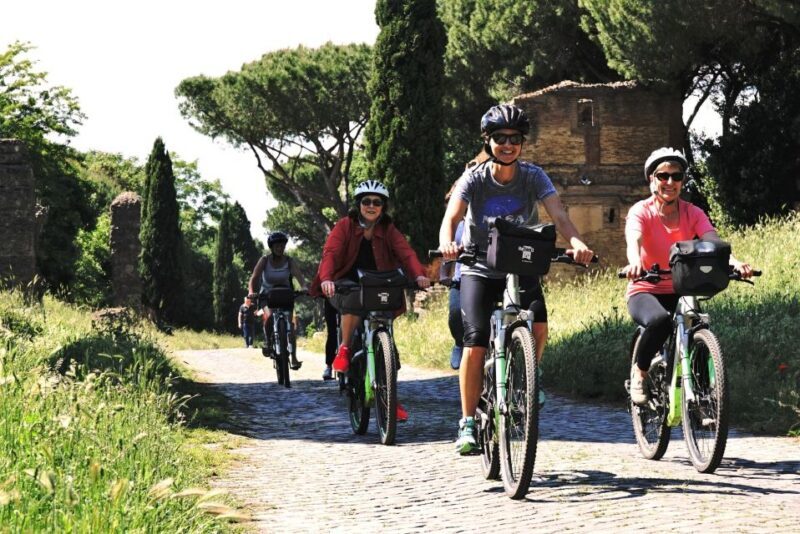
Rome’s Appian Way is best understood beyond the city center, where ancient paving, tombs and vast aqueduct arches sit among open parks. This 27-kilometer e-bike ride links those sights in one outing, with a guide leading the way and electric assistance helping on the longer stretches.
I like two things in particular: the route joins the Appian Way with the dramatic arches of the Aqueducts Park, and the small group size, capped at 10, leaves room for questions and a careful pace. Choose the 6-hour tour if you want a guided visit inside the catacombs; the 4-hour version stops at their entrance instead.
The trade-off is that this is a real ride, not a sightseeing bus tour with occasional pedaling. About 60 percent of the route is off-road, the surface can be bumpy, and some city traffic is unavoidable, so you should be comfortable handling a bike.
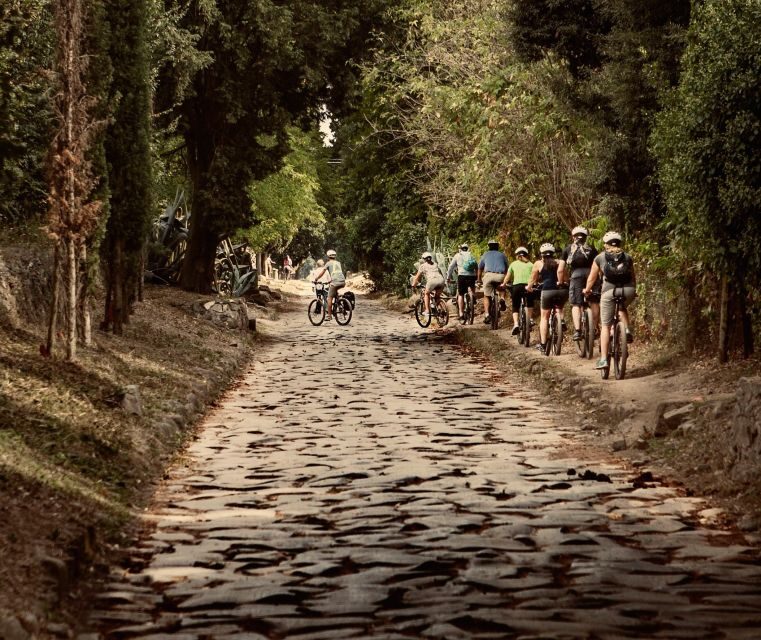
The ride starts at Via Labicana 49, a short walk from either the Colosseum or Manzoni metro stations. From the Colosseum, allow about 10 to 15 minutes on foot; from Manzoni, about 10 minutes. The meeting point is near central Rome, but the ride quickly shifts from city streets to the older road network beyond the walls.
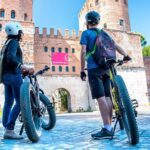
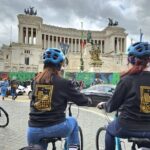
At the start, your guide fits you with a helmet and Cannondale e-mountain bike, then explains how to use the electric assistance and gears. This is useful even if you have ridden bikes before: the group needs to move safely through sections of traffic before reaching the parks. If this is your first e-bike ride, arrive ready to listen and practice the controls before setting off.
You get a 5-liter handlebar bag and a biodegradable bottle of water. Helmets are mandatory, and comfortable shoes are the one item you are specifically asked to bring. The bikes have anti-puncture tires, though no tire is invulnerable; one guide has helped a rider with a flat during a tour, so expect the team to deal with routine problems rather than assume none can happen.
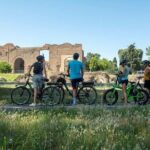
The route passes through or by several notable places, including the Aurelian Walls, Circus of Maxentius, Tomb of Cecilia Metella and Villa dei Quintili. The exact time spent at each is not specified, so think of this as a moving tour with stops for explanation and photos, not a long interior visit at every monument.
You can check availability for your dates here:
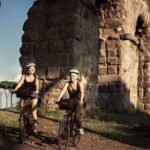
The Appian Way is the heart of the outing. At roughly 2,300 years old, it connects the story of Rome’s expansion with the quieter remains of the Roman countryside. Your guide points out tombs and mausoleums along the road, and the sequence of villas and ancient monuments helps explain how Rome’s elite lived and commemorated the dead beyond the city.
Some stretches are rough, with uneven stone, gravel or dirt under the tires. That is part of the appeal, but it also means you need to steer, balance and respond to the surface. Riders who are comfortable on a bike but have little off-road experience may manage well, yet should not mistake electric assistance for automatic handling.
The e-bike does the hard work of adding power when you pedal, which makes the distance and hills less tiring than they would be on a standard bike. It does not steer or brake for you. If you rarely ride, consider your comfort on a bike before booking, particularly because the route also includes city traffic.
There is a useful distinction between physical effort and riding skill. Many people find the motor assistance makes the full ride quite manageable, but the bumpier park paths still ask for control and attention. The tour is classed as intermediate, and it is difficult with a child seat or child extension.
Cyclists might enjoy these other Rome biking routes and tours
The two versions differ most clearly at the Catacombs of Rome. On the 6-hour tour, you stop for a guided visit inside the Catacombs of St. Callixtus or St. Sebastian. The underground corridors and crypts add a different chapter to the day, shifting the focus from Roman roads and engineering to early Christian history.
The specific catacomb visited can vary between those two sites. The tour information does not give the length of the underground visit, so allow for the longer overall duration rather than trying to plan the day around an exact time underground.
The 4-hour version does not include an interior visit. It pauses at the entrance for a short explanation of the catacombs’ history and importance, then continues along the route. If you have already visited a catacomb or prefer a shorter outing, this can be enough context without committing to the longer tour.
For a first visit to Rome, I would lean toward the 6-hour option if you have the time and want the full mix of outdoor sights and underground history. The 4-hour version still covers the Appian Way and aqueducts, but the catacomb stop is a brief introduction rather than a guided exploration.
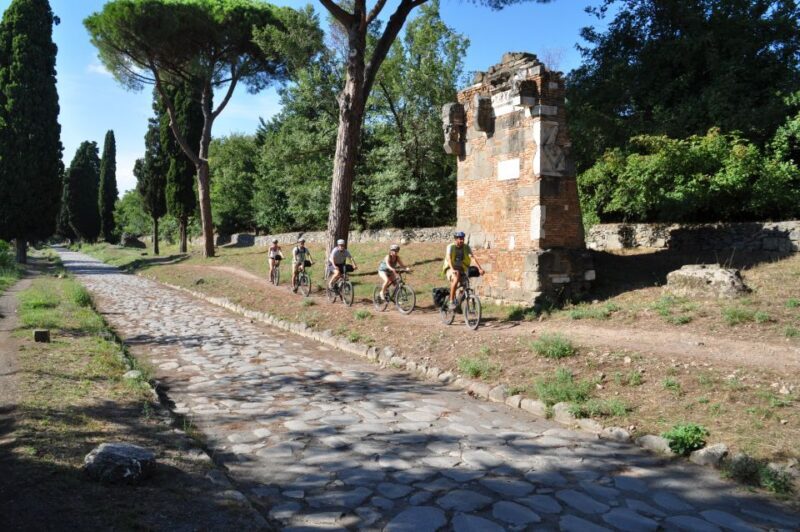
The Circus of Maxentius and Tomb of Cecilia Metella bring the route’s monuments into sharp focus. The Appian Way is not simply a stretch of old paving; it is lined with large memorials and remains that show how the road served as both a route out of Rome and a setting for public display. Your guide helps put these sights in context as you stop along the way.
Villa dei Quintili adds another look at the scale of Roman life beyond the city center. The tour passes this vast villa site, then carries on toward the aqueducts. The stops are part of a broader ride, so if you want to spend hours examining one archaeological site in detail, a separate visit may suit you better.
That is the bargain here: you cover more ground and see how these places relate to each other, rather than lingering at every ruin. A guide can also point out details you might pass without noticing on your own, while the cycling keeps the day varied.
The Park of the Aqueducts is the visual payoff for many riders. Here, tall Roman aqueduct arches cross the open parkland, making the engineering easy to grasp at a glance. The structures carried water toward the city, and their scale feels especially striking after the closer, roadside remains of the Appian Way.
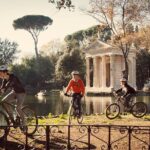
The tour follows the aqueducts back toward modern Rome, then crosses the green Caffarella Valley. This change of scenery is a strong reason to book: within one ride, you move from ancient stone road to huge infrastructure and then through a broad, quieter valley. The route offers a welcome contrast to the city’s crowded central sights.
This is not a traffic-free outing from beginning to end. About 40 percent of the ride takes place in the city, and some traffic is needed to connect the Appian Way with the aqueduct park. The remaining 60 percent is in parks, where there is no traffic. Guides such as Arina, Anna and Oscar have been praised for keeping groups safe on the roads, but you still need to be alert and follow instructions.
Near the end, the route passes the Baths of Caracalla before returning to Via Labicana 49. The exact nature of this final highlight is not specified, so treat it as part of the route rather than expecting a separate extended visit inside the baths.
More Great Tours Nearby
The bike matters on a tour this long. These are Cannondale e-mountain bikes, with anti-puncture tires and electric assistance. Riders have found them solid and easy to use, and guides have helped first-time e-bike users learn the gears and power settings. If you have never used an e-bike, say so at the start; there is time to get familiar with the controls before the route gets demanding.
The guide is not just there to narrate Roman dates. They also set the pace, manage the group through traffic and explain when rougher sections are coming. Past guides include Oscar, Arina, Agnese, Ali, Sina, Pablo and Cas, among others, but you cannot book a particular guide by name. The tour is offered in English, Dutch, Spanish, French, German and Italian.
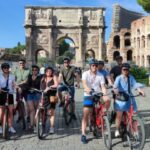
With a maximum of 10 participants, the group remains small enough for the guide to keep track of riders. That matters more here than on a walking tour, since the group must stay together on roads and uneven tracks. The stated minimum is four participants; if the minimum is not met, you will be offered an alternative or a full refund.
You might also be interested in these Rome experiences
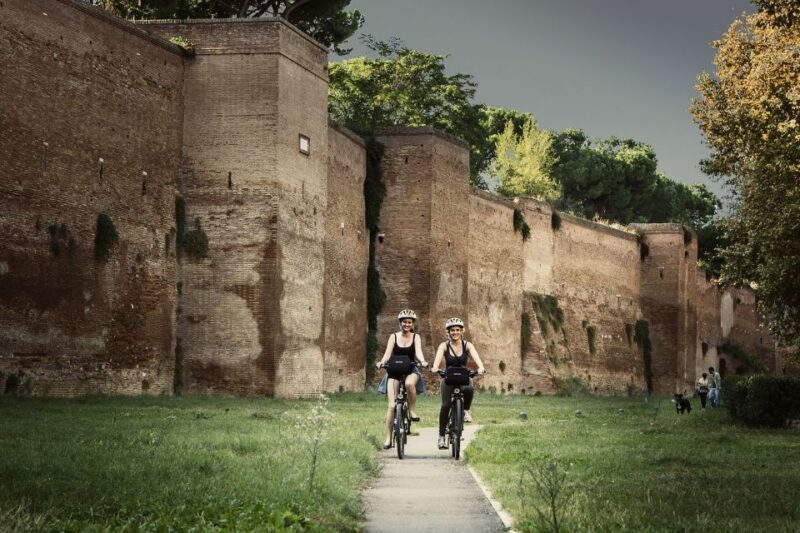
At $85 per person, the tour offers a substantial half-day or full-day outing, depending on your choice. The price includes the bike, helmet, guide, handlebar bag and water; the guided catacomb visit is included only on the 6-hour option. Food and other drinks are not included, though you can buy food along the way. Some tours have included a pizzeria stop, but do not count on a particular meal stop unless it is confirmed for your departure.
The 4-hour version is a practical choice if you want the Appian Way and aqueducts without giving up most of the day. The 6-hour version costs more time, but adds a proper guided catacomb visit and gives you a fuller day connecting ancient history, countryside and early Christian sites. Check the available departure times and which version you are selecting before booking.
On Wednesdays, the tour can run 30 minutes longer. Plan for that extra time, especially if you have a timed commitment afterward. Water is provided, but food and additional drinks are not, so bring money for a purchase along the route if you expect to want more.
Children can join under specific conditions: ages 1 to 4 ride in a child seat, up to 22 kg, and travel free; ages 5 to 8 use a child extension; children 9 and older can ride an e-bike independently. Babies under 1 are not suitable. The equipment has a maximum weight limit of 136 kg, and the tour is especially challenging with a child seat or extension.
You can cancel up to 24 hours ahead for a full refund, and a reserve-now, pay-later option is available. Those terms are handy if plans may shift, but the main decision is whether you want a ride of 27 km with off-road sections and city traffic.
Book it if you are comfortable riding a bike, want to see Rome beyond its central monuments and like the idea of joining history to open-air scenery. The strongest version of the day combines the Appian Way, aqueduct arches and, on the longer option, the catacombs. It is an especially good choice for families with older children and for visitors who want a change from museums and crowded streets.
Skip it if you are uneasy on a bike, want a fully traffic-free ride or need to move slowly over rough ground. The e-bike reduces the effort, not the need to handle the bike. If you are unsure, choose the 4-hour option only if the shorter duration helps; it still includes the same basic riding conditions.
For the most complete outing, I would choose the 6-hour version, wear comfortable shoes, bring money for food or extra drinks and leave room in your schedule afterward. If you want a shorter introduction to the Appian Way and aqueducts, the 4-hour ride gives you the essential outdoor route without the underground visit.
“Such a fun way to see the Appian Way, Catacombs, and Aquaduct Park, plus other neighborhoods of Rome! Rick was such a fun, knowledgeable guide!”
There are two versions, one lasting 4 hours and one lasting 6 hours. On Wednesdays, the tour can take about 30 minutes longer.
The route is 27 km, or about 17 miles. Around 60 percent is off-road, and about 40 percent takes place in the city.
No. The 6-hour tour includes a guided visit inside the Catacombs of St. Callixtus or St. Sebastian. The 4-hour tour stops at the entrance for a brief explanation.
The ride passes the Aurelian Walls, Catacombs of Rome, Appian Way, Circus of Maxentius, Tomb of Cecilia Metella, Villa dei Quintili, Park of the Aqueducts, Caffarella Park and Baths of Caracalla.
The guide can explain the bike’s gears and electric assistance, but you should be comfortable riding a bike and handling uneven ground. The tour is classed as intermediate.
Yes. Some city traffic is unavoidable when connecting the Appian Way with the Aqueducts Park. The park sections are traffic-free.
The tour includes a Cannondale e-mountain bike with anti-puncture tires, a professional guide, a mandatory helmet, a 5-liter handlebar bag and a biodegradable bottle of water. A guided catacomb visit is included only on the 6-hour tour.
No. Food and drinks are not included, though you can buy some along the way.
Yes, with age-specific equipment. Children aged 1 to 4 use a child seat and ride free, children aged 5 to 8 use a child extension, and children aged 9 and older can ride an e-bike independently. Babies under 1 are not suitable.
The meeting point is Via Labicana 49. It is about a 10 to 15-minute walk from the Colosseum metro station and about a 10-minute walk from Manzoni metro station.
You can check availability for your dates here: