Physical Address
304 North Cardinal St.
Dorchester Center, MA 02124
Physical Address
304 North Cardinal St.
Dorchester Center, MA 02124

Visit three Chiang Mai temples on a guided walk, learn about Lanna culture and Buddhism, and plan for entry fees, dress rules, and heat.
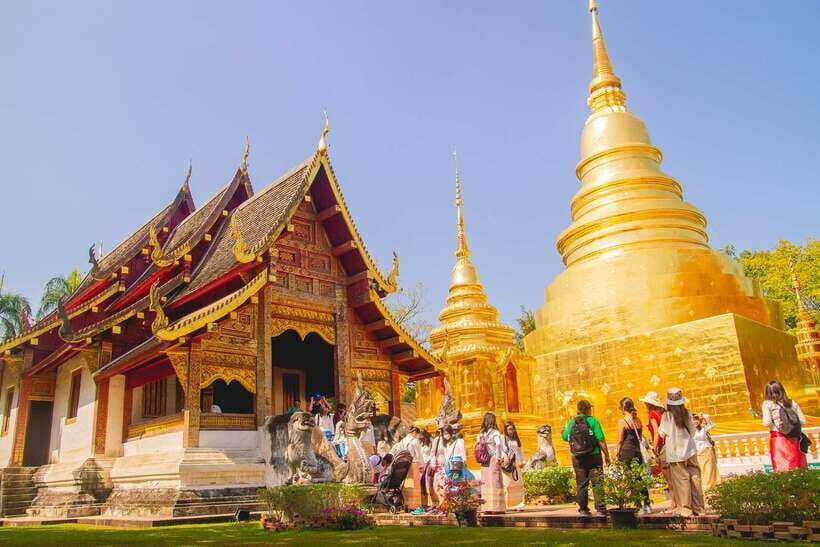
Chiang Mai’s temples make more sense when someone explains what you’re seeing. On this three-hour walk, a local guide leads you from the massive brick stupa at Wat Chedi Luang to the teak carvings of Wat Phan Tao and the ornate halls of Wat Phra Singh. I like the mix of architectural detail and everyday Buddhist practice, and I like that the walk links three central sights without requiring you to plan a route.
The main consideration is that $16 does not include temple entry fees, which add up to 120 baht. You’ll also spend several hours on foot in the heat, taking your shoes off repeatedly and following dress rules at sacred sites. Bring water, wear easy-on shoes, and leave a little room in your schedule in case the tour runs long.

Chiang Mai’s old city is easy to explore independently, but a temple courtyard can be hard to read without context. A guide can connect the buildings to Lanna history, explain how Buddhist beliefs shape daily life, and help you notice details you might otherwise pass by. That makes this tour useful not only for seeing three temples, but for understanding why they matter.
The strongest part is the human explanation. Guides have discussed Thai beliefs, local languages, meditation, and their own experiences of Buddhist life. One guide, Popcorn, has shared what it was like growing up as a monk in a temple; another, Boon, has taught visitors how to meditate. Those are personal details that make a short visit feel less like a checklist.
Guides named on past tours include Nana, TomTam, Sunny, Nuttaya, James, and Popcorn. The guide you meet may be someone else, but the experience is designed around an English-speaking local guide who can take questions as you go. If you’re curious, ask them about the differences between temples, the meaning of a feature you see, or how Buddhism fits into everyday life. The walk is most rewarding when you treat it as a conversation, not a lecture.
If you enjoy exploring Chiang Mai on foot, these walking tours might also suit your style
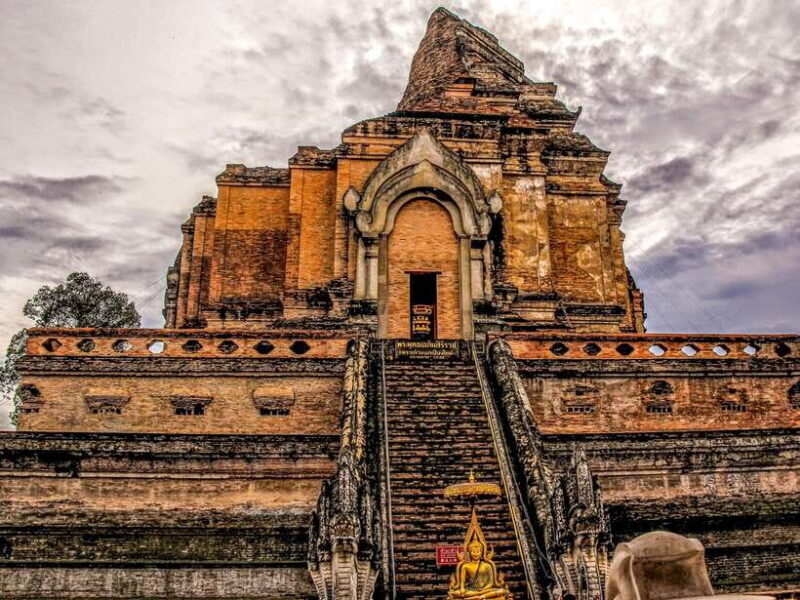
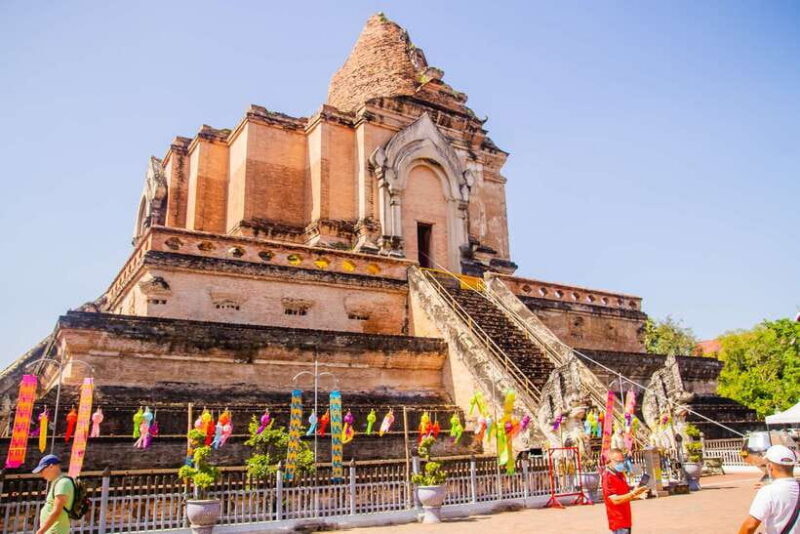
The tour begins at Wat Chedi Luang, built between the 14th and 15th centuries. Its large stupa is the biggest in Chiang Mai, and its scale gives you a clear first impression of the city’s historic religious architecture. The temple compound is spacious, so there is room to look closely at Lanna-style design rather than viewing everything from a single doorway.
Plan to spend about an hour here according to the suggested schedule. That time gives your guide space to introduce the temple’s history and point out features around the grounds. A guide’s explanations are especially helpful at a site this large: the headline is the stupa, but the surrounding compound also rewards a slower look.
The entry fee is 50 baht, paid separately. You’ll need cash for this and the other temple fees. Wear clothing that covers your shoulders and knees. Rules can be strict at some sights, so modest dress is the safest choice rather than relying on what other people happen to be wearing.
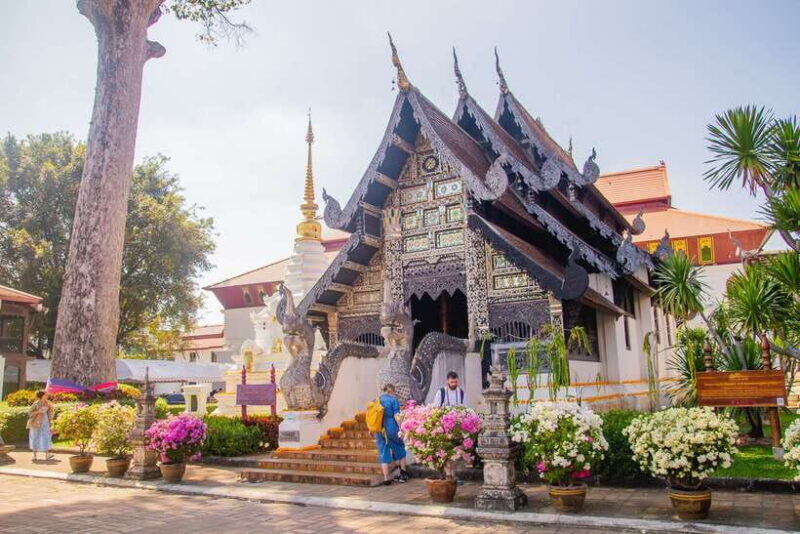
Wat Phan Tao is much smaller than Wat Chedi Luang, but its carved teak facade gives it a distinct character. The temple was once a throne hall for King Mahotara Prateth before becoming a place of prayer. Here, the appeal is less about grand scale and more about looking closely at the woodwork and noticing how a different building type serves a religious purpose.
The shift from a large stupa to a compact wooden temple helps the walk feel varied. You’re not seeing three versions of the same monument. Instead, each stop gives you a different way to understand Chiang Mai’s temple architecture and religious life.
The entry fee is 20 baht. One description of the route names Wat Phan Lao, while the detailed stop information describes Wat Phan Tao. Since the wood-carved temple is specifically described as Wat Phan Tao, confirm the planned middle stop with the operator if you want certainty before booking.
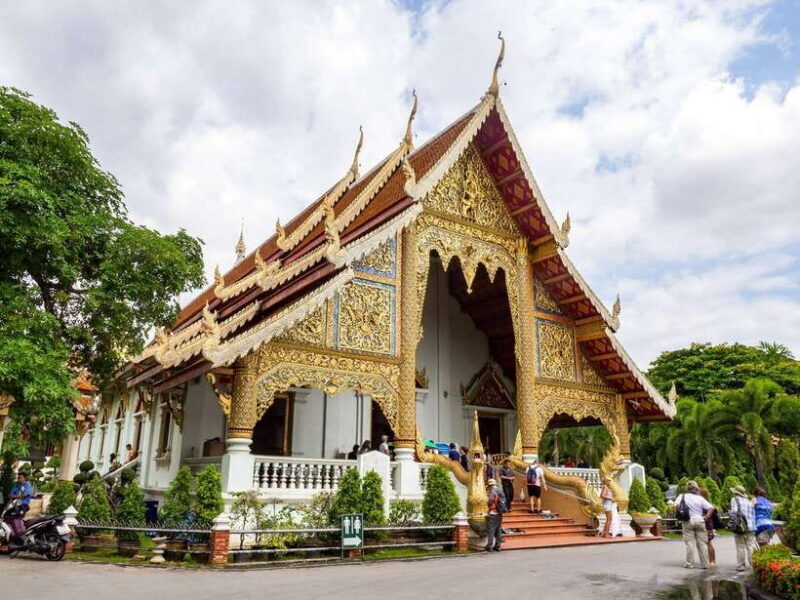
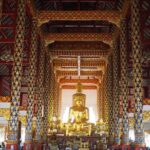
Wat Phra Singh is the final major stop and a fitting finish to the route. Built in the 14th century, it is one of Chiang Mai’s finest temples. Its grounds include a mosaic-decorated sanctuary, a large Lion Buddha statue, and gilded pagodas, so there is plenty to look at even after the guide’s main explanation.
Allow roughly an hour here in the suggested schedule. The sanctuary’s mosaic work and the contrast between its ornate details and the temple grounds give you a different visual experience from the older, more imposing stupa at Wat Chedi Luang. If you enjoy photography, this stop offers many details to frame, though be mindful that you’re visiting active religious sites, not just scenic backdrops.
The entry fee is 50 baht. The walk ends at Wat Phra Singh Woramahawihan, so you finish in the old city rather than returning to the starting temple. There is no hotel pickup or drop-off included; plan your own way to the meeting point and onward from the finish.
More Great Tours Nearby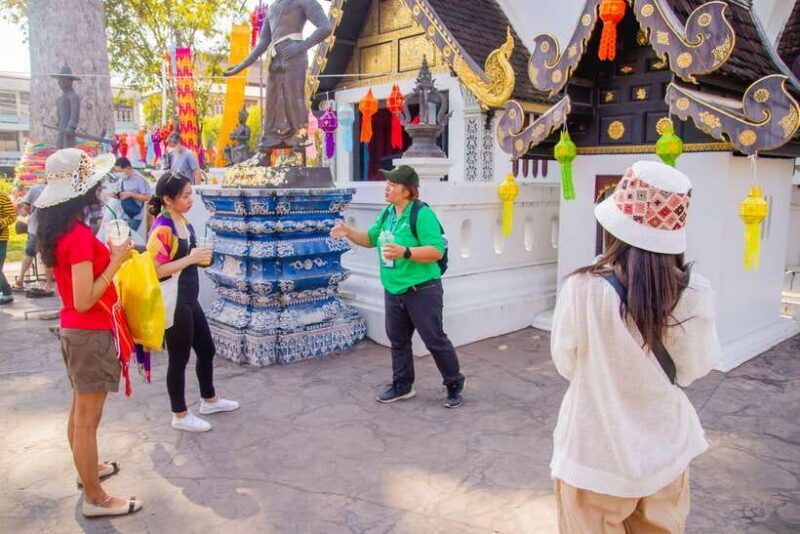
The advertised duration is three hours, with the route laid out as about an hour at each temple. Treat that as a guide rather than a promise of an exact finish time. Some tours have lasted closer to four or four and a half hours, especially when visitors have lots of questions or want more time at the sites.
That extra time can be welcome if you enjoy discussion, but it matters if you have a tight schedule or another activity booked immediately afterward. Keep your plans flexible, and don’t assume you’ll be back at your hotel at the three-hour mark.
This is a walking tour, not a vehicle-based visit. Moderate fitness is recommended, and the tour is not suitable for people with mobility impairments, heart problems, or respiratory issues. It is also not suitable for pregnant women. If you have concerns about the distance or the pace, ask the operator before booking rather than relying on the guide to arrange transport mid-tour.
If you prefer having a local expert, these guided Chiang Mai experiences could work well
You’ll remove your shoes at temple interiors, so slip-on shoes or sandals save time. If you prefer not to walk barefoot, bring socks. Since you’ll be taking footwear on and off throughout the tour, complicated laces can become a small but repeated nuisance.
Cover your shoulders, back, and knees. A light scarf can help you adjust your outfit, but it should provide suitable coverage. Pack sunglasses, a hat, sunscreen, insect repellent, a camera, and cash for entry fees. Food and extra drinks are not included.
Carry water even in cooler months. The walk is outdoors, and the shade does not necessarily keep the heat at bay. One useful rhythm is to drink before you feel thirsty, especially if you’re visiting during a warm part of the day. The tour’s exact start times depend on availability, so check the time options before booking.
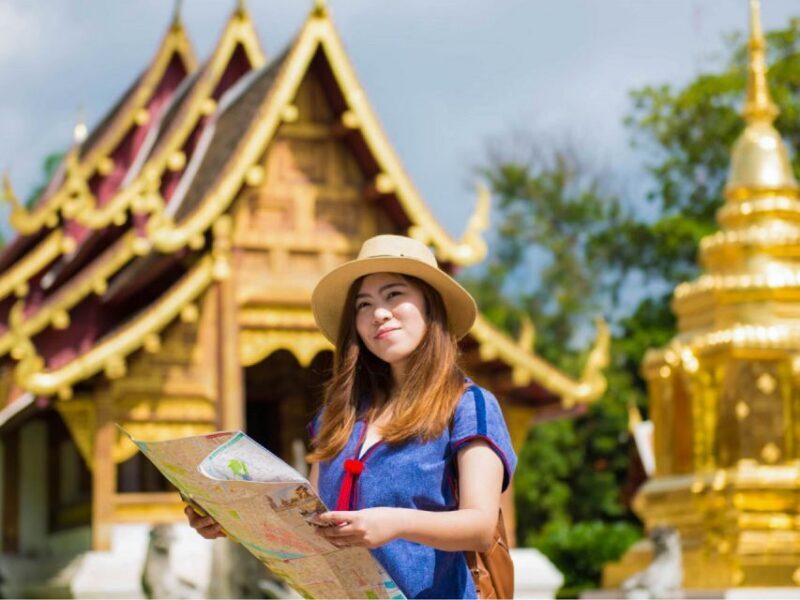
At $16 per person, the price is modest for three hours with a local English-speaking guide. You’re paying for the route and interpretation, not transport, meals, or temple admission. Add 120 baht for the three entry fees, and remember to budget separately for anything you buy along the way.
The guide is where the value becomes clear. You can visit these temples independently, but the tour adds explanations about Chiang Mai, Lanna history, Buddhism, and local customs. Visitors have found the guides’ answers, humor, and personal stories especially meaningful. If you already know a lot about Thai temples, the route may feel familiar; if you’re new to the subject, the context can make each stop far more engaging.
The tour is presented as a GSTC-certified, low-impact experience, with carbon emissions offset for every tour. Walking between central sights also means you’re not adding a vehicle transfer to this part of your day. That is a practical way to see the old city while keeping the outing focused on the temples themselves.
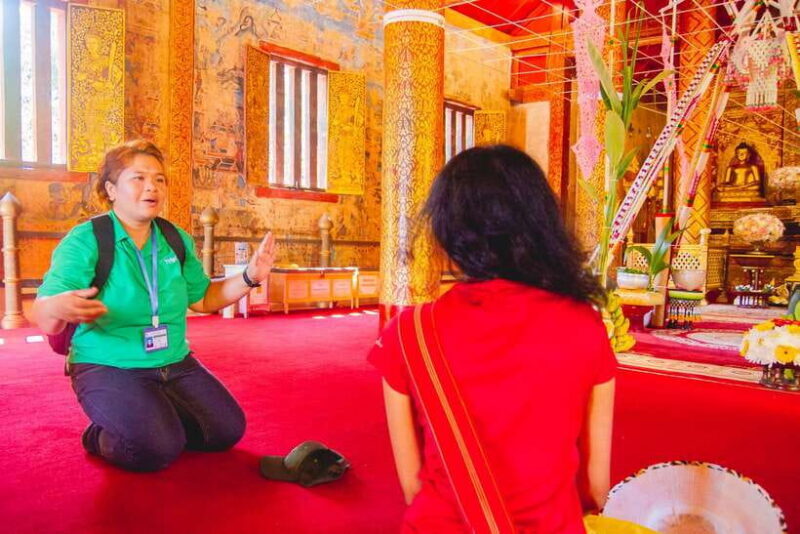
Book it if you want an efficient introduction to three of Chiang Mai’s best-known temples and value having a local guide explain what you’re seeing. It is particularly useful early in your stay, when a few hours of context can help you make sense of other temples you visit on your own.
Think twice if prolonged walking, heat, or repeated shoe removal would make the outing difficult. The tour is not designed for visitors with mobility, heart, or respiratory issues, and it does not include transport or admission. If you have limited time, leave space beyond the stated three hours.
For a good-value introduction to Chiang Mai’s temple architecture and Buddhist culture, this is a strong choice. Bring cash for the 120 baht in entry fees, wear modest clothes and easy-on shoes, and arrive ready to ask questions.
“We loved our tour. The guide was very informative and knowledgeable. We learned a lot about Buddhism and different Thai beliefs. She also taught us…”
The stated duration is three hours. The suggested schedule allows about an hour at each temple, though some outings may take longer.
The described route visits Wat Chedi Luang, Wat Phan Tao, and Wat Phra Singh. One route description also mentions Wat Phan Lao, so confirm the middle stop with the operator if needed.
Admission is listed as 50 baht for Wat Chedi Luang, 20 baht for Wat Phan Tao, and 50 baht for Wat Phra Singh. These fees are not included in the tour price.
The meeting point is the entrance of Wat Chedi Luang, where the guide holds a TripGuru sign. The tour finishes at Wat Phra Singh Woramahawihan.
Wear clothes that cover your shoulders, back, and knees. Bring comfortable shoes that are easy to remove, water, sun protection, insect repellent, a camera, and cash.
The tour recommends moderate fitness and is not suitable for pregnant women or people with mobility impairments, heart problems, or respiratory issues.
You can check availability for your dates here: