Physical Address
304 North Cardinal St.
Dorchester Center, MA 02124
Physical Address
304 North Cardinal St.
Dorchester Center, MA 02124

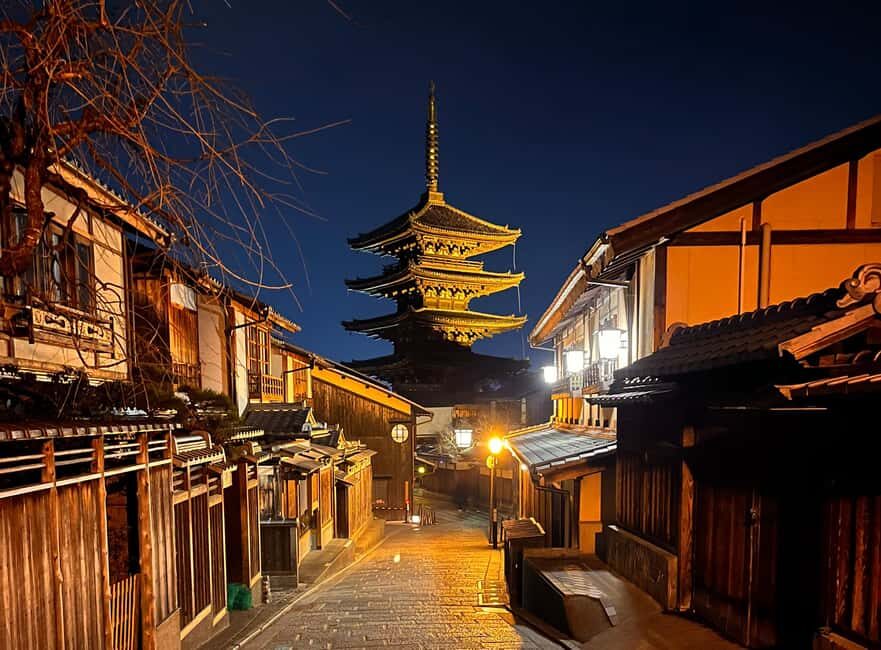
Walk Gion after dark on a small-group Kyoto tour, with geisha culture, quiet shrines, an illuminated pagoda, and practical local stories.
Gion’s best evening souvenir may be a quieter street. This 100-minute walk starts at Minamiza Theatre and moves through Hanamikoji, shrine paths, and an illuminated pagoda, while your guide explains the district’s geisha traditions and local religious customs. The night setting is a major part of the appeal.
I like two things especially: the group is capped at 10, so you can ask questions without shouting over a crowd, and the route reaches beyond the geisha district to shrines and less obvious paths. Guides including Shino, Hina, Masami, and Sho have been praised for clear explanations, lively storytelling, and practical tips.
One consideration: this is a walking tour on a route with stairs, so it is not suitable for wheelchair users, strollers, or people with limited mobility. And while you might spot a geisha or maiko, the tour is not designed as a meeting or photo opportunity.
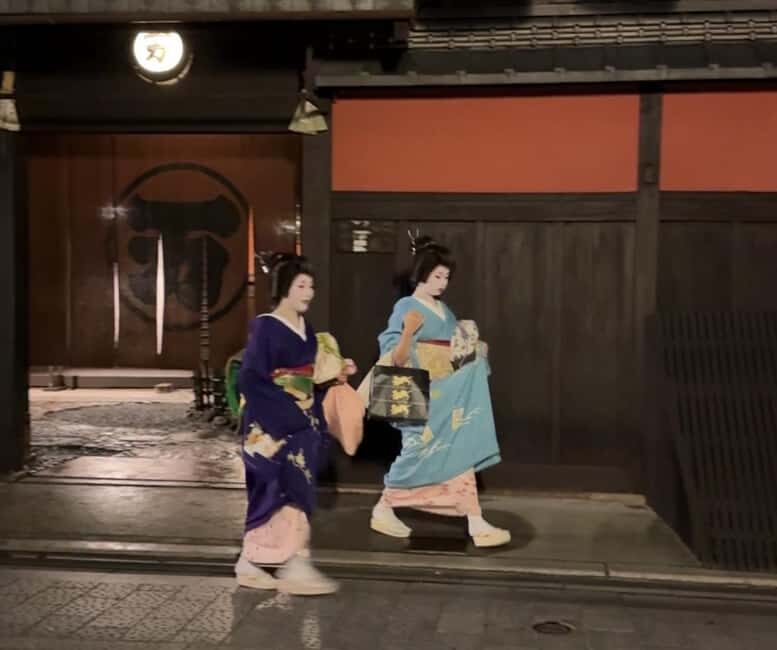

Gion is not simply a picturesque collection of old streets. It is a working district with customs, private spaces, and a long-standing geisha culture that can be easy to misread if you only pass through with a camera. A guide helps explain what you are seeing and how to behave respectfully.
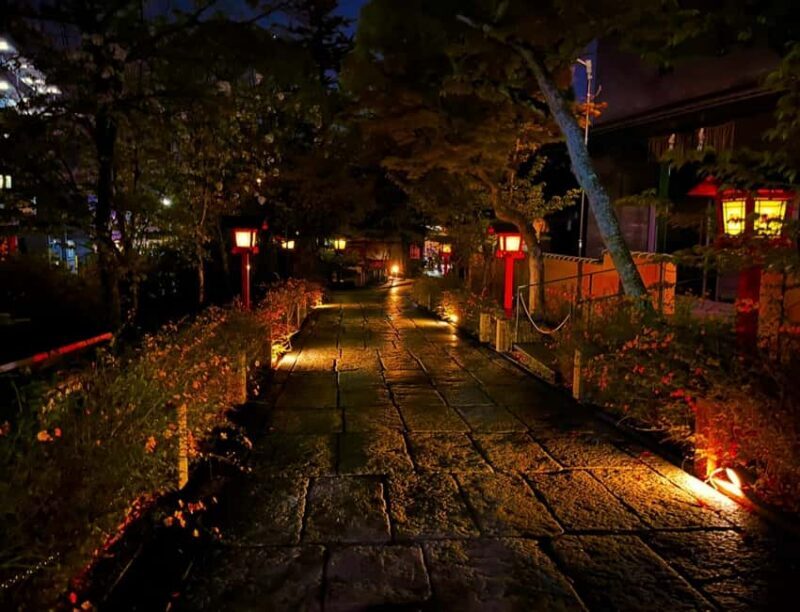
The night walk also changes the pace. The lanterns and lit buildings draw your eye to details that can get lost in the daytime bustle, while quieter lanes make it easier to listen and take in the setting. You are not promised empty streets, but the evening often offers a calmer way to experience the area.
This tour is a good first look if Gion is new to you. If you have already explored the main streets at length, the guide’s stories, shrine visits, and smaller pathways may still add useful context, though you will have seen some of the district’s familiar sights.
If you enjoy exploring Kyoto on foot, these walking tours might also suit your style
The meeting point is in front of Minamiza Theatre, a landmark in Gion. Look for the guide holding a TravelinGood sign, and arrive at least five minutes before the listed start time. The tour leaves at the stated time, so do not treat it as the time to show up. If you are coming by bus or taxi, allow extra time for traffic.
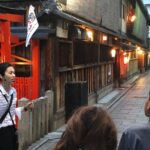
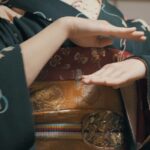
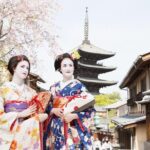
From the theatre, the group heads to Hanamikoji, the geisha district. The guide introduces the traditional streets and explains the rules and customs around geisha culture. The aim is to help you understand the place, not to treat the women who work here as attractions.
You may be lucky enough to see a geisha or maiko, a geisha in training, arriving or leaving by car or walking along the street. But sightings are incidental. The tour is not set up for meeting geisha, and it is best to keep your attention on the guide’s explanations and respect the privacy of people going about their work.
The difference between a geisha and a maiko is one of the details guides often make easier to grasp. Guides such as Sho have used photos and videos to illustrate distinctions, while others, including Shino and Hina, have helped explain the traditions and everyday rules around the profession. The exact guide varies, but the small group format gives you room to ask questions.
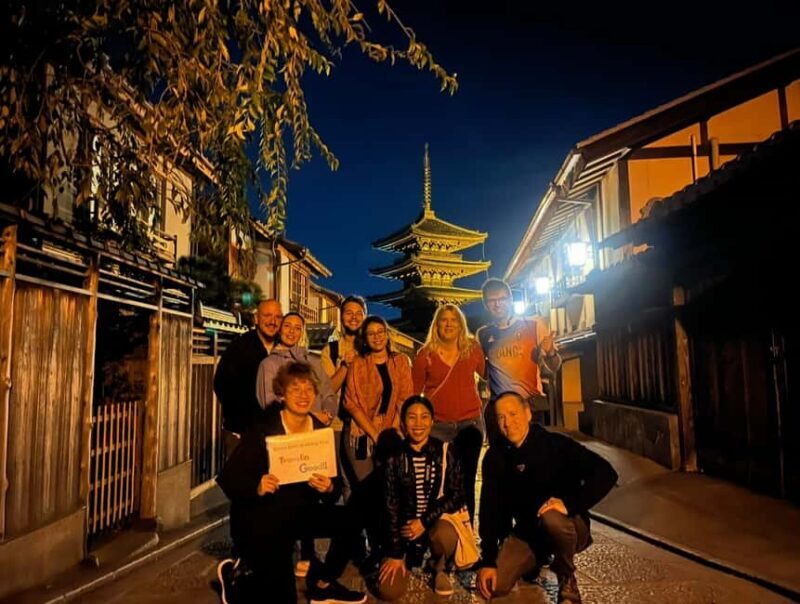
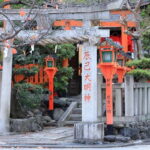
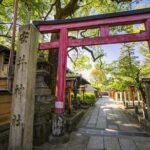
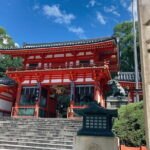
The walk goes beyond Hanamikoji to a shrine associated with matchmaking. It is a useful change of subject: the tour moves from Gion’s entertainment district to the spiritual practices woven into everyday Kyoto life.
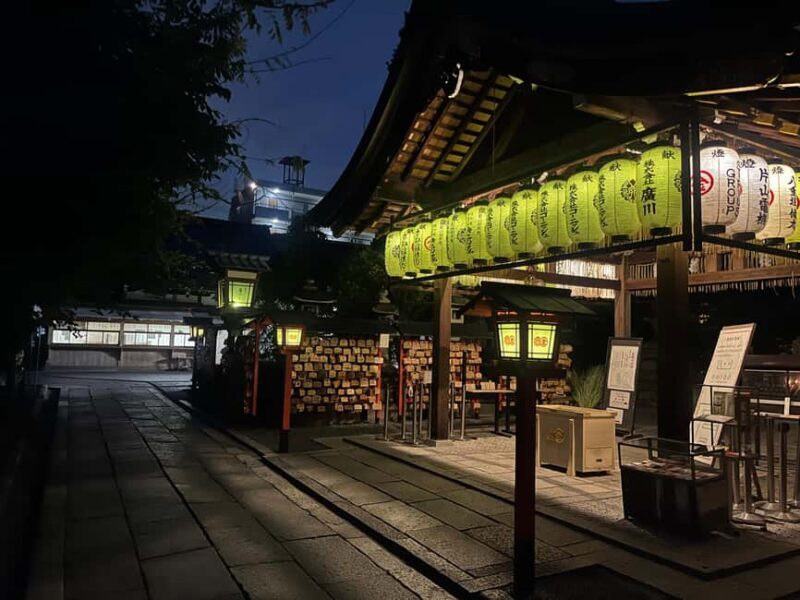
At a Shinto shrine, your guide may explain how to approach and pray. Some groups have been shown the steps and invited to practise them, which can make the visit more meaningful than simply pausing for a photograph. You do not need prior knowledge of Japanese religious customs. The guide can help you understand what you are seeing and how to take part, if you choose.
Nearby, the route also covers the distinction between Shinto shrines and Buddhist temples. These traditions have different practices and visual cues, and hearing a clear explanation on the spot helps the details stick. You may also hear local stories or legends connected to the places along the way.
This part of the walk is one reason the tour works even if geisha culture is not your only interest. It offers a wider look at Kyoto’s religious and cultural life, without trying to turn a short evening stroll into a full history lesson.
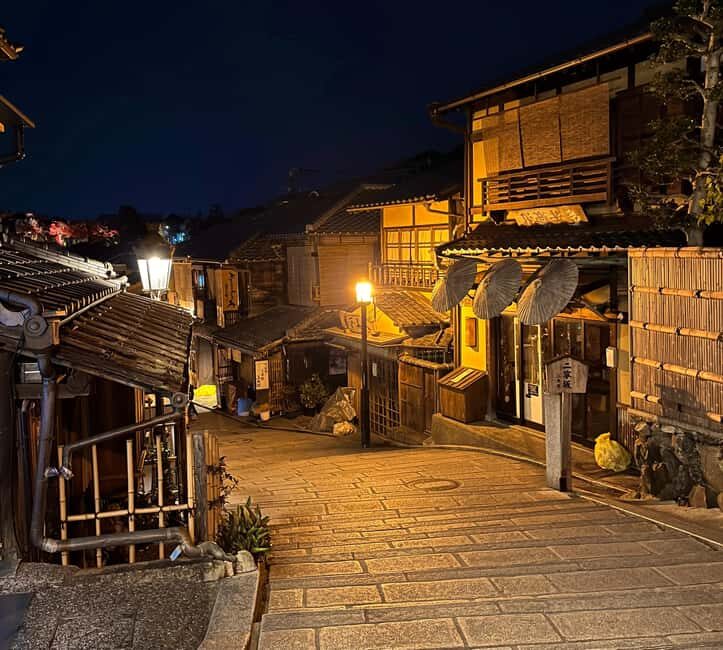
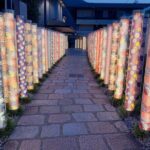
A Buddhist pagoda outside the geisha district is another highlight. It is illuminated at night, and the lighting gives the structure a striking presence against the dark. For many people, this is the visual high point of the walk, and a reason to choose the evening departure rather than seeing the same area only by day.
The route also follows smaller paths and less obvious corners. These turns help break up the walk between main sights, and the guide can point out details you might otherwise pass without noticing. That matters in a district where the appeal is often in the atmosphere and the small clues, not a single grand monument.
The final stop is a shrine more than 1,000 years old. The route description does not name it, so do not plan the tour around a particular shrine or expect a long visit at each stop. The value is in seeing several kinds of places in one compact walk, with explanations that connect them.
At 100 minutes, the tour offers a useful overview rather than an exhaustive study of Gion. The pace has been described as relaxed, with time for questions and photographs. Still, you will be walking throughout, and stairs on the route make it a poor fit if mobility is a concern.
More Great Tours Nearby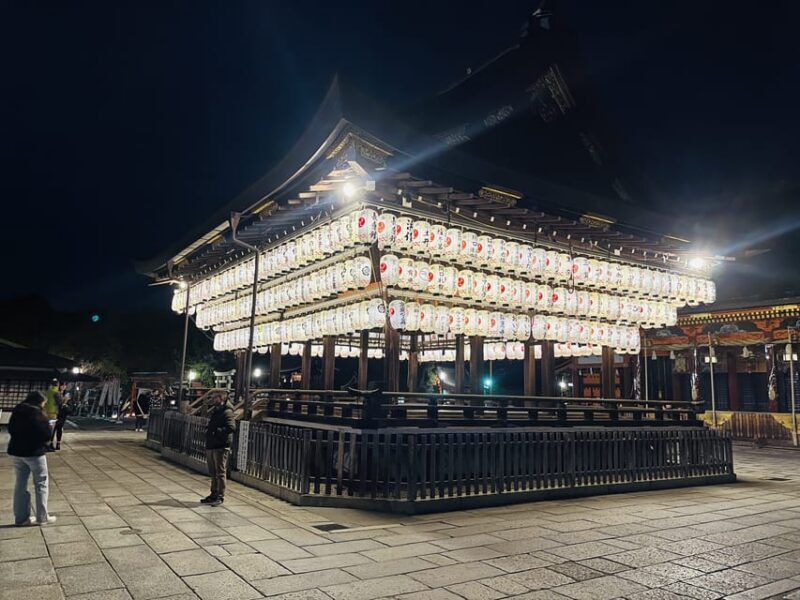
The group limit is 10 people. That is a meaningful cap for a walking tour in narrow streets: it is easier to keep together, hear the guide, and ask a question than it would be in a much larger group. Some outings may be smaller still, which can make the experience feel more like a conversation.
Guide quality is central here. The named guides who have led these walks include Shino, Hina, Masami, Sho, Pam, Kevin, Yuri, and others. Their styles differ, but the qualities that make the tour work are clear English, patience, a sense of humor, and the ability to connect local history with the places in front of you.
Some guides share restaurant suggestions, festival details, or ideas for places to see during the day. Treat these as useful extras rather than guaranteed parts of every departure. The main value is the local explanation along the route, not a fixed script or a promise that every guide will cover the same anecdotes.
Photography service is included. That can be handy if you want a few pictures of the walk without spending the whole evening framing shots yourself. It does not change the tour’s central purpose: learning about Gion while walking through it.
Evening activities in Kyoto include these interesting options
At $24 per person, this is an affordable way to add context to a part of Kyoto that is easy to admire but harder to understand on your own. You are paying for a 100-minute guided walk, a small group, an English-speaking guide, and a photography service. The tour also covers several different types of sights, rather than focusing only on one street or one cultural topic.
The price makes the most sense if you are visiting Gion for the first time, want a clear introduction to geisha and maiko culture, or would value help understanding the shrines and temples. If you are happy to wander independently and read up beforehand, you can see the streets without booking a guide. What you would miss is the live explanation, the chance to ask questions, and the help spotting details that might not be obvious.
The tour is a walk, not an indoor performance or a formal meeting with a geisha. Keep that distinction in mind when deciding what you want from the evening. Book for the district’s atmosphere and cultural context, not for a guaranteed sighting.
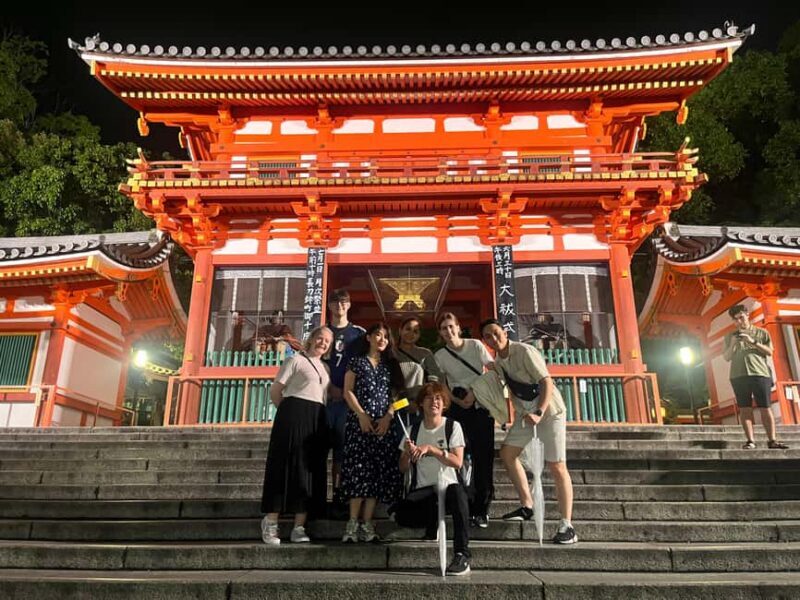
Most departures are at night, when lanterns and illuminated sites shape the walk. In February, a limited 3 p.m. option is also offered for people with evening plans or those who prefer to explore in daylight. Check the available times for your date, since starting options can vary.
Wear shoes you are comfortable walking in, and dress for the weather. The tour takes place outdoors and includes stairs. It is not accessible for wheelchair users, baby carriages, or people with limited mobility. The activity is also listed as unsuitable for babies under one and people with a cold.
Children under six do not need a ticket, but the walking route and evening timing may not suit every young child. One family with children aged nine and eleven enjoyed the experience, but that does not guarantee it will be a fit for every family. Use your own judgment about your child’s stamina and interest.
The tour suits curious first-time visitors, anyone interested in geisha and maiko traditions, and people who enjoy learning the stories behind streets and sacred sites. It is less suitable if you need step-free access, want a guaranteed geisha encounter, or prefer to explore at your own pace without a guide.
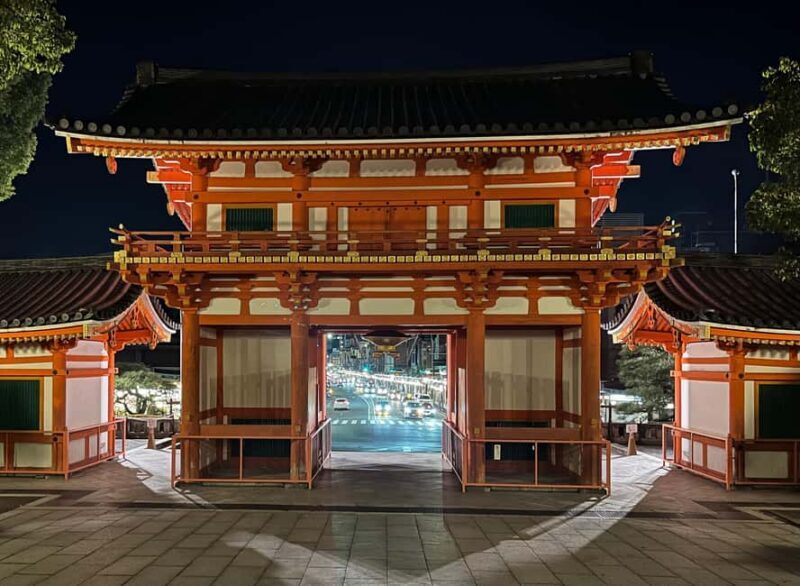
I would book this tour if you want more than a quick look at Hanamikoji. Its strongest points are the small group, the explanations of geisha culture, and the shift from traditional streets to shrines and a lit pagoda. The nighttime setting gives the walk a mood that is hard to replicate on a busy daytime visit.
Choose it early in your Kyoto stay if you want an orientation and local suggestions for what to see next. If you have already covered Gion thoroughly, consider whether another guided walk would add enough new context. Either way, go with realistic expectations: the streets and stories are the main event, while a geisha sighting is only a possibility.
“Really fun tour – our guide was friendly and knowledgeable. We were lucky enough to see a Geisha during our tour. It was a great way to see the hig…”
The walking tour lasts 100 minutes.
The live guide speaks English.
The tour is limited to 10 participants.
Meet in front of Minamiza Theatre, on the front side of the theatre. Look for a guide holding a TravelinGood sign.
No. It is the time the group leaves the meeting point. Arrive at least five minutes early.
No. Stairs along the route mean it is not accessible for wheelchair users, baby carriages, or people with limited mobility.
You might, but a sighting is not guaranteed. The tour is not intended as a way to meet geisha.
You can check availability for your dates here: