Physical Address
304 North Cardinal St.
Dorchester Center, MA 02124
Physical Address
304 North Cardinal St.
Dorchester Center, MA 02124


Trek Sa Pa’s Muong Hoa Valley through rice terraces, Hmong and Red Dao villages, bamboo forest and a home-cooked lunch. Get the footwear advice first.
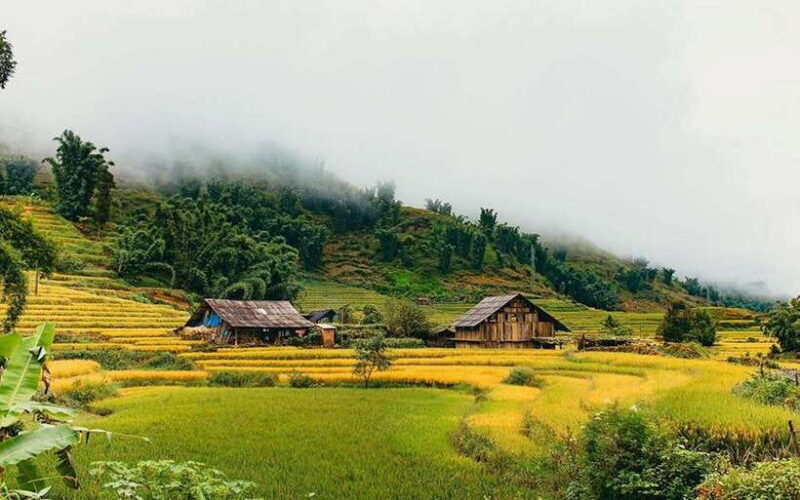
Muong Hoa Valley is best explored on foot: the route leaves Sa Pa’s roads for narrow trails through terraced fields, village paths and bamboo. You’ll cross the Muong Hoa River, see ancient rock carvings near Ta Van, and finish with a stop by a waterfall.
I like two things in particular: the varied route, which takes you through several villages and types of terrain, and the chance to share lunch at a local home rather than simply pass through. Guides such as Su, Chai and Sunny are praised for explaining local life and helping the group navigate tricky sections.
The trade-off is that this is a real trek, not a gentle valley stroll. Rain can turn parts of the trail slick and muddy, so bring grippy hiking shoes, a willingness to get dirty, and a reasonable level of fitness.

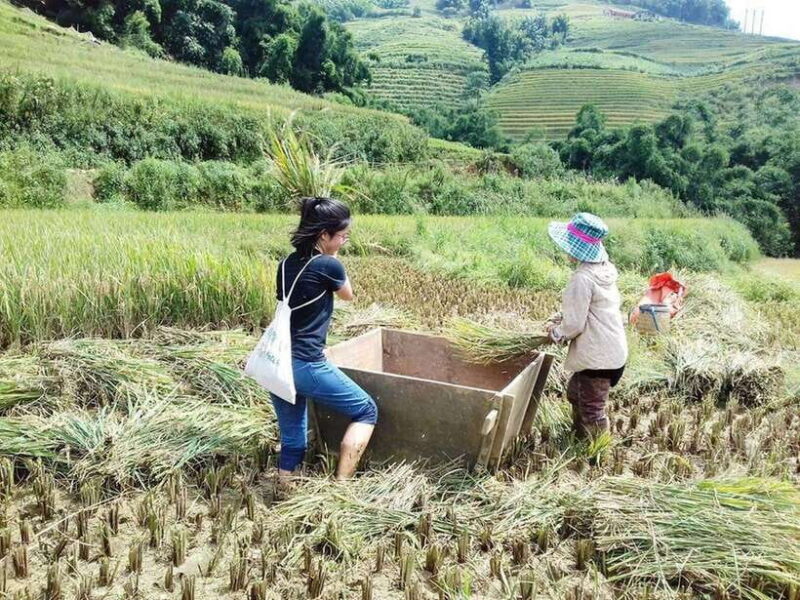
The day begins with pickup at a hotel in central Sa Pa or at the Vietnam Nomadtrails office. Pickup is not available from outside the Sa Pa area. From town, the group heads toward the valley and starts the walk, with the guide setting the pace and introducing the area.
The first views can be especially atmospheric when morning mist sits over the terraces. The mist is part of the mountain weather, not a guarantee of a clear panorama, so keep your expectations flexible. Even on cloudy days, the walk has plenty to offer at close range: the paths, field edges, river and village homes are the day’s main interest, not just a distant view.
The advertised trek is 10 kilometers, but the effort depends on conditions and the ground underfoot. Some people find it a manageable walk; others record a longer distance and describe rough, slippery sections. Think of it as a substantial half-day hike, not a short guided walk.
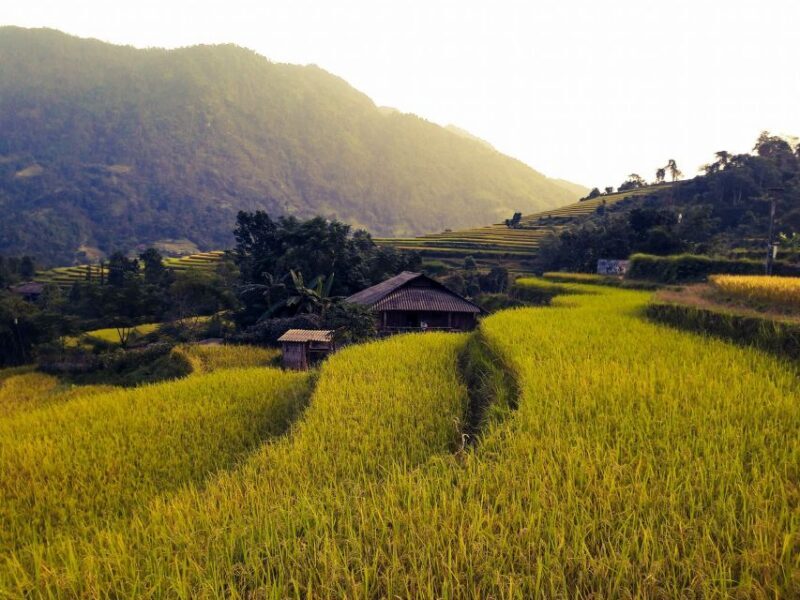
The trail continues past carefully worked rice terraces toward Lao Chai, home to a Black Hmong community. A good guide helps you notice more than the views, explaining aspects of local culture, village life and the surroundings as you walk. Guides named Su, Chai, Sunny, Khu and Minh have been particularly appreciated for their explanations and care, though the guide on your date may be someone else.
This part of the route is valuable because you travel through inhabited places rather than viewing the valley only from a roadside lookout. You may see people at work in the fields and get a closer sense of how homes and daily routines fit into the valley. Keep in mind that this is a lived-in community, not a staged display. Follow your guide’s lead, be respectful when passing homes, and ask before taking close-up photos.
The track can be narrow and uneven. In dry conditions, many walkers find it straightforward; after rain, muddy descents can demand slow steps and concentration. Local women may accompany the group and offer a helping hand on slippery ground. Some expect you to buy a small item afterward as thanks, so carry cash if you’d like to make a purchase. It is sensible to understand this arrangement in advance and decide what you are comfortable with.
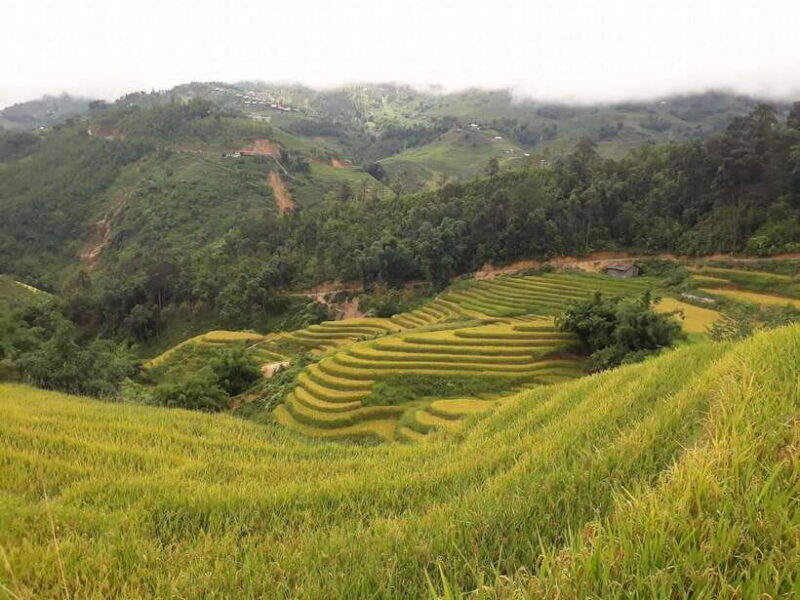
From Lao Chai, the walk continues toward Ta Van Giay and follows the Muong Hoa River. A small suspension bridge lies roughly two kilometers from the settlement. The route’s mix of river, fields and village paths keeps the scenery changing, while the walk itself brings you closer to the geography of the valley than a drive between viewpoints would.
Near Ta Van, the group visits ancient rock carvings depicting figures, stilt houses and decorative patterns. They offer a different kind of stop from the rice terraces: a chance to look closely at marks left in stone and consider how people have recorded images in this place. The available details do not establish the carvings’ age or meaning, so treat them as something to observe rather than expecting a full archaeological account.
The guide’s explanations make a difference here. If you’re curious about the carvings or local customs, ask questions as you go. The group is small enough, with a maximum of 11 participants, for the walk to feel more personal than a large coach excursion, although the exact group size will vary.
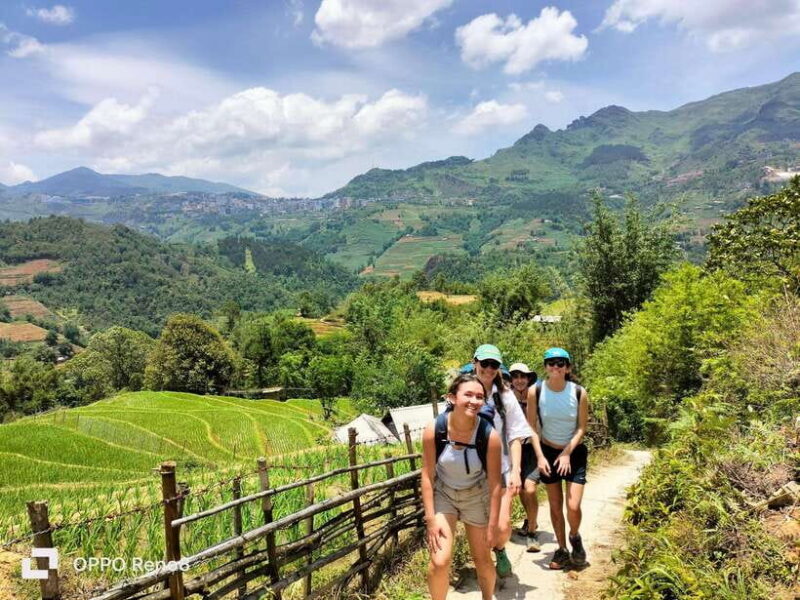
Lunch is served at a local home in the village, making it more than a quick roadside refuel. The meal also divides the trek into manageable sections: one walker described stopping for a drink after roughly two hours, then reaching lunch after another couple of hours. Timing can vary, but plan on being on your feet for much of the morning before sitting down to eat.
The included meal is a useful part of the $23 price, especially alongside the guide, entry tickets, transport and a 500-milliliter bottle of water. Meals described on the route have included rice, vegetables, tofu, eggs and spring rolls, but you should not assume the exact menu will be the same every day. One visitor with a vegan diet was accommodated, so tell the operator about dietary needs when arranging the tour rather than waiting until lunch.
For many people, lunch is also the calmest chance to pause and talk with the guide. It gives the group a break before the afternoon’s bamboo and trail sections. Drinks beyond the included water are not covered, so bring money if you want to buy beverages.
More Great Tours Nearby
After lunch, the route enters a bamboo forest before reaching Giang Ta Chai, a village associated with the Red Dao community. The forest brings a distinct change of scenery, but it can also be one of the most slippery parts of the walk when wet. Roots, mud and uneven ground call for careful footing; this is where worn trainers with smooth soles can become a poor choice.
The guide and local helpers may point out safer steps or offer an arm on difficult stretches. Accepting help can make the route more manageable, but it does not remove the need to watch your footing. One walker reported a mixed day of muddy paths, paved stretches, creek crossings and unstable rocks, so don’t expect a uniform trail.
A short rest by a nearby waterfall offers a pause before the final uphill climb to the main road. The driver waits there to take the group back to Sa Pa. The tour ends at about 3:30 p.m., though the precise timing may shift with conditions and group pace. The uphill finish is worth bearing in mind if you’re already tired by lunch.
At $23 per person, the tour bundles several useful pieces: an English-speaking guide, hotel pickup in central Sa Pa or pickup at the operator’s office, entry tickets, lunch, 500 milliliters of mineral water and transport back to town. For someone with limited time in Sa Pa, that makes the day simple to arrange and gives you a guide through several villages without organizing separate transport and meals.
The value is strongest if you want a guided walk with cultural context and a home lunch. The group cap of 11 also helps keep the outing from feeling like a large tour procession. However, this is a structured tour, and one person felt that arranging a trek directly with a local woman could feel less tourist-oriented and cost less. If direct contact with a local guide is your priority and you have time to make arrangements, that is a reasonable alternative to consider.
Budget for extras. Beverages, personal purchases and soft drinks are excluded. If you choose to buy something from women who assist on muddy sections, bring cash. A French-speaking guide costs an additional $19 per person, payable upon confirmation. For departures from February 14 to 21, 2026, a Lunar New Year surcharge of $30 per person is payable at departure.
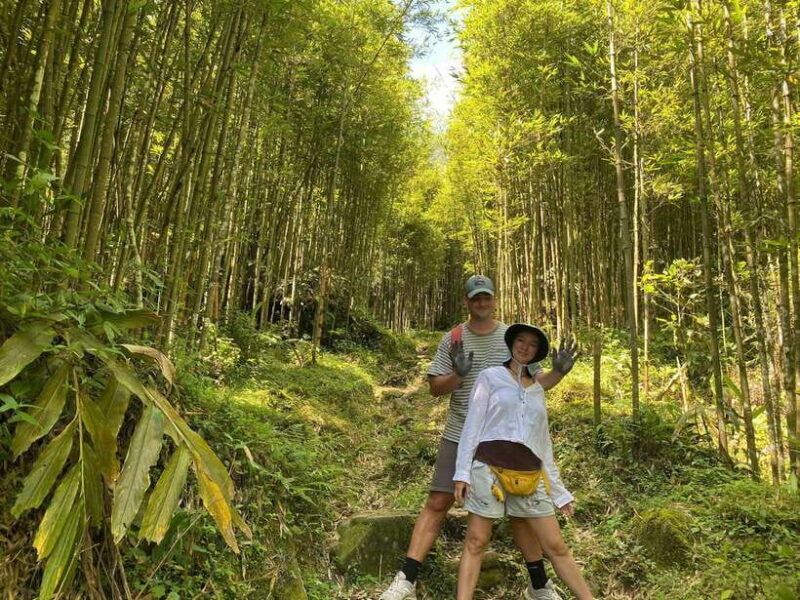
Bring hiking shoes with good grip. The operator recommends hiking shoes, sunglasses, sunscreen and insect repellent; reviews of muddy days make the footwear advice especially important. Trainers may work in dry conditions, but smooth soles are a gamble on steep, wet ground. Don’t wear shoes you need to keep clean. Some mud can be rinsed off at a cleaning point at the end, but you should expect to come back dirty.
The route can be challenging, especially after rain. Walkers have described slipping on muddy slopes, rough ground and wet rocks, and some report needing local help to stay upright. You do not need to assume every day will be difficult, but you should be comfortable walking for hours and handling uneven terrain. This tour is not suitable for people with mobility impairments or children under six.
From October through March, bring warm clothes. Weather can also affect the views: fog may reduce visibility, while rain makes the trail harder. A cloudy day can still be rewarding, but if you have flexibility, choosing a dry forecast gives you a better chance of easier footing and clearer views.

Book this if you want a village-and-valley walk, not just a viewpoint, and you’re interested in rice terraces, local communities, a bamboo forest and lunch in a home. It suits active visitors who have half a day, can manage uneven ground and value a guide who can explain what they’re seeing. The small group and included transport make it a practical choice if you have limited time in Sa Pa.
Think twice if you need an easy walk, dislike mud, or have mobility limitations. In wet weather, the route can be exhausting and slippery, and the stated 10 kilometers may feel longer than the number suggests. For a more comfortable day, check the forecast, pack proper shoes and carry cash for drinks or any small purchase you choose to make.
“Kau was a brilliant guide and we had the best day! They accommodated for my vegan diet, the help through the bamboo forest kept me upright lol and …”
The stated route is about 10 kilometers and the activity lasts six hours. Some walkers have found the day’s route closer to 12.5 kilometers, so allow for a substantial walk.
The group is limited to 11 participants.
Pickup is available from hotels in central Sa Pa or from the Vietnam Nomadtrails office. Pickup from outside the Sa Pa area is not available.
The walk passes through Lao Chai, Ta Van Giay and Giang Ta Chai, associated with Black Hmong and Red Dao communities.
Yes. Lunch at a local home is included. The exact menu may vary, so share dietary requirements with the operator in advance.
Bring hiking shoes with good grip, plus sunglasses, sunscreen and insect repellent. Warm clothes are recommended from October to March.
It can be challenging, particularly in wet weather, when mud and slippery ground make walking harder. A suitable level of fitness is needed.
It is not suitable for children under six or for people with mobility impairments.
It ends at approximately 3:30 p.m.
Beverages, personal purchases and soft drinks are not included. A French-speaking guide costs an extra $19 per person, and a $30-per-person Lunar New Year surcharge applies from February 14 to 21, 2026.
You can check availability for your dates here: