Physical Address
304 North Cardinal St.
Dorchester Center, MA 02124
Physical Address
304 North Cardinal St.
Dorchester Center, MA 02124

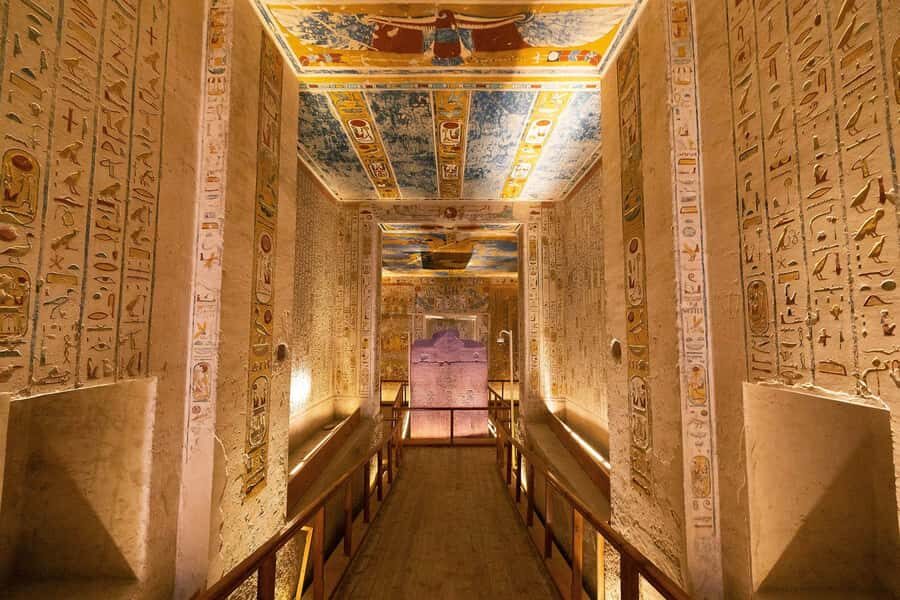
Travel from Hurghada to Luxor for Karnak, the Valley of the Kings, Tutankhamun’s tomb, Hatshepsut’s temple, lunch and a felucca ride.
Luxor packs an extraordinary stretch of ancient Egypt into one day: Karnak’s immense columns, royal tombs in the Valley of the Kings, and Hatshepsut’s temple against the cliffs of Deir el-Bahari. From Hurghada, this tour adds a Nile felucca ride and lunch, making it a full introduction to the city’s great sights.
I especially like the Egyptologist guide, who can connect the temples and tombs to the people and beliefs behind them, and the chance to visit Tutankhamun’s tomb with its separate entry ticket included. The mix of major sites and a traditional boat ride also breaks up what could otherwise be a day of stone walls and coach seats.
The trade-off is time on the road: allow about 15 hours in all, including roughly four and a half hours each way. You’ll cover a lot, but this is not a relaxed, lingering visit to Luxor, and the felucca ride may be brief.
The tour starts with hotel pickup in Hurghada and a roughly four-and-a-half-hour drive to Luxor in an air-conditioned minivan. That is a substantial ride before the sightseeing even begins, so think of this as a full excursion rather than a quick change of scenery.
The drive is part of the practical calculation. You get to visit Luxor without arranging transport, tickets and a guide separately, but you’ll spend about nine hours of the day on the road. Comfort stops have been part of some departures, but I’d still prepare as if you’ll want your own water and a few snacks. One useful tip from a previous departure: roadside stops may have packaged sweets and crisps rather than a proper breakfast.
Small groups and private departures are available. The difference matters here: the sites are extensive, and a smaller party can make it easier to hear the guide and keep moving together. A private option may also suit you if you want more control over your pace, though the precise arrangements depend on the departure you book.
You might also be interested in these Hurghada experiences
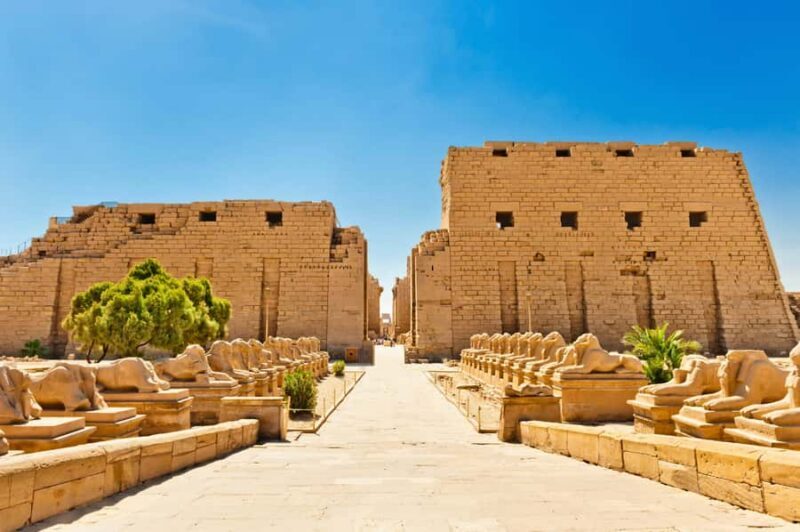
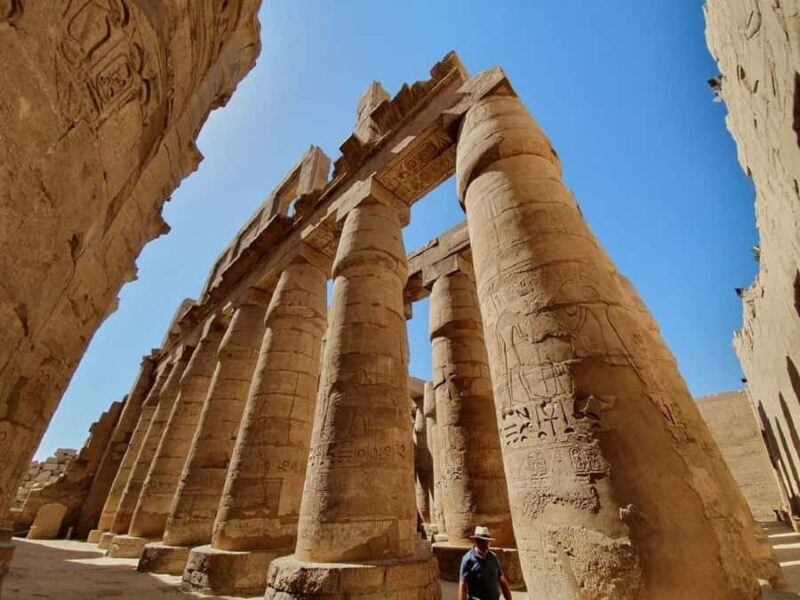
Karnak is the first major stop, with around two hours set aside for a visit, guided explanation, photos and some free time. The complex is dedicated to Amun, his wife Mut and their son Khonsu. Understanding that family grouping helps make sense of the Theban Triad and the religious life that shaped this great temple precinct.
This is a place where a guide adds real value. Karnak is not a single building with one obvious route. It is a vast complex, and the guide can help you notice how its spaces and monuments relate to the gods and rulers associated with them. You’ll have time to look around and take pictures, but two hours is still a brisk visit if you like to pause at every carved detail.
Wear shoes you can walk in comfortably, and bring sunglasses and sunscreen. Shade is not guaranteed across the site, and your day will continue outdoors at other stops. A hat and water are sensible additions, even though they are not on the formal bring list.
After Karnak, the group stops for lunch at a local restaurant. The meal is included, which makes the $150 price easier to judge and saves you from having to plan another stop in a tightly timed day. Some departures have had lunch in a setting by the Nile, but that location is not specified as a guarantee.
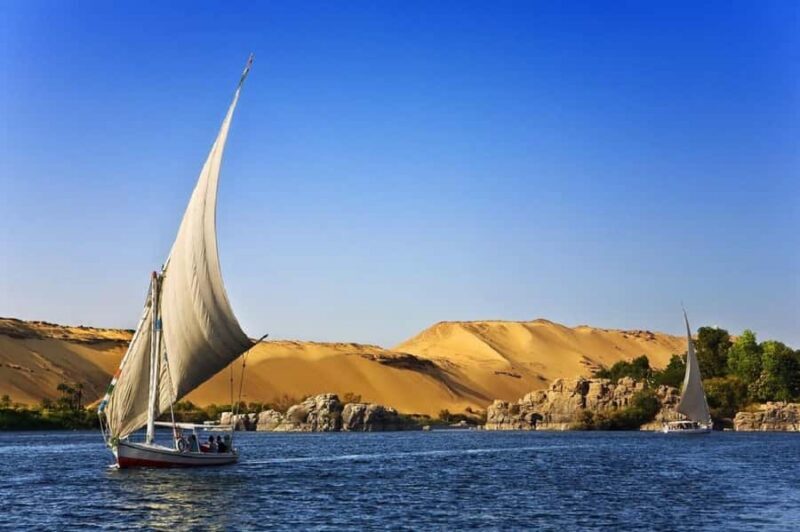
The boat trip is on a felucca, a traditional wooden sailing boat. It gives you a change of pace and a river-level view of the Nile after a morning among the temple walls. The experience can vary: one account describes a short stretch of river, with a motorboat towing the felucca before a brief pause and drift back. Another describes a longer ride. Treat it as a scenic interlude, not a guaranteed extended sailing excursion.
There is also about an hour listed for a break and photos in Luxor. The timing gives you a little breathing room between the major visits, but the day remains tightly scheduled. If you want to browse at length or linger over lunch, keep in mind that the West Bank sites still lie ahead.
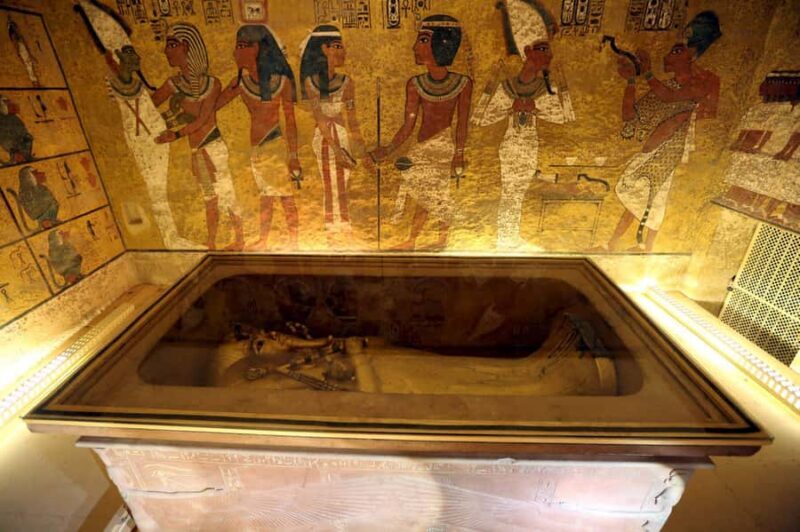
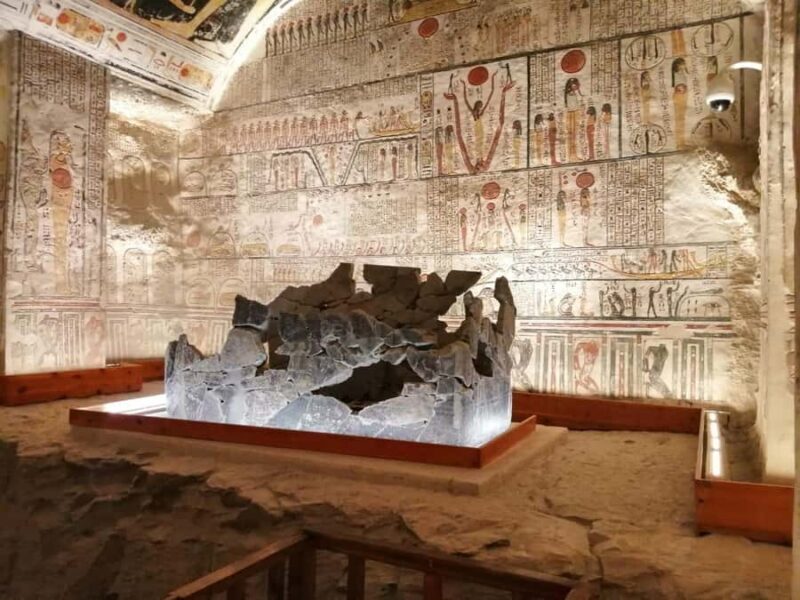
On the West Bank, the tour visits the Valley of the Kings, where you’ll see three tombs, including the Tomb of Tutankhamun. The valley visit is scheduled for about an hour, followed by a separate half-hour for Tut’s tomb. Both the Valley of the Kings entry and the Tutankhamun tomb ticket are included.
Tutankhamun’s tomb is a highlight for many people, but it helps to arrive with realistic expectations. The appeal is not simply its size. It is the chance to enter the burial place of the boy king whose tomb became one of the best-known discoveries in Egyptology. Your guide can give context that helps the visit feel more than a quick stop for a photo.
The tour’s schedule is useful here because the separate half-hour signals that Tut’s tomb is not just an afterthought folded into the general valley visit. Still, the Valley of the Kings contains many tombs, and this trip includes three rather than an open-ended tour of the entire site. If you have a particular tomb in mind, ask your guide what is available on the day. Access and the specific tombs visited are not guaranteed in the details provided.
Expect uneven walking surfaces and sun exposure. Comfortable shoes are especially important at the valley, and an ID card or a copy is listed as required. The tombs are the kind of place where a guide’s explanation can help you look beyond the decorated walls and understand the role of royal burial.
More Great Tours Nearby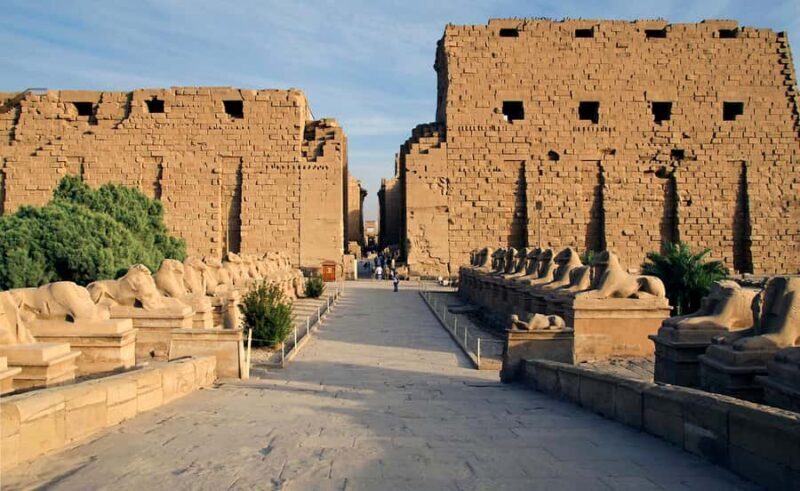
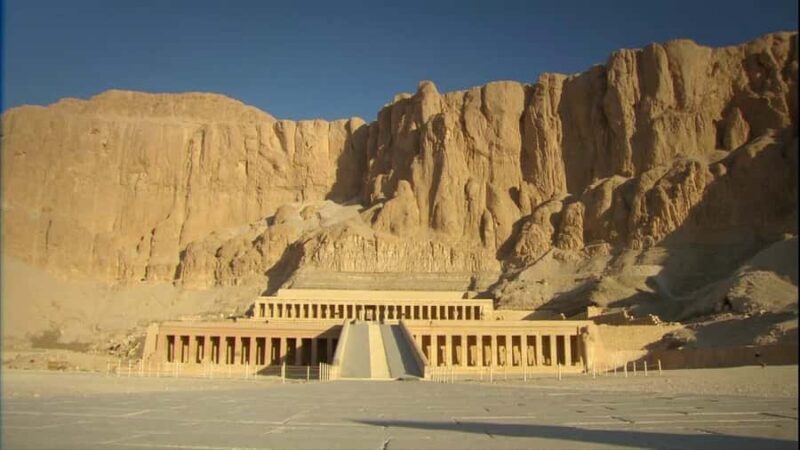
The Mortuary Temple of Queen Hatshepsut is scheduled for about an hour. Its three broad terraces rise from the desert floor toward the cliffs at Deir el-Bahari, creating a striking contrast with the enclosed tombs of the valley. Here, the setting is as much part of the experience as the architecture.
Hatshepsut’s temple also changes the rhythm of the day. After the Valley of the Kings, where attention turns inward to painted chambers and burial spaces, this is an open, monumental site where you can take in the structure against the surrounding rock. Your guide can place the temple in the wider story of the rulers and religious life of ancient Egypt.
One hour gives you time to see the main areas and take photos, but not necessarily to study every detail at leisure. The stops are designed to let you see Luxor’s leading sights in a single day, not to replace a longer stay.
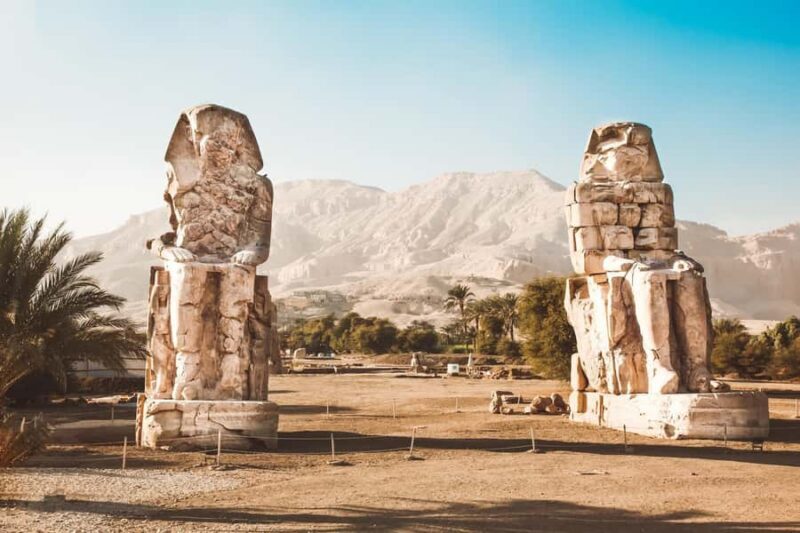
The Colossi of Memnon are scheduled for about half an hour. These two massive statues are associated with the mortuary temple of Amenhotep III, and their scale makes them a memorable roadside pause after the longer temple visits.
This is a brief stop, so think of it as a chance to view the statues, hear some context and take photographs rather than a separate, extended exploration. It is a fitting final monument before the return journey, though by this point you may be feeling the miles and the early start.
At $150 per person, the tour includes round-trip hotel transfers, lunch, an Egyptologist guide and entry tickets for Karnak, the Valley of the Kings, Tutankhamun’s tomb and Hatshepsut’s temple. Those inclusions make the price easier to compare with arranging a private vehicle, guide and site tickets independently. The Colossi of Memnon are part of the visit, though no separate entry ticket is listed for them.
The guided element is especially useful in Luxor. You are seeing several major sites in a short span, and the guide can give each a clear place in the day instead of leaving you to piece together the connections on your own. Guides on different departures have included Adam, Hamdy, Mohamed Alazeb, Ahmed Bahaa and Ahmed Ali Hassan. Assignment varies, so you should not book on the assumption that you’ll have a particular guide.
There are extra pickup charges if your hotel is outside Hurghada. Pickup and drop-off from Makadi Bay, Sahl Hasheesh or El Gouna cost an additional $5 per person; from Safaga or Soma Bay, the extra is $8 per person. A Spanish-speaking guide is available as an add-on. The stated guide languages include Arabic, English, French, German and Spanish, but the included professional Egyptologist guide is specified as English, French or German-speaking.
The tour offers free cancellation up to 24 hours before departure and a reserve-now, pay-later option. It is also described as skip-the-ticket-line, which can save time at the included ticketed sites, though it does not shorten the driving time or the visits themselves.
This is a strong choice if you’re staying in Hurghada and want to see Luxor’s biggest ancient sites without arranging the pieces yourself. It suits first-time visitors who value an expert explanation, want to see both the East and West Bank highlights, and are willing to trade a slow pace for a broad overview.
Families may also find the guided format helpful. One departure accommodated a parent using a walking aid by finding a shaded place to rest, and a guide engaged well with a seven-year-old. That is a useful sign of the value a considerate guide can bring, but it is not a promise of specific accessibility arrangements. If you have mobility needs, contact the operator before booking to discuss what can be accommodated at each site.
This is less suitable if you dislike long drives, need a leisurely pace, or want to spend many hours inside individual tombs and temples. Consider staying in Luxor or choosing a multi-day visit if you want more time at each site. Also, don’t count on the felucca ride being a long sailing trip; its length can differ.
I’d book this tour if you have limited time in Egypt, are based in Hurghada and want a guided day that covers Karnak, the Valley of the Kings, Tutankhamun’s tomb, Hatshepsut’s temple and the Colossi of Memnon. The included tickets, lunch and transport make the $150 fare a practical package, and the guide is central to making such a packed route understandable.
I’d skip it if nine hours of round-trip driving sounds miserable or if your ideal visit means lingering at every monument. Bring comfortable shoes, sunscreen, sunglasses, water and snacks, and start the day prepared for a long one. If that sounds manageable, this is an efficient way to meet Luxor’s headline sights in a single trip.
“Very interesting with some fantastic insights and information. Adam was a fabulous guide and kept it funny all day. Lovely guy thanks Adam.”
The tour lasts about 15 hours, including roughly four and a half hours of driving each way between Hurghada and Luxor.
The tour visits Karnak Temple, the Valley of the Kings, Tutankhamun’s tomb, Hatshepsut’s Mortuary Temple and the Colossi of Memnon.
Yes. Tickets are included for Karnak Temple, the Valley of the Kings, Tutankhamun’s tomb and Hatshepsut’s Temple.
Yes. Lunch at a local restaurant is included.
Yes. The tour includes a felucca ride on the Nile. The length of the ride is not specified.
The listed live guide languages are Arabic, English, French, German and Spanish. A Spanish guide is available as an add-on. The included professional Egyptologist guide is specified as English, French or German-speaking.
Yes. A private group is available.
No. Pickup and drop-off from Makadi Bay, Sahl Hasheesh or El Gouna cost an extra $5 per person. From Safaga or Soma Bay, the extra is $8 per person.
Bring comfortable shoes, sunglasses, sunscreen, comfortable clothes and a passport or ID card. A copy of your ID is accepted. Water and snacks are also useful for the long day.
Yes. You can cancel up to 24 hours in advance for a full refund. The tour also offers a reserve-now, pay-later option.
You can check availability for your dates here: