Physical Address
304 North Cardinal St.
Dorchester Center, MA 02124
Physical Address
304 North Cardinal St.
Dorchester Center, MA 02124

Explore Cu Chi’s quieter Ben Duoc tunnels with a small group, English-speaking guide, wartime snacks, hotel pickup, and an optional shooting range.
The most striking part of the Cu Chi Ben Duoc tour is the chance to squeeze into tunnels built for wartime survival, then see how hidden trapdoors, kitchens, and command spaces fit into a much larger underground network. This is not just a walk past exhibits: you get a physical sense of how cramped and demanding life below ground could be.
I like two things about this trip: Ben Duoc is generally quieter than Ben Dinh, and a small group makes it easier to hear your guide and take your time at the tunnels. Guides including Ken, Tri, and Linda have been praised for clear explanations, humor, and attentive pacing. One consideration: the site is a long drive from Ho Chi Minh City, and the tunnels are dark, low, and tight.
Cu Chi’s tunnels are famous, but the choice of site matters. Ben Dinh is the busier stop; Ben Duoc is described as less touristy, with a larger network and tunnels that have been less altered for foreign visitors. That distinction is useful if you want a quieter visit and a stronger sense of the scale of the underground system.
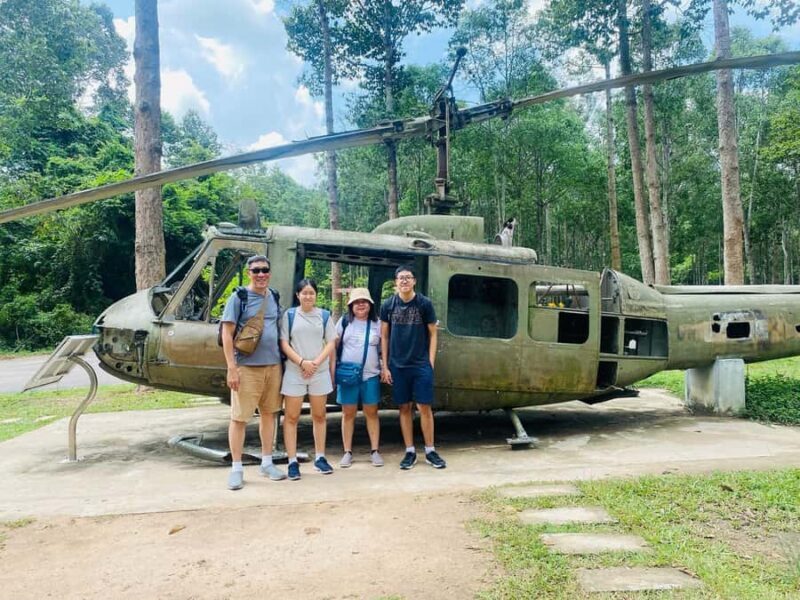
The site was a Viet Cong stronghold during the Vietnam War. Rather than treating the tunnels as a novelty, a good guide connects the tight passageways with the practical work done underground: command activity, food preparation, storage, and medical care. You will see features including camouflaged trapdoors, booby traps, a command center, weapon storage, and a hospital bunker.
The small-group format suits a site where you may want to pause, ask questions, or decide how far into a tunnel you feel comfortable going. Groups have been around a dozen people, though the exact size is not guaranteed. Private groups are also available. Guides named Ken, Tri, and Linda have been praised for clear English, storytelling, humor, and looking after people as they enter and leave the tunnels. You cannot choose a particular guide based on the information provided, but those qualities are worth looking for in whoever leads your trip.
You can check availability for your dates here: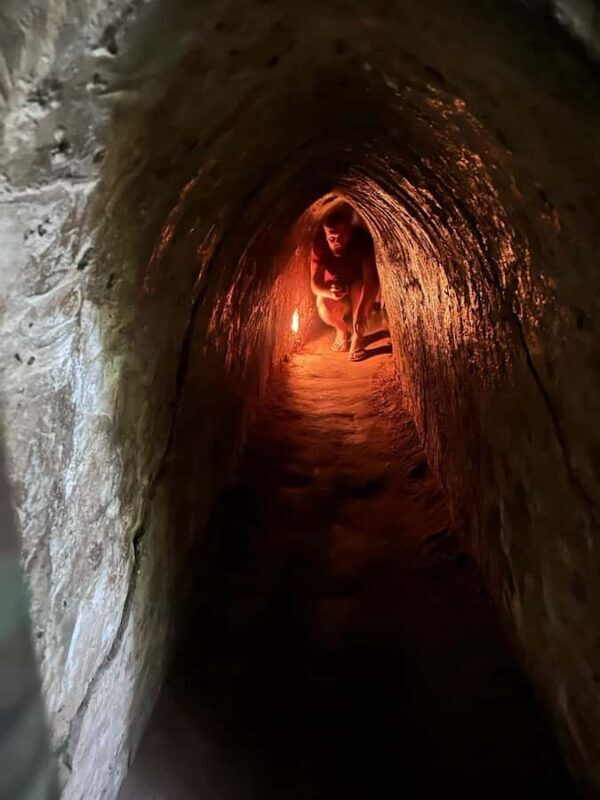
The tour takes seven to eight hours, and a good share of that time is spent in the van. The route includes a roughly 75-minute ride, a 20-minute break in Ho Chi Minh City, another ride of about an hour, and then the return journey, listed at around two hours. Traffic can stretch the ride back, so plan for a full outing rather than a quick excursion.
Pickup is offered at hotels in Districts 1, 3, 4, and 5. For the morning departure, expect the guide and van between 7:30 and 8:00 a.m.; the noon pickup window is 12:00 to 12:30 p.m. The order of hotel pickups is set to make the route work efficiently, so your pickup may not be at the start of the window. If your accommodation is outside the pickup area or is not listed, contact the operator for an alternative meeting point.
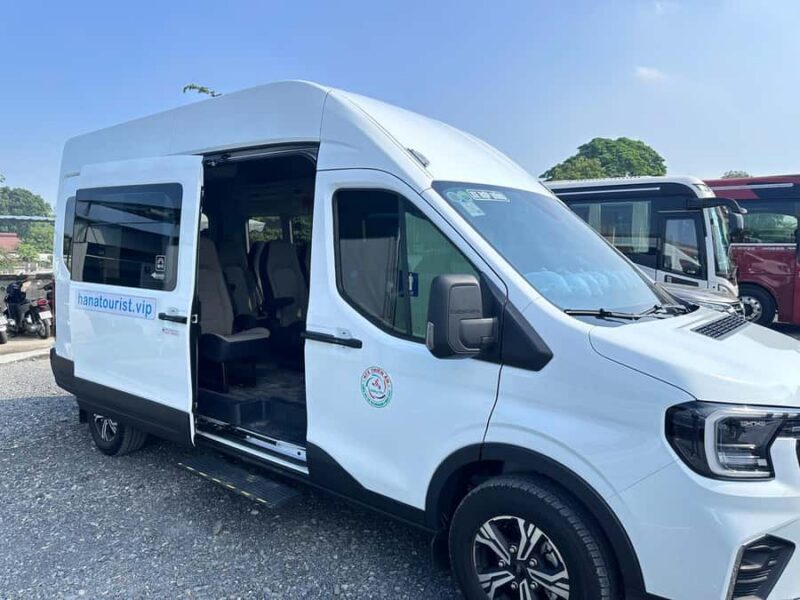
An air-conditioned vehicle, drinking water, and cool tissue are included. The ride is a practical part of the value: you avoid arranging your own transport to a site outside the city, and the guide can begin setting the historical scene along the way. Still, bring cash and consider packing a snack. The included cassava and tea are a taste, not a full meal, and one visitor found the return leg long without extra food.
Looking for more options in Ho Chi Minh City? Here are some other experiences worth considering.
At Ben Duoc, the visit begins with a short documentary about the war. It gives you a basic frame for the site before you walk among the tunnels and structures. The value here is context: without it, a trapdoor or bunker can look like an isolated exhibit rather than part of a system built for concealment and survival.
Your guide then leads the group through the site, explaining what you are seeing and how it was used. This is where the quality of the guiding matters most. Guides such as Ken, Tri, and Linda have been praised for answering questions, explaining the tunnels before people enter, and balancing a serious subject with humor. The jokes can make a long day more relaxed, but the subject calls for respect, too. The strongest guiding keeps the history in view rather than turning the visit into a stunt.
You will walk between features and see examples of the tunnels’ defenses and daily infrastructure. The itinerary includes hidden trapdoors and deadly traps, along with the command center, weapon storage, and hospital bunker. Seeing these elements together gives you a clearer idea of how the underground network supported more than hiding alone.
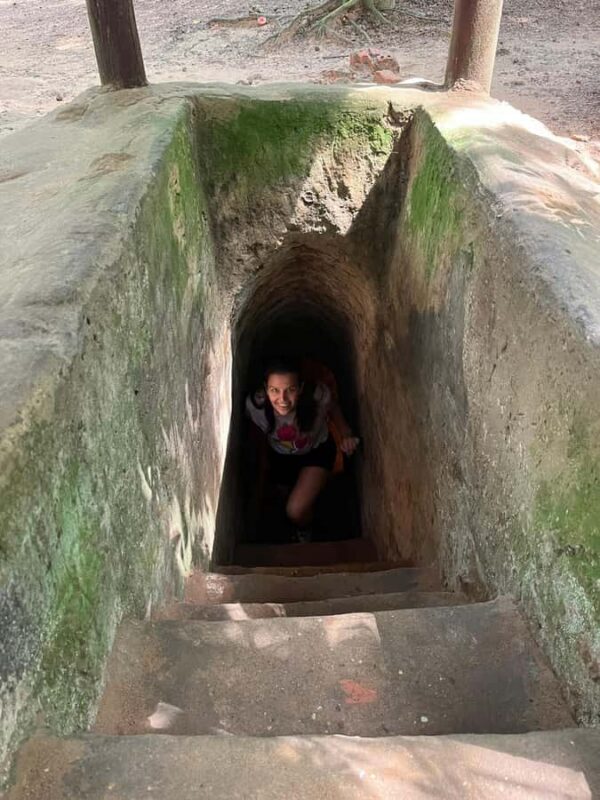
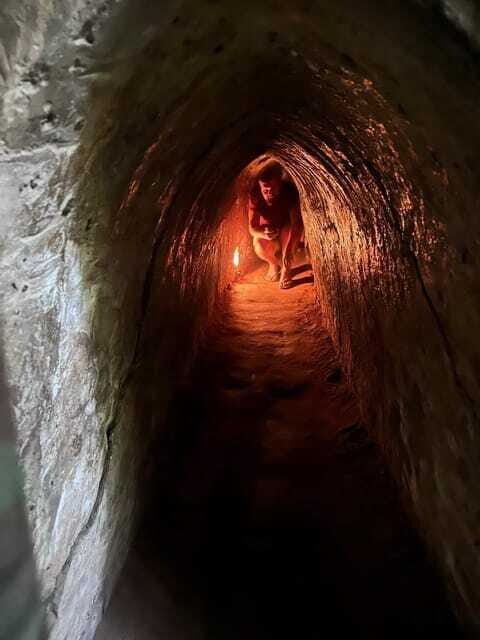
The tunnel crawl is the part you are most likely to remember, and it is also the part to approach honestly. The passages are low, narrow, and dark. You may need to crouch or crawl, and people with back or heart problems are advised not to join this activity. Even if you are generally fit, the close quarters can feel uncomfortable or claustrophobic.
You do not need to prove anything by going farther than you want. A guide explains what to expect before entry, and visitors have appreciated being checked on after emerging. If you are unsure, ask the guide about the tunnel section before you go in, and stop when you have had enough. The point is to understand the conditions, not to turn discomfort into a competition.
Ben Duoc’s less-modified passages help make the experience feel more physical than a museum display. You get a direct impression of how little room there was to move, and why life underground demanded endurance. That sensation is useful historical perspective, but it is not comfortable sightseeing. Wear clothes you do not mind getting dirty, and leave anything that would make crouching or moving through a tight space awkward.
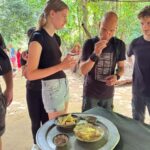
After the tunnel visit, you can try cassava with tea, foods associated with wartime life. It is a modest snack, but it adds a practical detail to the visit: the underground network depended not only on shelter and movement, but also on food and routine. Do not count on this serving as lunch, especially if you tend to get hungry during a long day.
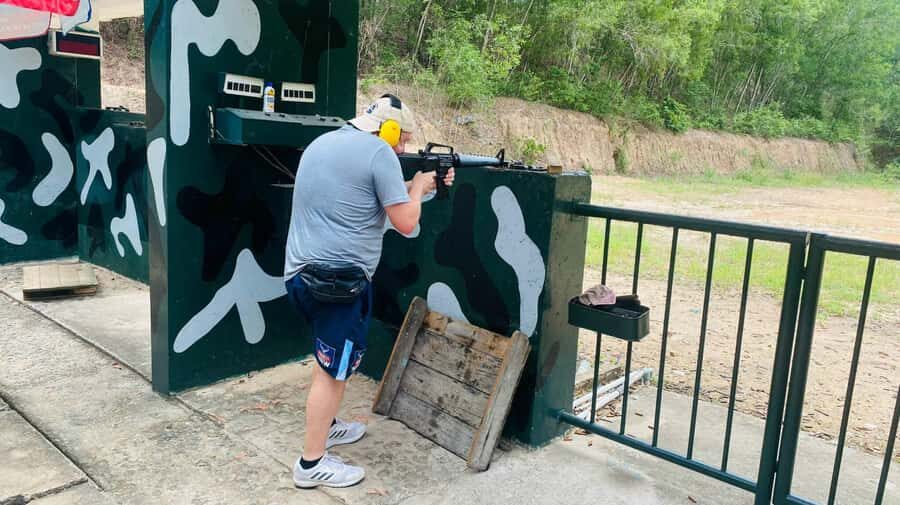
The shooting range is optional and costs extra. The listed firearms include the AK-47 and M16. If you want to try it, set aside additional cash and decide whether it fits the kind of history visit you want. Some people will find the chance compelling; others may prefer to keep the focus on the tunnels and their human history. The fee is not included in the $19 tour price.
More Great Tours Nearby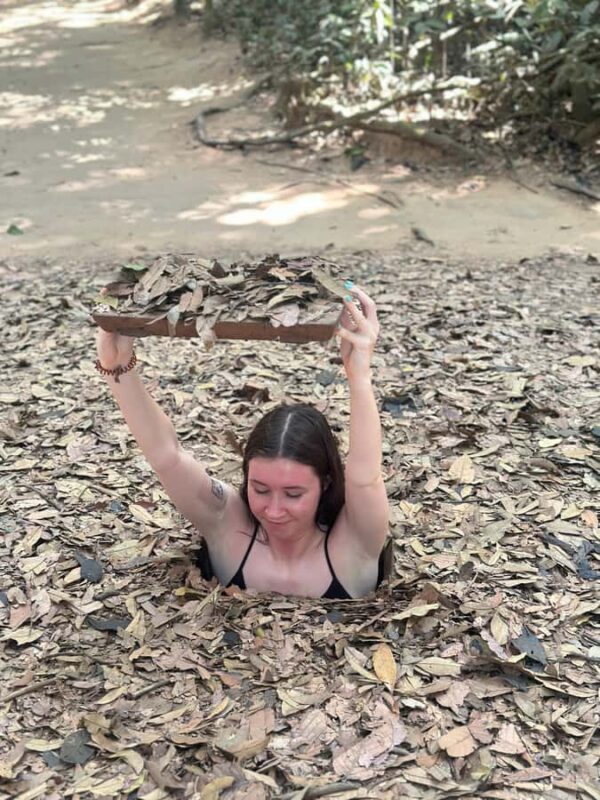
The morning tour picks you up between 7:30 and 8:00 a.m. and usually returns around 2:30 p.m. This timing leaves the later afternoon open and is the only departure that can be combined with the War Remnants Museum option. With that add-on, the group returns to central Saigon around noon, spends about an hour at the museum, and finishes around 4:00 p.m. You explore the museum independently, with an audio guide available at extra cost.
The noon tour picks you up between 12:00 and 12:30 p.m. and typically returns around 7:00 p.m. It can work well if you want an unhurried morning in the city, but you will spend the afternoon and early evening away. The ride home may take longer in Ho Chi Minh City traffic, so avoid making a tight evening commitment.
The museum pairing gives the day more historical range, but it also makes for a longer outing. If you want time to read displays and watch videos at the museum, an hour may feel brief. Choose the tunnel-only trip if you prefer a simpler schedule, or add the museum if you want another perspective on the war and accept a more packed day.
At $19 per person, the tour includes hotel pickup and drop-off in selected districts, an air-conditioned vehicle, an English-speaking guide, the entrance fee, drinking water, and cool tissue. The main extra cost identified is the shooting range. That is strong practical value if you would otherwise need to arrange transport and site entry yourself.
The bigger question is how you value time. The round trip takes several hours, while the visit at the site is listed at about 105 minutes. For some people, that balance is worthwhile because Ben Duoc is harder to reach independently and the guide adds historical context. Others may feel the drive is long for the time on site, particularly if traffic slows the return.
A small group can improve the experience without making the tour private. You have more chance to hear the explanations and move through the tunnels without a large bus group converging at every stop. The tour has a 4.7 rating from 1,160 reviews, and the most consistently praised elements are guide quality, smooth pickup, good pacing, and the less crowded site. These are useful strengths, though the actual guide and traffic conditions can vary.
Wear comfortable clothes that can get dirty. Bring insect repellent, a camera, and cash for optional purchases or the shooting range. Drinking water is included, but staying comfortable in heat and on a long day is easier if you plan ahead.
The site is not suitable for people with back problems or heart problems. If you have concerns about bending, crawling, or being in a confined space, think carefully before booking. The tunnels are a central part of the experience, not a minor side activity you can ignore without changing the nature of the visit.
Cancellation is free up to 24 hours in advance, and the booking option allows you to reserve without paying immediately. These terms offer flexibility, but check the selected departure and pickup details when booking. Pickup is limited to Districts 1, 3, 4, and 5 unless the operator arranges another meeting point.
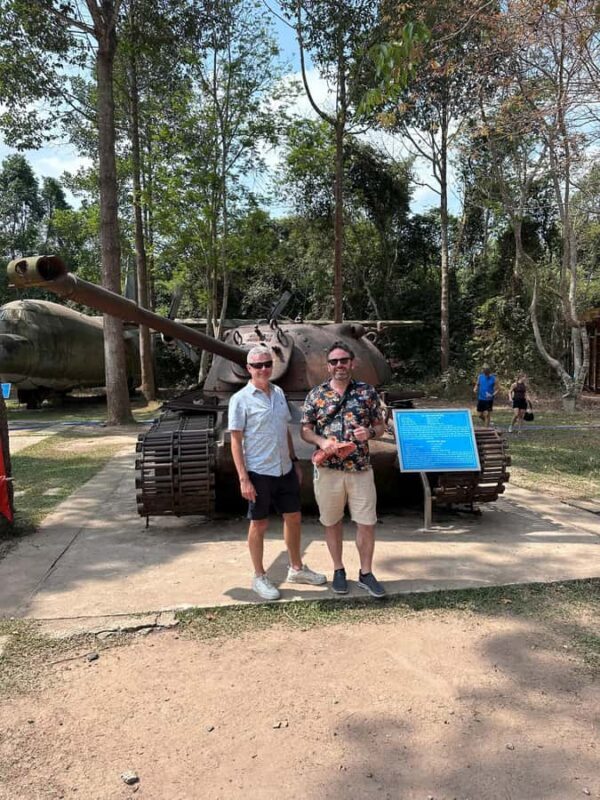
Book this trip if you want a guided, physical introduction to the Cu Chi tunnels and prefer a quieter site over the busier Ben Dinh. It is especially well suited to history-minded visitors who want to see traps, bunkers, and tunnels while hearing how the network worked. The guides’ clear explanations and lively storytelling are a major part of what makes the long drive worthwhile.
Skip it, or choose a less physical way to learn about the war, if tight spaces are a serious concern or if you have back or heart problems. Also think twice if you want a short outing: transport takes up a substantial part of the day. For most people drawn to this chapter of Vietnam’s history, though, Ben Duoc offers a thoughtful balance of explanation and firsthand experience, at a modest price.
“It was very interesting and cool. Our guide Tri was very nice aswell!”
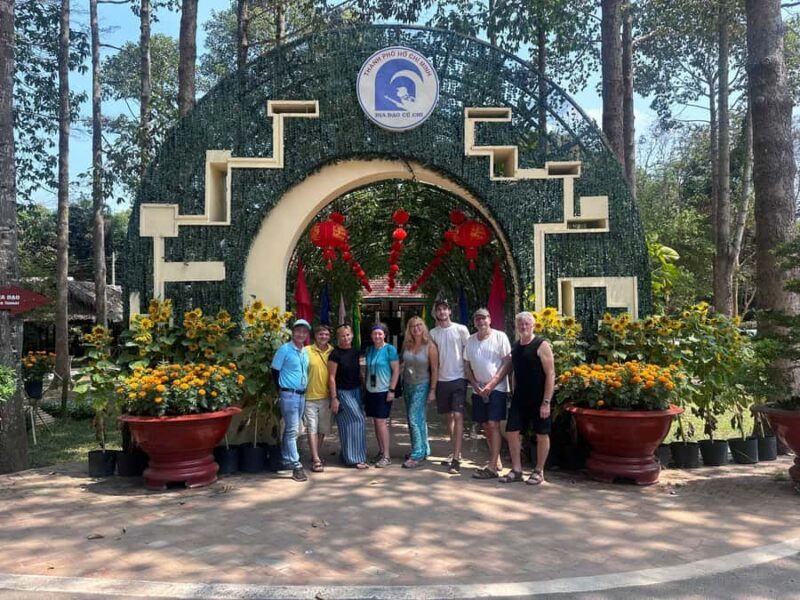
Plan for seven to eight hours. The morning trip usually finishes around 2:30 p.m., while the noon trip typically ends around 7:00 p.m.
For the morning departure, pickup is between 7:30 and 8:00 a.m. For the noon departure, pickup is between 12:00 and 12:30 p.m.
Pickup and drop-off are available in Districts 1, 3, 4, and 5. If your hotel is outside these areas or is not listed, contact the operator to arrange an alternative meeting point.
The price includes hotel pickup and drop-off in selected districts, an English-speaking guide, an air-conditioned vehicle, the entrance fee, drinking water, and cool tissue.
No. The shooting range costs extra. The available options listed are the AK-47 and M16.
The visit includes a short war documentary, tunnel passages, camouflaged trapdoors, traps, a command center, weapon storage, and a hospital bunker. You can also try cassava with tea.
The passages are narrow, low, and dark, and you may need to crouch or crawl. The activity is not suitable for people with back or heart problems.
Yes, as an optional add-on for the morning trip only. You will have about an hour to explore independently, and the combined outing usually finishes around 4:00 p.m.
Yes. You can cancel up to 24 hours in advance for a full refund.
You can check availability for your dates here: