Physical Address
304 North Cardinal St.
Dorchester Center, MA 02124
Physical Address
304 North Cardinal St.
Dorchester Center, MA 02124

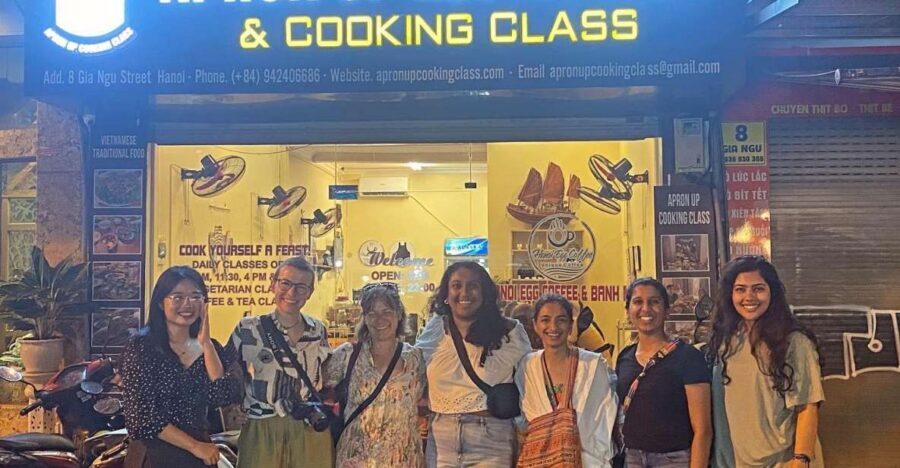
Shop a Hanoi wet market, cook five local dishes with an English-speaking chef, then sit down to eat your work in this practical 3.5-hour class.
Hanoi’s food makes more sense when you see what goes into it. This 3.5-hour cooking class starts at a local wet market, where your instructor shops for fresh ingredients, then moves into a hands-on lesson and a meal of five dishes you helped prepare. It’s a tasty way to learn a few useful kitchen skills, not just collect another restaurant meal.
I like two things in particular: the market visit connects the recipes to everyday food shopping, and the two set menus let you choose a good mix of Hanoi favorites, including pho, bun cha, spring rolls, and egg coffee. The recipes come with a cookbook, so you can try them again at home.
One consideration: this is a full, active class, not a quick tasting. The market visit and cooking require time on your feet, and the experience is not suitable for wheelchair users or people with mobility impairments. You’ll also need to choose between the two menus, unless you book both classes.
Meet your English-speaking instructor at Apron Up Cooking Class in Hanoi’s Old Quarter. Look for the large Apron Up sign outside the venue. From there, the group heads to a nearby wet market to buy ingredients for the session.
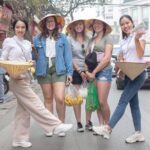
This first stop gives the class its local footing. Rather than starting with a recipe sheet and a pile of pre-measured food, you see your instructor select and purchase fresh ingredients. You can ask how to judge freshness and learn the names of ingredients you’ll later use in the kitchen. One instructor, Winnie, has been praised for explaining what to look for at the market, while other named instructors, including Vy and Bella, have also led classes.
The market portion is a visit, not a separate shopping excursion. You are there with the class to gather ingredients, so expect a practical introduction rather than a long, free-roaming tour. If you’re especially interested in food shopping, use the time to ask questions about what is going into your dishes and how you might find similar ingredients at home.
The visit also helps you understand the role of preparation in Vietnamese cooking. Fresh herbs, vegetables, noodles, and other ingredients are not just background details; they shape the dishes you’ll make. Seeing the shopping before the cooking makes the lesson feel connected to the food culture around you.
You can check availability for your dates here: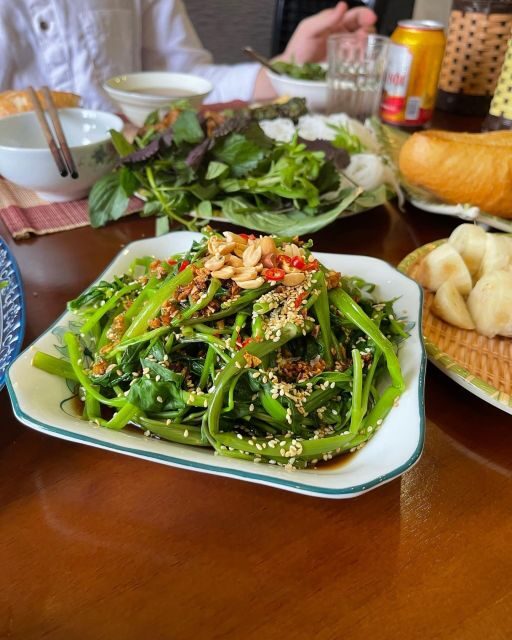
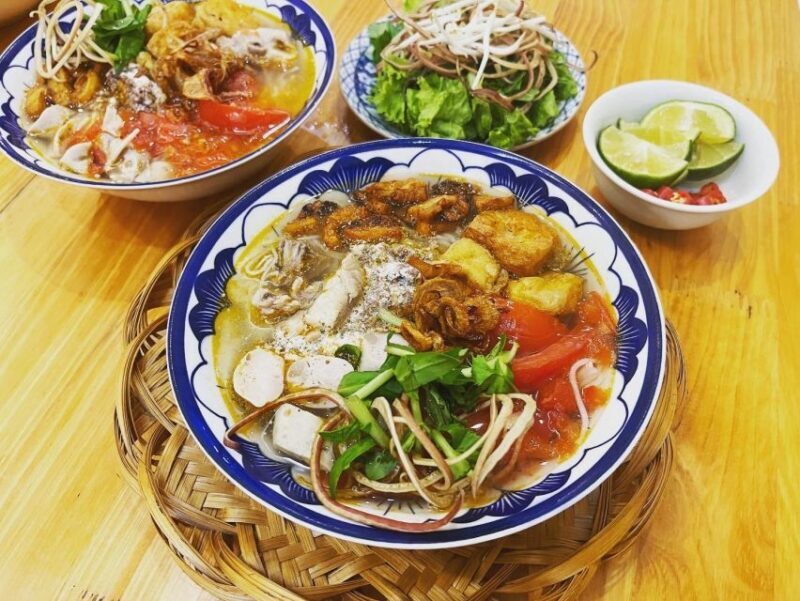
You choose between two set menus. One includes banh xeo pancakes, bun cha with grilled pork and noodles, pork rib noodle soup, beef fresh rolls, chicken salad, and banana ice cream. The other includes pho, bun cha, fried spring rolls, papaya salad, and egg coffee.
That’s a generous range for a single class, and the menus offer different ways into Hanoi cooking. One brings together pancakes, noodles, rolls, salad, and a sweet finish. The other pairs iconic noodle dishes and fried rolls with papaya salad and egg coffee. You won’t make every dish listed across both menus in one session: each class follows one set menu, and you can take both classes if you want to learn the full selection.
The choice matters, especially if you have a particular dish in mind. Check the menu when booking, and don’t assume every class includes pho or egg coffee. If you are vegetarian, the menus can be adapted. The class has catered for vegetarian diners with vegetable versions across the meal, but it’s sensible to make your dietary needs clear when arranging your place.
Shoppers can discover Hanoi's markets and boutiques through these guided experiences
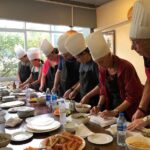
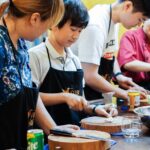
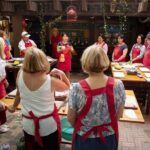
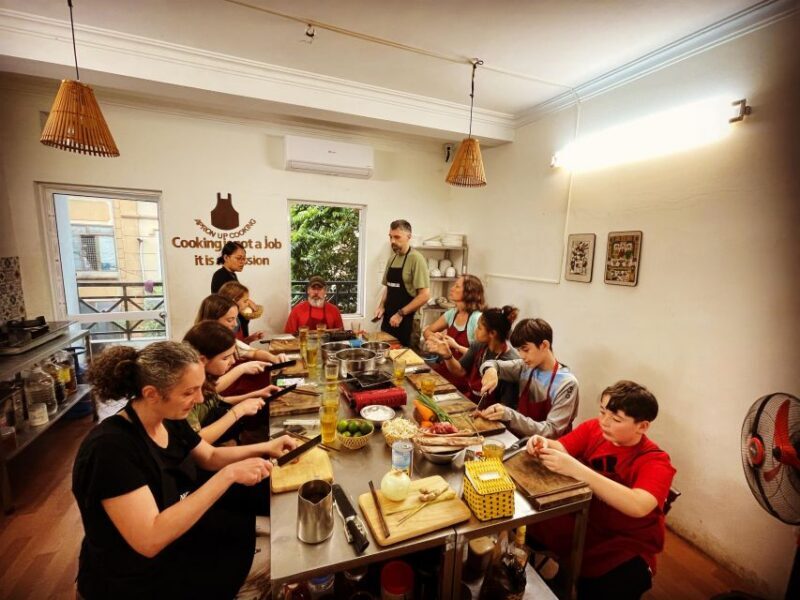
Once the ingredients are ready, your instructor guides you through the dishes step by step. You are not simply watching a chef work: the class is designed for you to roll up your sleeves and take part. Instructors such as Ruby have been praised for giving clear instructions and repeating a demonstration when needed, while Vy has been noted for helping people with different levels of cooking experience join in.
That makes this a good fit if you’re new to cooking. You don’t need to arrive with knife skills or a confident hand at the stove. The point is to follow the process, learn how the ingredients work together, and pick up techniques you can reuse. Ask questions as you go, especially about flavors and substitutions you might need when cooking at home.
The pace appears designed to keep everyone involved across several dishes. That’s an advantage if you enjoy a lively group activity, and the teamwork can make the meal feel earned. It may be less appealing if you prefer a quiet, one-to-one lesson or want to focus on just a single recipe. Class size is not specified, and the experience can sometimes be more intimate if few people book the same session. One participant described having a solo class with instructor Kim, who adjusted the lesson to their pace, but you should not count on a private session.
The instructors are a central part of the experience. Past classes have been led by Vy, Winnie, Bella, Ruby, Kim, and others. Their teaching style is described as patient and engaging, with attention to clear demonstrations and getting everyone involved. Since you may not know your instructor in advance, treat those names as examples rather than a promise of who will teach your class.
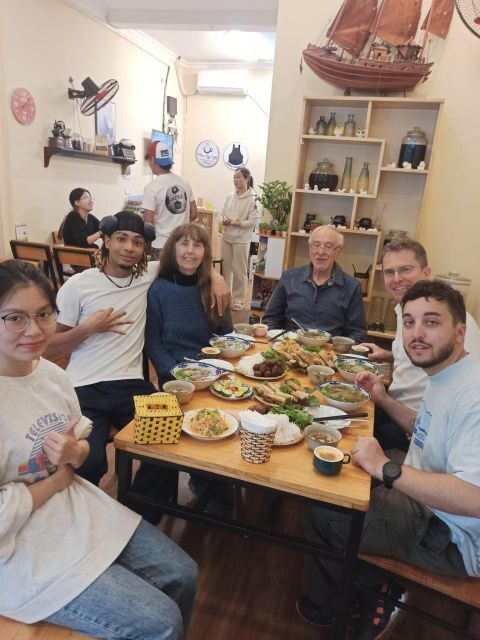
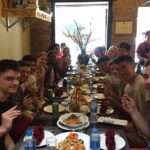
After the cooking, you sit down for lunch or dinner and eat the dishes you’ve prepared. This is the payoff, but it is also part of the lesson. You can taste how the ingredients and techniques come together, and you get to share the meal with the people who cooked beside you.
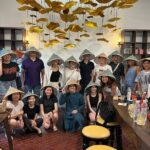
The shared table adds a social element that a market tour or restaurant meal alone can’t provide. You have been working on the same dishes, so conversation comes naturally. If you’re traveling solo, or simply enjoy meeting people over food, this can be a pleasant way to spend an evening or midday break.
Tea, homemade rice whisky, and seasonal fruit are included as well. The rice whisky is a small taste, not the main event, and the fruit rounds out the meal. Don’t expect a separate tasting session or a large drinks selection: the focus is the cooking and the food you make.
At $40 per person, the price covers the market trip, an English-speaking instructor, ingredients and cooking tools, the hands-on class, lunch or dinner, tea, rice whisky, fruit, a cookbook, and a certificate. For a 3.5-hour activity that combines a market visit, instruction, and a substantial meal, that’s a solid package if you value participation more than a polished demonstration.
The cookbook is especially useful. The class moves through several dishes, and it’s difficult to remember every quantity and step after one session. A take-home set of recipes gives you a practical way to revisit the meal and attempt the dishes in your own kitchen. The certificate is a cheerful memento; the recipe book is the more useful souvenir.
Transportation is not included. You meet at Apron Up and return there at the end, so plan your own way to and from the Old Quarter meeting point. The tour lasts 3.5 hours, and starting times vary, so check availability before planning the rest of your day around it.
Booking flexibility is helpful if your Hanoi plans are still shifting: you can reserve now and pay later, and cancellation is free up to 24 hours in advance. The activity is not suitable for children under four, people over 95, wheelchair users, or people with mobility impairments. The market visit and cooking format make those limitations worth checking before you book.
More Great Tours Nearby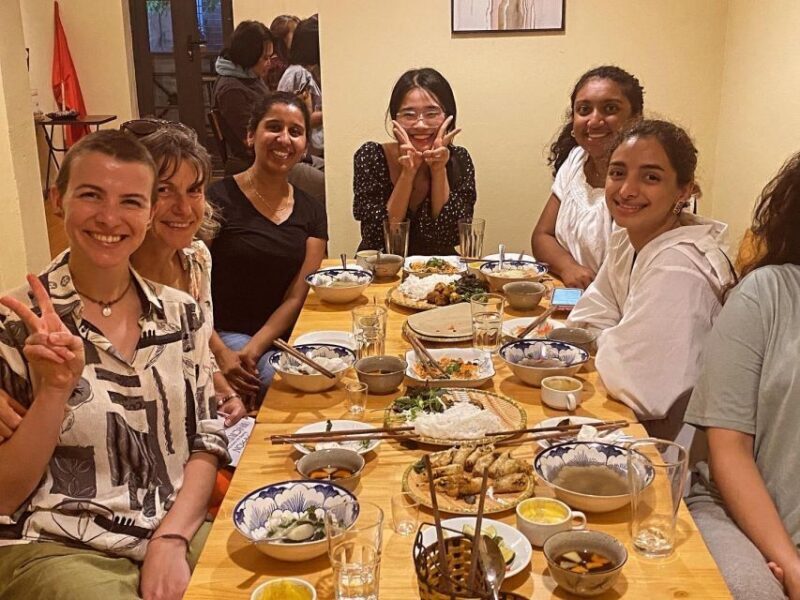
This is a strong choice if you want to understand Vietnamese food by making it, rather than only ordering it. It suits curious eaters, beginner cooks, couples, friends, solo visitors who like group activities, and families with older children. One parent brought a 13-year-old, who joined in and learned about the ingredients, though the stated age restriction means children under four cannot take part.
Vegetarians should not rule it out. The menus can be adapted, and the class has offered vegetable versions of dishes across the meal. Still, the menu itself includes meat and fish-based possibilities, so tell the provider about your needs rather than assuming every recipe will suit you unchanged.
You might prefer a different activity if you have limited time, don’t enjoy group cooking, or are mainly looking for a market tour. The market visit is one part of a wider cooking class, and most of the experience is devoted to preparing and eating the menu. If your priority is to learn a few recipes in a friendly setting and enjoy a meal you helped make, the format makes good sense.
You might also be interested in these Hanoi experiences
I’d book this if you want more than a meal out and have three and a half hours to spare. The combination of market shopping, guided cooking, and a shared meal gives you a useful glimpse of how local dishes come together, while the recipe book helps the experience last beyond your stay.
Before booking, choose the menu that matches the dishes you most want to learn, confirm any vegetarian needs, and factor in the walk and standing involved. At $40, the class offers good value for someone who wants active instruction and dinner or lunch in one outing. If you’d rather simply eat Hanoi food without spending time cooking, save your money for another meal.
“It was the best thing we did in Hanoi. We booked for a group class but since that particular day there weren’t any other bookings we got a sessio…”
The activity lasts 3.5 hours. Starting times vary, so check availability for the date you want.
Meet at Apron Up Cooking Class in Hanoi’s Old Quarter. Look for the large Apron Up sign outside the venue.
Yes. You visit a local wet market with your instructor to buy fresh ingredients for the dishes.
You take part in making five dishes from one of two set menus.
Yes. The menus can be adapted for vegetarian diets. Tell the provider about your needs when arranging your place.
Yes. You sit down to eat the dishes you prepared, and the activity includes lunch or dinner.
The price includes an English-speaking instructor, market trip, ingredients and tools, tea, rice whisky, seasonal fruit, a cookbook, and a certificate.
No. Transportation is not included. The activity ends back at the Apron Up meeting point.
You can check availability for your dates here: