Physical Address
304 North Cardinal St.
Dorchester Center, MA 02124
Physical Address
304 North Cardinal St.
Dorchester Center, MA 02124

Visit Monet’s house and gardens in Giverny with a licensed guide, skip the ticket queue, and see the water lily pond and Japanese bridge.
Monet’s Giverny gardens make more sense when you see them through an artist’s eyes. On this two-hour tour, a licensed local guide leads you from the water lily pond and Japanese bridge to the Clos Normand, then into Monet’s house, explaining how the garden’s plants, colors, and design fed his painting.
I like two things in particular: the separate entrance, which saves time at a busy site, and the small group of no more than 10, which makes it easier to ask questions. Guides such as Brigitte are especially good at linking the flowers to Monet’s use of color and light.
The main consideration is the pace: two hours gives you a guided visit, not an unhurried day in Giverny. You can stay in the gardens afterward, but you’ll need to plan extra time if you want to linger, visit the gift shop, or explore the village.
The appeal of Monet’s home is not just that it belonged to a famous painter. The gardens were part of his working life and artistic vision. A guided walk helps you connect what you see in the flower beds, pond, and bridge with the colors and subjects that appear in his paintings.
That connection is the strongest reason to book a guide rather than simply walk through on your own. You’ll hear about Monet’s life, the development of the gardens, and his approach to light and color. Guides such as Brigitte have also used images of paintings and explanations of color theory to show how the gardens relate to his art. Those details can turn a pretty stroll into a visit with a clearer story.
The tour is based at Fondation Monet in Giverny, in Normandy. It lasts two hours and is led by a licensed local guide. The garden is open to visitors from early spring until the first days of November, when flowers and seasonal color make the grounds part of the attraction.
You can check availability for your dates here: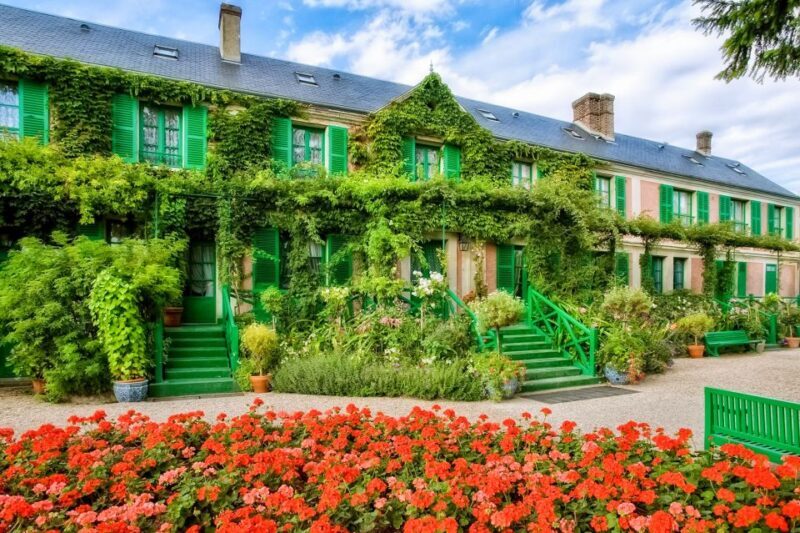
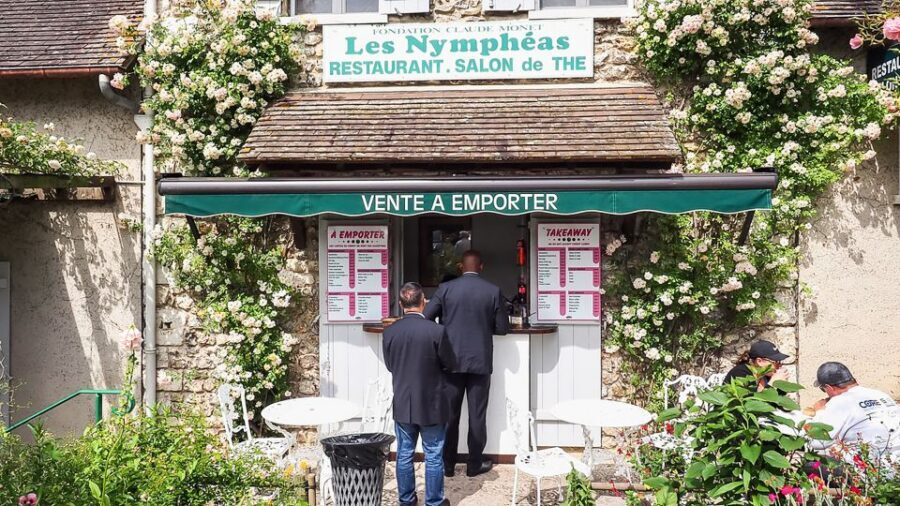
The meeting point is outside Les Nymphéas café and restaurant, the closest café to Monet’s house. Look for your guide with a blue badge and a green folder marked written guided tour. The guide has your prepaid tickets and takes the group to the entrance.
This meeting detail matters. The café is close to the house, but you should still allow enough time to find it and identify your guide before the start. The tour is small, with a maximum of 10 participants, so it is worth arriving ready to join the group rather than expecting to find it once you are inside.
The tour is offered in French or English, with one language used per tour. If you need a particular language, check that the departure you choose is the right one. The experience is listed as wheelchair accessible, though the supplied details do not describe specific routes or facilities.
If you prefer having a local expert, these guided Giverny experiences could work well
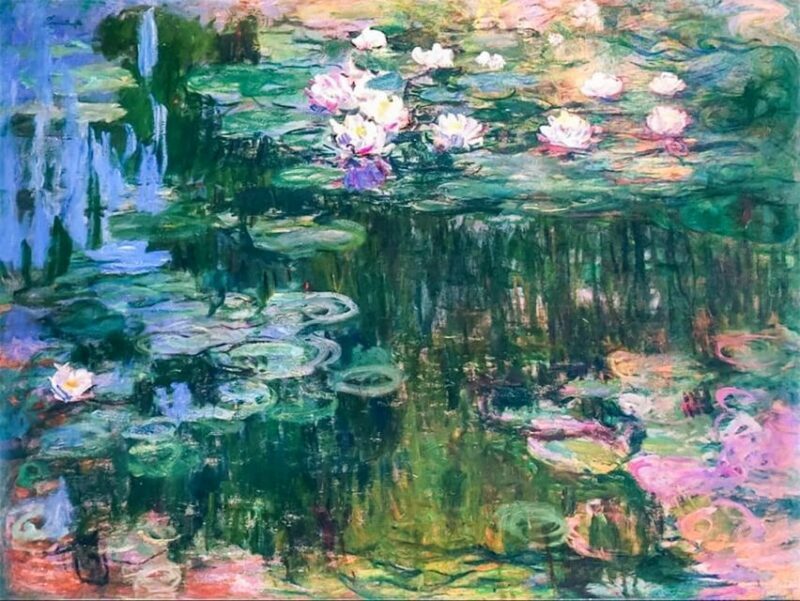
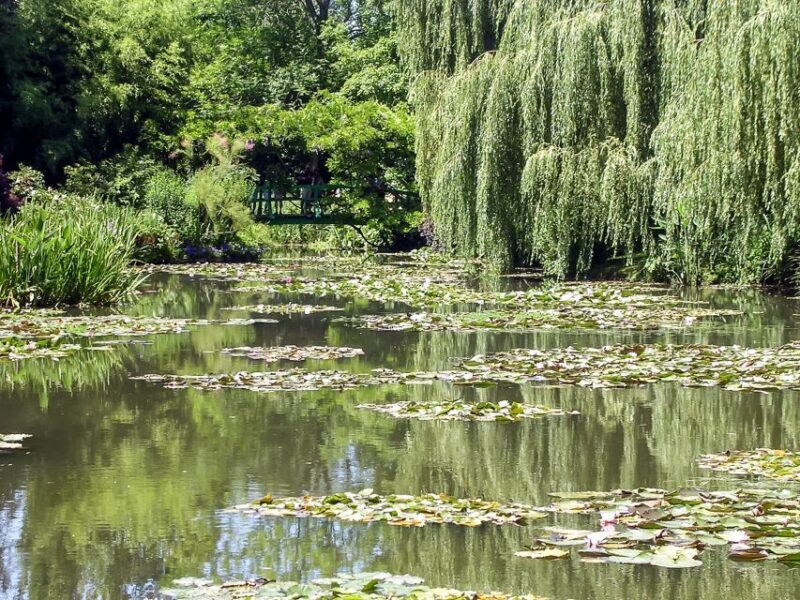
The visit begins in the water garden, the part of Giverny many people most want to see. Here, Monet’s water lilies and Japanese bridge bring familiar painted scenes into view. Seeing the actual pond and its setting helps explain why this garden became such a lasting source of inspiration.
Your guide points out features of the garden and explains how its plants relate to Monet’s paintings. This is a good place to ask questions: what is growing, how the garden is arranged, or how Monet used color and light. Guides have also shared comparisons between the garden and his works, helping you look beyond the obvious photo spots.
There is time for pictures, but this is still a guided visit through a popular site. Keep close enough to hear the guide and be ready to move with the group. Headphones are not specified as part of the tour, so if the garden is crowded, staying nearby is sensible.
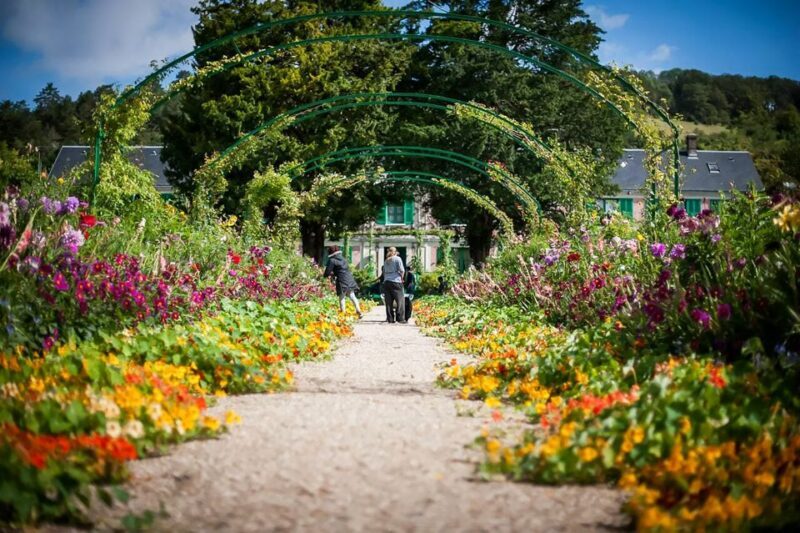
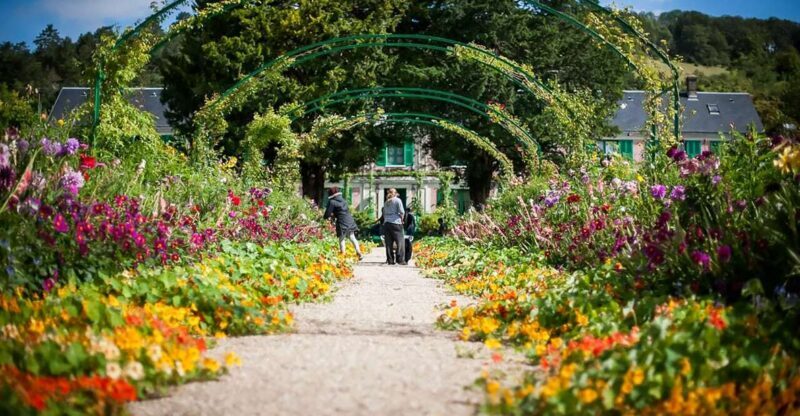
After the water garden, the tour continues to the Clos Normand, the flower garden in front of Monet’s house. The mood changes here. Instead of the pond and bridge, the focus is on the plants, flower species, and the way Monet arranged color across the beds.
A guide can point out details you might otherwise pass by, and explain how the plants and garden design relate to Monet’s work. The gardens are at their most colorful from early spring through the first days of November, but the exact display changes with the season. A visit in September, for example, may feel different from one in spring or midsummer. The tour information does not promise particular flowers on a given date, so go for the overall garden and its connection to Monet, not a specific bloom.
This is also where the small group can pay off. With no more than 10 people, there is room to ask questions and take in the guide’s explanations without being part of a large tour. The garden is beautiful on its own, but the commentary gives you a reason to look more closely.
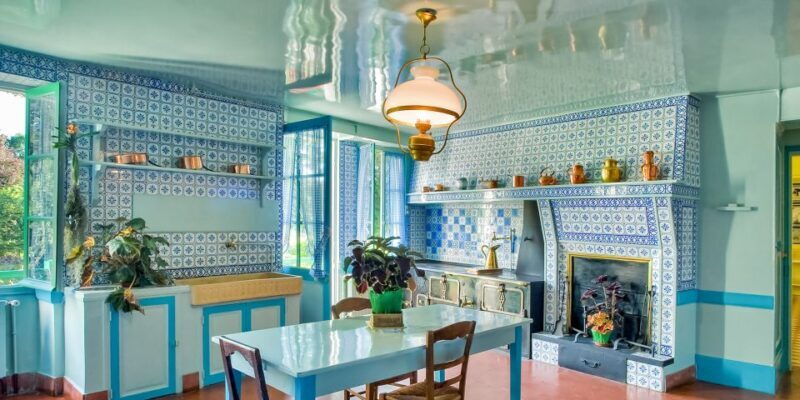
The tour also includes Monet’s house. Here, the guide brings the garden visit back to the painter’s daily life, his family, and the home where he lived and worked. The house is a chance to see a more personal side of the story, rather than treating Giverny as only a collection of famous garden views.
The guide’s role is particularly useful because the house and garden are closely linked in this visit. You can hear how Monet’s home life, interests, and artistic work came together in Giverny. The supplied details do not specify which rooms are included or how long the group spends inside, so expect a guided visit rather than a detailed room-by-room schedule.
The tour keeps moving through both grounds and house, which helps fit the main sights into two hours. If you want to pause at length in a particular spot, you can return to it after the guided portion.
More Great Tours NearbyTwo hours is enough for a guided look at the water garden, Clos Normand, and house, with commentary tying the visit together. It is a good fit if you want the essentials and the story behind them, especially if you are making Giverny part of a fuller day in Normandy.
It is not the same as having two hours entirely to yourself. The guide sets the route and pace, and you’ll need to follow the group. The useful compromise is that you can stay longer after the tour, stroll on your own, or visit the large gift shop before leaving. Build that extra time into your plans if photography or a slow return through the gardens matters to you.
The tour does not include food or drinks. Les Nymphéas is at the meeting point, but the supplied information does not include a meal or refreshments as part of the experience.
At $69 per person, this is more than an entry ticket, but it includes both skip-the-ticket-line entry and a licensed guide. The guide is the part that adds most value: you get historical and artistic context while seeing the gardens, rather than having to piece the story together as you go.
The separate entrance can also be worthwhile when queues are long. It does not make the site private or empty, but it reduces the time spent waiting to enter. The group limit of 10 is another practical benefit, since it makes questions and conversation easier than they would be in a large group.
The price may feel high if you mainly want free time for photographs or already know Monet’s life and work well. If you are curious about how the garden connects to his art, or want a guide to identify plants and explain the house, the extra cost is easier to justify.
I’d choose this tour if you want more than a quick walk around Monet’s property. It suits art lovers, garden enthusiasts, and anyone who wants a guide to explain how the pond, bridge, flower beds, and house fit into Monet’s life and painting.
It is also a practical choice if you have limited time in Giverny and would rather have the entry and main sights handled as one guided visit. The small group and two-hour duration keep the experience focused, while the option to stay afterward leaves room to revisit a favorite spot.
You might prefer to visit independently if you want complete control over your pace and do not need the commentary. But for a first visit, the guide’s explanations can make the gardens far more than a series of lovely views.
“Brigitte was a most excellent tour guide. She provided us with an extensive history of Monet, his life, family, the grounds, individual species of …”
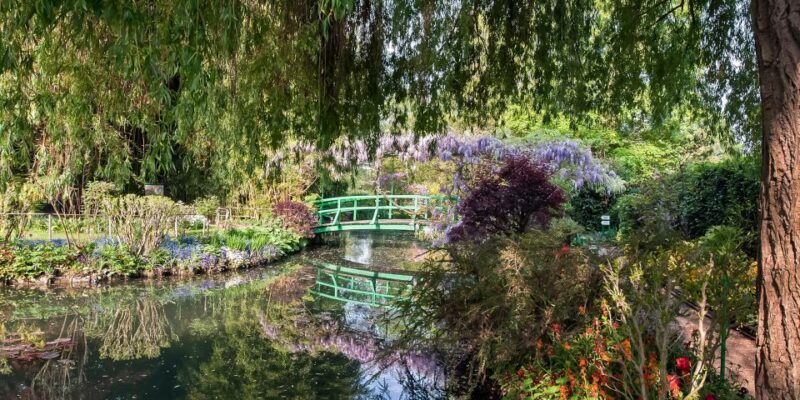
The guided tour lasts two hours. You can stay longer afterward to walk through the gardens on your own or visit the gift shop.
The price is $69 per person and includes skip-the-ticket-line entry tickets and a licensed local guide.
Meet outside Les Nymphéas café and restaurant, near Monet’s house. The guide will have a blue badge and a green folder marked written guided tour, and will have your prepaid tickets.
Tours are offered in French and English. Each tour is conducted in one language only, so check the language when choosing a departure.
The small group is limited to 10 participants.
Yes. The tour includes skip-the-ticket-line entry through a separate entrance.
The gardens are open from early spring until the first days of November. The flowers and colors vary by season.
No. Food and drinks are not included in the tour price.
The activity is listed as wheelchair accessible. The supplied details do not describe particular routes or facilities.
You can check availability for your dates here: