Physical Address
304 North Cardinal St.
Dorchester Center, MA 02124
Physical Address
304 North Cardinal St.
Dorchester Center, MA 02124

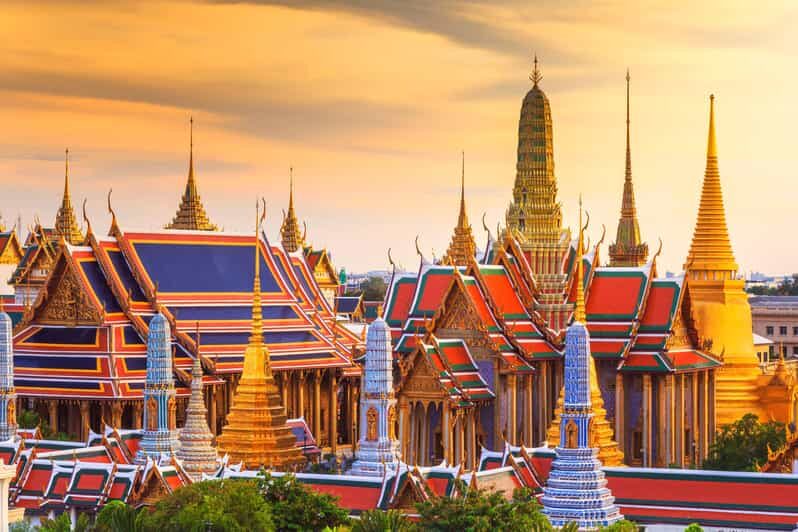
See Bangkok’s Grand Palace, Wat Arun and Wat Pho on a guided half-day tour, with river ferries, the Amulet Market and practical tips on costs and dress.
Bangkok’s great temples make more sense when you see them as part of one route: from the royal compounds of the Grand Palace to the riverfront spire of Wat Arun and the vast Reclining Buddha at Wat Pho. This 5.5-hour guided tour links all three by foot and public ferry, with a stop at the Amulet Market along the way.
I like two things in particular: the river crossing, which gives you a welcome change of pace and a different view of the city, and the guide’s cultural context, which can help you read the details rather than simply photograph them. The main caveat is cost: the $15 tour price does not include the three temple admissions, which total 1,000 THB.
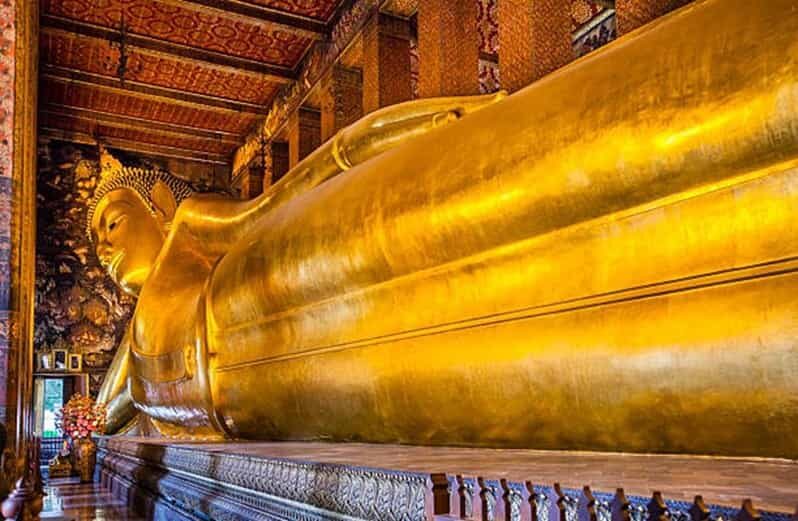
Bangkok has no shortage of grand religious sites, but fitting the Grand Palace, Wat Arun and Wat Pho into one outing takes planning. This tour takes care of the sequence and the river transport, while an English-speaking guide supplies context at each stop. That is useful if you have limited time or would rather not work out the route between busy sights on your own.
The tour is listed at $15 per person and lasts about five and a half hours. That price covers the guide, the market walk, public boats and ferries, and mandatory insurance, but not admission to the temples. Grand Palace entry is 500 THB, Wat Arun is 200 THB and Wat Pho is 300 THB. Add those costs before deciding whether the overall price suits your budget.
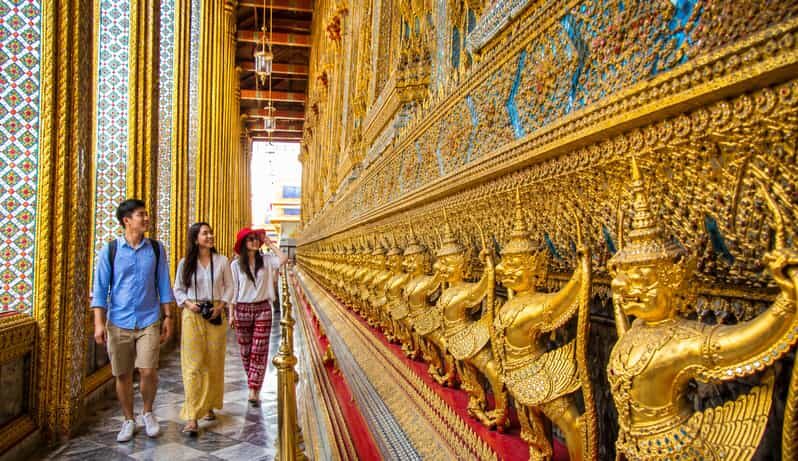
The guided format matters most at the Grand Palace and Wat Phra Kaew, where ornate buildings, murals and sacred spaces can be hard to make sense of without some explanation. You can still look around and take photographs, but you also get a framework for understanding why the royal site and its Emerald Buddha are central to Thai culture.
If you prefer having a local expert, these guided Bangkok experiences could work well
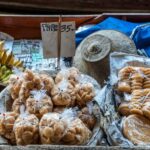
The walk begins near Golden Place, with the exact meeting point depending on the option you book. From there, the group passes through the Amulet Market for about 15 minutes. This is a short but distinctive introduction to everyday religious practice: locals search for charms, talismans and other sacred objects believed to offer protection or good fortune.
The market stop adds something different to a route otherwise dominated by monumental architecture. It gives your guide a chance to explain Buddhist customs and local beliefs in a more ordinary setting. A private group of four, for example, found the market a useful place to hear about Buddhism and local life before entering the major temple compounds.
Keep your expectations modest about the amount of time here. Fifteen minutes is enough for a look and a short explanation, not a leisurely market visit or a chance to compare amulets at length. If you see something you want to buy, have cash ready, but do not let shopping distract you from keeping up with the group.
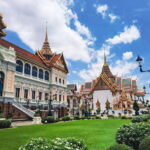
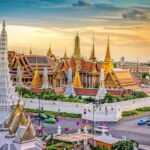
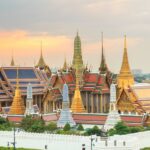
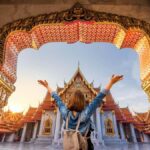
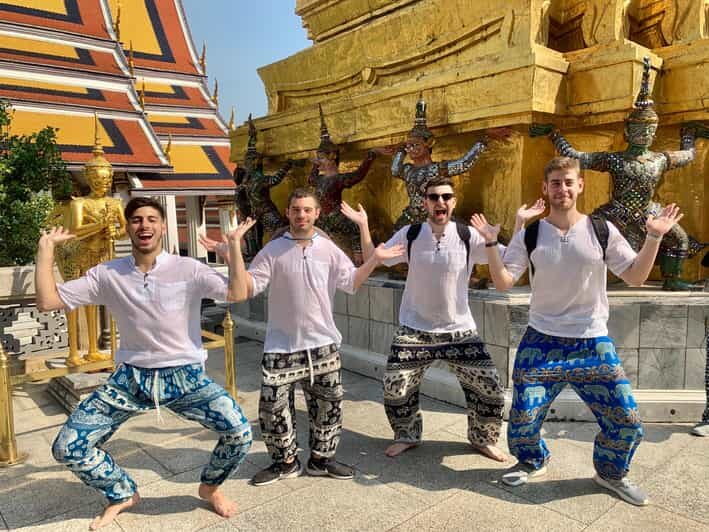
The Grand Palace is the visual and cultural centerpiece of the tour. It was the former residence of the Thai royal family, and its grounds bring together golden spires, elaborate architecture and detailed murals. Even if you arrive knowing little about Thai royal history, the scale and decoration make the importance of the site clear.
Within the complex, Wat Phra Kaew is home to the Emerald Buddha, Thailand’s most revered Buddha image. The guide can help you understand the religious significance of the temple and point out details that might otherwise blur into the surrounding gold and ornament. Several guides, including Kiwi, Nok and Pam, have been praised for making explanations lively and easy to follow.
There is a practical catch: the Grand Palace and Wat Phra Kaew enforce a strict dress code. Men must wear long pants and shirts with sleeves. Women must wear skirts or pants that cover the knees, and everyone should keep shoulders covered. Tight leggings, see-through clothes and torn pants are not allowed. Dress appropriately before setting out, rather than relying on a last-minute fix at the entrance.
You should also expect a lot of walking and exposure to the heat. A visitor described the tour as tiring on a very hot afternoon, and others advised bringing water and sun protection. Comfortable shoes are essential; sunglasses and an umbrella may help, too. The palace is a place to look up often, but remember to watch your footing as you move through the grounds.
After the palace visit, the group takes a public boat across the Chao Phraya River to Wat Arun. The crossing is listed at about 15 minutes. It is not just a transfer between sights: the river gives you a brief pause from the temple crowds and a view of Bangkok from the water.
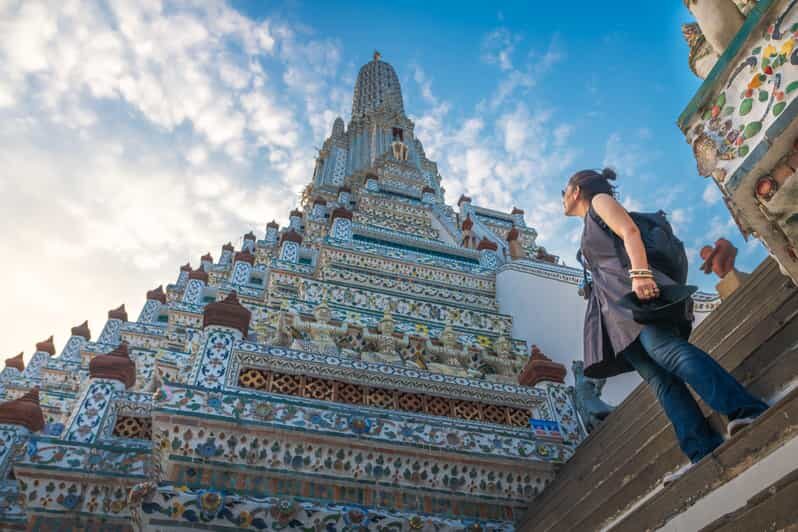
Wat Arun is known for its tall central prang, decorated with colorful porcelain details. Its riverside setting makes it one of the city’s most photographed landmarks, and the change in scale and style from the palace is part of what makes this stop worthwhile. Your guide explains the temple and its features, while the riverbank setting offers a different kind of view from the enclosed palace grounds.
Public transport also means the route can be affected by conditions on the river. One guide, Terry, adapted when the river was closed for Navy rehearsals and arranged tuk-tuks instead. That is a useful reminder that the ferry is a planned part of the outing, not a guarantee that every transfer will happen in exactly the same way. If the river service changes, the tour may need to adjust.
More Great Tours Nearby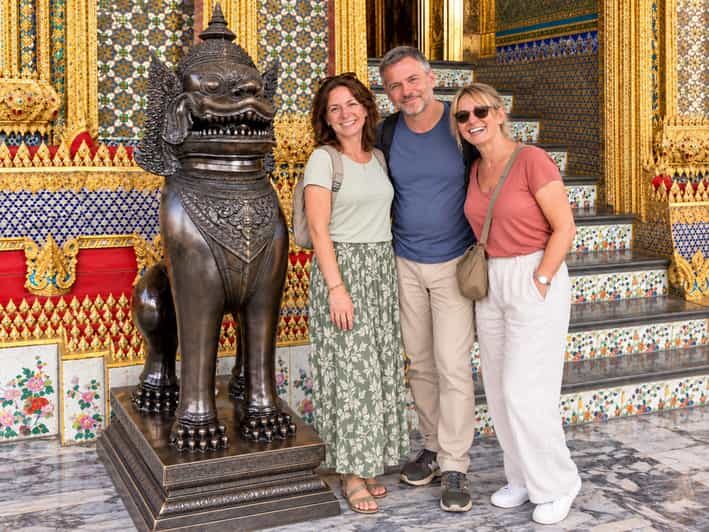
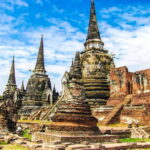
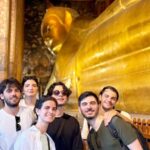
A second ferry takes you to Tha Tien Pier and on to Wat Pho, another of Bangkok’s oldest and most respected temples. The site is best known for the Reclining Buddha, but the visit also includes a chance to see peaceful courtyards and golden Buddha statues. After the height and riverside drama of Wat Arun, Wat Pho offers a different mood and a fitting final temple stop.
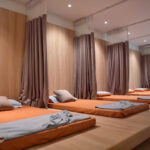
Wat Pho is also associated with the heritage of traditional Thai massage. That detail gives the complex another layer beyond its famous statue: it has long been a place of religious and cultural importance, not simply a stop for photographs. Your guide can connect the buildings and customs to a wider story of Bangkok and Thai life.
The tour includes guided sightseeing here, though the exact amount of free time can vary. Some guides are especially good at balancing explanation with room to wander. A guide named A, for instance, was praised for giving historical context while allowing visitors time to explore at their own pace. If independent browsing matters to you, ask your guide how much time is available at each stop.
This is a walking-and-sightseeing tour, but the human element is a major part of its value. Guides named Kiwi, Kobie, Nok, Pam, Jenny, Terry, A and Hady have drawn praise for being friendly, attentive and clear in their explanations. The recurring strengths are energy, patience, humor and an ability to make Thai history and culture approachable.
No particular guide is guaranteed, so book for the route and format rather than expecting one named person. Still, the consistently warm response to different guides is encouraging. A good guide can help you notice small architectural details, answer questions in plain English and keep the group moving without turning the day into a lecture.
The advertised live guiding language is English. Audio guides are also available in 41 languages through a QR code, but you need your own earphones. The audio option is useful if you prefer another language, though it does not replace the live English guide. Bring a charged smartphone and headphones so you can use it.
A private group is available if you want a more personal arrangement. The group size for a standard departure is not specified, so do not assume it will be a private or small-group outing unless you select that option.
At $15, the tour’s base price is low for a guided visit that includes three major temples, the Amulet Market and public river transport. You are paying for the route, the guide’s explanations and the convenience of having the stops linked for you. For a first visit to Bangkok, that structure can be worth more than the cost of transport alone.
But the headline price is only part of the budget. The listed entrance fees add up to 1,000 THB per person, paid separately on site. The tour description also says to bring cash for these fees. Make sure you are comfortable with the full outlay before booking, especially if you are comparing this with visiting the temples independently.
The value is strongest if you want context and a straightforward way to see the three sites in one half-day. It is less compelling if your priority is a slow, self-paced temple visit, or if you want every cost bundled into one payment. Food and drinks are not included, so plan to eat before or after the tour and carry water.
Bangkok traffic can be unpredictable, and the tour leaves on time. Arrive at least 15 minutes before departure and allow extra time to reach the meeting point. The meeting location varies with the option selected, so check your booking details carefully. Late arrivals may not join, and the tour cannot be joined partway through.
The outing is not recommended for anyone with mobility impairments. It involves walking through several large temple sites and using public boats and ferries. If heat, long periods on your feet or getting on and off boats are concerns, consider whether a 5.5-hour route is right for you.
Bring comfortable clothing that meets the palace dress rules, comfortable shoes, cash, sunglasses, insect repellent, a camera, headphones and a charged smartphone. Large bags and luggage are not allowed, and alcohol and drugs are prohibited. There is no food or drink included, so carry water and arrange meals around the tour.
Free cancellation is available up to 24 hours in advance, and you can reserve now and pay later. Do not schedule this tour on a day when you have a flight to catch: the operator advises against it, and traffic or route changes can make a tight connection risky.
Book it if you want to see the Grand Palace, Wat Arun and Wat Pho in one organized outing, and you value a guide who can explain what you are looking at. The market stop and river crossings add variety, while the range of praised guides suggests that the human side of the tour is often a real strength.
Think twice if you want a relaxed pace, have difficulty walking, dislike group schedules or are trying to keep temple costs to the $15 headline price. Add the 1,000 THB in admissions, dress for the palace rules and plan for heat. If those conditions suit you, this is a practical way to get an informed first look at Bangkok’s central temples.
“Our guide Jeed was very nice and knowledgeable. The whole group had a lot of fun and a great day. Thank you.”
It lasts about 5.5 hours. Check the available starting times when choosing your date.
The tour visits the Amulet Market, the Grand Palace, Wat Phra Kaew and its Emerald Buddha, Wat Arun and Wat Pho.
No. The listed fees are 500 THB for the Grand Palace, 200 THB for Wat Arun and 300 THB for Wat Pho. Bring cash to pay on site.
The live tour guide speaks English. Audio guides are available in 41 languages through a QR code.
Yes. Earphones are not included, and you need your own headphones to use the audio guide.
Men must wear long pants and shirts with sleeves. Women must wear long skirts or pants covering the knees, and shoulders should be covered. Tight leggings, see-through clothes and torn pants are not allowed.
Arrive at least 15 minutes before the scheduled departure. The tour leaves on time, and late arrivals may not join.
No. The tour is listed as unsuitable for people with mobility impairments.
No. Food and beverages are not included.
Yes. You can cancel up to 24 hours in advance for a full refund.
You can check availability for your dates here: