Physical Address
304 North Cardinal St.
Dorchester Center, MA 02124
Physical Address
304 North Cardinal St.
Dorchester Center, MA 02124

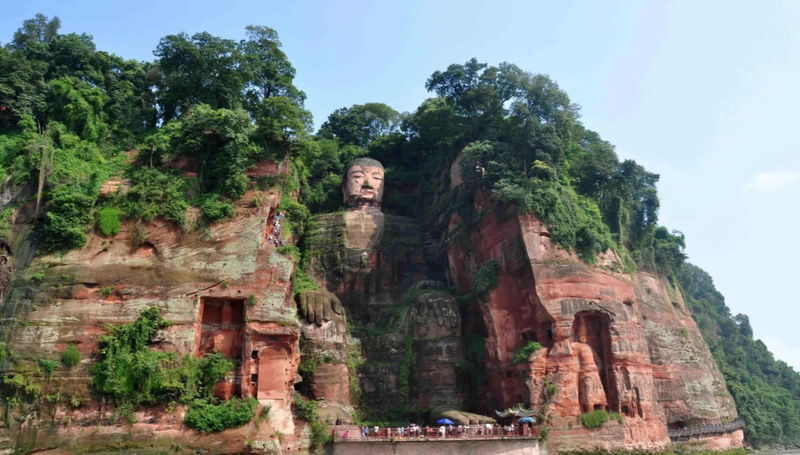
See Leshan’s vast cliff-carved Buddha, then ride up Mount Emei to the Golden Summit on a demanding, scenic day trip from Chengdu.
The day pairs two very different sights: the calm, monumental face of the Leshan Giant Buddha, carved into a riverside cliff, and Mount Emei’s high-altitude Golden Summit, where clouds can roll past the temples. It is an ambitious way to see two major Sichuan destinations without arranging separate transport.
I like two things in particular: the boat ride gives you a wide view of the Buddha without the effort of walking down to its feet, and guides such as Xiao Li, Lily, Wang, and Yuan have been praised for keeping the day clear and well coordinated. The comfortable bus matters, too, because the road time is a real part of this trip.
The trade-off is time. Leshan and Mount Emei are far apart, so you’ll spend hours in transit and move briskly between stops. The Golden Summit can also be cold, wet, or foggy, and a clear view is never guaranteed.
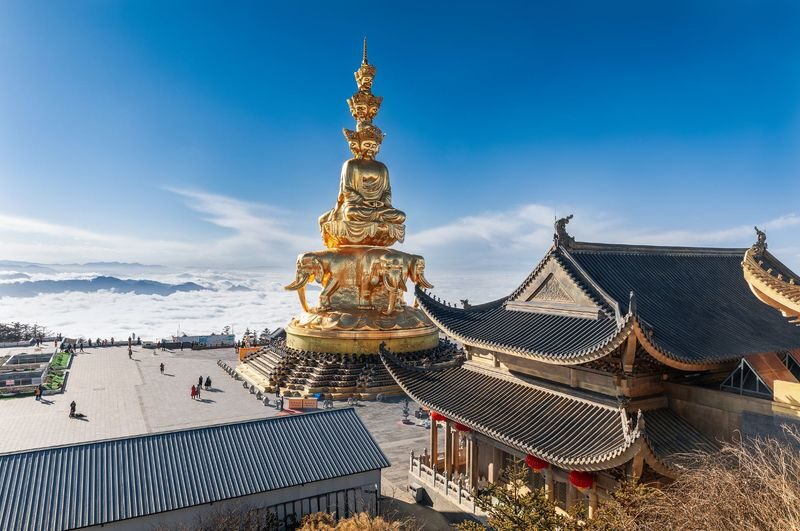
Leshan’s Giant Buddha and Mount Emei offer contrasting experiences. At Leshan, the main event is a monumental sculpture cut into a rock face beside the river. At Emei, the focus shifts to mountain scenery, Buddhist sites, and the Golden Summit, where weather can transform the view from clear peaks to a sea of cloud.
Seeing both in a day is efficient, especially if your time in Chengdu is limited. The price starts at $67.65, which can be good value for a day involving long-distance transport, a guide, and several major sights. But the starting price does not tell you exactly which extras are included. Check the selected package details for costs such as transport within the scenic area, cable car access, meals, or other fees. Some people have paid extra during the day.
This is not a slow, lingering visit to either place. Think of it as a well-packed introduction: you get the headline sights, useful context, and an organized route, then trade some unhurried time for the chance to see both destinations.
The Leshan Giant Buddha is the kind of sight that makes photographs feel inadequate. Cut into the cliff, it looks imposing from the river, and the boat gives you room to take in the whole figure rather than only one close-up detail. The ride is also a practical choice on a tight schedule. It saves the energy and time involved in descending to the Buddha and climbing back up.
The boat makes a stop or slows for photographs, according to accounts of the trip, and the cabin may be air-conditioned. Crowds can still gather around the best viewing spots, so keep your camera ready rather than expecting a long, private photo session. The scale is the point: from the water, you can see how the sculpture belongs to the cliff and river setting, not just how large its face is.
A guide can add useful meaning to what might otherwise look like a very impressive rock carving. Guides have explained the Buddha’s construction, local stories, and the religious importance of the sites. If you do not speak Chinese, clarify the language arrangement before departure. Some guides have helped foreign-language speakers with translated messages or phone translation, but that is not the same as a guaranteed full commentary in your language.
After Leshan, the group continues to Mount Emei. This is where the day’s logistics become more obvious. The two destinations are not next door to each other, and the bus ride is long enough that comfort matters. Past groups have described spacious buses and roomy seats that made it easier to rest between stops.
Bring a small snack and water if you prefer to have something at hand. Food arrangements can vary, and the package information does not spell out exactly what is included. Lunch has been served during the day, sometimes as a shared meal with multiple dishes, but confirm the details for your selected option rather than assuming every meal is covered.
The ride is also a good time to ask your guide about the mountain sequence, walking expectations, and any additional charges. Guides have been praised for explaining timings and setting clear expectations before each stop. That advance briefing is useful when the schedule is tight: you know where to meet, how long you have, and what you need to carry.
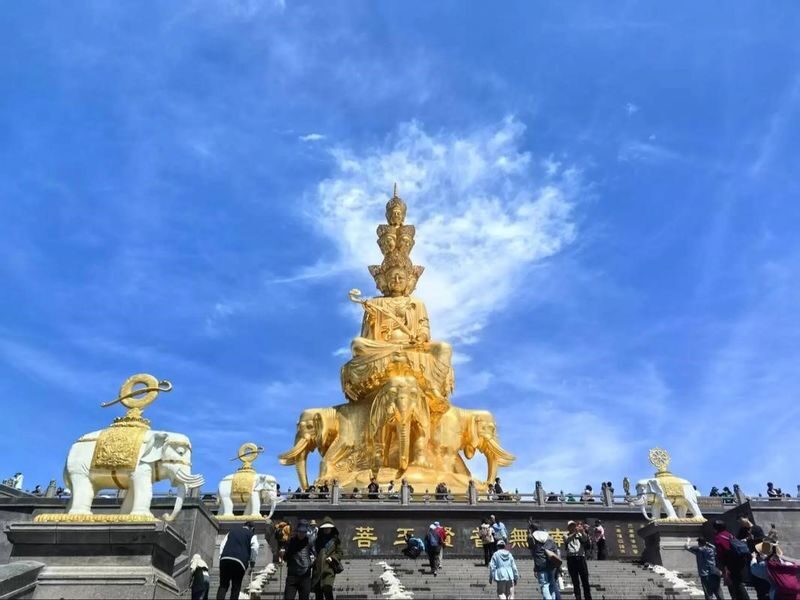
Mount Emei is the visual and spiritual high point of the trip. The route to the Golden Summit involves a bus and cable car, followed by walking around the temple complex. You do not need to hike all the way up the mountain to reach the summit area, but do expect some walking and a full day on your feet.
At the top, the views can be spectacular. When clouds part, you may see mountain ridges and the summit’s temples; when fog moves in, visibility can change in minutes. Rain and cold are common enough possibilities that you should pack for them even if the forecast in Chengdu looks mild. A warm jacket and raincoat are more useful than optimistic weather-checking alone. Waterproof shoes can help in wet conditions.
The Golden Summit is not simply a viewpoint. The temple complex and the Buddhist presence give the stop a cultural dimension, and a guide can explain what you are seeing. Guides such as Lhamo, Lily, and Yuan have been singled out for sharing explanations while keeping the group moving. You may have less time to linger than you would on an overnight visit, but the guided context makes a short stop more rewarding.
Mount Emei is also known for its monkeys. If you encounter them, keep food out of sight and secure any snacks in your bag. One useful rule: do not offer food or leave a bag open. The mountain’s wildlife is part of the experience, but a monkey grabbing your provisions is a poor way to make a memory.
The itinerary is compact by design. You’re covering two distant sights and making several transport changes in one day, so the group needs to stay on schedule. Some people find the pace manageable; others find it demanding, especially when walking uphill or keeping up with a group at altitude.
Guides have been noted for looking after older participants and helping people with different physical needs, but that should not be taken as a promise of a slow or customized pace. If you need frequent breaks, have mobility concerns, or are unsure about the mountain walking, ask the operator about the route before booking. The road and cable car reduce the amount of climbing, but they do not remove all walking.
The group experience can vary, too. Multiple group types are offered, and some departures may have a mix of local and international participants. A guide may use spoken explanations, WeChat messages, or phone translation to help bridge language gaps. If detailed commentary is important to you, confirm the language before you pay.
At $67.65 and up, the appeal is the combination of transport, time savings, and a guide who coordinates a complicated day. Organizing Leshan and Emei independently would mean sorting out the transfers and connections yourself, then working out how to fit both into one day. This tour takes that planning burden off your plate.
The price is not the whole budget, however. Some costs may be separate, and the available information does not give a complete item-by-item list of inclusions. Check your package before booking, especially for cable car or scenic-area transport, meals, and other on-site charges. A low starting rate can still be good value, but only if you know what you will pay beyond it.
The strongest value is for someone who wants to see both places efficiently and is comfortable with a long day. If you prefer time to explore temples slowly, hike more of Emei, or wait for the clouds to clear, an overnight stay or separate visits may suit you better.
Book it if you have limited time in Chengdu, want a guide to manage the transport, or would rather see both signature sights in one organized outing. It also suits visitors who appreciate practical explanations and are happy to follow a brisk schedule.
Think twice if you dislike early starts, long bus rides, crowds, or a day with little flexibility. The mountain weather can hide the very view you came for, and the journey is still worthwhile only if you are content to experience Emei as a compact visit rather than a full mountain stay.
Before departure, pack a warm jacket, rain protection, water, and a small snack. Keep food hidden around monkeys, and save your guide’s contact details and meeting instructions. Guides on this trip have included Xiao Li, Lily, Wang, and Yuan, but guide assignment varies.
For a first visit with limited time, this is a sensible way to see Leshan’s Buddha and Mount Emei’s Golden Summit in one day. The boat view, summit access by bus and cable car, and on-the-ground guidance make the packed schedule workable. Book if efficiency matters more to you than lingering. If you want a slower mountain visit, give Emei its own day.
“The tour guide arranged the itinerary very smoothly and provided clear explanations. There were no shopping stops at all throughout the entire trip…”
The listed starting price is $67.65. The final cost and what is included may depend on the package you choose, so check the selected option for extra charges.
The tour visits the Leshan Giant Buddha and Mount Emei, including the Golden Summit area.
Yes. It is a full-day tour from Chengdu that covers Leshan and Mount Emei in one day.
The tour includes a boat or ferry ride that provides a view of the Buddha from the river.
The route described includes travel by bus and cable car, followed by walking around the temple area.
There is walking at the attractions, including around the mountain summit area. The day can feel demanding, and the pace may be brisk.
The information confirms that Chinese-language groups are offered, but it does not guarantee an English-language guide for every departure. Check the language for your chosen package before booking.
Meal arrangements are not fully specified. Lunch has been served on some tours, but you should confirm what your selected package includes.
Bring a warm jacket and rain protection. Mountain weather can be cold, rainy, or foggy, even when conditions elsewhere seem mild.
You can receive a full refund if you cancel at least 24 hours before the activity date, based on local destination time. Late arrivals and no-shows are not eligible for a refund or amendment. If extreme weather or an unforeseen event leads the operator to cancel, you can reschedule or request a full refund.