Physical Address
304 North Cardinal St.
Dorchester Center, MA 02124
Physical Address
304 North Cardinal St.
Dorchester Center, MA 02124

Travel from Fukuoka to Mojiko, Karato Market, Tsunoshima Bridge, and Motonosumi Shrine on a long, scenic day trip with a guide.
Tsunoshima Bridge’s white span over open water and Motonosumi Shrine’s red gates make this a day of striking coastal views, with a seafood-market stop in the middle. I like that the trip links places that are awkward to reach in one day without a car, and that it leaves real time for Mojiko and Karato Market rather than treating every stop as a quick photo break.
I also like the mix: old port buildings, fresh seafood, a sea-crossing bridge, and a cliffside shrine are very different slices of northern Kyushu and Yamaguchi. The main trade-off is the long bus day, and the guide speaks Chinese or Japanese, not necessarily English. A ferry ride from Mojiko to Karato is at your own expense, and you need to manage that transfer carefully.
This tour covers several far-flung stops in one day, crossing from Fukuoka into Kitakyushu and Yamaguchi Prefecture. It is a practical choice if you do not plan to drive: the bus handles the long distances, while you get out for a historic port, a seafood market, and two famous coastal sights.
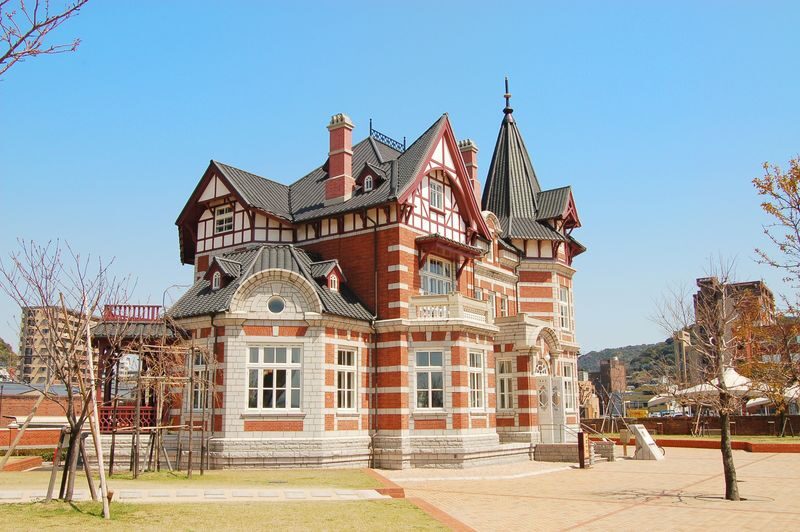
The variety is the point. Mojiko has red-brick buildings and old Western-style architecture; Karato is a place to browse and eat; Tsunoshima Bridge is all sea and sky; and Motonosumi Shrine offers a dramatic line of red gates along the coast. It is less a slow study of any one place than a well-paced sampler of the region.
The tour is listed from $44.25, though the final price depends on the package and date. At that starting price, it can be good value for a full day of transport and several distant stops. Budget separately for food and the ferry, and remember that the advertised price does not include personal purchases.
The morning begins at the meeting point by LAWSON Oriental Hotel Fukuoka, with assembly at 8:20 and departure at 8:30. Be on time: the bus leaves promptly and does not wait for late arrivals. The operator sends guide and pre-trip details by email around 19:00 the night before, so check your inbox and spam folder.
Mojiko Retro is the first major stop, with about two and a half hours set aside for the port area and the move to Karato Market. Its Meiji- and Taisho-era buildings, brick warehouses, and seafront setting give the district an entirely different feel from central Fukuoka. You might also try the local baked curry, a regional favorite mentioned as a good meal option.
Here is the key logistical wrinkle. To explore Mojiko and then reach Karato Market independently, you need to take the Kanmon ferry at your own expense. The bus does not stop at Mojiko. If you skip the ferry, you must stay with the bus and go directly to Karato, which means giving up independent time in the port district.
Check the ferry timetable before you set off. Boats may be about 20 minutes apart, and a missed departure can eat into your market time. One workable plan is to visit the port efficiently, buy your ferry ticket, and leave a buffer for boarding and the crossing. The operator describes the ferry as the way to reach the Karato meeting point, so follow the guide’s instructions closely.
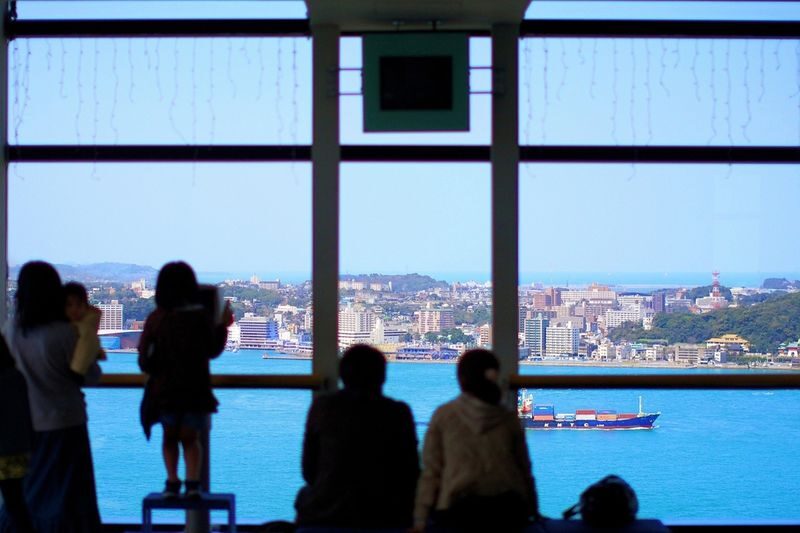
That transfer adds a little planning, but it also gives the day a memorable local touch: you cross the Kanmon Strait between Kyushu and Honshu rather than simply watching the coast from the bus. If managing a ferry connection sounds stressful, or you would rather spend longer at the market, go directly with the bus instead.
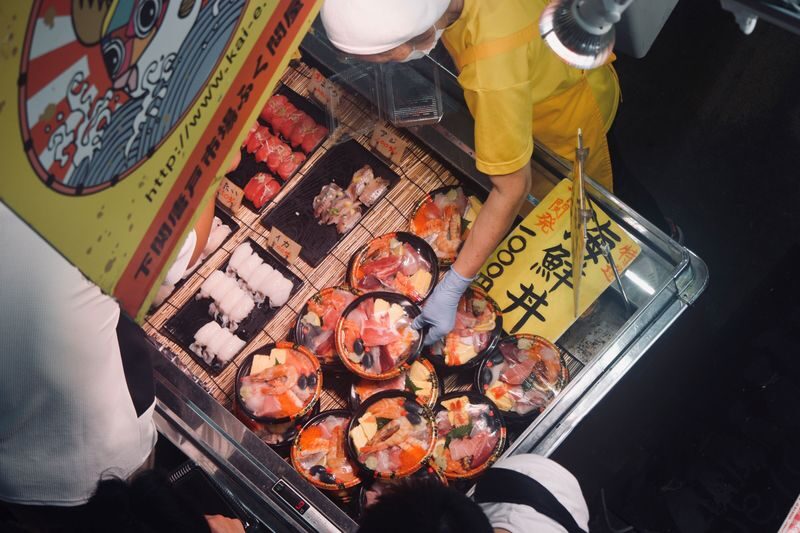
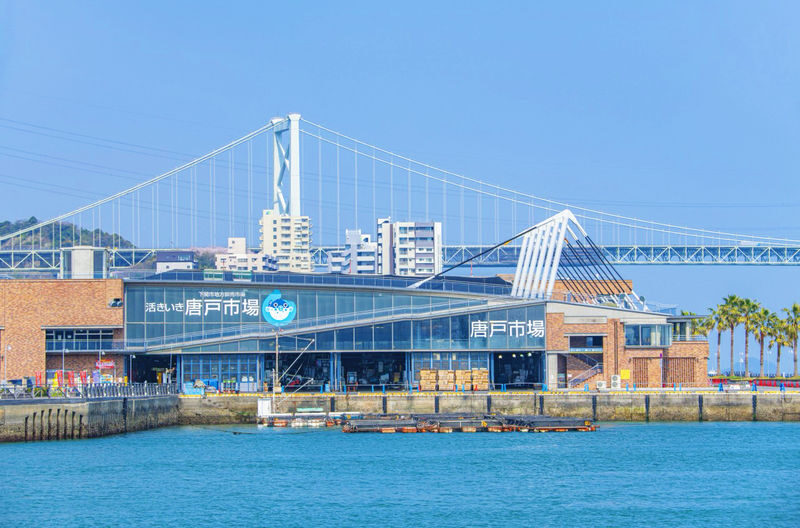
Karato Market is the day’s best stop for a relaxed lunch and a taste of the region. You can browse stalls selling sushi and seafood, including oysters, sea urchin, and puffer fish. The market is especially lively on Fridays, Saturdays, Sundays, and Japanese public holidays, when its seafood market is held. On other days, check what is open rather than expecting the full market setup.
The appeal is simple: choose a few things that look good, then eat them while they are fresh. Several dishes are sold by the piece, so you can sample rather than commit to one large meal. Prices can add up, especially if you are tempted by premium cuts such as otoro, so decide how much you want to spend before you start filling a tray.
Expect crowds on market days and possible waits at popular stalls. If the indoor seating is busy, you may be able to take food outside and eat by the water. There is also a second floor where you can sit down more comfortably, a useful option if you have bought a proper lunch rather than a few bites.
You have enough time to browse and eat, but this is still a group itinerary with a departure time. Keep an eye on the clock, and agree on the meeting point before wandering off. The market is a natural highlight for seafood fans; if you do not eat seafood, it will be a shorter stop.
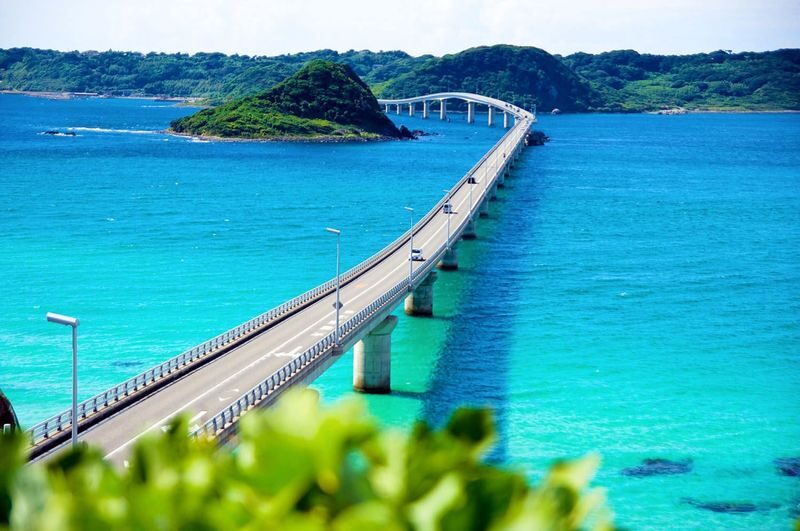
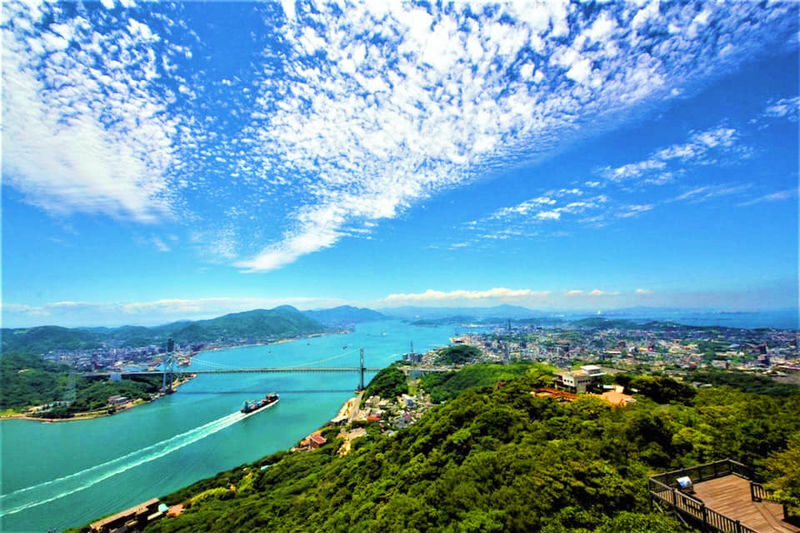
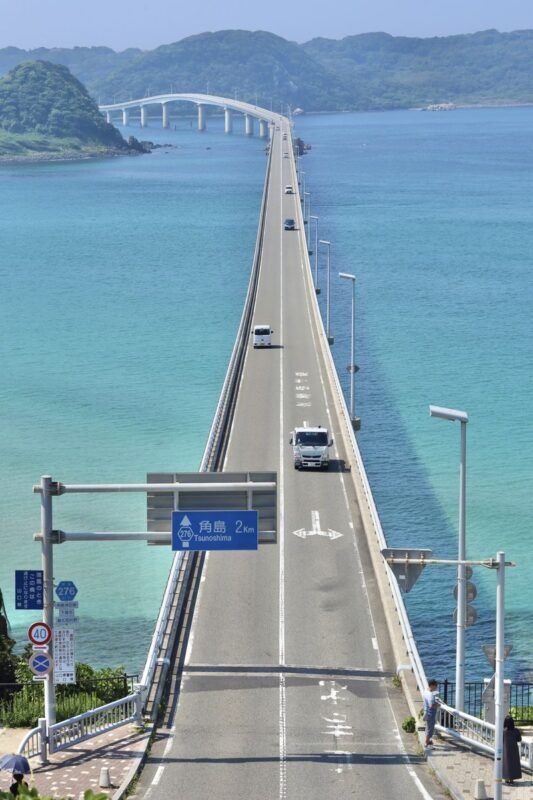
After lunch, the bus heads toward Tsunoshima Bridge, where the road forms a long, pale line across the water. The stop is about 30 minutes, so think of it as a viewpoint break, not an island visit. You will have time to look at the bridge and sea, take photos, and stretch your legs before getting back on the bus.
Clear weather makes a big difference here. On a sunny day, the water and bridge make a clean, graphic scene that photographs well even on a phone. In rain, haze, or strong cloud, the view can lose much of its color. The stop is still worthwhile, but keep expectations tied to the weather rather than to a perfect postcard.
The short visit is one of the tour’s compromises. The bridge is a scenic highlight, but you cannot linger or explore at length on this schedule. If you mainly want to see the famous view without organizing a long drive yourself, half an hour is a useful stop. If you want a slow visit, this group tour will feel brief.
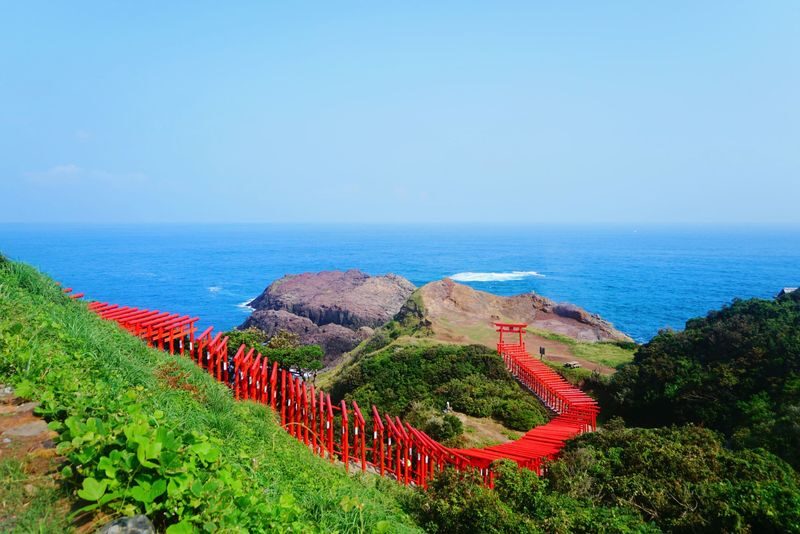
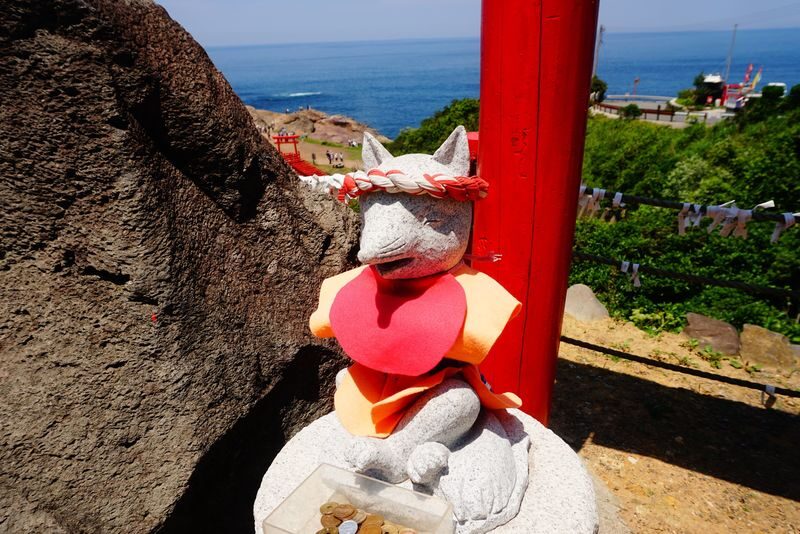
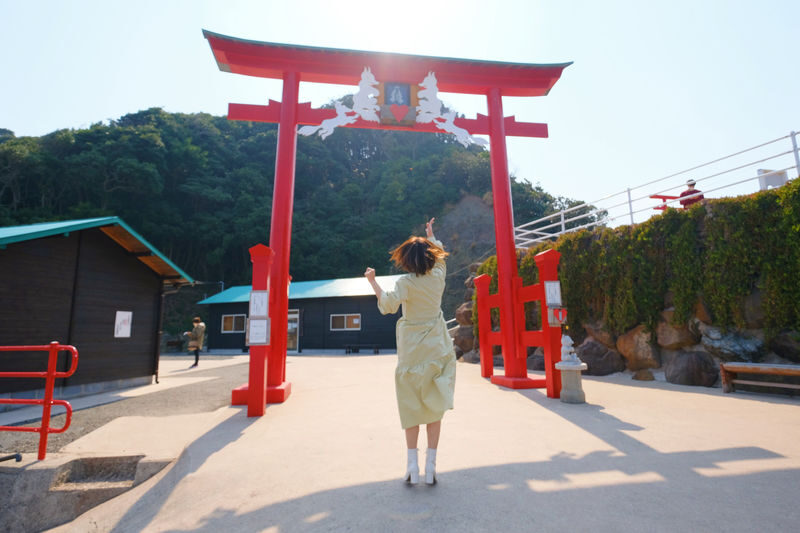
Motonosumi Shrine is the final major stop, with about 40 minutes on site. Its 123 red torii gates run down the slope toward the Sea of Japan, making a striking contrast with the water and sky. The approach involves steps, and walking the line of gates takes effort, so wear shoes you are comfortable walking in.
Use the time thoughtfully. Take photos from above, then walk down only as far as suits your pace and the time available. The stop can feel tight if you want to walk the whole route, take pictures, and rest. The tour also has a long return journey ahead, so the schedule has to balance time at the shrine with the drive back to Fukuoka.
There is an important restriction for 2026. On Saturdays, Sundays, and public holidays from March through November, as well as during Golden Week from May 2 to 10 and Obon from August 8 to 16, traffic controls close the shrine route through the torii gates. You can still take photos from above and in front of the main entrance, but you cannot pass through the gates. Check your date before booking if walking beneath the gates is a priority.
The scheduled day runs from an 8:20 meeting to an estimated 18:30 return. Much of the route is spent on the road, which is the price of linking these distant places. The bus gives you a chance to rest between stops, but traffic and weather can push the return later. Do not book a timed evening activity or a tight onward connection for the same day.
The included guide speaks Chinese or Japanese. English support is not promised. Some guides have used translation apps, printed instructions, or brief English explanations to help international participants, but you should treat that as helpful when available, not as a service you can count on. If you need detailed English commentary, this may not be the right tour.
Guide quality can make a real difference on a long day. Names mentioned by participants include Wang Qi, Li Hua, Chen Yun, and Xiao Chen, among others. Guides have helped with practical directions, explained local history, recommended places to eat, and taken photos. The assigned guide varies, so do not book expecting a particular person.
Seats are not pre-assigned and are generally first come, first served. The operator may try to accommodate requests, but the guide makes the final arrangement on the day. Tell the operator about special seating needs when booking, and arrive early if sitting with your companion matters.
The starting price is attractive for a ten-hour trip with long-distance transport and several well-known stops. The main value is convenience: you avoid driving unfamiliar roads and planning a route between Mojiko, Karato, Tsunoshima, and Motonosumi. A lower advertised fare can make this a sensible way to see the coast, particularly if you are comfortable with a group schedule.
The price does not include meals, drinks, the ferry, or personal expenses. Add the ferry fare if you plan to explore Mojiko and cross to Karato independently, plus enough for lunch and snacks. The two advertised discount packages may have different prices, so check which option you are selecting rather than assuming the lowest rate applies to every date.
This is a shared tour, though the vehicle type depends on the number of participants. It may be a bus or another vehicle suited to the group. Each person can bring one standard piece of luggage if declared in advance, but this is not a reason to treat the vehicle as a luggage shuttle: undeclared bags can create space and safety problems.
I would choose this tour if I had one free day in Fukuoka, wanted to see both the Kanmon area and Yamaguchi’s coastal sights, and did not want to rent a car. It also suits people who enjoy making a meal out of market browsing and are happy to trade a slower visit for a varied itinerary.
It is less suitable if you need English commentary, dislike long road journeys, or want generous time at every stop. The shrine closure dates matter if walking the torii route is your main reason for going. Families should note that children aged three and older pay the adult rate, children aged zero to two ride free if they do not need a separate seat, and child seats are not available.
Bring sun protection, especially in summer. The stops are outdoors, and the July sun can make even a short walk feel demanding. A hat, sunglasses, and sunscreen are specifically recommended. Carry water and keep your phone charged: this is a photo-heavy route, and you will want both hands free for food, ferry tickets, or the steps at the shrine.
Book it if you value access and variety over independence. The combination of Mojiko, Karato Market, Tsunoshima Bridge, and Motonosumi Shrine is difficult to arrange as a relaxed day without a car, and the tour takes care of the long transfers. The strongest reasons to go are the seafood lunch and the two striking coastal stops.
Skip it, or choose a more focused trip, if you want a guaranteed English-speaking guide, extended time at the shrine, or an unhurried day. Before you pay, check your date against the 2026 shrine restrictions, decide whether you plan to take the ferry, and leave the evening open for a late return. If those trade-offs suit you, this is a useful and fairly priced way to see a memorable stretch of the coast.
“The overall itinerary provided ample time at each attraction, and the tour guide was quite nice, though there was relatively little commentary. Add…”
The scheduled day runs from about 8:20 to 18:30, or roughly ten hours. Traffic and weather may affect the return time.
Meet by LAWSON Oriental Hotel Fukuoka. The exact meeting instructions and guide details are sent by email around 19:00 the day before the tour.
The included guide speaks Chinese or Japanese. English is not guaranteed, though some guides have used translation apps, printed notes, or short English explanations.
No. The Kanmon ferry fare is an additional expense if you choose to take it.
You can explore Mojiko, but to continue to Karato Market independently you need to take the ferry at your own expense. If you do not take it, the bus goes directly to Karato and does not stop at Mojiko.
The market offers seafood such as sushi, oysters, puffer fish, and sea urchin. Meals and drinks are not included in the tour price.
The first Mojiko and Karato portion is scheduled for about two and a half hours in total. Tsunoshima Bridge gets about 30 minutes, and Motonosumi Shrine about 40 minutes.
On Saturdays, Sundays, and public holidays from March through November 2026, and during Golden Week from May 2 to 10 and Obon from August 8 to 16, access through the gates is closed due to traffic restrictions. Photos are still possible from above and in front of the main entrance.
No. Meals and beverages are at your own expense.
Children aged three and older are charged the adult rate. Children aged zero to two can join free if they do not need a separate seat. Child seats are not available.