Physical Address
304 North Cardinal St.
Dorchester Center, MA 02124
Physical Address
304 North Cardinal St.
Dorchester Center, MA 02124

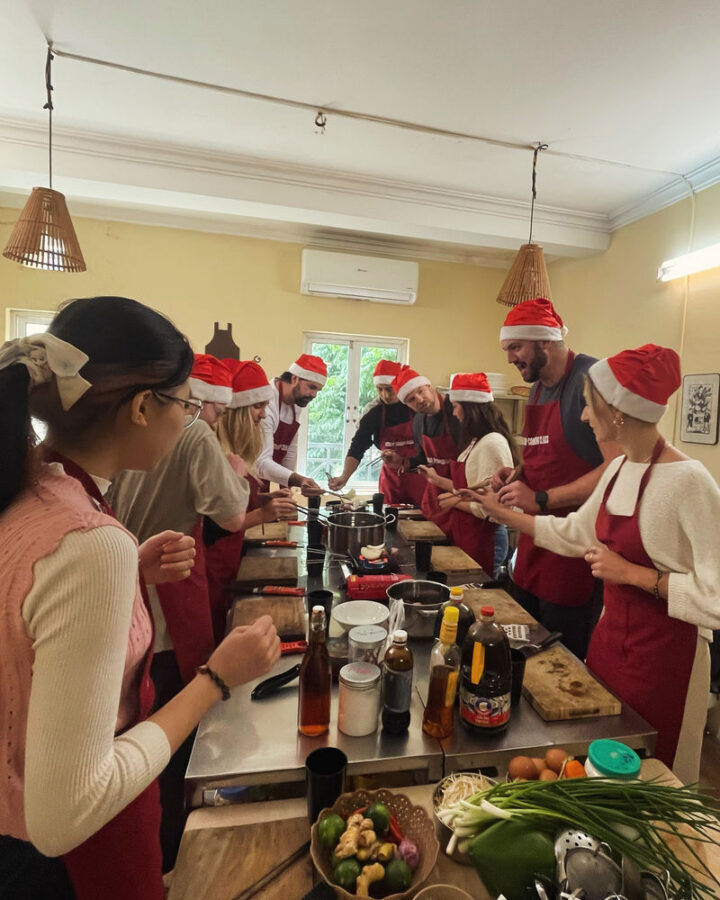
Shop Hanoi’s local market, cook five Vietnamese dishes with a patient instructor, then sit down to enjoy your meal at Apron Up.
Hanoi’s food makes more sense when you see what goes into it. At Apron Up, you begin at a neighborhood market, then return to the kitchen to prepare five dishes, from pho and bún chả to egg coffee. It is a useful way to move beyond eating Vietnamese food and learn how its ingredients work together.
I like the market visit, which turns shopping for fresh ingredients into part of the lesson, and the chance to cook a full five-dish menu with guidance from instructors such as Vy, Hazel, and Hailey. One thing to weigh: this is a shared class, so you may work on dishes with other participants rather than prepare every recipe on your own.
Plan for about three hours, sometimes closer to three and a half, and come hungry. The food you make becomes lunch or dinner, and the class includes a recipe book to help you try the dishes again at home.
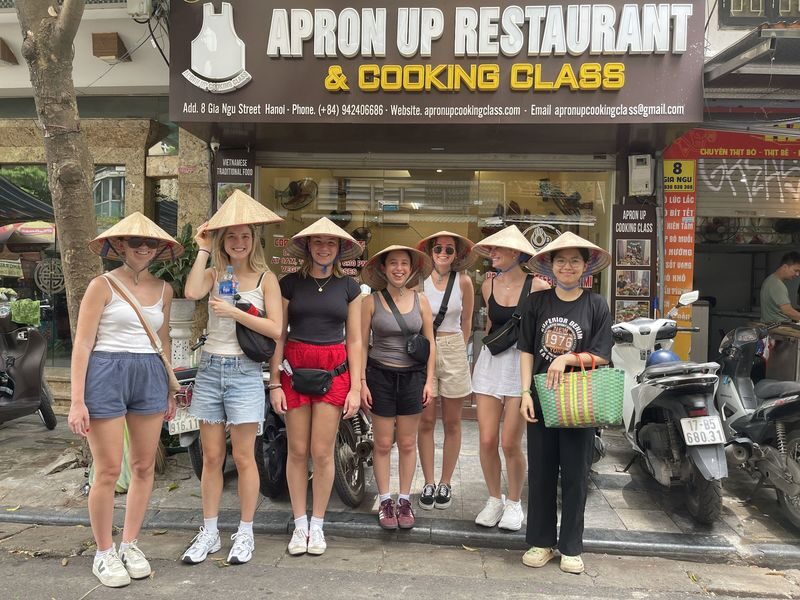
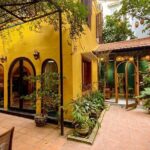
The class meets at Apron Up, at 8 Gia Ngu in Hoan Kiem, and heads to a nearby local market. That short walk gives the cooking lesson a practical beginning: instead of seeing ingredients already portioned in bowls, you get to look at them where people buy them.
Your instructor helps explain what the ingredients are, how to choose good produce, and how bargaining works. This is useful even if you do not plan to cook much at home. You get a closer look at the everyday food culture that shapes Hanoi’s cooking, and you can ask questions while the ingredients are still in front of you.
The market visit is not a long food tour, and it is not meant to cover Hanoi’s whole food scene. Its value lies in connecting the later recipes to the items you have just seen and selected. Fresh herbs, vegetables, and other ingredients stop being a list of unfamiliar names and become the building blocks of lunch.
The market is close to the class location, so there is no long transfer between the two parts. Transport to the meeting point is not included, however, so make your own way to Apron Up. The address is 8 Gia Ngu, Hoan Kiem, Hanoi.
Want to bring Hanoi flavors home? These cooking classes could be just right
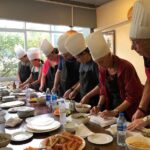
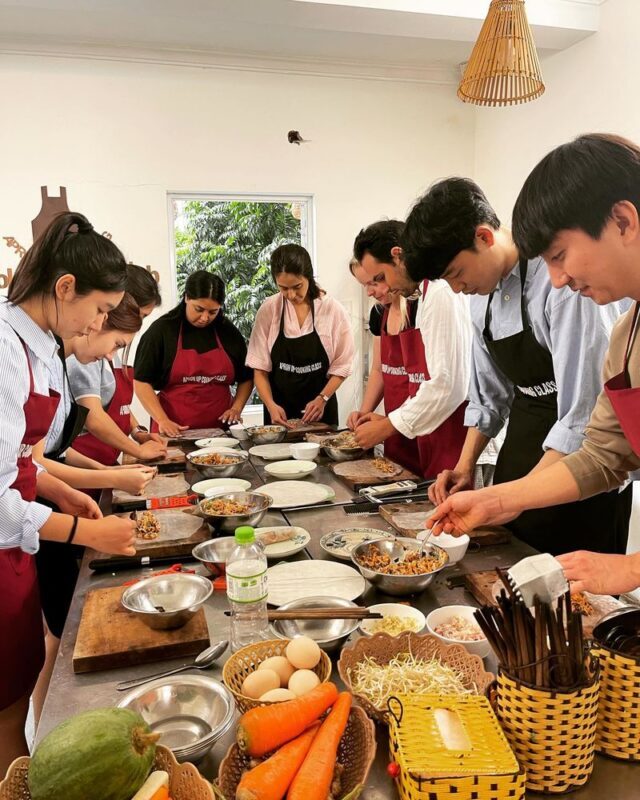
Back at the kitchen, the instructor guides you through a five-dish meal. The traditional Hanoi menu may include pho, bún chả, nem rán (fried spring rolls), papaya salad, and cà phê trứng, or egg coffee. That mix gives you several kinds of cooking in one session: soup, grilled meat, fried food, fresh salad, and a sweet drink.
The lesson is hands-on, but it is not necessarily five separate cooking stations with one full dish for each person. In a group, tasks may be divided: one person chops aromatics, another helps with grilling, and others work on another step. That arrangement can keep the class moving and make it social, but it also means you may share a cutting board or knife and prepare dishes as a team.
If you are booking mainly to practise every recipe from start to finish on your own, this format may feel less satisfying. If you enjoy learning alongside other people and want a guided introduction to several dishes, the group approach is a reasonable trade-off. The class has been described as small in some sessions, but the exact group size can vary.
Instructors including Vy, Hazel, Hailey, Emmy, Lynn, and others have led classes. The teaching style is a major part of the experience: participants have found the instructions patient and clear, with useful explanations of ingredients, technique, and food traditions. You can ask questions as you cook, and instructors have been described as attentive to dietary needs.
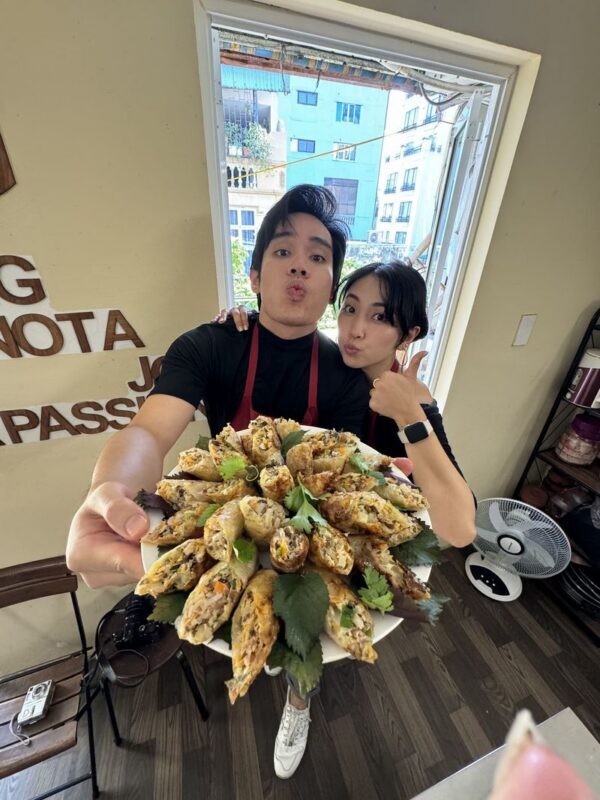
The menu is a strong reason to choose this class over a lesson focused on just one dish. Pho introduces you to the familiar beef noodle soup, while bún chả brings together noodles and barbecued pork in a distinct Hanoi-style meal. Nem rán adds a crisp, fried element, and papaya salad gives the meal a fresh counterpoint.
Then there is egg coffee, one of Hanoi’s best-known local specialties. Learning to make it rounds out the session with something very different from the savory dishes. The class is about preparing a complete meal, not just mastering one headline recipe.
The menu can change with the season and ingredient availability, so treat the listed dishes as examples rather than a guarantee for every date. The vegetarian sample menu replaces the meat-based dishes with options such as pho chay, tofu noodle dishes, and vegetarian spring rolls. Egg coffee may be offered, or fruit salad instead.
If you have an allergy or dietary restriction, tell the instructor. Instructors have accommodated different food needs, including preparing meat and tofu dishes in the same class. Still, it is sensible to raise restrictions when booking or as early as possible, rather than waiting until ingredients are being prepared.
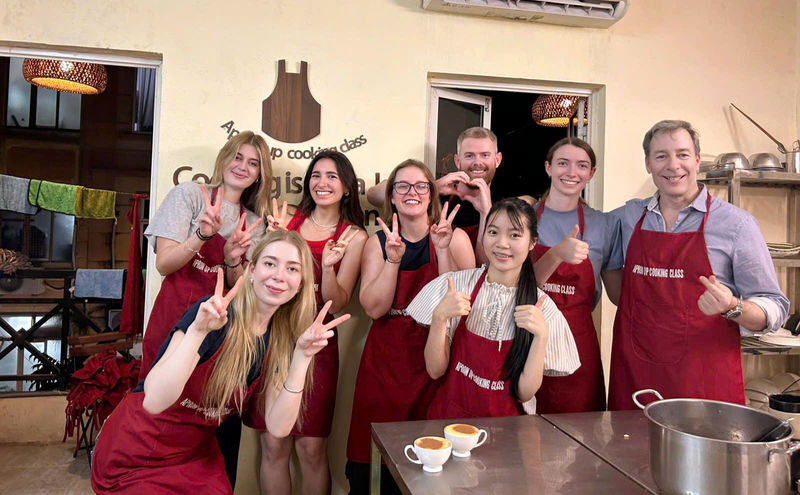
A good cooking class gives you more than a sequence of steps to copy. Here, the market visit and kitchen lesson connect ingredient choice with the finished dish. You can ask why a particular herb is used or how a dish gets its balance, rather than simply following a recipe without context.
That attention to the why is particularly helpful with Vietnamese cooking, where fresh herbs, vegetables, and seasonings shape the character of a meal. The instructor also shares cultural background as you cook. It is not a formal history lecture, but the conversation helps explain the dishes in a local setting.
The recipes are presented in an approachable way, including for people who do not cook much at home. The clear, step-by-step format makes the class a good introduction, though one session will not turn you into an expert in Vietnamese cuisine. You will leave with a better sense of what goes into the dishes and a cookbook for practising later.
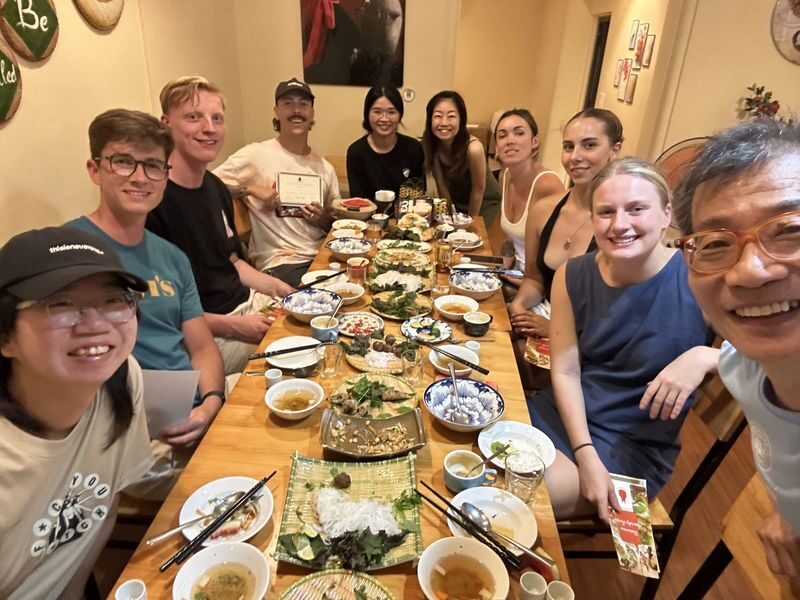
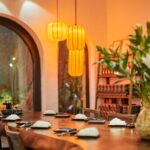
The meal at the end is more than a small tasting. You sit down with the group and eat the dishes prepared during class, which can add up to a generous spread. For some people, five dishes made by a group of participants means plenty of food, so there is no need to plan a large meal immediately afterward.
This shared meal is also a chance to compare what you have cooked and ask last questions. The atmosphere is generally sociable, and the format works well for solo participants, couples, families, or people who like meeting others over food. For a solo visitor, it offers conversation built naturally into the activity.
Do not expect restaurant-style consistency from a meal prepared by a changing group of home cooks. One participant had a poor experience with the food, and the shared-work format will not suit everyone. Still, the chance to eat your own work is central to the class, and many people find the meal a satisfying finish.
You might also be interested in these Hanoi experiences
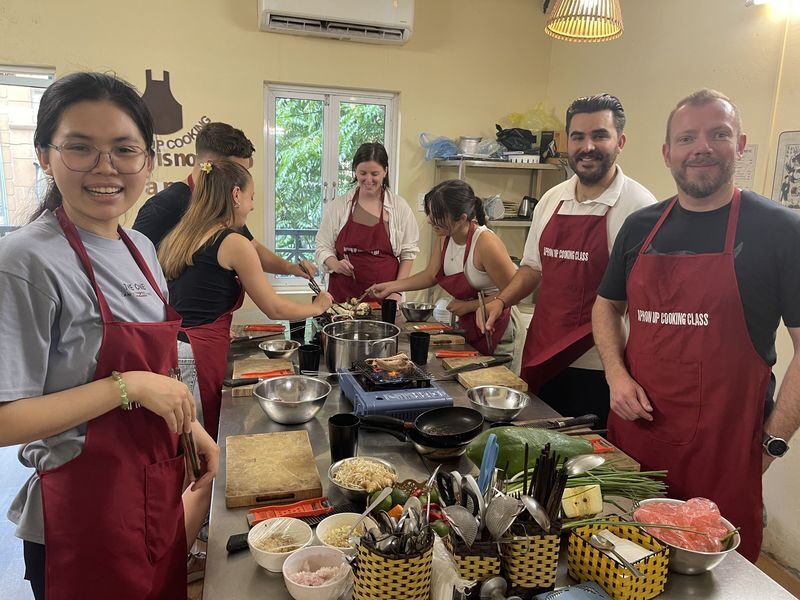
The starting price is US$33.75 for the join-in class. That covers the market tour, English- or Vietnamese-speaking guide, ingredients, cooking instruction, five dishes, welcome tea, cookbook, and certificate. Transport, personal expenses, and tips are extra.
For the price, the value rests on the combination of market visit, cooking lesson, and full meal. You are not paying only for a demonstration: you take part in ingredient selection and food preparation, then eat what you have made. The cookbook adds practical value if you want to repeat a dish at home.
The class is a stronger buy if you are curious about several Hanoi dishes and enjoy working in a group. It is less suited to someone who wants one-on-one instruction or a separate workstation for every participant. On public holidays, expect an additional US$7 per person, payable on site.
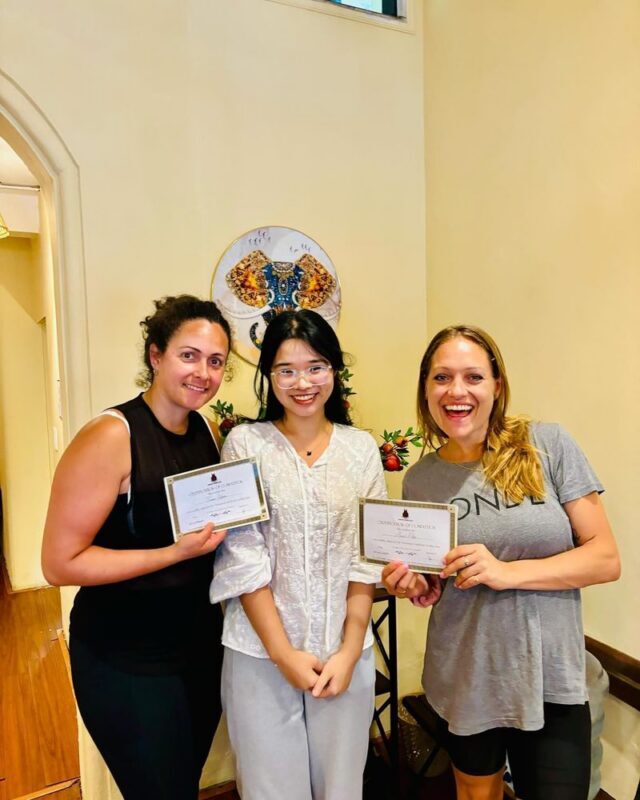
Choose from four time slots when booking, based on your schedule. The class itself generally takes around three hours, and some sessions can run for three to three and a half hours. Leave room afterward, especially if you have a train, flight, or timed activity to catch.
The meeting point is Apron Up Cooking Class at 8 Gia Ngu, Hoan Kiem. The activity includes the market visit and ingredients, but not transport to the meeting point. The voucher is valid only for the specified date and, where applicable, time.
Children and infants must be included in the passenger headcount. If you need to change a booking, changes are allowed until 24 hours before the activity, subject to stated exceptions. A full refund is available if you cancel at least 24 hours before the activity date, using local time.
This class is a good fit if you want an active food experience rather than another restaurant meal. It works especially well for people who like Vietnamese food, want to understand a handful of signature dishes, or enjoy a relaxed group activity. The market visit also makes it a useful choice if you want a closer look at how Hanoi’s ingredients are bought and used.
You do not need to be an experienced cook. The steps are designed to be followed with an instructor, and the class is as much about learning and tasting as it is about producing polished restaurant dishes. Solo visitors can join a group, while couples and families can cook and eat together.
Consider another format if you are looking for private tuition, a quiet lesson, or the chance to make each dish entirely by yourself. The shared kitchen is part of the social experience, but it can mean sharing tools and dividing tasks. Also keep the three-hour commitment in mind; this is not a quick stop between sightseeing appointments.
I would book Apron Up if I wanted to spend part of a Hanoi day learning several local dishes, shop for ingredients with a guide, and sit down to a substantial meal afterward. The market-to-kitchen sequence gives the activity a useful sense of place, and the cookbook means the lesson can continue after you leave Vietnam.
Go in expecting a friendly, collaborative class rather than private chef training. Check the menu and mention dietary needs in advance, choose a time that leaves breathing room in your day, and be comfortable sharing kitchen tasks. If that sounds like your kind of afternoon, the price is fair for a market visit, five dishes, instruction, and lunch or dinner in one booking.
“I made this with Teacher Hazel. The three of us who participated made 5 plates, so the portion was really huge! It was great to be able to learn in…”
It meets at Apron Up Cooking Class, 8 Gia Ngu, Hoan Kiem, Hanoi.
The join-in cooking class starts at US$33.75 per person.
Allow about three hours. Some classes may take around three to three and a half hours.
The class includes a guide, cooking lesson, five-dish menu, welcome tea, market tour, ingredients, cookbook, and certificate.
No. Transport and other personal expenses are not included.
The traditional sample menu includes pho, bún chả, fried spring rolls, papaya salad, and egg coffee. The menu can change based on the season and ingredient availability.
Yes. A sample vegetarian menu includes pho chay, tofu noodle dishes, vegetarian fried spring rolls, papaya salad, and egg coffee or fruit salad.
Yes. There are four time slots to choose from when booking.
Yes. A surcharge of US$7 per person applies on public holidays and is payable on site.
A full refund is available if you cancel at least 24 hours before the activity date, using the destination’s local time.