Physical Address
304 North Cardinal St.
Dorchester Center, MA 02124
Physical Address
304 North Cardinal St.
Dorchester Center, MA 02124

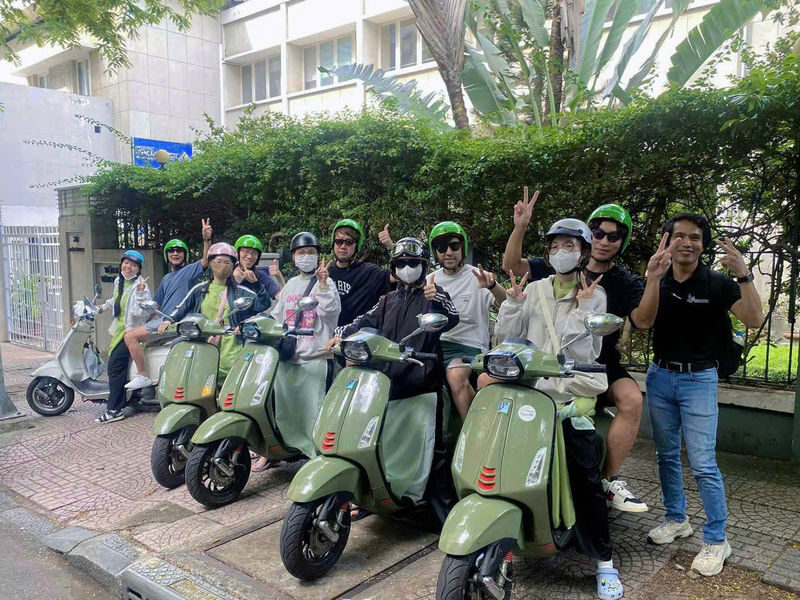
Ride through Ho Chi Minh City with a local scooter guide, see landmark architecture and war history, and get a close-up view of everyday Saigon.
Saigon makes more sense from the back of a scooter. In four hours, you can cross the city between colonial landmarks, a sobering war museum and a Taoist temple, while seeing the street life that slips by between the sights. You ride as a passenger, so you can watch the traffic rather than worry about steering through it.
I like the mix of big-name landmarks and local street scenes, and I like that guides such as Katie, Tera, Ana and Jade are often praised for clear explanations and careful riding. One thing to weigh: the War Remnants Museum can be emotionally heavy, and the pace of a scooter tour may not suit everyone.

The best thing about this tour is not simply the list of sights. It is the way a scooter connects them. You move through the city at street level, with the gap between one monument and the next filled by everyday Saigon: traffic, shopfronts, side streets and glimpses of local life. A car can get you from point A to point B; a scooter makes the journey part of the visit.
You sit behind a local driver and guide, with a helmet provided. The drivers are described as trained to manage Saigon traffic, and many accounts praise their calm, attentive approach. That matters if the flow of motorbikes looks daunting from the pavement. You can leave the steering to your rider and focus on the city around you.
This is a join-in tour, with morning and afternoon options. The advertised duration is about four hours, though traffic and weather can change the order or timing. The route covers a lot, but it is not a leisurely museum day. Expect a moving overview, short visits and commentary along the way, rather than hours at each stop.
History buffs will find these Ho Chi Minh heritage tours enlightening
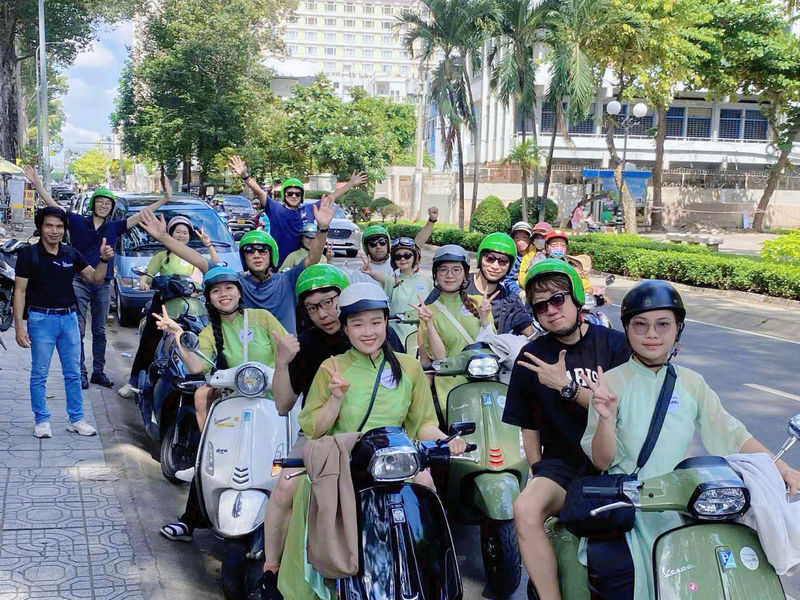
The route begins at the Reunification Palace, a major site for understanding modern Vietnamese history. Your guide can give you context before you move on, helping you connect the building and its place in the city with the larger story of the country.
This stop works well early in the tour. You are fresh, the day’s route is just beginning, and the palace offers a clear starting point for the historical thread that continues at the War Remnants Museum. The specific amount of time spent at each landmark is not fixed, so if you want to explore the palace in depth, check with your guide about the schedule.
The scooter format also offers a useful contrast. You hear about national events, then ride through present-day streets where the city’s daily pace is on full display. That contrast is part of the appeal: Saigon is not only a collection of historic buildings, but a place where past and present sit close together.
Notre Dame Basilica is a major stop for its Gothic French colonial architecture. You will see the cathedral from outside as part of the city route, then continue to the Central Post Office, another striking colonial-era building. Together, they give you a quick look at the European styles that shaped parts of central Saigon.
The post office is credited on the tour with a design by Gustave Eiffel. Its architecture and interior are highlights, and the building’s continued use as a post office gives the visit a practical, lived-in feel. It is not just a facade to photograph. Your guide can explain the building’s background and point out details you might otherwise pass by.
These stops are especially useful if you are new to the city and want the main landmarks without working out transport between them. The trade-off is that a short visit cannot replace a slower architectural tour. If buildings are your main interest, tell your guide; one visitor with an architecture background found the explanations and chance to ask questions particularly worthwhile.
The route continues to the Opera House and City Hall, at the end of Walking Street. These central landmarks help you get your bearings and show another side of Saigon’s colonial-era architecture. You will see them as part of a wider city circuit, rather than setting aside a long block of time for either building.
The scooter ride between stops is useful here. Central landmarks are close enough to link in one route, but the experience of moving through the streets adds more than a map can. Guides may point out cultural details and local customs as you go, and the best conversations often happen in the spaces between formal stops.
The route can shift with traffic and weather, so do not treat the order as set in stone. If you have a particular landmark you care about, mention it early. The guides are often described as attentive to requests, but the tour still needs to keep moving within its four-hour window.

The War Remnants Museum is the most emotionally demanding stop on the route. Its exhibits offer a forceful account of the war and its effect on ordinary people. Some displays can be difficult to view, and this is not a light sightseeing stop. Give yourself time to take in what you can, and do not feel obliged to rush through exhibits that affect you.
The museum gives the tour’s historical commentary a different weight. The colonial buildings show one layer of the city’s past; the museum confronts the human cost of war. That range is valuable, especially if you want more than a quick tour of photogenic landmarks.
The main limitation is time. A four-hour tour also includes several other stops and travel between them, so you may not have as long in the museum as you would on a dedicated visit. If you know you want to read every display, consider returning on your own after the tour. The scooter trip can still serve as a useful introduction, with a guide helping set the context.

The tour ends at the Jade Emperor Pagoda, a Taoist temple visited by President Barack Obama in 2016. It offers a change of mood after the museum: a religious site with its own atmosphere and traditions, rather than another civic or colonial landmark.
This final stop broadens the route beyond architecture and war history. It gives your guide a chance to talk about local religious life and customs, subjects that can be easy to miss if you spend your time only moving between headline sights. The visit also makes a fitting end to a route that has covered several different chapters of the city.
Some guides may add a coffee shop, Book Street, a temple or other local stop when time and conditions allow. Treat those as possible extras, not guaranteed parts of the standard route. If a specific place matters to you, ask before setting off.

The route is worthwhile on its own, but your guide shapes how much you take from it. Names praised for clear explanations and considerate riding include Katie, Tera, Ana, Jade, Amy and Julie. Guides change, so you cannot count on a particular person. What you can look for is a local guide who can explain the sights in English and share context as you travel.
Many comments about this experience focus on patient communication, good driving and guides who answer questions. That is a useful combination for a first visit. You are not just being dropped at a monument; you have someone to help connect the landmarks to the city’s history and present-day customs.
The tour can also work for families. Children aged 0 to 4 can join free, while child tickets apply to ages 5 to 11. Families with children have described attentive care on the ride, but you should consider your child’s comfort as a passenger and the fast-moving traffic before booking.
Morning and afternoon tours are offered, with departure choices listed from 08:00 through 12:00. Your selected time matters, and the operator reconfirms the pick-up time in advance. Because this is a shared transfer, the driver may arrive early or late. Be ready in your hotel lobby ten minutes before the selected time.
Hotel pick-up and drop-off are included for hotels in Districts 1, 3 and 4. If you are staying outside those districts, the listed surcharge is US$5 per person, paid directly to the guide. Enter your hotel name and address when booking so the operator can confirm the arrangement.
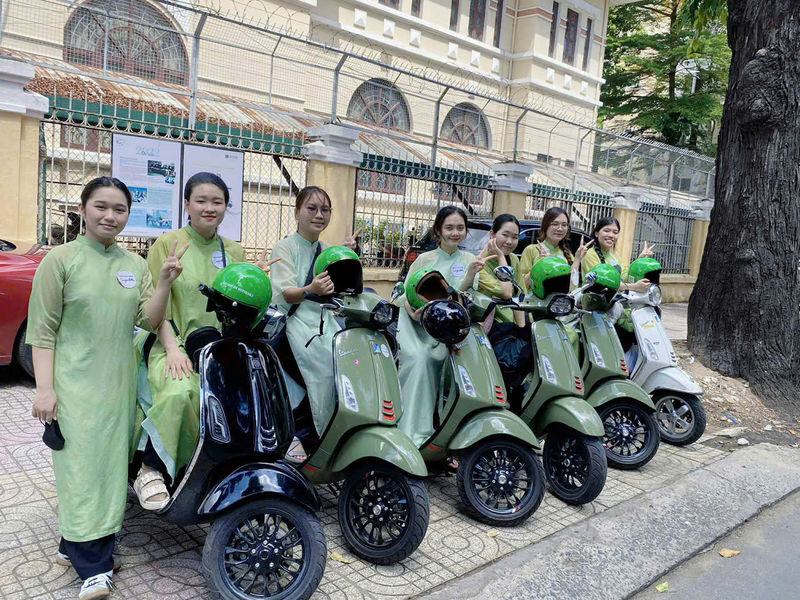
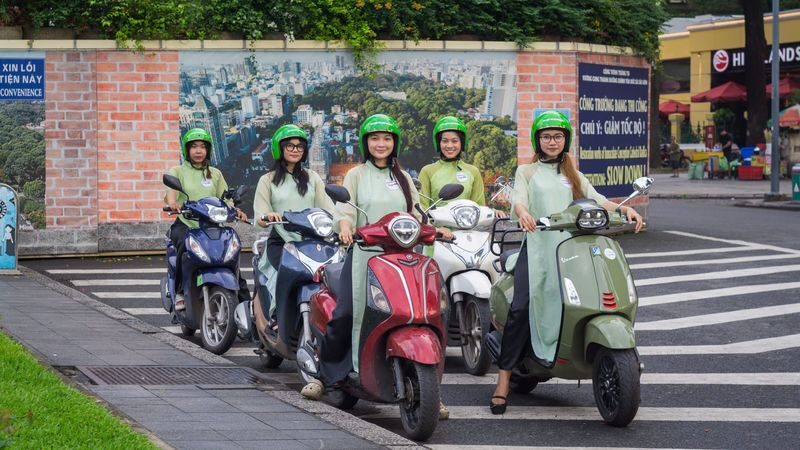
Female Ao Dai riders can be requested, but make the request at least six hours ahead. If you ask later, or on a crowded day, the rider may be assigned at random and could be male or female. The option is a useful choice for those who prefer it, but it is not a guarantee unless requested in time.

The tour is advertised from US$22.59 for either the morning or afternoon package, while the overview gives a starting price of US$25.95. Prices can vary by booking details, so check the amount shown for your date before paying. An extra VND 100,000 per person applies on the listed Lunar New Year dates, paid on site.
For the price, you get a join-in scooter tour, fuel, helmet, poncho if needed, an English- or Vietnamese-speaking guide, hotel transfers in the included districts and photos emailed after the tour. That bundle can be good value if you want to see several major sights without arranging transport and interpretation separately. It is less compelling if you prefer to spend half a day inside one museum or move at your own pace.
Tips and personal expenses are not included. Nor is the outside-district pick-up surcharge. Factor those into your decision, especially if your hotel is beyond the free pick-up zone.

I would put this tour near the top of the list for a first visit to Ho Chi Minh City, especially if you are comfortable riding as a passenger and want a fast, guided introduction. It suits people who value context as much as landmarks, and those curious about seeing ordinary streets from a local’s scooter.
It is a less natural fit if you dislike motorbike travel, need a slow pace, or want extensive time at every stop. The War Remnants Museum may also be intense, while rain or traffic can affect the route. A poncho is supplied if needed, but this remains an outdoor ride through a busy city.
Book it if you want several central sights, local commentary and the scooter experience in one half-day. If you do, choose a time that fits your plans, request a female rider early if that matters to you, and tell your guide which stops interest you most. For a first day in Saigon, the ride can help you understand the city’s layout and decide where to return for a longer visit.
“Katie & Rosa are very knowledgable and friendly. They can speak good English and explained the attractions very well. We will definitely book again…”
The scooter tour lasts about four hours. The schedule may change depending on traffic and weather.
The planned route includes the Reunification Palace, Notre Dame Basilica, Saigon Central Post Office, Opera House, City Hall, War Remnants Museum and Jade Emperor Pagoda.
Yes. Morning and afternoon packages are available. Departure options are listed from 08:00 to 12:00, with the available return time depending on your chosen departure and tour duration.
Hotel pick-up and drop-off are included for hotels in Districts 1, 3 and 4. For hotels outside those districts, a surcharge of US$5 per person applies, payable directly to the guide.
Yes. Female Ao Dai riders must be requested at least six hours before the tour. Requests made within six hours, or on crowded days, may be assigned a male or female rider at random.
The tour includes fuel, a join-in scooter tour, a helmet, a poncho if required, an English- or Vietnamese-speaking guide, photos sent by email after the tour, and round-trip hotel transfers in the included pick-up area.
Children aged 0 to 4 can join free of charge. Child tickets apply to children aged 5 to 11.
Yes. An extra VND 100,000 per person applies on the listed dates of 5, 6, 7, 8 and 9 February, payable directly on site.