Physical Address
304 North Cardinal St.
Dorchester Center, MA 02124
Physical Address
304 North Cardinal St.
Dorchester Center, MA 02124

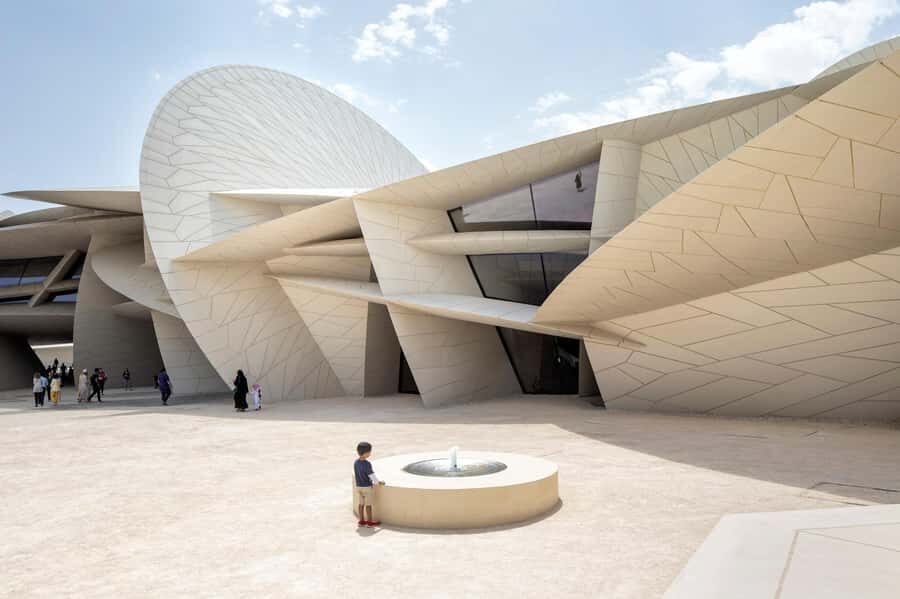
Explore Qatar’s history at its striking desert rose museum, with galleries, a QR audio guide, and reduced $13 admission during renovations.
The National Museum of Qatar turns a building into part of the story: French architect Jean Nouvel shaped it to resemble a desert rose, a natural formation associated with Qatar. Inside, you can trace the country’s story from its natural beginnings through traditional life and modern change. I like the clear link between the striking architecture and the subject, and the mix of objects, images, and interactive displays.
The main consideration is the renovation work. Some galleries are temporarily closed, so the visit may not cover the full museum; the $13 ticket reflects a 50 percent reduction during this period. Check what is open when you plan your visit, and give yourself time to read and listen rather than rushing through.
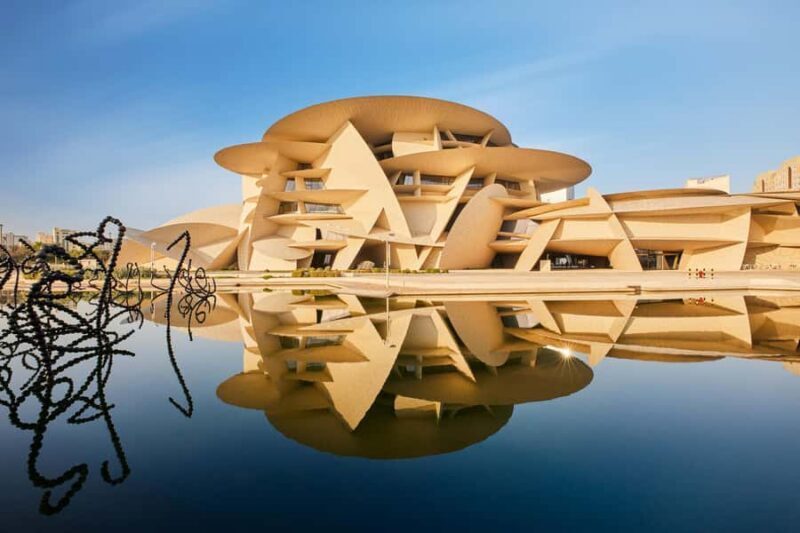
The National Museum of Qatar is not a neutral box for its exhibits. Designed by Jean Nouvel, the structure takes its form from the desert rose, a crystalline formation found in Qatar’s dry environment. The overlapping, curved discs give the building a sculptural presence, and the idea of resilience fits the museum’s wider account of life in a demanding climate.
I would allow a few minutes outside before heading in. The architecture is one of the clearest reasons to visit, and it gives you a visual introduction to the place before the galleries begin. The grounds also offer places to look around and take photographs, though the outdoor layout can feel confusing. If you are unsure where to go, ask staff for help rather than assuming the entrance and exit route will be obvious.
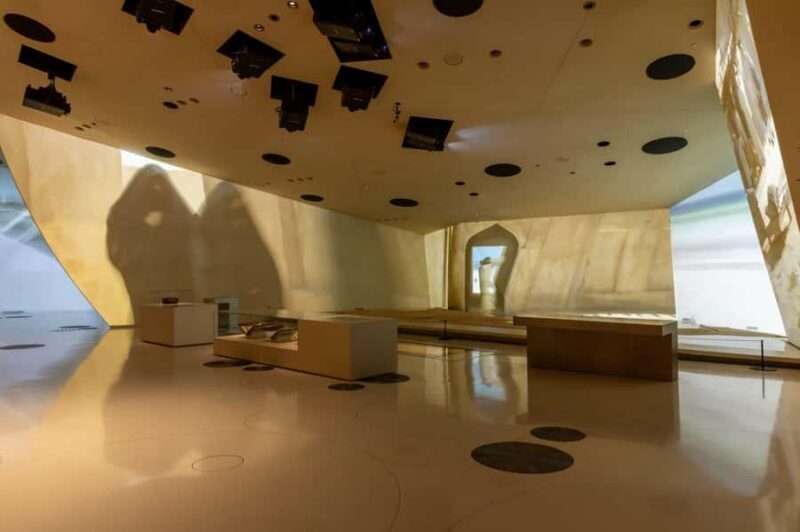
Inside, the museum works best as a connected story rather than a collection of unrelated displays. Its main subjects include Qatar’s natural past, the customs and daily life of its people, and the country’s more recent development. That sequence gives you useful context for Doha: not just what the country looks like now, but how its environment and traditions shaped it.
You can check availability for your dates here: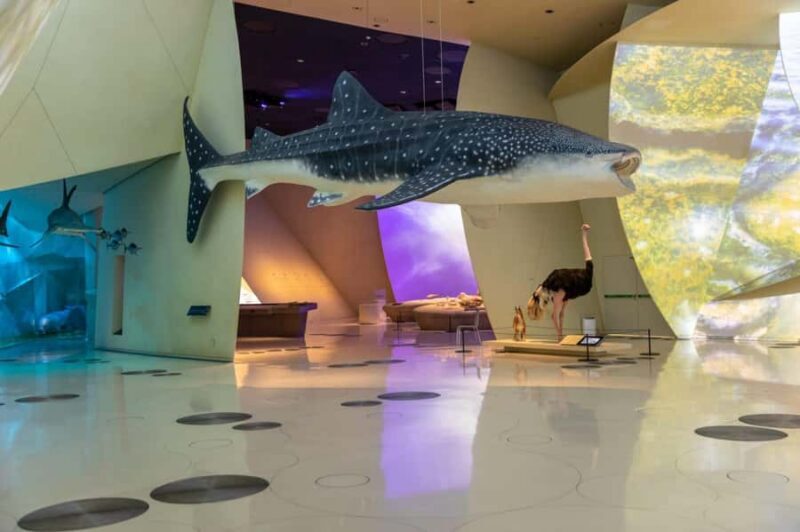
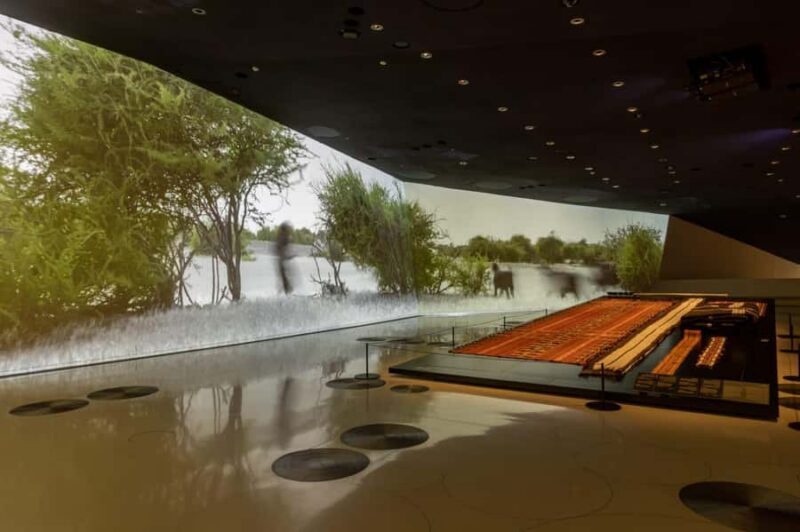
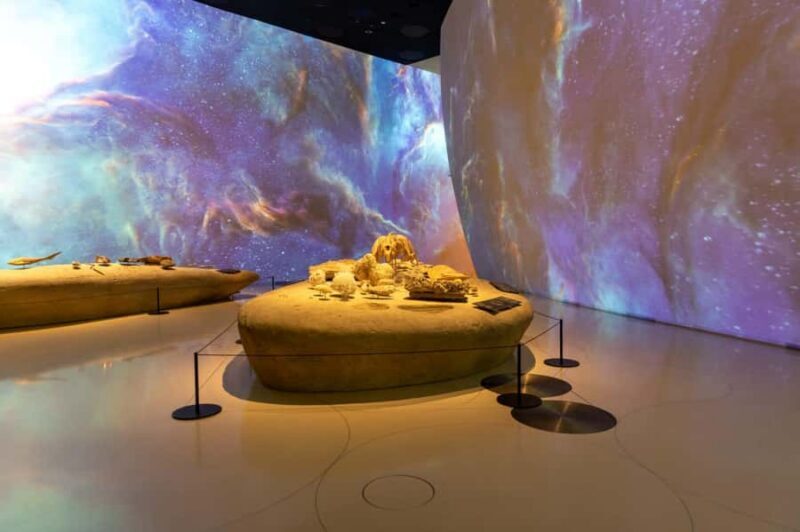
The Beginnings gallery introduces Qatar through its natural history. This is an important first stop because the country’s environment helps explain the demands and opportunities that shaped life here. The natural world is not just a preface to the human story; it is part of the reason Qatar developed as it did.
Take time with the display rather than treating it as a quick corridor on the way to the cultural galleries. The museum uses visual material and objects to make its subjects accessible, and the QR-code audio guide can add context as you go. If you are visiting with children or someone who prefers a more visual approach, the combination of display formats offers more than rows of text panels.
The caveat is the renovation schedule. Some galleries may be closed during enhancement work, and the open route can vary. Beginnings is one of the central galleries, but check current access before you set your expectations around seeing every section.
Looking for more options in Doha? Here are some other experiences worth considering.
Life in Qatar shifts the focus from nature to people. The gallery looks at both traditional and contemporary cultural practices, helping you see culture as something lived and changing, not a frozen picture of the past. That balance matters in a country where long-established customs and rapid development sit side by side.
Expect a substantial amount to take in. The displays use images, handicrafts, and other material to convey how people lived and how practices have changed. This is where the QR audio guide can be especially useful: it gives you a way to add explanation without needing to move through the museum with a live guide.
The museum’s storytelling is a strength, but it does reward patience. If you try to race through every panel, the details can blur together. I would choose a few subjects that catch your attention, read those carefully, and use the audio guide when you want added context. The result is a more grounded sense of the country than a quick pass through headline dates and famous objects can provide.
The Modern History of Qatar section broadens the story, showing how the country evolved over time. It connects the earlier material on environment and social life to the nation you encounter today. That connection is valuable if your visit to Doha has mostly shown you new buildings and major attractions; here, you can place contemporary Qatar in a longer frame.
The museum presents social, political, and cultural subjects, so there is plenty to absorb. The displays are designed to tell a story rather than simply stack objects in cases, and images and interactive elements help break up the reading. Still, this is not a quick stop. A few hours is a sensible allowance if you want to see the open galleries without feeling hurried. Some people may spend longer, particularly if they pause to listen, read, and take photographs.
A partial closure changes the rhythm of this section. You may find that the route is shorter than expected or that a floor or group of galleries is unavailable. The reduced ticket price is a fair way to recognize that limitation, but the discount does not make the missing material available. If seeing every part of the museum is essential to you, confirm which galleries are open before you go.
Among the museum’s significant artifacts is the Pearl Carpet of Baroda. It gives you a specific object to seek out amid the larger story and offers a reminder that Qatar’s cultural connections extend beyond the country itself. Check the current gallery arrangement, since renovation work can affect what is accessible.
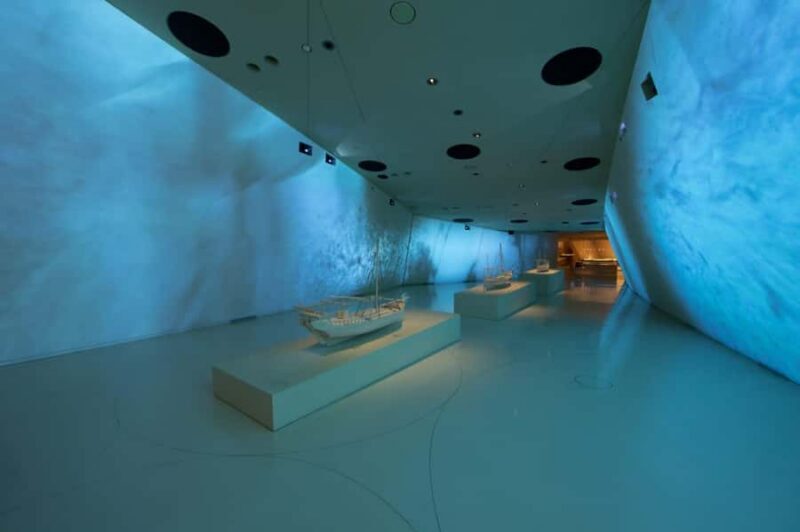
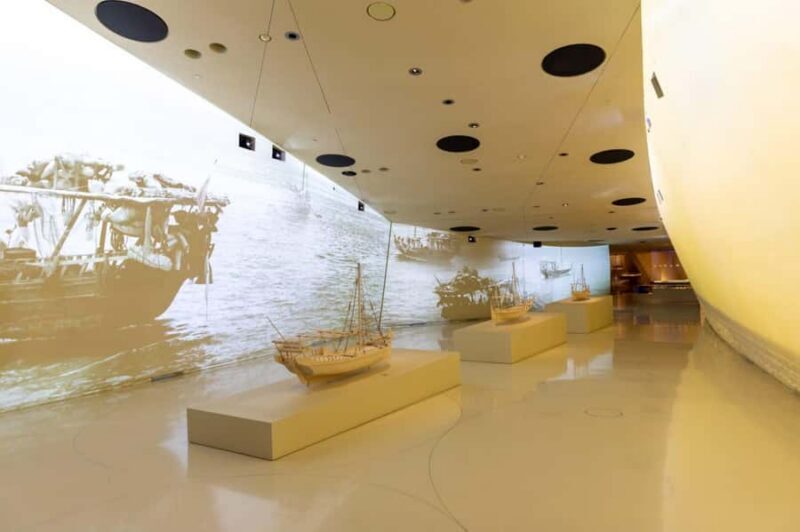
The wider displays include artifacts that help make the museum’s historical themes tangible. Rather than focusing only on famous objects, the museum places material culture alongside images, explanations, and interactive features. That blend helps you move between individual details and the broader story.
You will get more from the collection if you do not treat every item as equally important. Pick out the objects that catch your eye, then use their labels or the QR audio guide to learn why they matter. This approach works well in a museum with a lot to read and several thematic sections.
More Great Tours Nearby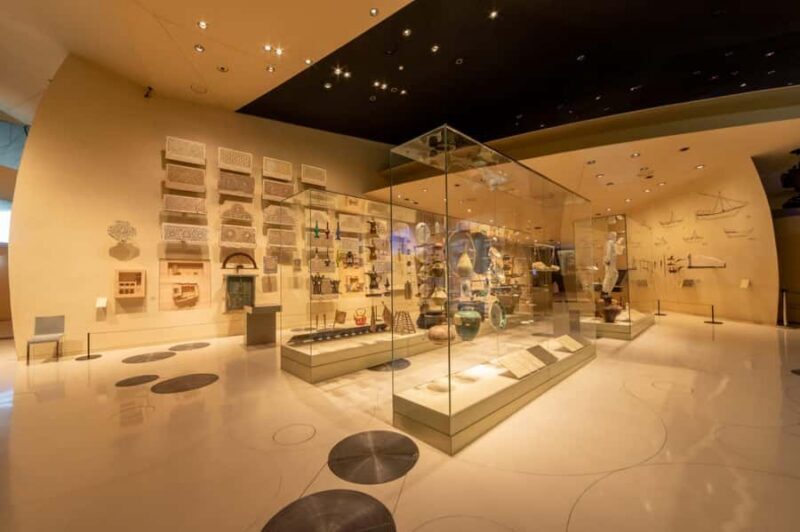
The museum has cafés and gift shops, handy additions if you are spending much of the day inside. A café break can give you a pause between sections, especially if you have been reading closely or using the audio guide. The gift shop offers a chance to take home something connected with Qatari culture, rather than ending your visit at the exit without a moment to reflect.
The museum’s scale makes a break worthwhile. Although your ticket is described as valid for one day, that does not mean you need to fill every hour. Plan around your interest and energy: two or three hours may suit a focused visit, while a slower pace can stretch toward four hours. The open galleries and your appetite for reading will shape the timing.
The admission price is listed at $13 per person, with a 50 percent reduction while galleries are temporarily closed for enhancement work. Entry includes access to the permanent and temporary exhibitions that are open, as well as an audio guide accessed by QR code. The reduced rate makes sense if you are comfortable seeing a partial version of the museum; it is less attractive if your priority is to cover every gallery in one visit.
Value here comes from both the content and the building. You are not paying only to look at displays; you are also getting an introduction to Qatar’s natural setting, social customs, cultural objects, and modern development. The architectural design gives the visit an added dimension, even before you consider the exhibits.
The practical question is how much of the museum will be open on your chosen date. Some galleries have been closed during renovations, and the extent of the closure may affect your route. The museum remains open, but it is wise to check current access before booking or arriving. The half-price admission helps balance the disruption, though it is still worth knowing what you are buying.
The museum is open daily except Tuesdays. It is accessible by car and public transportation, with on-site parking available. The building is wheelchair accessible, and children under 16 must be accompanied by an adult.
A QR code provides access to the audio guide, so bring a phone you can use to scan it. The museum’s design and displays invite photographs, but leave enough time to experience the galleries without turning the visit into a photo checklist. If you want help finding your way outside, ask staff; the route around the building can be confusing.
This is a good museum for a Doha visit when you want context beyond the city’s contemporary skyline. It suits curious adults, families with older children, and anyone interested in architecture, cultural history, or how a country changes over time. The museum’s interpretive style asks you to read and pay attention, so it may be less satisfying if you want a quick, mostly visual stop.
Book if you want a substantial introduction to Qatar and are willing to spend a few hours with its exhibits. The desert rose design, the Beginnings and Life in Qatar galleries, and the account of modern development make a strong combination. The QR audio guide and the Pearl Carpet of Baroda add useful detail, while the museum’s café gives you a practical pause.
Pause before booking if seeing the whole museum is your main reason for going. Renovation closures mean some galleries may be unavailable, even though the ticket includes access to open exhibitions and is half-price at $13. Check the current gallery status, then decide whether the available sections are enough for your plans. If they are, this is a worthwhile way to understand more of Qatar than a view from the street can show.
“Asif and Zakir were excellent tour operators. I would recommend them anytime. A fun filled experience!”
Admission is listed at $13 per person. The fee has been reduced by 50 percent while some galleries are temporarily closed for renovations.
The ticket duration is listed as one day. A visit of two to three hours is a useful planning estimate, while a slower visit can take longer depending on how much you read and listen.
The museum includes Beginnings, Life in Qatar, and sections such as The Modern History of Qatar. Some galleries may be temporarily closed for enhancement work, so the open sections can vary.
Yes. You can access the museum audio guide through a QR code.
Yes. The museum is described as fully accessible for wheelchair users.
It is open daily except Tuesdays.
No. Children under 16 must be accompanied by an adult.
You can check availability for your dates here: