Physical Address
304 North Cardinal St.
Dorchester Center, MA 02124
Physical Address
304 North Cardinal St.
Dorchester Center, MA 02124

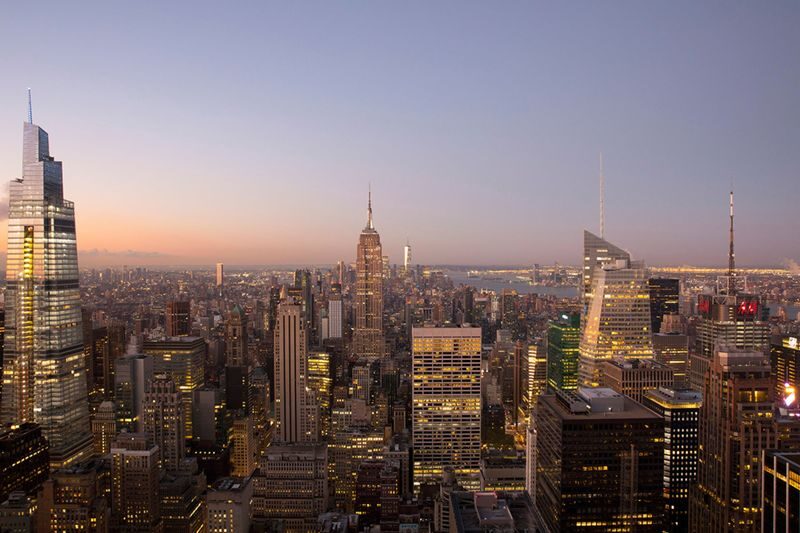
Compare New York’s skyline from Top of the Rock, with open-air decks, Central Park views, optional Beam and SKYLIFT experiences, and practical timing tips.
Top of the Rock gives you a classic New York view with the Empire State Building in the picture, rather than beneath your feet. From three levels of indoor and outdoor decks, you can look north over Central Park and south across Midtown, with the city’s most familiar towers laid out around you.
I like two things here: the open-air 70th-floor deck gives you clear sightlines without glass in front of the view, and the building’s location makes it easy to pair a visit with Rockefeller Center, Radio City Music Hall, or Times Square. The Welcome Gallery also gives you a little context before you head upstairs.
The main caution is timing. Sunset is beautiful but can bring long queues and crowded decks, so a less popular hour may make for a calmer visit. Optional experiences such as The Beam and SKYLIFT also add considerably to the ticket price.
👉 You might find our guide helpful: 2 Best Food Tours In New York

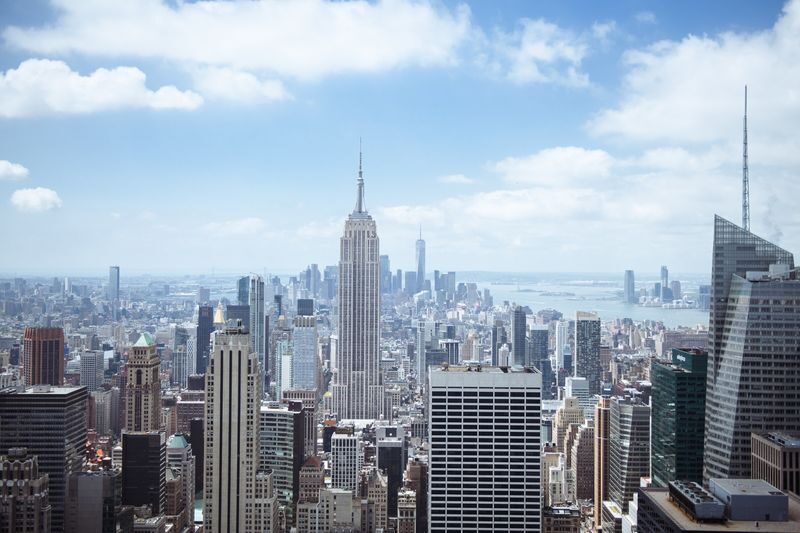
New York has several observation decks, but Top of the Rock has one particularly useful advantage: from here, the Empire State Building is part of the view. You can also look north toward Central Park and take in a wide sweep of Midtown. Rather than seeing only the roofs around you, you get a strong sense of how the city’s landmarks fit together.
The deck reaches about 850 feet above Rockefeller Center. On clear days, the view may extend beyond Manhattan to New Jersey, Connecticut, the Tappan Zee Bridge, and Coney Island’s boardwalk. Visibility depends on weather, of course, and a rainy or hazy day can soften those far-off details. Even so, the closer skyline provides plenty to pick out.
The three levels give you more than one way to enjoy the panorama. You can start inside, get your bearings, and then go out to the upper deck for an unobstructed look. I’d take a few minutes to identify the landmarks before concentrating on photos. The Empire State Building and Chrysler Building are easy points of reference, while Central Park makes a striking green shape to the north.
You might also be interested in these New York experiences
Your visit begins at the Rockefeller Center entrance, where you present the QR code on your mobile ticket. The timed ticket is for a specific date and, when applicable, entry time. Arrive a few minutes early, but don’t line up before your assigned slot. The venue asks you to proceed to the red carpet at your reservation time, and early entry isn’t allowed.
Before the elevator ride, the Welcome Gallery on the mezzanine gives you a short introduction to Rockefeller Center. It includes photo opportunities, a living model of Rockefeller Plaza, and a short film about the site’s history. This is a worthwhile pause if you want more than a quick trip to the roof. It also gives you a sense of the complex below, whose buildings and public spaces are part of the city view you’ll see from above.
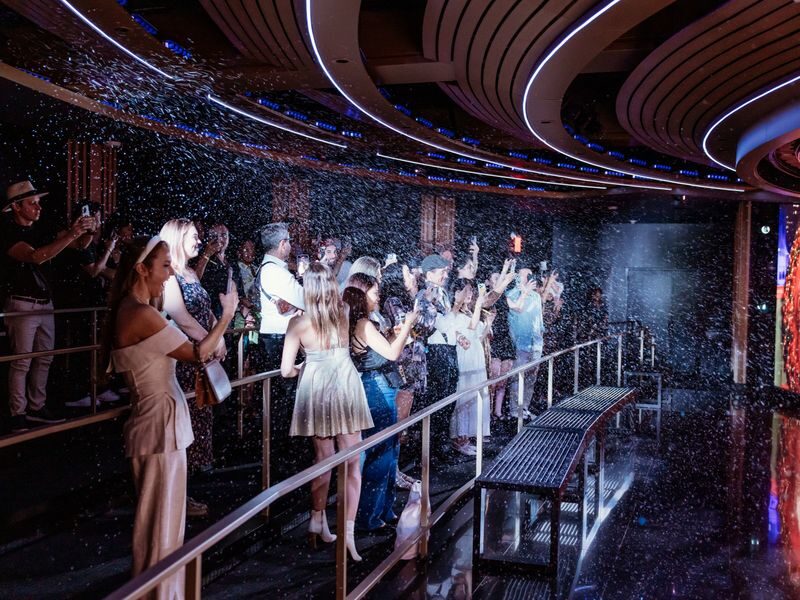
Then you head up to the observation levels. The 67th floor is indoors, with floor-to-ceiling windows and the Radiance Wall, a 180-foot Swarovski art piece. This is a useful level if the wind is sharp or the weather turns unpleasant. It also gives you a place to view the skyline without having to stay outside.
The 69th floor is surrounded by glass and offers another angle on the city. This is where you’ll find The Beam Experience, an optional photo attraction inspired by the famous 1932 image of construction workers eating lunch on a steel beam. The experience raises you 12 feet above the deck, with glass around you and city views beyond. It’s a memorable photo setup, but it is brief. If you’re buying a more expensive ticket mainly for this moment, keep that short duration in mind.
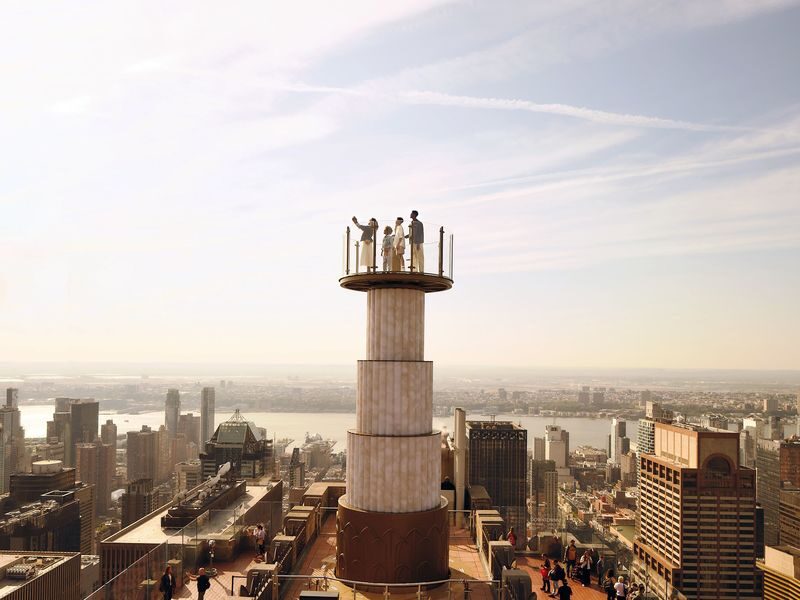
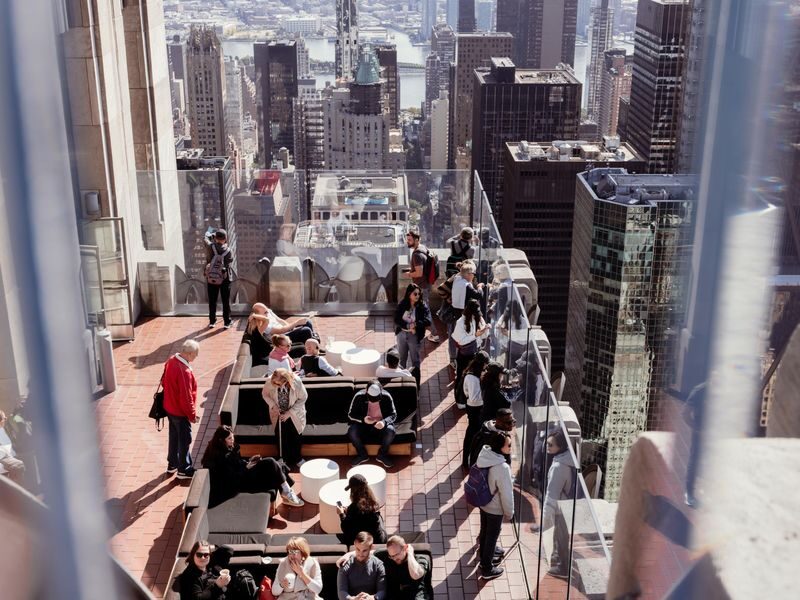
At the top, the 70th-floor deck is open air and has no glass barriers. This is the place to get the clearest view through your camera lens, and many people make it their first stop. The trade-off is exposure to wind and weather, and the space can feel small when it’s busy. You may need patience to reach the edge or find a clear angle for a photo.
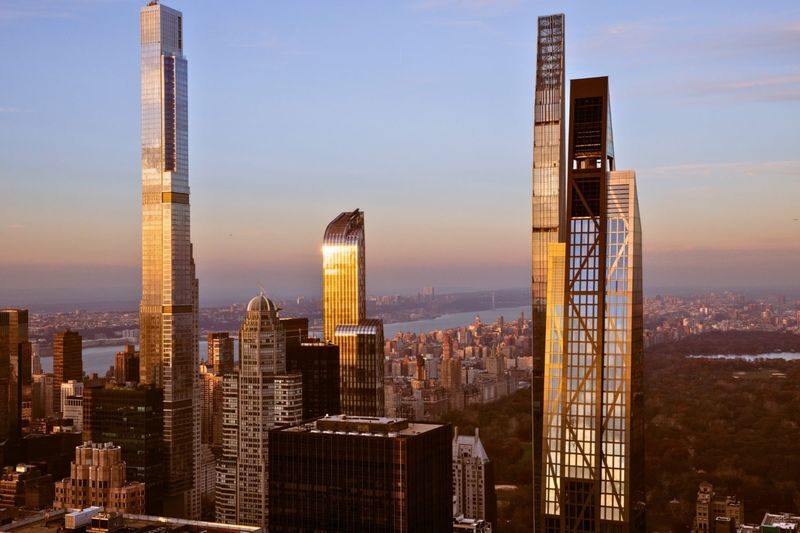
Look south for the Empire State Building, one of the defining sights from this deck. One World Trade Center and the Chrysler Building also help you read the skyline. The city’s tightly packed towers become easier to understand when you can compare them from above, rather than looking up from street level.
Turn north for Central Park, whose size and shape are hard to appreciate from the ground. From this height, you can see the park set against the dense blocks of Manhattan. Looking east and west, the terraces open up views of the city and, on a clear day, landmarks such as the Brooklyn Bridge and Statue of Liberty.
The wide outlook is the main reason to choose Top of the Rock. Some observation decks emphasize unusual interiors or thrill rides; here, the central pleasure is looking across the city and spotting its icons. That makes it a strong choice if your priority is a broad, recognizable New York panorama rather than an activity-heavy attraction.
Photos are allowed. For the cleanest shots, the open-air top level is a good bet, though weather and crowds matter. If you want to photograph the skyline at sunset, plan for the possibility of waiting both to enter and to move between levels. The views can change as daylight fades and city lights come on, but that popular transition is also the busiest part of the day.
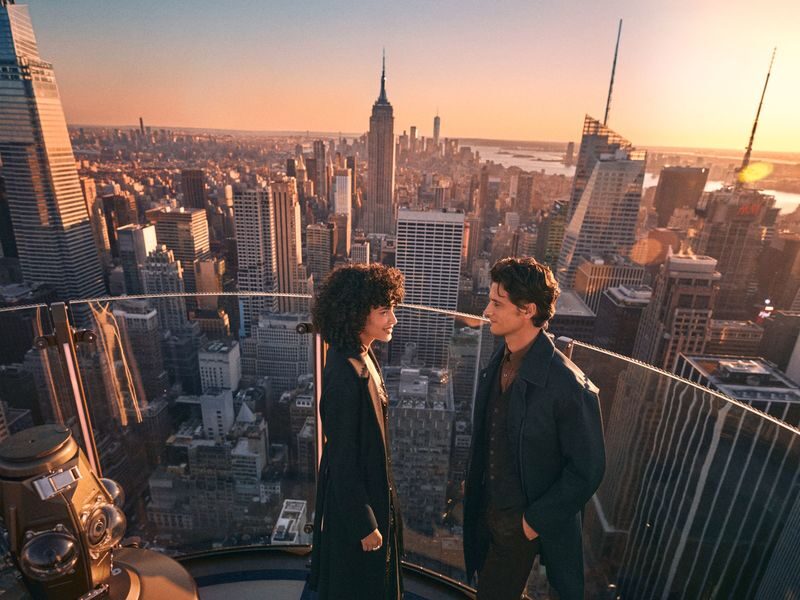
The attraction is listed as open daily from 8:00 a.m. to 11:59 p.m., with last entry at 11:10 p.m. The last elevator to the observation deck goes up one hour before closing, and hours can change, so check the details for your date before setting out. A typical visit takes about 45 minutes to an hour, though the overall experience is listed as one to three hours. You can stay on the decks during operating hours, so there’s no need to rush once you’re upstairs.
For a quieter visit, aim for early morning, roughly 8:00 to 11:00 a.m., or late evening from around 8:00 p.m. onward. If you want the sunset glow, book an entry time about an hour before sunset. That gives you a chance to see the city in daylight, watch the colors shift, and stay for the first city lights. It also means accepting heavier crowds and possible delays.
A timed ticket helps you plan, but it doesn’t promise that every part of the visit will be instant. At popular sunset hours, queues can form before the elevator and between levels. Some people have experienced waits at the entrance and on the way down, too. If standing in a tight crowd would spoil the outing for you, choose an off-peak time instead of treating sunset as essential.
Weather matters. Rain can limit the view, and wind is noticeable on the open deck. If the forecast is poor, check whether changing your visit time is possible before you go. Some ticket changes may be handled on site, but don’t count on that without confirming the terms for your booking.

General admission covers access to the observation decks. The Beam and SKYLIFT are separate ticket options, and some packages include one or both. The Beam’s appeal is clear: it stages a dramatic photo based on a famous New York construction image. But the ride is short, and the extra cost may not suit you if the skyline itself is your main reason for coming.
SKYLIFT adds another raised perspective above the deck. It is a separate experience, not a requirement for enjoying Top of the Rock. If you’re weighing both add-ons, consider whether you want a quick thrill and a posed photo or would rather spend that money on another New York activity. The VIP options cost more still and may include priority access, a guided tour, private experiences, a photo pass, a champagne toast for visitors 21 and older, and a gift-shop discount. Check the package details carefully: the standard ticket does not include a guide.
Prices depend on date and package. The activity is advertised from $29.40, while the listed timed-admission package starts at US$38.89; add-ons raise the cost, with some packages listed from US$57.39 and the Beam plus SKYLIFT option from US$78.39. Those figures can change, so check the price for your chosen date before booking. For a straightforward skyline visit, general admission is the sensible starting point. Pay extra only if the specific experience appeals to you.
Top of the Rock is at 30 Rockefeller Plaza, between Fifth and Sixth Avenues, with the main entrance on 50th Street. The B, D, F, and M trains stop at 47-50th Streets/Rockefeller Center. You can also take the 1 train to 50th Street or the 6 train to 51st Street, then walk to Rockefeller Center.
The entrance can be a little hard to spot in the busy complex, so allow time to find it rather than arriving at the last minute. Your mobile QR code is the ticket; no printed ticket is needed. Standard admission does not include a guide or personal expenses. Food and drink are not included, though The Weather Room offers coffee, local bites, and cocktails, with views of Central Park and Manhattan.
The attraction is wheelchair and stroller accessible, and children aged five and under must be with a paying adult. Service animals with valid identification are allowed; other pets are not. Bags are inspected at the entrance. The available information also advises against bringing outside food or drinks, large bags, tripods, selfie sticks, or large umbrellas, so travel light.

If you’re choosing just one observation deck, think first about the view you want. Top of the Rock gives you the Empire State Building in your frame and a clear look toward Central Park. That makes it especially appealing if you want a classic Midtown panorama and open-air photography.
The Empire State Building offers a different experience because you’re standing inside the landmark itself, while Summit One Vanderbilt and Edge are other alternatives with their own settings and views. If you’re already visiting another observation deck, ask yourself whether another city panorama is worth the extra ticket. Top of the Rock is not essential for every itinerary, but its position makes its view distinct.
The best value comes from choosing the right ticket and time. A standard timed ticket is enough to enjoy the decks, and visiting outside the sunset rush can make the experience calmer. The Beam and SKYLIFT can add fun, but they are optional extras, not the heart of the visit.
Book it if you want a sweeping New York view that includes the Empire State Building, Central Park, and the open-air perspective of Midtown. It’s also a practical choice if you’re already exploring Rockefeller Center, Times Square, or nearby sights and want to fit a skyline stop into the day.
I’d choose standard admission for a first visit, then consider The Beam only if the photo experience genuinely appeals to you. Pick an early or late time if you value room to move, or accept the crowds if sunset is part of the plan. If you’re already paying for another observation deck, compare the views before adding a second ticket. The skyline is the star here, and the basic ticket is the clearest way to see it.
“Great, good, excellent”
Many people spend about 45 minutes to an hour exploring the three observation levels. The visit can take longer if you go at a busy time or want to linger.
It is listed as open daily from 8:00 a.m. to 11:59 p.m., with last entry at 11:10 p.m. The last elevator to the observation deck goes up one hour before closing. Hours may change.
Take the B, D, F, or M train to 47-50th Streets/Rockefeller Center. Other options are the 1 train to 50th Street or the 6 train to 51st Street, followed by a walk to Rockefeller Center.
No. General admission includes one Top of the Rock Observation Deck ticket. The Beam and SKYLIFT are available through separate ticket options.
Yes. Present the QR code on your e-ticket for entry. A printed ticket is not required.
Yes. The attraction is wheelchair accessible, and strollers are also permitted.