Physical Address
304 North Cardinal St.
Dorchester Center, MA 02124
Physical Address
304 North Cardinal St.
Dorchester Center, MA 02124

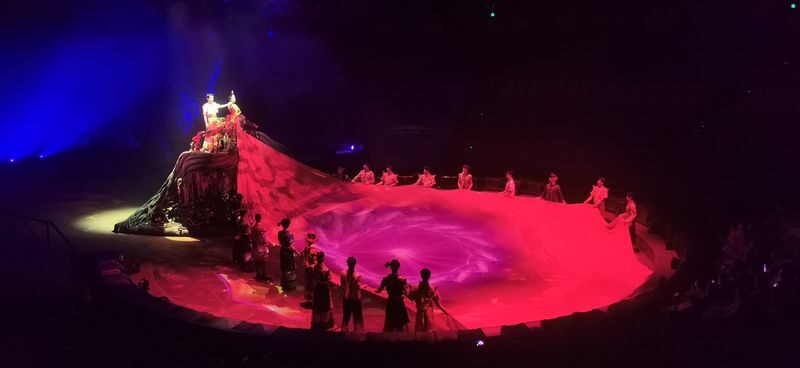
Review of Xishuangbanna’s New Dai Show: 70 minutes of Dai legend, water effects, ethnic dance, acrobatics, and a post-show bonfire party.
The New Dai Show puts its grandest trick up front: a stage built to shift between land and water, with a central platform that rises and falls and water effects that can suggest a river or lake. The show wraps a Dai legend around those effects, then adds dance, acrobatics, puppets, and lasers.
I like two things about the plan: the story gives the spectacle a clear thread, and the mix of Dai, Hani, Yi, and other cultural elements offers more than a single dance routine. The performance also leads into a bonfire party, so the evening can continue beyond the theater.
The main consideration is scale. With a 70-minute show, dramatic effects, and a large theater, this is a stage production first, not an intimate introduction to Dai culture. Arrive early, too: you’ll need to exchange your QR code for a paper ticket before taking your seat.
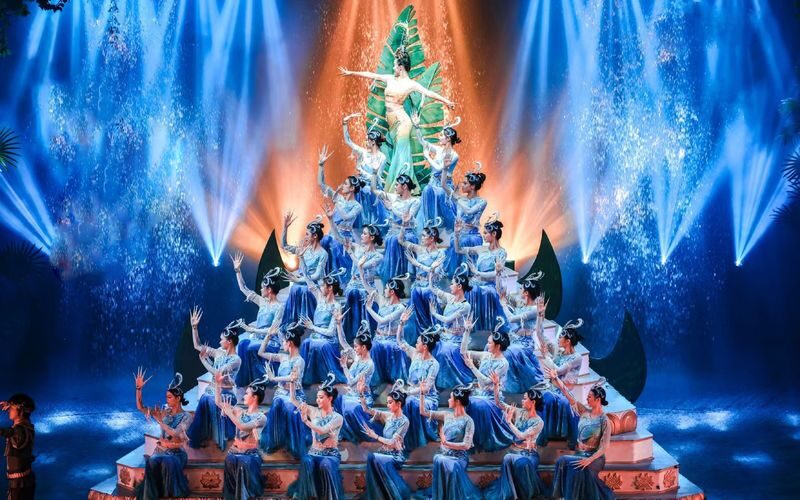
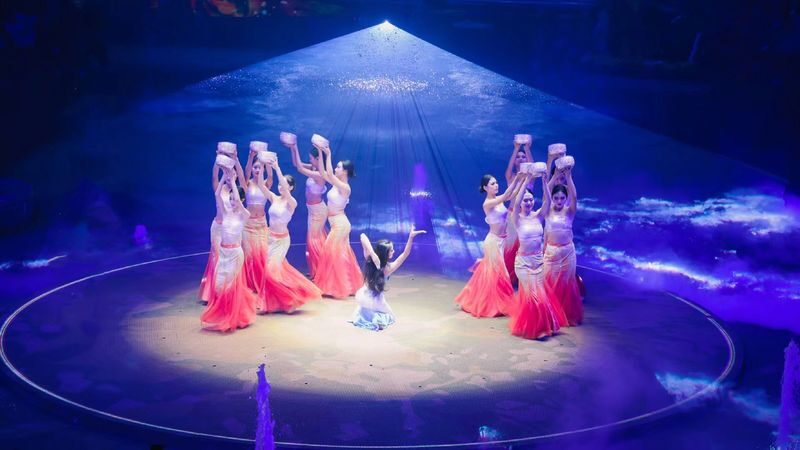
The show’s central tale draws on ancient Dai legends. Princess Nan Mu Nuo Na meets Prince Zhao Shu Tun by Lang Si Na Lake, and the two fall in love. Their happiness is threatened when an evil sorcerer pursues powerful magic and conflict erupts between their kingdoms.
The story reaches its turning point when the princess gives up her feather cloak to imprison the sorcerer and end his magic. The plot brings familiar themes of love, war, sacrifice, and peace to the stage, giving the production a narrative spine amid the visual effects.
You don’t need to know the legend in advance to follow the broad arc. The sequence is built around clear dramatic contrasts: a peaceful meeting, a threat, conflict, and a return to calm. That makes the show accessible if you’re new to Dai stories, though the production’s aim is theatrical impact rather than a detailed history lesson.
One separate story, Xiangwang Banna, takes inspiration from the northward migration of Asian elephants. Puppet elephants carry a message of harmony, adding a gentler note to the show’s larger spectacle. The puppets also bring a different kind of stage presence from the dancers and acrobats, which can help keep the program from feeling like one long string of similar numbers.
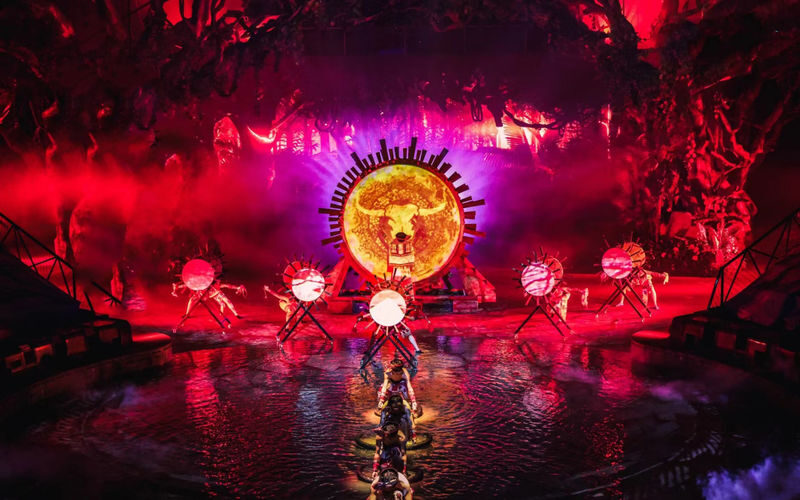
The theater’s main technical draw is its 6D land-and-water stage. Its central lift platform is described as covering 1,400 cubic meters, while 140 three-dimensional water devices create shifting effects. The stage can change quickly, giving the production room to move from a quiet lake scene to a more forceful river or battle setting.
These features matter because they do more than decorate the stage. A rising or falling platform can signal a change of place or mood without stopping the action, while water effects make the natural setting feel like part of the story. If you enjoy big theatrical machinery, this is likely to be the show’s strongest selling point.
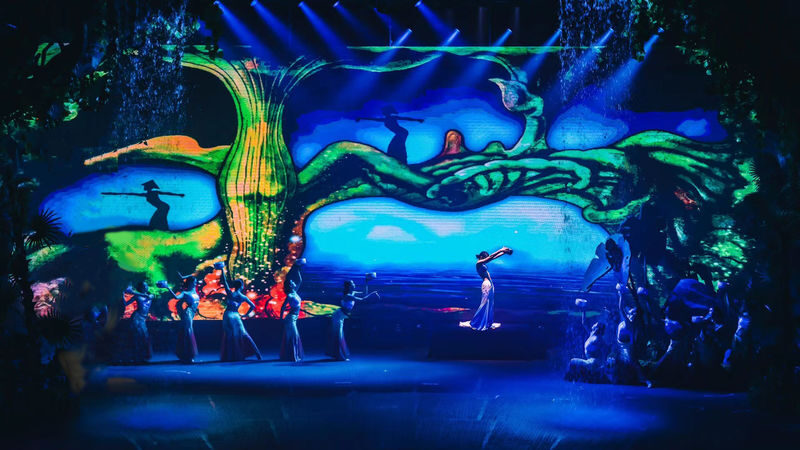
The double-layer folding dome is part of the theater’s distinctive design. Inside, a circular auditorium with a stated 270-degree viewing angle aims to keep seats oriented toward the action. The venue also uses 3D holographic projection, lighting, and surround sound to extend the scene beyond the performers themselves.
The practical limit is that a wide view is not the same as a close view. The production is built for scale, so smaller facial expressions may not carry the same weight as the movement, costumes, and stage changes. I’d choose it for the overall visual effect, not for the chance to study every detail of a performer’s expression.
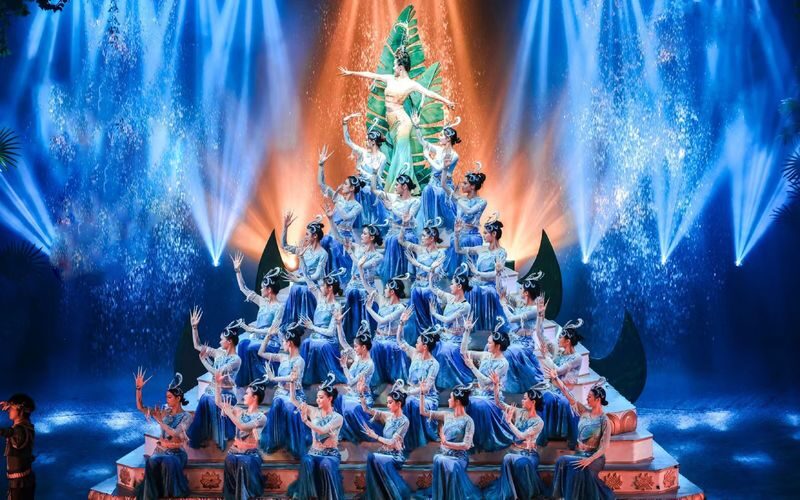
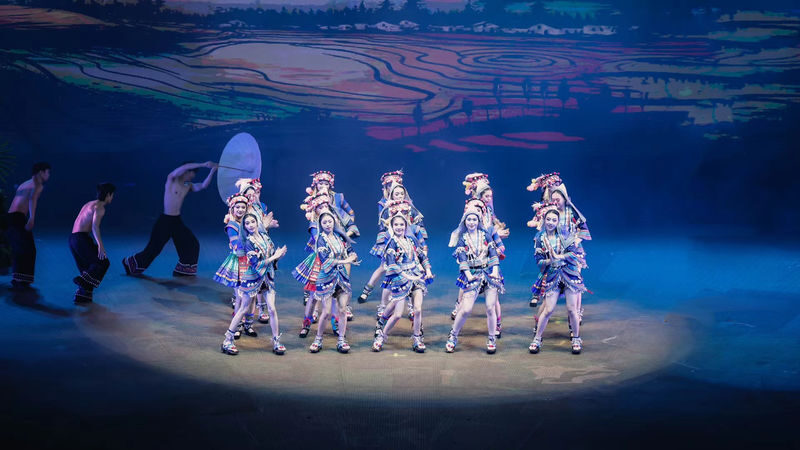
The show presents 13 chapters featuring the cultures of the Dai, Hani, Yi, and other ethnic groups in Xishuangbanna. The costumes are a major part of the visual storytelling: Dai tube skirts and Hani attire help distinguish the groups, while dance movements and drum rhythms add another layer.
Dai dance is described through its graceful, three-bend movements. Hani dance brings a more forceful quality, with drum-led movement. The contrast is useful for the audience: rather than relying on a single style throughout, the performance changes pace and energy as it shifts among cultural scenes.
The program also includes scenes drawn from daily work and festival celebrations. These moments can offer a glimpse of how the region’s communities express labor, ceremony, and shared life through performance. Still, a stage show necessarily condenses culture into brief chapters. Treat it as an evening introduction, not a substitute for time spent learning about local communities and their traditions.
Acrobatics add risk and motion, with performers taking on demanding movements in the air. Laser displays bring a sharper, more modern visual style, while puppets provide comic or tender moments. That variety is part of the appeal, particularly if you’re attending with children or a group with mixed tastes. It also means the production may feel busy if you prefer a quieter, more focused dance performance.
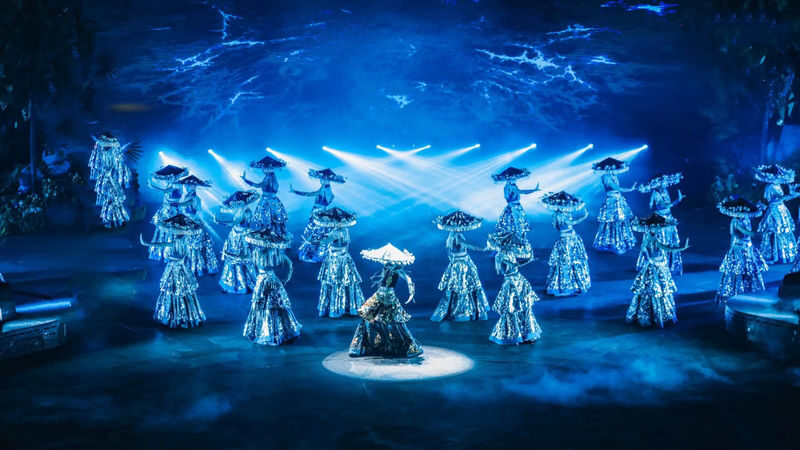
Lighting shifts with the story, creating scenes that range from a mysterious rainforest to a battlefield and a peaceful land. Sound effects include birds, water, war drums, and laughter. Together with the surround system, they aim to make the setting feel present on all sides rather than confined to a flat stage.
Singing and music support the dancers, while the lighting helps signal when the mood turns from calm to tense. These details are worth noticing if you like to see how technical elements guide a story. The effects are not just a backdrop: they help mark each change in place and feeling.
The production’s strongest praised element is its stage effects. One available audience comment singled out the effects as amazing, and that matches the show’s emphasis on its moving platform, water, projection, and lighting. Keep expectations in proportion, though: the sample of feedback is very small, so it should be read as one positive response, not a promise that every part of the evening will suit every taste.
The listed schedule places outside reception at about 19:10, with the performance beginning at 19:45 and running roughly 70 minutes. Ticket inspection begins half an hour before the show. Arriving 30 to 60 minutes early gives you a sensible cushion to find the group ticket counter, exchange your QR code, and get through the entry process without rushing.
At the counter, present the QR code sent after booking to collect your paper ticket. You’ll need to provide accurate identity details for one adult when placing the order, since incorrect information can prevent entry. The voucher is valid only for the selected date and, where relevant, time, so check those details before you set off.
The show is followed by a bonfire carnival scheduled for about 21:05. The format includes Dai disco, dancing, and close interaction with performers. That extra social hour may be a real plus if you want a lively end to the evening. If you’re mainly interested in the seated performance, factor in the later finish when planning your return.
The listed package covers the New Dai Show ticket only. Personal expenses and anything not specifically included are extra. Food, drinks, professional photography and video gear, lighters, and pets are not permitted under the venue’s stated restrictions, and you cannot re-enter after leaving.
The venue address is in the Sunac Tourism Resort on Wanjing Avenue, in Jinghong’s industrial park. It is also referred to as Peacock Princess Theatre or Peacock Princess Grand Theatre, so use the full destination name when checking directions to avoid confusion.
Jinghong bus routes 8 and 5 serve Sunac Shopping Plaza. From that stop, the listed walks to the theater are about 438 meters on route 8 and 507 meters on route 5. The theater is open daily from 16:00 to 21:30, though the performance schedule can change, so confirm the timing locally on the day.
Performance times and program details are subject to on-site announcements. Extra shows or special circumstances may bring adjustments. Keep the paper ticket after you collect it, and follow staff instructions about entry and restricted items.
Tickets start at $30.05, with the final value depending on the price shown for your date and package. For that, you get a roughly 70-minute production with a large technical setup, several performance styles, and a story rooted in Dai legend. The scheduled bonfire party adds another reason to consider the ticket as an evening plan rather than a short theater stop.
The value is strongest if you enjoy high-impact staging. The moving platform, water effects, projection, lasers, and surround sound are central to the production, not minor extras. If you’re curious about local performance but also want a polished, large-scale show, the mix may be a good fit.
The value is less certain if you want a small venue, a detailed cultural lecture, or an unamplified folk performance. The show combines many forms and cultures in a short time, so it offers variety rather than depth on any one tradition. You may want to pair it with other experiences in Xishuangbanna if cultural context is your priority.
Children under 1.3 meters tall may enter free, but they do not receive a seat and must be accompanied by a ticketed adult. Each ticketed adult may bring one free child, and the child still needs an admission ticket collected at the counter. Children 1.3 meters or taller need an adult ticket. For a family, that rule is worth checking before you book, especially if a child will need their own seat.
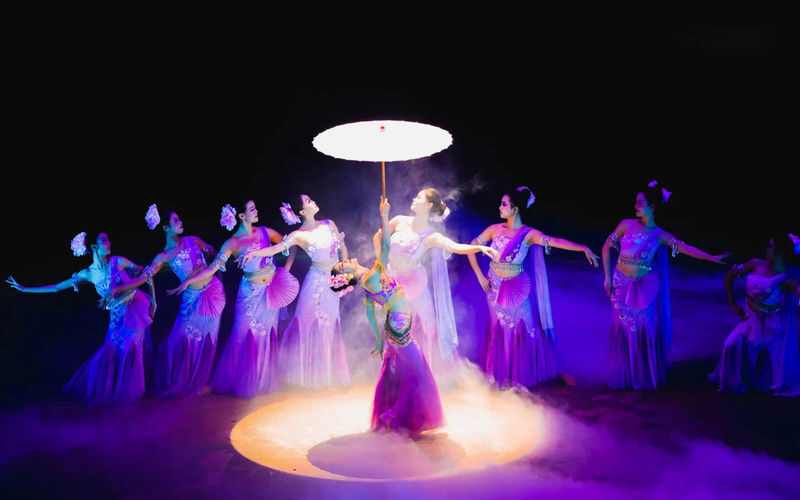
Book it if you want a visually ambitious evening with Dai legend, ethnic dance, acrobatics, water effects, and a bonfire party afterward. The stage machinery and effects are the clearest reasons to go, and the show’s mix of styles makes it an easy choice for a group with varied interests.
Skip it if you’re hoping for an intimate performance or a deep explanation of Xishuangbanna’s many cultures. For most visitors, the best approach is to enjoy it as theatrical entertainment with cultural elements, arrive early for ticket exchange, and leave enough time for the post-show party if you plan to stay.
“Super impressive! The stage effects were amazing.”
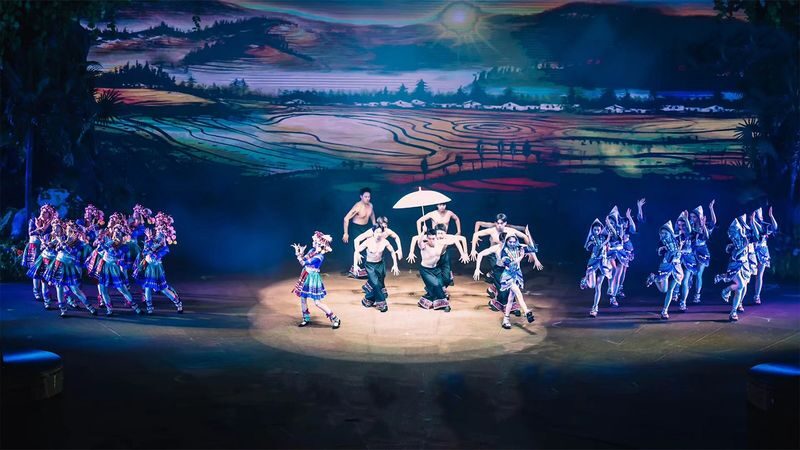
The performance lasts about 70 minutes. A bonfire carnival is scheduled outside at around 21:05, after the show.
The listed show time is 19:45 to 20:55, subject to on-site changes. Ticket inspection starts half an hour before the performance.
Present the QR code sent after booking at the group ticket counter to collect a paper ticket for entry.
Children under 1.3 meters tall can enter free without a seat, with a ticketed adult. Each ticketed adult may bring one free child, and the child must collect an admission ticket at the counter. Children 1.3 meters or taller need an adult ticket.
Jinghong routes 8 and 5 stop at Sunac Shopping Plaza. The listed walks from the stop are about 438 meters and 507 meters, respectively.
The ticket is refundable if you cancel at least 24 hours before the event starts, using destination local time.