Physical Address
304 North Cardinal St.
Dorchester Center, MA 02124
Physical Address
304 North Cardinal St.
Dorchester Center, MA 02124

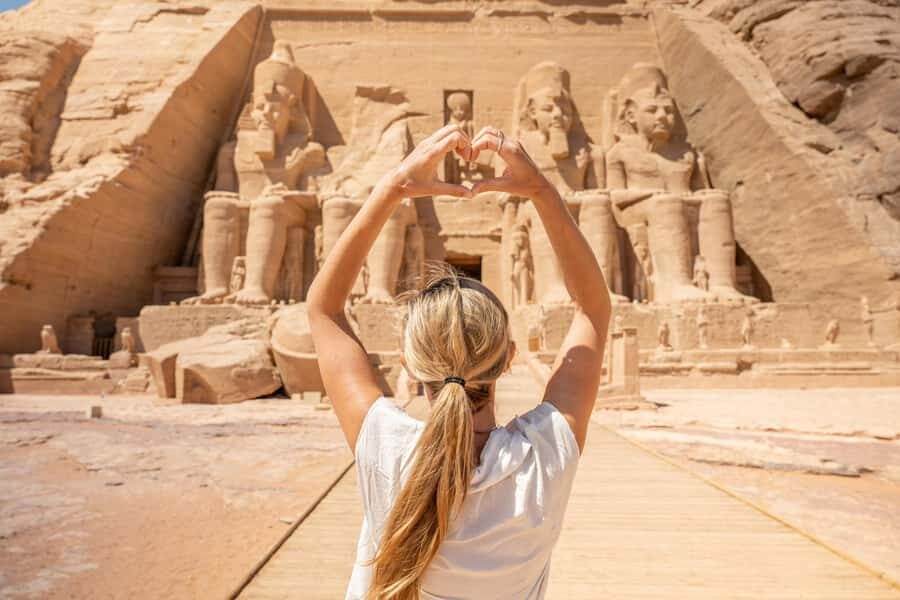
Review this $65 Aswan day trip to Abu Simbel, with temple entry, hotel pickup, an expert guide, and a long early-morning drive.
Abu Simbel’s colossal statues are the kind of sight that makes the long ride south feel worthwhile. This 10-hour group trip from Aswan pairs the temples of Ramses II and Queen Nefertari with a guide who can explain their carvings and the remarkable move that saved them from the rising waters behind the Aswan High Dam.
I like two things here: the entry fee and hotel pickup are included, so the main costs are clear, and the guides named by visitors, including Ahmed Ashraf, Mido, and Waleed Adnan, are often praised for making the history easy to follow. The trade-off is the road time: you may spend only about an hour to two hours at the temples, so this suits you best if convenience matters more than lingering.
Abu Simbel lies far south of Aswan, and getting there is a substantial part of this excursion. The tour runs for about 10 hours, with an early departure so the group can travel with the daily convoy. You’ll ride in an air-conditioned vehicle, an important comfort on a day when the road takes up much of the schedule.
The drive is not a small gap between attractions. It is the price of reaching one of Egypt’s most striking ancient sites without arranging your own transport. Some visitors found the ride smooth and comfortable, and one described a stop for a restroom break. But stops are not guaranteed by the tour details, and at least one visitor reported no breaks or shops along the way. Bring water and anything you need rather than counting on a particular stop.
The early start has a practical upside: some groups have reached the temples around 8 a.m., when there were fewer people. Pickup times can vary, and clear communication matters when you are waiting in a hotel lobby before dawn. Keep your phone handy, confirm where to meet, and be ready to step outside if you cannot see the vehicle or coordinator.
The return time also varies. One reported schedule was back in Aswan shortly after 1 p.m., while another account described a return around 3:30 p.m. Treat the 10-hour duration as a guide, not a promise of a precise arrival time. Avoid making tight plans for the same afternoon.
If you prefer having a local expert, these guided Aswan experiences could work well
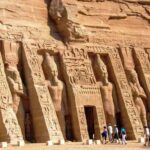
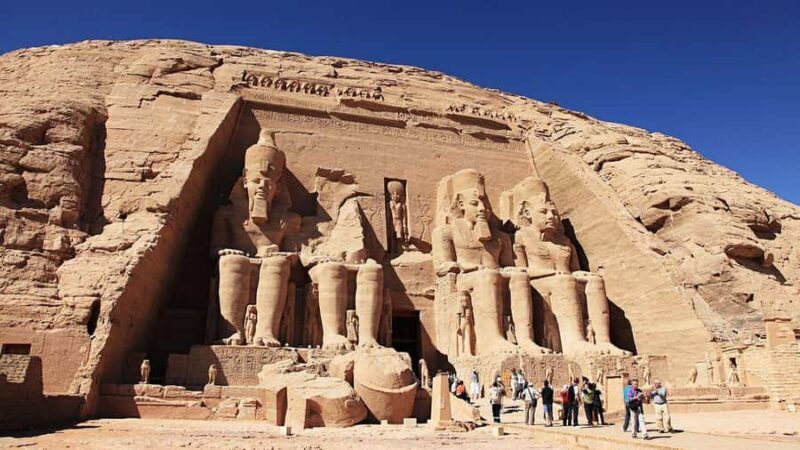
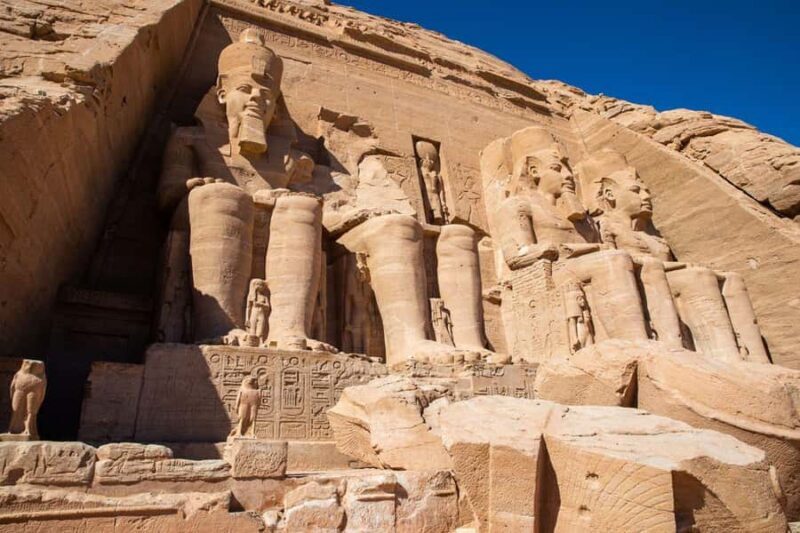
At Abu Simbel, the Great Temple of Ramses II commands attention with its colossal statues and carved façade. Built in the 13th century BCE during Ramses II’s reign, it honors the pharaoh himself. The scale is hard to grasp from photographs: the seated figures rise above you, turning the approach into part of the experience.
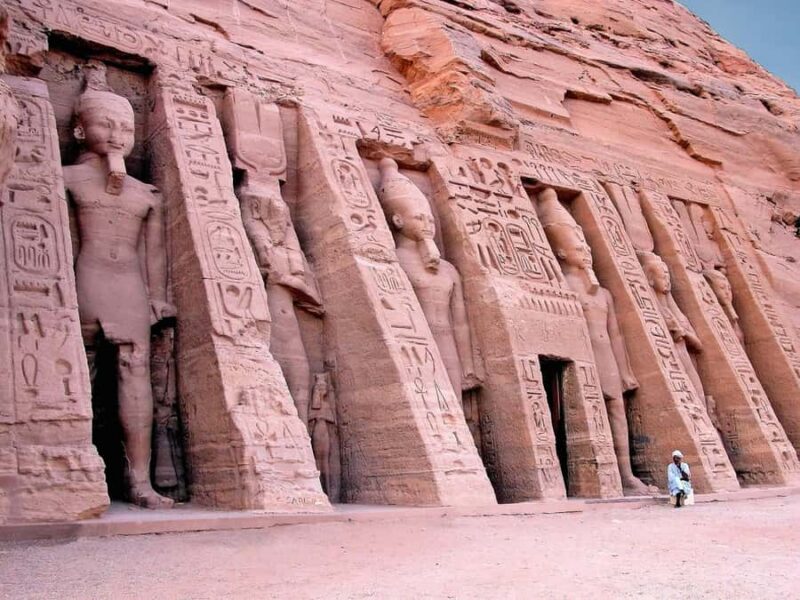
The smaller Temple of Hathor honors Queen Nefertari, Ramses II’s chief wife. Its carvings and statues give the visit a different focus from the larger temple, and a guide can help you notice the connection between the two monuments. Don’t rush straight from one to the other. Take a moment to look at the façades as a pair, then pay attention to the details your guide points out.
A good guide can make a brief visit more rewarding. Ahmed Ashraf is repeatedly praised for clear explanations, while Mido is noted for combining history with an easy, humorous manner. Waleed Adnan and Shazly Ali are also named for their engaging explanations and care with the group. Guides vary by departure, of course, but the tour offers several languages: Arabic, English, French, German, and Spanish.
The guide’s role may be concentrated in an introductory explanation rather than a continuous walk-through. One visitor found that the guide spoke briefly before the temple visit and did not accompany the group inside. So think of this as a guided overview plus time to look around independently, rather than assuming a guide will interpret every room and carving with you.
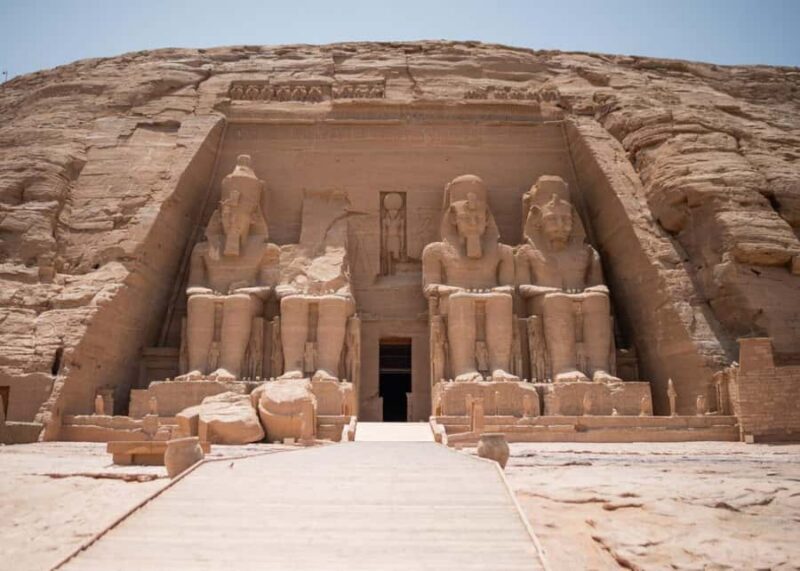
The temples are not only remarkable ancient monuments. They also tell a modern story of preservation. When construction of the Aswan High Dam threatened to submerge the site, the temples were moved to higher ground in the 1960s, block by block.
That engineering effort is a major part of what makes Abu Simbel more than a photogenic stop. The relocation helps explain why the temples now sit where they do and why their preservation required such an ambitious project. Ask your guide to explain how the move worked; several guides are praised for covering the reconstruction as well as the temples’ ancient history.
This context is especially useful if you have already seen other Egyptian temples. The statues and carvings are the immediate draw, but the modern relocation gives the site a second story: ancient power on one hand, and a massive effort to protect cultural heritage on the other.
This is the key decision point. The tour’s full duration is 10 hours, but the visit itself is much shorter. Reports range from around an hour to roughly two hours at Abu Simbel. Some people found an hour enough to see both temples comfortably; others wanted another 15 to 45 minutes to take in the site at a slower pace.
Your own pace matters. If you listen to the guide, explore both temples, take photos, and leave time to look carefully at the façades, an hour may feel brisk. If you like to linger over inscriptions or take a break between the temples, you may wish the visit were longer. The long ride makes every minute on site feel valuable.
This is a sensible choice if you want a well-organized day trip and are content with an overview. If Abu Simbel is the main reason for your time in Egypt and you want a leisurely visit, compare options that offer a longer stay before booking. The available information does not promise a fixed amount of time at the site, so ask about the expected schedule if that detail will decide it for you.
More Great Tours Nearby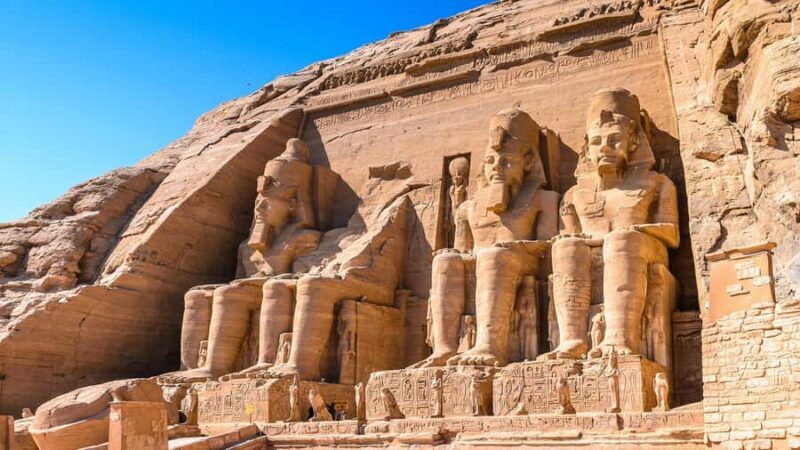
At $65 per person, the price includes hotel pickup and drop-off, an English-speaking guide, and the Abu Simbel entry fee. Those inclusions take care of the main logistics and reduce the need to arrange transport and tickets separately. For a distant site, the convenience is a large part of the value.
Food and drinks are not included. Bring a packed lunch, snacks, and water, particularly if you prefer not to rely on a café stop. A coffee shop is available at the site according to one account, but that is not a substitute for a planned meal, and availability or timing may not suit your group.
Pickup and drop-off are excluded for Gharb Soheil, The Island, Nagaa al-Mahatta, and New Aswan. If you are staying in one of these areas, check the pickup arrangement before paying so you can factor in any extra transport.
If you are booking for children, check the price before confirming. One family noted that children were charged the adult rate despite needing lower-cost or no-entry tickets in their case. That does not establish a standard child policy, but it is worth clarifying rather than assuming the adult price will be adjusted.
Tips are not listed among the included services, so decide for yourself whether you want to tip. Keep your phone in your own hands if you are asked to leave a review, and take the time to write what you genuinely think.
Wear comfortable clothes and shoes that you can manage through a long outing and while exploring the temple grounds. The essentials are simple: water, sunscreen, and sunglasses. The sun can make waiting and walking tiring, even when the transport is air-conditioned.
Pack food as well. The tour does not provide meals or drinks, and a long day is easier when you are not counting on a stop at the right time. Keep what you need accessible in the vehicle, rather than buried in a bag you cannot reach during the ride.
Pickup is from your hotel lobby. Confirm the meeting point and be ready early, since the group has to coordinate a convoy departure. If the vehicle is not visible at the expected time, contact the operator rather than assuming pickup has been missed.
I’d recommend this tour if you want to see Abu Simbel without arranging your own vehicle, tickets, and guide. The included entry fee and hotel pickup make the $65 price easy to assess, and an experienced guide can give the temples useful context in a short visit. It is especially appealing if you have a limited stay in Aswan and want the essential sights handled in one day.
It is less suitable if you dislike early starts, long drives, or set group schedules. You may also want a different arrangement if you expect to spend several hours studying the temples. The group format offers convenience, but it means your time at the site is shaped by the schedule and other people’s pace.
Overall, book it for the practical package and the chance to see two extraordinary temples with a guide. Before you commit, confirm your pickup area, ask how long the group expects to stay at Abu Simbel, and check child pricing if needed. If those details suit your plans, this is a strong-value way to make the long trip from Aswan.
“We had a wonderfull day in Abu Simbel with our Guide Shazly Ali. He cared for us and he gave us time and his Knowledge to get a deeper understandin…”
The tour lasts about 10 hours, including the trip from Aswan and the visit to the temples. The exact return time can vary.
Hotel pickup and drop-off, an English-speaking guide, and the Abu Simbel entry fee are included.
No. Bring water and a packed lunch, as food and drinks are not included.
Guides may speak Arabic, English, French, German, or Spanish. Check which language is offered for your departure.
The visit includes the Great Temple of Ramses II and the Temple of Hathor, dedicated to Queen Nefertari.
Pickup is excluded from Gharb Soheil, The Island, Nagaa al-Mahatta, and New Aswan. Check the arrangement if you are staying in one of these areas.
Yes. You can cancel up to 24 hours in advance for a full refund.
You can check availability for your dates here: