Physical Address
304 North Cardinal St.
Dorchester Center, MA 02124
Physical Address
304 North Cardinal St.
Dorchester Center, MA 02124

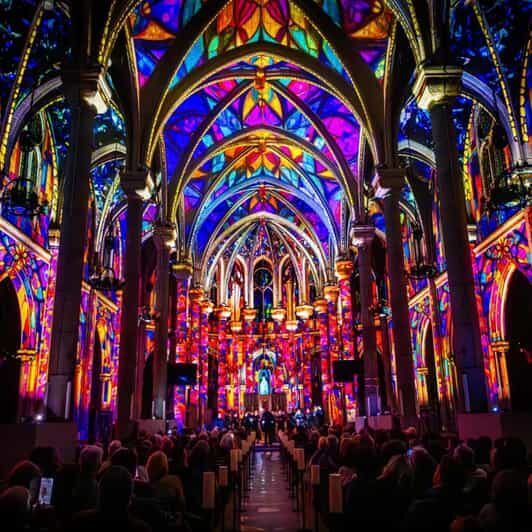
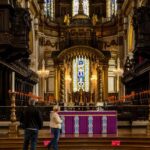
See Westminster Cathedral transformed by LUMINISCENCE, a 50-minute concert of live choral music, 360° projections, and London history narrated by Hugh Bonneville.
Westminster Cathedral becomes the stage for a 50-minute concert in which light and music play across its domes and mosaics. Lux Aeterna sings classical works as Hugh Bonneville narrates a specially written story about London and the cathedral.
I like the way the show makes the building itself part of the performance, rather than just a grand room around it. I also like the mix of live choral music and clear historical storytelling, which gives the projections something more substantial to follow.
One thing to plan around: seats are unassigned, and a seat farther back offers a broader view of the projections. Arriving early can mean a wait in the queue, but arriving late may leave you close to the front, where looking up at the dome can get uncomfortable.
LUMINISCENCE takes place at Westminster Cathedral on Victoria Street, a short walk from Victoria Station and near the Victoria and St James’s Park Underground stations. That makes it a practical evening stop if you are already exploring central London, and an easy place to reach without setting aside a full day.
The first thing to keep straight is the name. Westminster Cathedral is not Westminster Abbey. They are separate London landmarks, and this show takes place inside the cathedral on Victoria Street. If you are booking because you want to see the Abbey, this is the wrong ticket. If you are curious about a different historic church and a performance designed around its interior, you are in the right place.
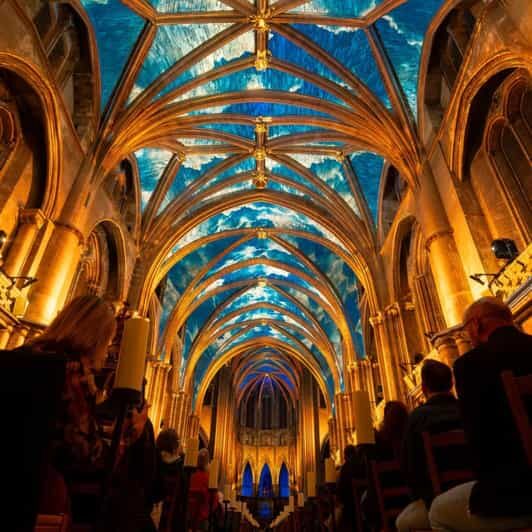
You arrive, take your seat, and watch the room change around you. The performance uses 360° video mapping and spatial sound to make the cathedral’s architecture part of the show. Images and light move across the interior as the music and narration develop, so you are not watching a screen at the front of a room. The building is the screen.
That distinction matters. The draw is not only the technology, nor only the chance to hear a choir. The experience brings the architecture, music, and story together in one place. If you enjoy performances that make a landmark feel newly legible, this format has a clear purpose.
You might also be interested in these London experiences
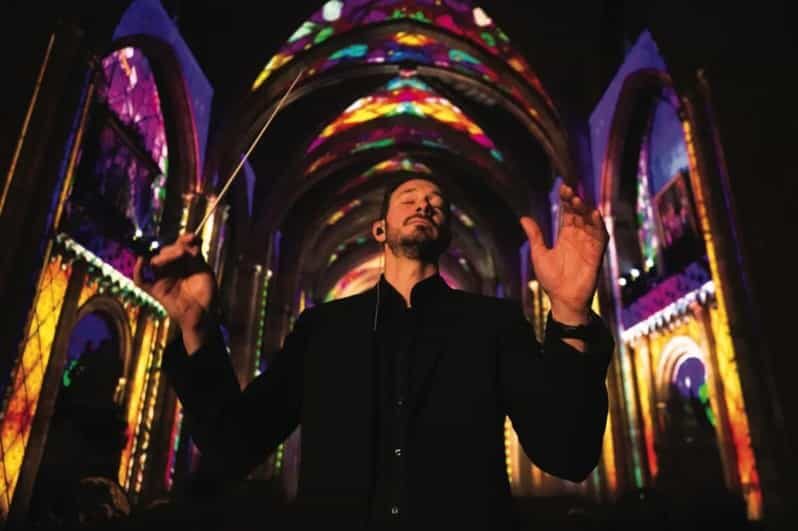
The performance is seated and lasts about 50 minutes. After you take your place, the projections and sound begin to shape the interior, with the narrative guiding you through London’s story and the history of the cathedral. Tim Whitnall wrote the script, and Hugh Bonneville voices it.
The narration gives the visuals a thread to follow. Instead of simply watching colors and patterns move over the walls, you hear about the city and the cathedral as the light changes. The storytelling is described as easy to follow and balanced with the music, which should suit you if you want context without a long lecture.
Music by Beethoven, Verdi, Debussy, Vivaldi, Bach, and other classical composers forms the score. Lux Aeterna performs live, adding human voices to the recorded narration and projection. The choir is a major part of the experience, not just background accompaniment. If choral music is your main reason to go, keep in mind that this is a visual concert with spoken storytelling, not a conventional choir recital.
The production also includes scenes that connect the cathedral’s past with London’s wider story. A sequence about the Blitz has been singled out as particularly effective. That gives the show a sense of place beyond the building itself, though the precise order and content of the scenes are best treated as part of the performance rather than a fixed sightseeing itinerary.
Some people may find the lighting changes too quick. The effect is built around moving images and changing color, so it can feel energetic rather than meditative. The spoken narration may also be harder to catch at moments, depending on where you sit and how the sound carries. If you prefer a quiet, unchanging church interior, this is a very different way to spend time in one.
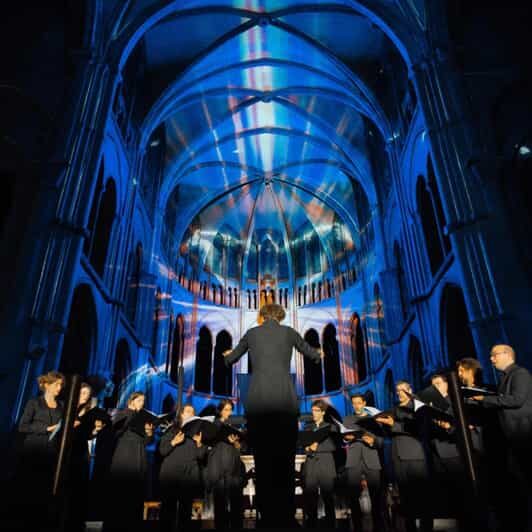
Westminster Cathedral is not simply a convenient venue. Its interior gives the projections unusual scale and texture, with domes and mosaics that light can trace and transform. The show uses the actual building as its visual surface, linking the performance to the place in a way a screen-based concert could not.
The story also gives you an introduction to the cathedral’s development and vision. That can make the visit worthwhile even if you arrive knowing little about the building. You are not expected to prepare by reading up on its history first. The narration is designed to make the context understandable as the show unfolds.
There is a useful balance here. The concert is accessible to people who do not know much about classical music or church history, but it still gives those subjects a central role. You can focus on the choir, follow the story, or simply take in the changing light. The show does not require you to arrive with specialist knowledge.
At the same time, LUMINISCENCE is a produced event inside a religious building, not a quiet visit for contemplation. The projections and music alter the atmosphere of the cathedral. If you want to see the interior in silence, or attend a service, this performance will not provide that kind of experience.
Seats are unassigned, and the cathedral is divided into Gold and Silver areas. The categories are separate, and ticket type affects where you can sit. Within those areas, arriving early matters because the seat you get is not reserved in advance.
The broadest view is generally from farther back. From there, you can take in more of the room and see the projections across a wider area. Seats close to the front can mean craning your neck to look up at the dome, which some people find uncomfortable. If you are choosing Silver, arriving early is especially useful if you want a chance at a seat farther back in that section.
There can be a substantial queue, even when the weather is poor. One account described arriving nearly 45 minutes early and finding long lines for both ticket categories. That is not a guarantee of what your own entry will be like, but it is a good reason not to cut your arrival close if your seat position matters. You may trade waiting time for a better view.
If you would rather avoid a long wait, you can accept that your seat may be closer to the front. The show can still be seen from different parts of the cathedral, but the perspective changes. For a production built around projections overhead and across the architecture, that difference is worth considering before you buy.
More Great Tours NearbyAt $38 per person, you are paying for a 50-minute seated performance that combines live choral music, narration, spatial sound, and 360° projections inside a major London landmark. The value rests on the combination. If you are interested in music, architecture, or visual performance, the ticket gives you several experiences in one compact outing.
It is less compelling if your priority is simply to enter the cathedral and look around. This is a ticketed show, not a general-purpose sightseeing visit. You are paying for the production and the way it uses the interior. It also lasts less than an hour, so think of it as a focused evening activity rather than a major day’s excursion.
Gold and Silver seating are separate categories, and Gold costs more. The practical question is how much you value a broader view and how early you are willing to arrive. A Silver ticket can still give you a good experience, but getting a preferred seat may take patience. If the added cost of Gold fits your budget, it may be the simpler choice; if not, arrive early and make the most of the seating available in your category.
The show is open to all ages, and children aged zero to five enter free with a ticket required. The format may hold a teenager’s attention if they enjoy music and striking visuals, but 50 minutes can feel long for some young viewers. It is seated throughout, so consider your child’s patience for a concert-style performance before booking.
The venue is Westminster Cathedral, Victoria Street, London SW1P 1LT. Victoria Station is about a five-minute walk away, and the nearest Underground stops are Victoria and St James’s Park. That central location makes it easy to connect the show with other plans, though the performance itself ends back on Victoria Street.
The show is wheelchair accessible. If you have a particular access question about your seating or arrival, check the details when booking rather than assuming every part of the venue works the same way for every visitor.
The cathedral can feel warm in summer. If you are attending on a warm evening, keep that in mind when choosing what to wear. Hard chairs have also been noted as a minor comfort issue, so this is not the place to expect plush theatre seating.
Free cancellation is available up to 24 hours before the performance, and you can reserve now and pay later. Starting times vary, so check availability for your date before building the rest of your evening around it.
I would put this on your shortlist if you want a memorable London evening that combines a landmark with a live performance. It suits people who enjoy choral music, classical composers, architectural spaces, or light installations. It also works well if you want an introduction to the cathedral’s story without committing to a long guided visit.
You do not need to be a classical music fan to appreciate the show. The changing projections and narrated story provide other ways into the experience. But if you dislike visual effects that change quickly, or you prefer an unamplified and quiet church visit, the production may feel too busy.
For families, the all-ages policy is helpful, but use the 50-minute running time as your guide. Younger children may enjoy the lights and music; older children and teenagers may respond more to the story and atmosphere. For an adult outing, the short duration makes it easy to fit around dinner or another central London stop.
Book LUMINISCENCE if you want to see Westminster Cathedral used as a stage, hear Lux Aeterna sing live, and follow a concise story of London and the building. The strongest reason to go is the combination of choral music, projections, and place-specific storytelling. Plan to arrive early if you want a seat farther back, and budget for Gold only if the seating difference is worth the extra cost to you.
Skip it if you are expecting Westminster Abbey, a traditional recital, or a quiet visit to the cathedral. For the right expectations, this is a distinctive 50-minute way to spend an evening in central London.
“This was great, the show and narration were awesome! Easy to get to, queue was well managed, and the show was mesmerizing.”
No. The show takes place at Westminster Cathedral on Victoria Street, London SW1P 1LT.
The seated performance lasts about 50 minutes.
Hugh Bonneville narrates a specially commissioned script by Tim Whitnall about London and Westminster Cathedral.
Lux Aeterna performs music by composers including Beethoven, Verdi, Debussy, Vivaldi, and Bach.
No. Seating is unassigned, and Gold and Silver ticket areas are separate. Arrive early if you want a better chance of sitting farther back.
All ages are welcome. Children aged zero to five enter free, but they still need a ticket.
Yes, the venue is wheelchair accessible.
You can check availability for your dates here: