Physical Address
304 North Cardinal St.
Dorchester Center, MA 02124
Physical Address
304 North Cardinal St.
Dorchester Center, MA 02124

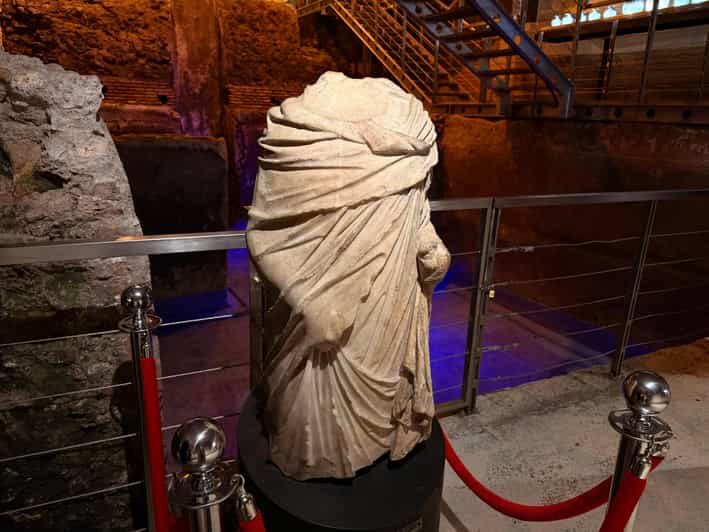
See Trevi Fountain from its restricted basin and visit Vicus Caprarius, where ancient Roman remains connect to the aqueduct still feeding the fountain.
Trevi Fountain is famous above ground, but the more surprising story lies below it: an ancient aqueduct system still feeds its water. This one-hour tour pairs a close view from the restricted basin area with a visit to Vicus Caprarius, the underground City of Water.
I like two things about this combination. You get more than the familiar fountain photo: the guide explains its stories and engineering, then connects them to the archaeological remains below. And with no more than 10 people, it is easier to ask questions and follow the explanation than in a large walking group.
The main consideration is the short time. An hour gives you a focused introduction, not a long archaeological visit, and the route includes walking underground. The tour is in English, so it is best suited to visitors who want a compact, guided look at this particular corner of Rome.
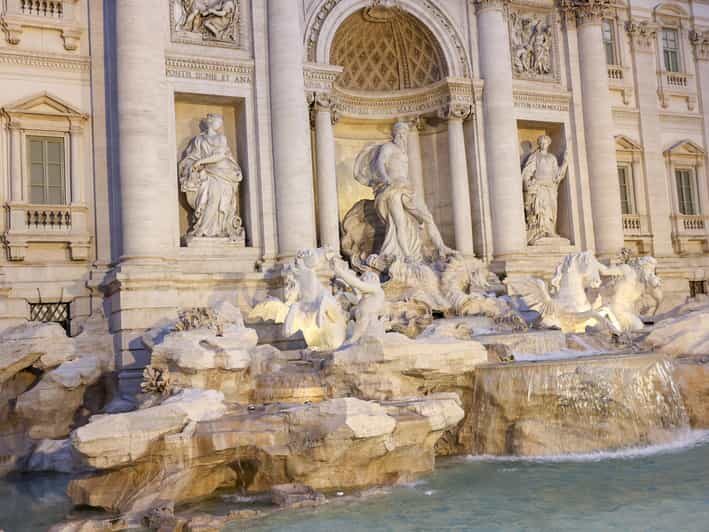
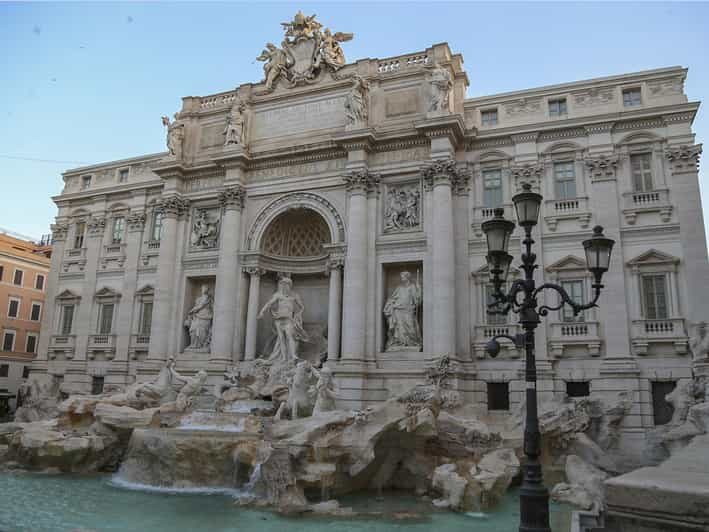
The tour starts with Trevi Fountain, one of Rome’s best-known sights. Its grand sculpture and moving water draw plenty of attention on their own, but a guide helps you read the monument rather than simply take it in as a backdrop for photos. You’ll hear about its myths, legends, meaning, and engineering.
The special feature here is access to the restricted basin area. Instead of seeing the fountain only from the usual public viewing area, you can get closer for an unusual angle and photographs. The access is described as quick, but there is time to take pictures; it is a chance for a different perspective, not a private, extended visit to an empty monument.
Trevi is a busy landmark, so this part of the tour may still feel lively. The basin access adds something distinctive, but it does not remove the crowds from the surrounding area. If you are hoping for a quiet, unhurried encounter with the fountain, keep your expectations realistic and use your time in the restricted area well.
The guide’s interpretation is a big part of the value. The fountain’s stories and design make more sense when someone points out what to notice and connects the monument to the water system beneath Rome. Several guides have been praised for making the subject clear and inviting questions, rather than delivering a string of dates.
Looking for more options in Rome? Here are some other experiences worth considering.
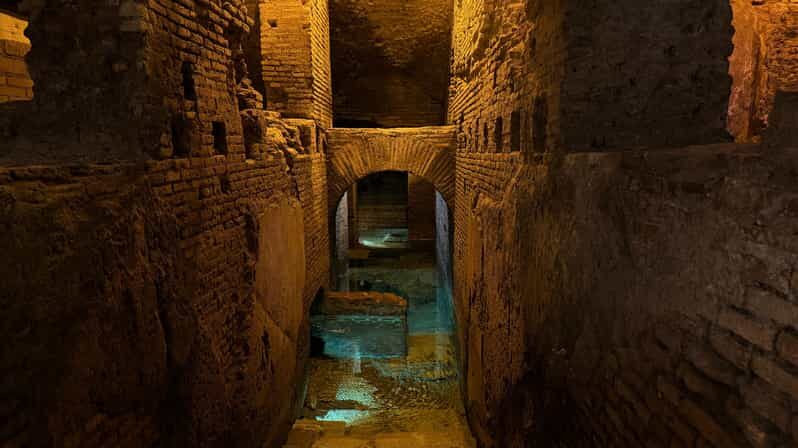
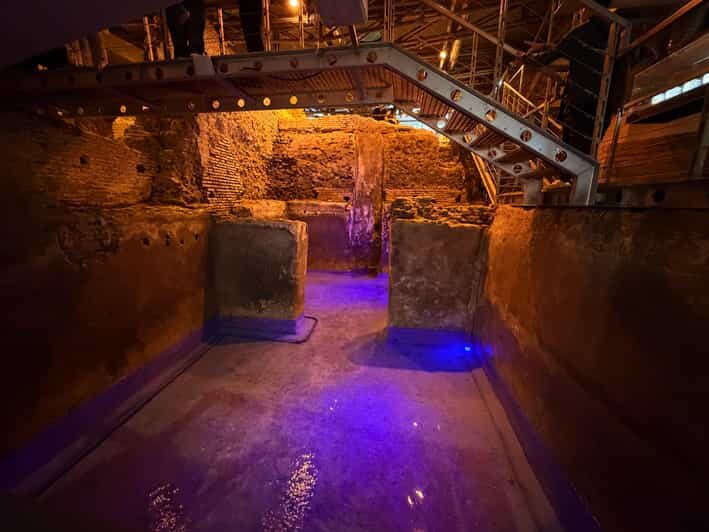
The tour then takes you to Vicus Caprarius, known as the City of Water. This archaeological site reveals remains of ancient Roman life below the modern streets. It offers a change of scale and mood from the monumental fountain: here, you are looking at traces of the city’s earlier layers rather than a grand public façade.
The most compelling link is the Aqua Virgo aqueduct. The ancient system supplied water to the Trevi Fountain and still does so today. Seeing the underground site helps make that connection tangible: the fountain is not just an elaborate monument with water added for effect, but part of a system with roots reaching back more than 2,000 years.
The underground section is a short visit, so expect an introduction rather than an exhaustive archaeological tour. Even so, it gives you a useful sense of how much of Rome’s past lies under its present-day streets. If you have walked past the fountain before without thinking about where its water comes from, this is the part most likely to change how you see it.
You’ll be walking through underground areas, so wear comfortable shoes. The tour information does not specify a particular level of physical difficulty, but the underground setting is worth keeping in mind when deciding if the outing suits you.

This is a history-focused tour, and the guide makes a real difference. Eugene, also named as Eugenio in some tour accounts, has been especially praised for explaining archaeology in an accessible way, asking questions, and keeping the group involved. Andrea, Giovanni, and Wen have also been named as guides. Your guide may vary, so don’t book on the assumption that a particular person will lead your tour.
A good guide adds context to both halves of the visit. At Trevi, that means helping you understand the stories and design; underground, it means explaining what the remains show and how the aqueduct relates to the fountain. Visitors have described guides as enthusiastic and easy to understand, with time for questions.
Some guides have also taken groups to a nearby church, including Chiesa di Sant’Ignazio di Loyola, when time allowed. That can be a welcome extra, especially if you have not seen the church before, but it is not a listed part of the tour and should not be treated as guaranteed. The core outing is the fountain and Vicus Caprarius.

One hour is enough for a concise introduction to the fountain and its underground connection. It also makes the tour easy to fit into a day of sightseeing without committing to a half-day outing. Visitors have described the pace as manageable and the walking as limited compared with longer city tours.
That short duration does mean the guide has to keep things moving. You should expect a concentrated visit, not lots of time to linger at every stop or cover Roman history broadly. If you want a slower, more detailed archaeological tour, you may want a longer experience elsewhere; if you want a focused explanation of Trevi and its water source, this format makes sense.
The group limit of 10 helps keep the visit personal. A smaller group can make it easier to hear explanations in a busy area and to ask a question without interrupting a crowd. It does not guarantee a quiet setting, especially around the fountain, but it is a useful advantage for a short tour where every minute counts.
The tour is conducted in English. If you need another language, this experience is not presented as an option for that; the stated language is English.
More Great Tours NearbyAt $33 per person, the price covers an expert-guided visit, access to the restricted fountain basin, and the Vicus Caprarius entry ticket. You are paying for the combination: a special vantage point at an iconic monument and a guided introduction to a less obvious archaeological site.
The value depends on what you want from Trevi Fountain. If you only want to see the fountain and take a photo, you can visit the public area without booking this tour. If you want the stories, the basin access, and the underground context in one short outing, the fee is easier to justify. The guide’s explanations are central to that value; the sites are more revealing when someone connects them for you.
Transport to the starting point, food, and drinks are not included. The tour is one hour, and availability depends on the starting times offered for your date. A separate entrance is used for skip-the-line access, a feature most people who rated it found useful.
I’d recommend it if you are curious about Roman engineering and want to understand how the Trevi Fountain connects to the city beneath it. It suits first-time visitors who want a guided introduction, as well as returning visitors who have already seen the fountain but want more than another look from the square.
Families can also find it a good fit if everyone is interested in the subject. The short duration and limited walking may make it easier to slot into a family day, though the underground walking and history-focused explanations may not suit every child. There is no age-specific information provided, so consider your group’s interests and comfort with underground spaces.
This is less suitable if you want a long, leisurely tour, prefer to explore without a guide, or need a tour in a language other than English. It is also not a substitute for a broader Roman history tour. Its strength is its narrow focus: the fountain, its water, and the ancient remains nearby.
The activity is in Lazio, Italy, and lasts one hour. Wear comfortable shoes for walking, including through the underground areas. The price is $33 per person, and the entry ticket to Vicus Caprarius is included along with the guided tour and restricted basin access.
You can cancel up to 24 hours in advance for a full refund. A reserve-now, pay-later option is available, which may help if your Rome plans are still taking shape. Check the available start times for your date before booking.

Book it if you want to connect Trevi Fountain’s famous façade with the ancient system beneath it. The restricted basin access is a special extra, while Vicus Caprarius gives the visit a layer of archaeology that a quick stop at the fountain cannot provide. For $33, the combination is good value if you care about the stories as much as the photographs.
Skip it if you only want a brief look at the fountain, or if you would rather spend an hour exploring at your own pace. But if the idea of seeing the water system that still feeds Trevi appeals to you, this is a compact, practical way to make the monument mean more.
“Honestly, don't think it twice! trustworthy and entertaining. Amazing experience! Eugene was incredible! Loved this tour”
The tour lasts one hour.
It includes the guided tour, access to the restricted basin area of Trevi Fountain, and entry to Vicus Caprarius.
Yes. The stated language is English.
The small group is limited to 10 participants.
Yes. The tour includes access to the restricted basin area for a close-up view.
Vicus Caprarius is an underground archaeological site known as the City of Water. It contains remains of ancient Roman life and is linked to the Aqua Virgo aqueduct system.
Yes. The ancient Aqua Virgo system still feeds the fountain.
Food and drinks are not included. The tour details do not specify that you need to bring them.
Wear comfortable shoes, since the tour involves walking through underground areas.
Yes. You can cancel up to 24 hours in advance for a full refund.
You can check availability for your dates here: