Physical Address
304 North Cardinal St.
Dorchester Center, MA 02124
Physical Address
304 North Cardinal St.
Dorchester Center, MA 02124

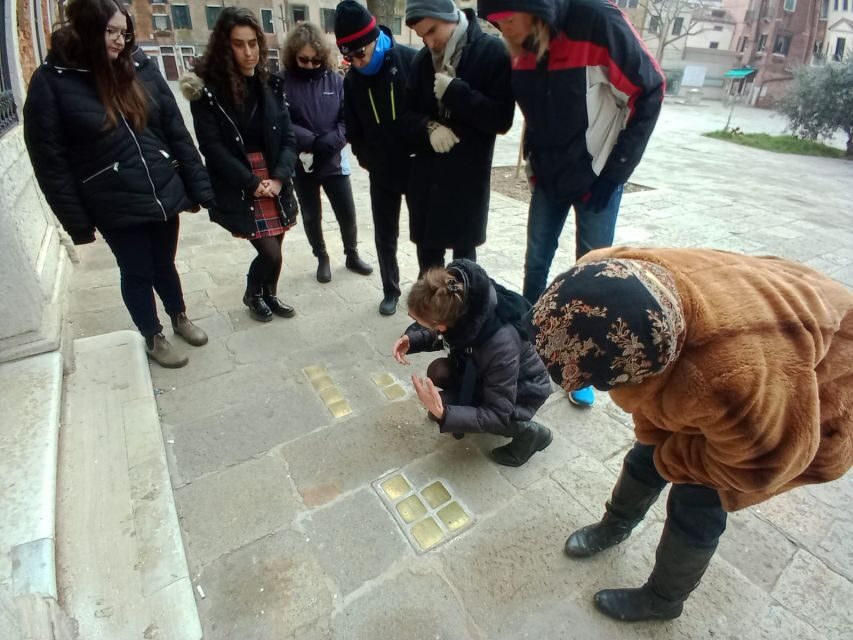
Explore Venice’s historic Jewish Ghetto with an expert local guide, hear its stories, and visit the Spanish and Levantine synagogues.
Venice’s Jewish Ghetto is a quieter, more intimate part of the city, but its story reaches far beyond its canalside squares. Established in 1516, it was the world’s first Jewish ghetto, and this two-hour walk gives you a way to understand the lives and traditions that shaped this corner of Cannaregio.
I like two things in particular: the guide connects Jewish history with the wider story of Venice, and access to the Spanish and Levantine synagogues lets you see remarkable interiors that are easy to miss on your own. The walk also moves at a thoughtful pace through a neighborhood that feels far removed from the busiest routes.
One consideration: the Jewish Museum is closed for restoration, so this tour does not include its exhibitions. The Levantine Synagogue is also excluded on Fridays, and synagogue visits require clothing that covers your shoulders, belly, and knees.
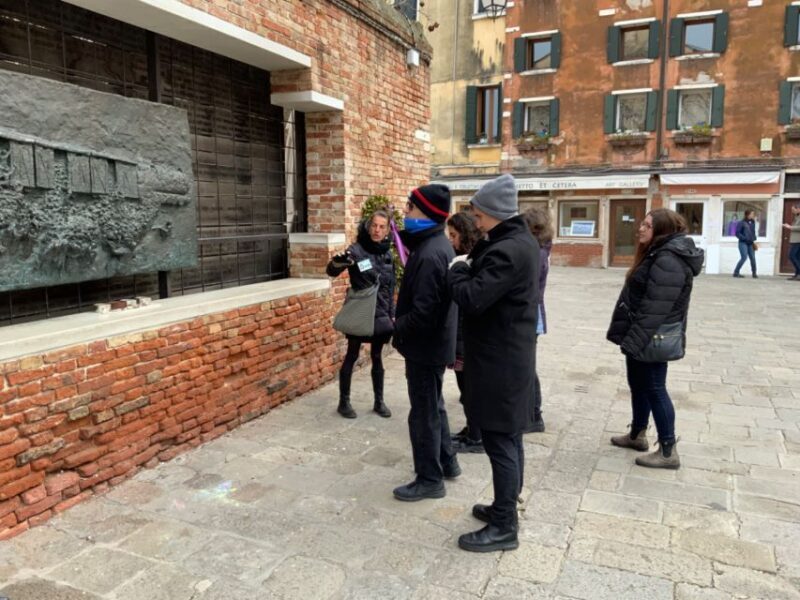
The Ghetto sits in Cannaregio, away from Venice’s best-known sights and their steady stream of foot traffic. That change of pace is part of the appeal. Instead of racing between landmarks, you spend time in a neighborhood whose squares, tall buildings, and narrow lanes hold centuries of community life.
The tour begins in Campo di Ghetto Nuovo, the large square at the heart of the Old Ghetto. Its tall buildings are an immediate clue to the unusual conditions in which the community lived. Your guide explains how Jewish life developed in a confined space and how the community contributed to Venice’s social, economic, and cultural life over the centuries.
I find this kind of guided walk especially useful in a place where the story is not always obvious from the street. The guide provides historical context and points out details you might pass without noticing. The focus is on Jewish life from the Renaissance to modern times, with attention to both difficult periods and the traditions that continue in the neighborhood.
The Ghetto is not a museum set apart from the city. It remains a place of cultural life, and that distinction matters. You are learning about the past while walking through a neighborhood that still has meaning in the present.
If you enjoy exploring Venice on foot, these walking tours might also suit your style
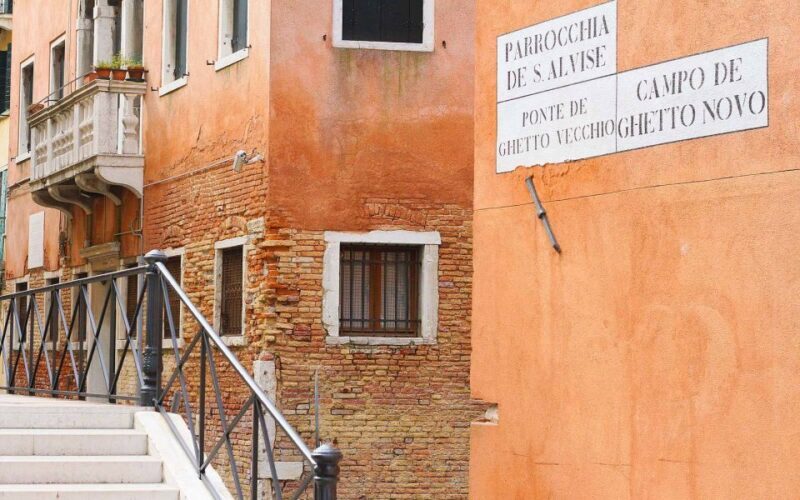
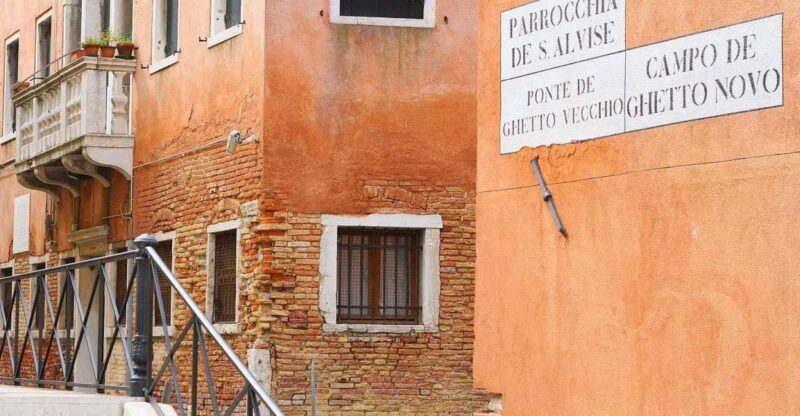
The route takes you through the Ghetto Nuovo and Ghetto Vecchio, with stops in the surrounding Cannaregio district. The walking sections are short, generally around 15 to 30 minutes at a time, leaving room for explanations and questions rather than turning the tour into a march.
In Calle Ghetto Vecchio and the nearby lanes, your guide fills in the story of how the quarter changed over time. The experience is strongest when you ask questions and let the guide connect the streets to daily life, religious tradition, and the wider history of Venice. Several guides, including Claire, Martina, Ilaria, and Carolina, have been praised for making those connections clear and engaging. The guide assigned to your departure may differ.
The tour is conducted in English. Guides have been described as warm and attentive, and one guide was especially considerate of a participant who walked more slowly. That is encouraging, but the route still involves walking through the neighborhood, and the tour is not suitable for wheelchair users or people with mobility impairments.
The itinerary returns to Campo di Ghetto Nuovo, so you finish where you began. That makes it easy to stay in the area afterward, though food, shopping, and independent visits are not part of the tour price.
The synagogue visits are the tour’s main practical advantage over a self-guided stroll. Access is organized in cooperation with the Jewish Museum, and the guide explains the buildings’ design, religious significance, and the Sephardic and Ashkenazi influences connected with them.
From the outside, these synagogues can be easy to overlook. Inside, their decoration and symbolism offer a more direct sense of the community’s religious life. The two visits are scheduled for about 30 minutes apiece, giving your guide time to discuss what you are seeing rather than simply ushering you through.
The guide leading the neighborhood walk may not be the person explaining the synagogues. At times, a synagogue guide joins for that part; Sylvia, for example, has been singled out for her work inside the buildings. Access is a special arrangement, so the synagogue portion adds real value for anyone interested in history, architecture, or Jewish traditions.
There are important limits. The Jewish Museum itself is closed for restoration, and its interior is not included. The Levantine Synagogue is not visited on Fridays. One past participant found that only one of the two expected synagogues was open, so it is sensible to check current access when choosing a date rather than treating every visit as guaranteed in all circumstances.
Dress respectfully for the synagogue interiors: both men and women must cover their shoulders, belly, and knees. Weapons and sharp objects, including knives, are not allowed on the tour.
The most consistently praised feature is the quality of the guiding. Guides such as Claire, Clara, Martina, Ilaria, Carolina, and Christina have been remembered for clear explanations, warmth, and an ability to make a complex subject feel approachable. Those are different people, not a promise that any particular guide will lead your tour.
A good guide also puts the Ghetto into context. Several have explained not only Jewish history in Venice, but the city’s broader past and present, helping you see how the neighborhood fits into the life of the lagoon city. The tone is generally historical rather than religious, and there is room to ask questions.
The best accounts describe guides who adjust to the group, take time with questions, and keep the walk comfortable. One guide used visual aids to make historical details easier to grasp, while another shared personal context that helped the group connect with the material. These touches are not guaranteed features, but they point to the kind of interpretive approach this tour is known for.
The subject calls for care, and the tour’s appeal depends in part on that. You are not just collecting dates or admiring architecture. The guide helps you consider what it meant to live in a restricted area and how a community maintained its traditions and identity through changing times.
More Great Tours Nearby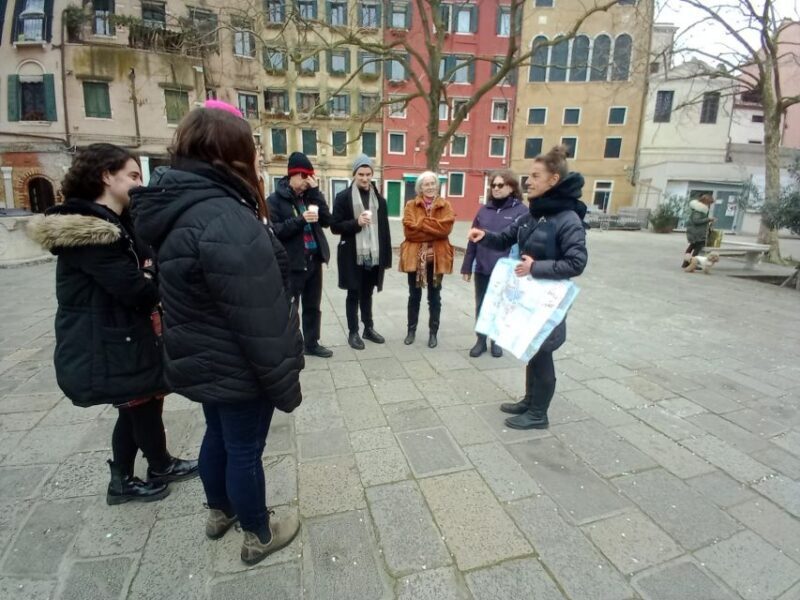
At $105 per person, this is not a budget walk. The price covers a professional local guide, a two-hour exploration of the Ghetto, and access to the Spanish and Levantine Synagogues when available. That synagogue access is the feature that makes the cost easier to justify, especially if you want someone to explain what you are seeing.
If you only want to wander through Cannaregio, you can do that independently without paying for a guide. But the tour’s value lies in the interpretation and arranged entry, not in covering a long distance. For a short visit to Venice, it can be a focused way to learn something substantial beyond the familiar city sights.
Small-group or private options are available. A private tour may suit you if you want more flexibility for questions or are travelling as a family, while a small group can offer conversation without making the walk feel like a private appointment. The exact group size is not specified, so do not assume a particular maximum.
Transport to and from the meeting point is not included. The tour begins and ends at Campo di Ghetto Nuovo, so plan your own route there and arrive five to ten minutes early. It is not possible to join once the walk has started.
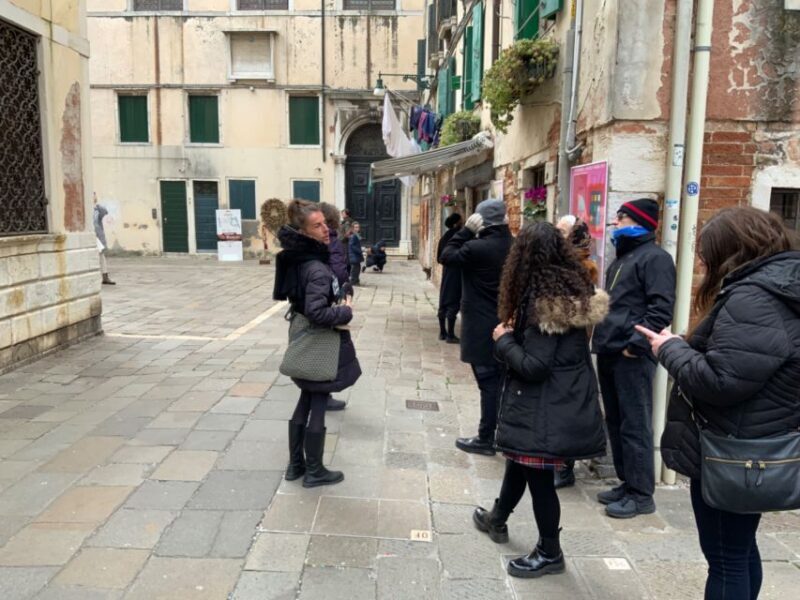
I would choose this tour if you want a thoughtful historical experience, especially if you are curious about Jewish life in Venice or enjoy learning how a neighborhood’s buildings reflect its past. The synagogue visits give the walk a clear focus, and the guide’s explanations help make the sights meaningful rather than merely photogenic.
Families can enjoy it too, particularly if the children are comfortable with a history-focused walk and can manage the route. A family with three children described the experience positively, and guides have been praised for making the subject engaging. Still, this is not a hands-on activity, and its appeal will depend on your child’s interest in history and ability to walk for two hours.
You may want a different plan if you need step-free access, cannot walk comfortably, or hope to visit the Jewish Museum. The museum is closed for restoration, and the tour does not include its interior. If synagogue access is your main reason for booking, remember the Friday restriction for the Levantine Synagogue.
For a more complete visit, consider leaving time afterward to explore the neighborhood independently. One useful local tip is to look for a kosher bakery or restaurant in the Ghetto; food is not included, but it can extend your time in the area and connect the history to present-day life.
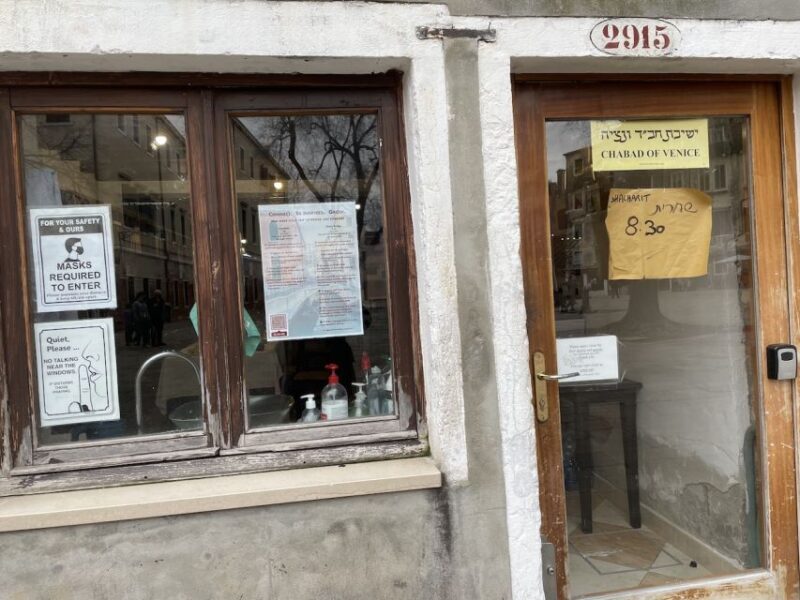
Book this tour if you want more than a quick look at a historic square. Its strongest points are the local guide, the careful historical context, and the chance to enter the Spanish and Levantine Synagogues. It is a focused, worthwhile addition to a Venice stay, particularly for history-minded visitors.
Skip it if you are mainly looking for a museum visit, need an accessible route, or cannot manage two hours on foot. Before booking, check the synagogue schedule for your chosen day and dress for entry. If those details fit your plans, this walk offers a grounded look at a side of Venice that deserves more than a passing glance.
“Our guide was amazing!!! She was not just knowledgeable but we got the feeling that she truly feeling that she truly emphasized with the Jewish cul…”
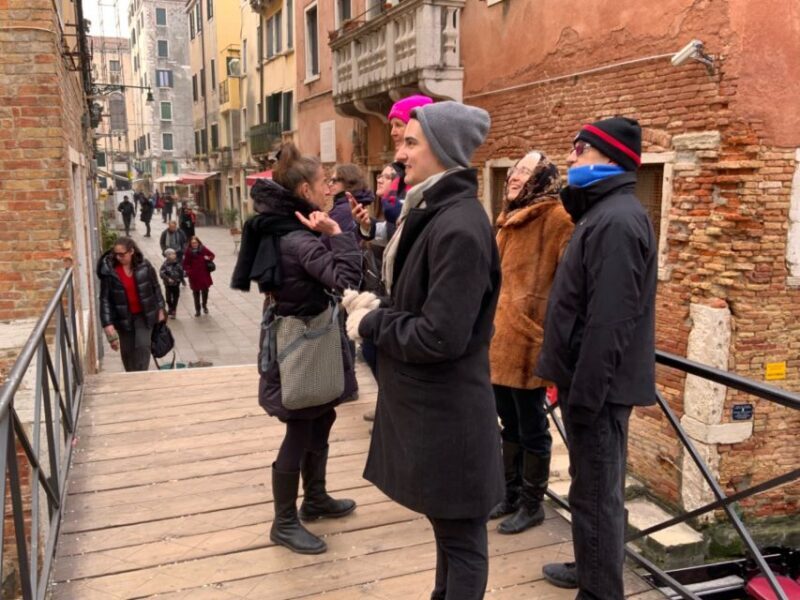
The tour lasts two hours and includes walking through the Jewish Ghetto and Cannaregio, plus guided synagogue visits when available.
The listed price is $105 per person.
The live tour guide speaks English.
Meet at Campo di Ghetto Nuovo, beside the black drinking fountain in the center of the square. Arrive five to ten minutes before the start.
Entry to the Spanish Synagogue and Levantine Synagogue is included, with access arranged through the Jewish Museum. The Levantine Synagogue is not included on Fridays.
No. The Jewish Museum is closed for restoration, and an interior visit is not included.
Both men and women must wear clothing that covers the belly, shoulders, and knees.
No. The tour is listed as unsuitable for wheelchair users and people with mobility impairments.
Yes. A private group option is available, as well as a small-group option.
Yes. You can cancel up to 24 hours in advance for a full refund.
You can check availability for your dates here: