Physical Address
304 North Cardinal St.
Dorchester Center, MA 02124
Physical Address
304 North Cardinal St.
Dorchester Center, MA 02124

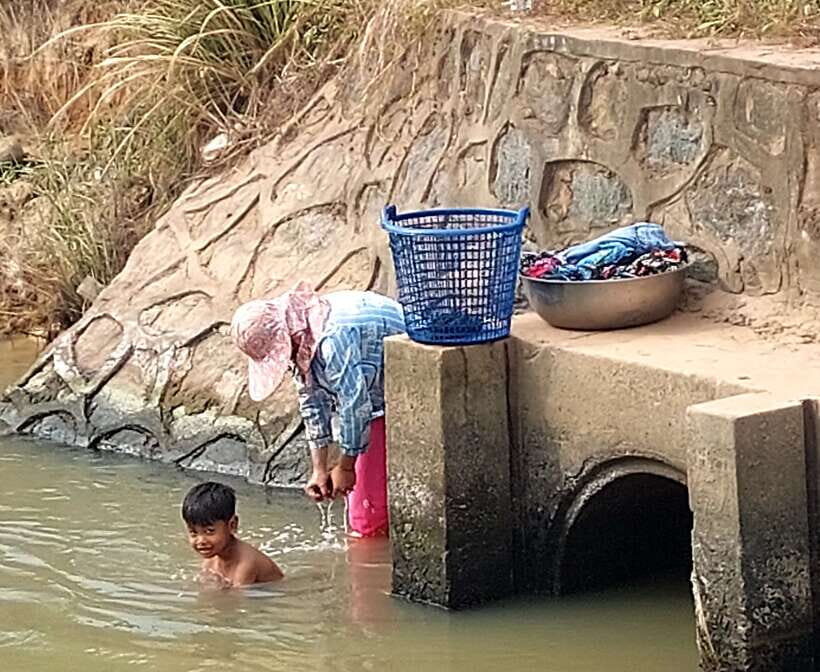
Explore Kampot’s countryside, salt fields, a cave temple, Secret Lake and La Plantation on a guided 5.5-hour tuk-tuk tour for $23.
Phnom Chhngok’s temple is tucked inside a limestone cave, reached by a climb of about 200 concrete steps and a careful walk through the rock. That pairing of countryside scenery and an ancient place of worship makes this more than a string of photo stops.
I like the mix of working farms and local history, especially the pepper tasting at La Plantation, and the chance to see rural Kampot from a tuk-tuk rather than through a car window. One caveat: the salt fields can be inactive in the wet season, and the cave visit is not allowed then, so the experience changes with the weather.
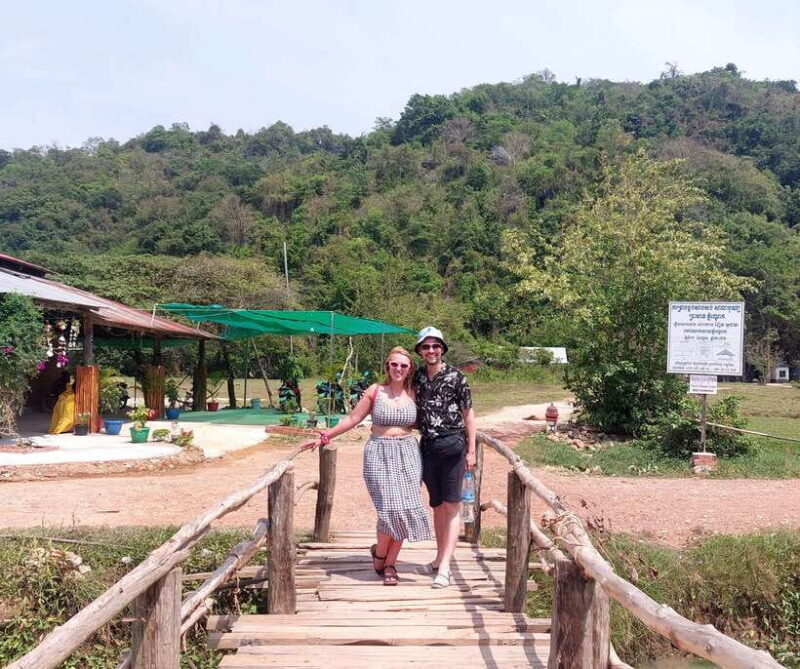
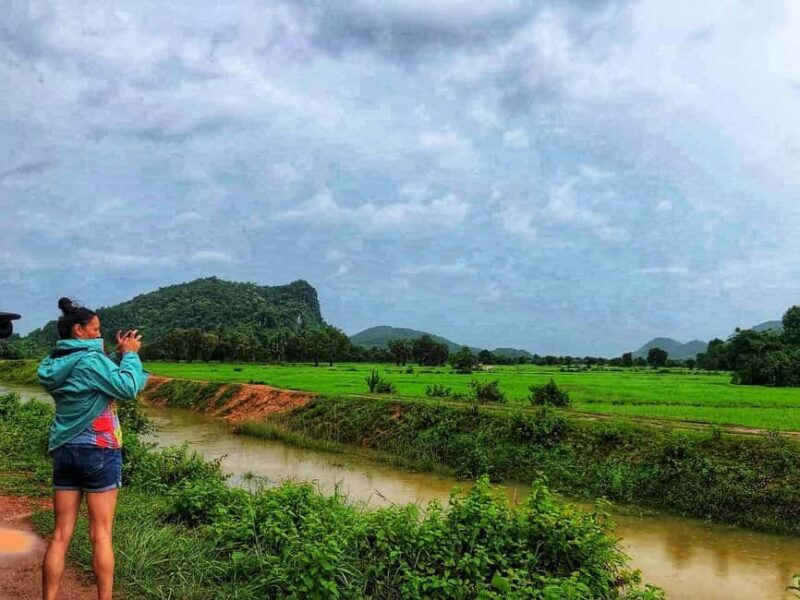
This 5.5-hour outing takes you from Kampot town into a patchwork of Khmer villages, rice fields, vegetable farms, salt pans, limestone hills, and pepper-growing country. The stops are varied enough to keep the day moving, but the drives between them are part of the experience: you get a look at ordinary rural life along the way.
Transport is by tuk-tuk, also called a remorque locally. It leaves you more exposed to heat, dust, and rain than a car would, but it also keeps the countryside close. Bring sunscreen, wear closed-toe shoes, and expect the road conditions to be less polished after rain. One guide, Rany, was able to handle waterlogged dirt roads with no fuss, but weather can still shape the day.
The tour is priced at $23 per person. That is good value if you want transport, a guide, entry fees, and several very different stops without arranging separate rides. Meals are not included, so plan to eat before or after the tour, or ask your guide if there is a suitable local food stop during the day. Drinks are included, with a soft drink at the lake.
The tour is described as a 5.5-hour experience, though its stop-by-stop schedule adds up to a full and active half-day. The pepper plantation gets the longest visit, at about 105 minutes, while the cave and lake each take around 45 minutes. The pace is not just drive, snap a picture, leave: you have time to walk, listen, taste, and look around.
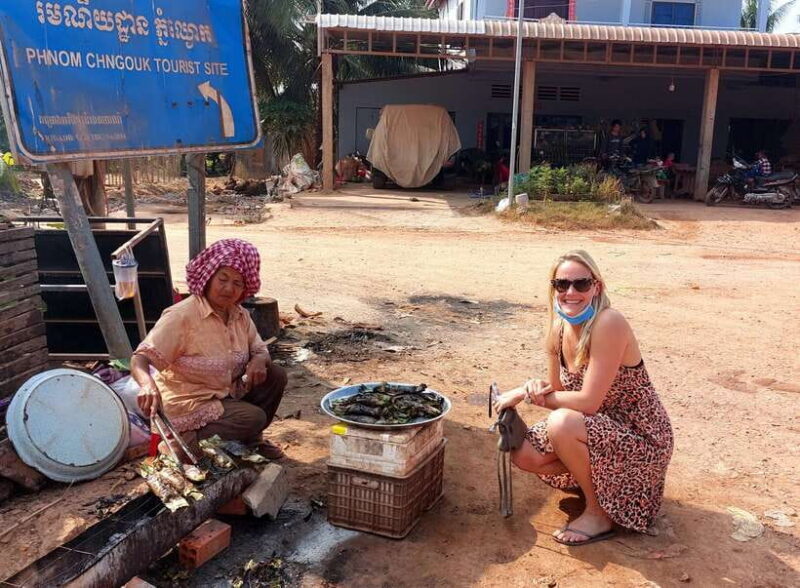
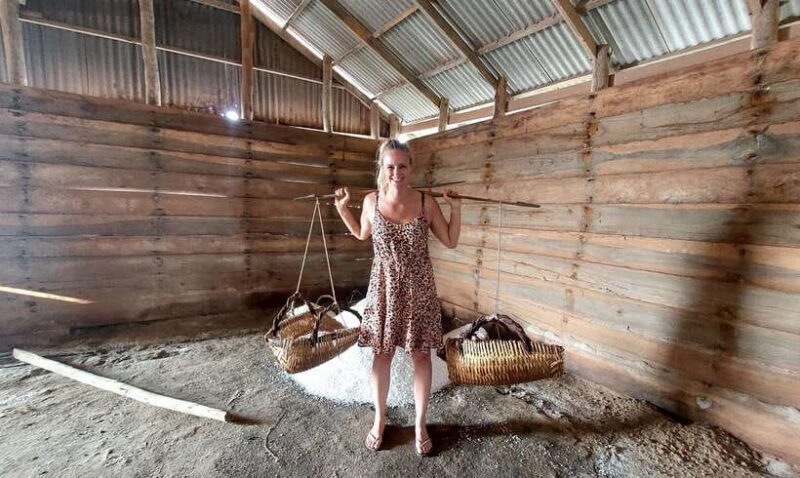
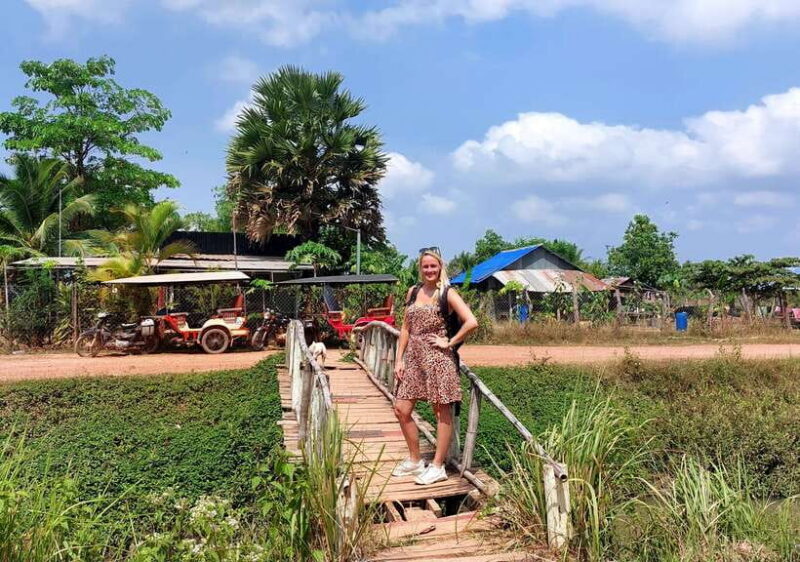
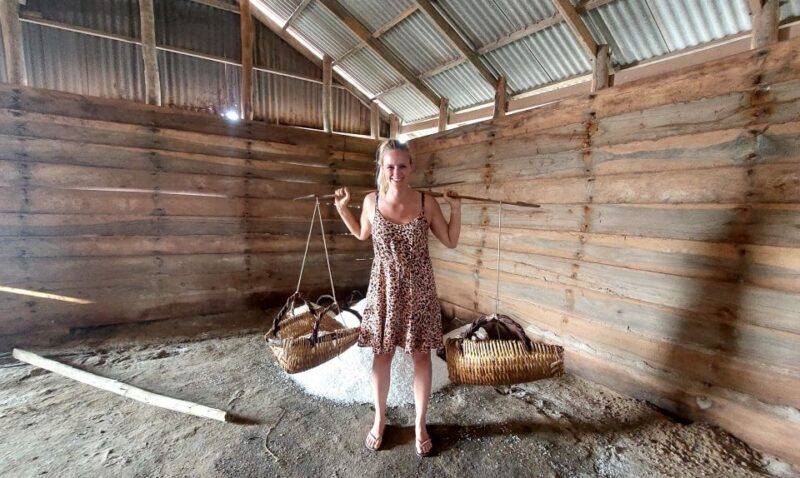
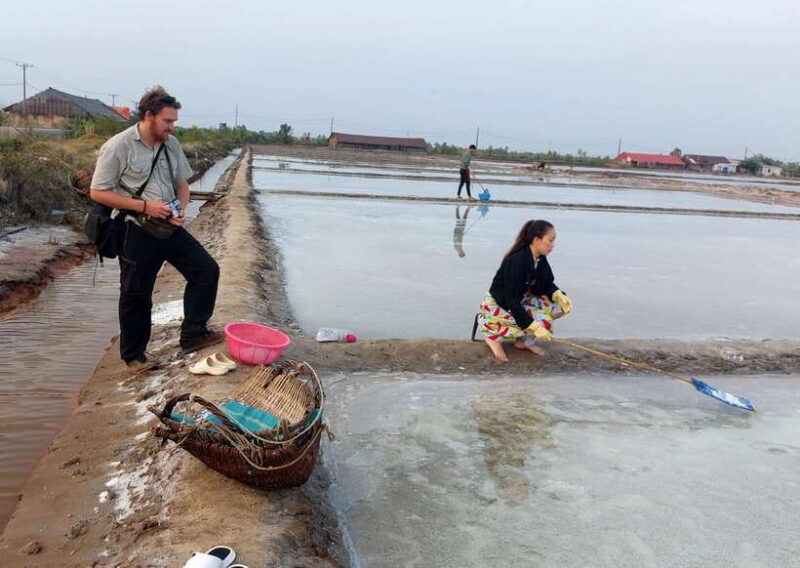
The first stop is Salt Farm Coffee, near Cambodia’s largest salt fields. In the dry season, you may see salt production in progress, with broad shallow pans and the work that turns seawater into salt. It is a useful counterpoint to the later pepper farm: one crop shaped by coast and climate, another by careful cultivation inland.
In the wet season, there may be no salt in the fields. That can make the stop less visually striking, so set your expectations accordingly. The visit can still be worthwhile if your guide explains the seasonal process and how salt production fits into local livelihoods. A guide’s stories make the difference between seeing an empty field and understanding why it matters.
Allow about 30 minutes here. It is a short introduction rather than a long farm visit, and the scenery on the way is part of the appeal. You will pass rural homes, rice fields, and vegetable plots, with chances to see how the countryside changes as you leave town.
Phnom Chhngok Cave is the tour’s most unusual stop. A concrete stairway of about 200 steps leads up to a limestone cave where a seventh-century Hindu temple sits inside the rock. The combination of ancient stonework and the cave’s natural formations gives the visit a sense of place that a roadside temple cannot.
The climb is manageable for many people who are comfortable with stairs, but it is still a climb in Cambodia’s heat. Closed-toe shoes are a smart choice, both for the steps and for moving through the cave. Take care underfoot and follow your guide’s lead as you explore. Guides have been praised for helping visitors through the cave and taking photos, which can be useful in the dim interior.
The cave portion is not allowed in the wet season. This is an important planning detail, not a minor footnote: if the cave is closed, you lose one of the tour’s signature experiences. Ask about current conditions before booking if seeing the temple is a priority. The scheduled visit is about 45 minutes, enough for the ascent, a look around, and time to take in the cave.
The cave can also feel close and uneven underfoot. If you dislike enclosed spaces or are uncertain about stairs, this may not be your easiest stop. The tour is not suitable for people over 70, according to its activity information, and it is not designed for strollers or baby carriages.
Brateak Krola, better known as Secret Lake, is a water dam with a peaceful setting and a local story attached to it. This stop changes the rhythm of the tour. After the climb and cave visit, you can walk a little, sit back, and enjoy the greenery around the water.
A soft drink is included, and the stop lasts about 45 minutes. Some visitors have enjoyed relaxing by the lake in hammocks, though you should not count on a particular setup being available. The main value is the pause itself: a chance to slow down and hear more about the area from your guide.
This is not a grand monument or a highly structured attraction. Its appeal is the setting and the breathing space. If your idea of a good excursion includes a calm stop between more active visits, the lake helps balance the schedule. If you prefer a packed list of major sights, you may find it understated.
More Great Tours Nearby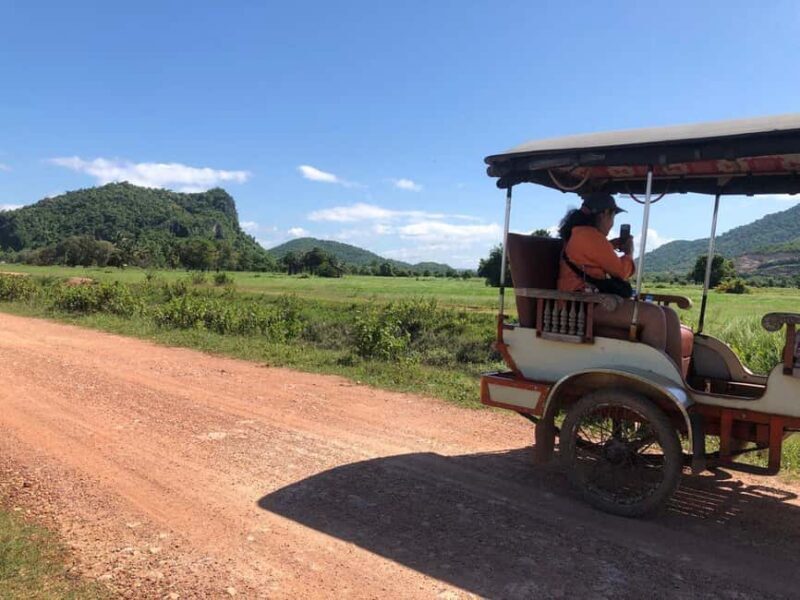
La Plantation is the tour’s longest stop, and for good reason. This organic pepper plantation offers a guided walk, tasting, and free time to explore. The plantation provides tours in English or French, while the overall activity is listed with a live English-speaking guide.
The tasting makes the pepper visit more than a lesson in agriculture. You can sample different peppers and learn about how they are grown and processed. Pepper ice cream has also been a memorable treat for some visitors, and pepper beer is another possible discovery at the plantation. These are not guaranteed components of the tour, so think of them as things to look for rather than fixed inclusions.
You may also have time to shop. That is useful if you want to bring home Kampot pepper, but it is worth remembering that shopping is part of the stop, not a requirement. The plantation’s gardens and setting offer a good contrast to the rougher rural roads and the natural cave.
Guides often make the visit more rewarding by connecting the pepper fields to the region’s wider agriculture. Kampot grows rice, salt, vegetables, fruit, and pepper, and the day gives you a compact introduction to that mix. Give yourself time to taste and ask questions rather than treating the plantation as a quick souvenir stop.
The driver-guide is central to this experience. Names associated with the tour include Nak, Ali, Ly, Micki, and others; you will not necessarily have a particular guide. The quality that matters most is the way the guide balances information with time to look around. Guides have been praised for explaining local farming, history, and daily life in clear English, while keeping the mood warm and relaxed.
That personal element can turn a simple transfer into a useful window on Kampot. Guides may share stories about rice and salt production, Cambodian history, local plants, or the villages along the route. Some have adjusted the order of stops for weather, and one guide helped visitors order food at a market. These small acts are not formal promises, but they show why a locally led trip can be more revealing than hiring transport alone.
The group can be small, and at times the tour may feel semi-private or even private if other bookings cancel. Group size is not specified, so do not book on the assumption that you will have a private guide. Still, the format leaves room for questions and a more personal pace than a large coach tour.
Pickup is included for hotels within 3 km of Kampot city center. If you are staying farther away, you can meet at the Kampot Tourist Information Center or request pickup for an additional fee starting at $2. Be ready in your hotel lobby about 10 minutes before departure; drivers wait no longer than 10 minutes.
Bring sunscreen and closed-toe shoes. A hat may also be useful in the sun, but only the first two items are specifically required in the tour guidance. Water and soft drinks are included. Meals are not.
The countryside can be wet and muddy after rain, and the itinerary may shift to suit conditions. Rain has not necessarily spoiled the trip, but it can affect the roads and the cave visit. In the wet season, salt production may be absent, and the cave is not allowed. If both salt fields and the cave are high on your list, aim for a dry-season date and confirm cave access.
The tour is not suitable for people over 70, and baby strollers and carriages are not allowed. Alcohol and drugs are also prohibited. The physical demands are concentrated at the cave, but the day includes walking at several stops and riding in an open tuk-tuk.
I would book this if you want a practical introduction to Kampot beyond its town center. You get a cave temple, countryside views, a calm lake stop, and a detailed pepper visit in one half-day, with transport and entry fees included. The guide’s local knowledge is a key part of the value, especially if you like asking questions rather than simply taking photos.
It is less ideal if you need a climate-controlled ride, want a fully accessible outing, or are visiting in the wet season mainly for the salt fields and cave. The itinerary still has appeal when conditions limit those stops, but it will not be quite the same day. For most active visitors with suitable footwear and a little flexibility, the $23 price buys a strong mix of culture, scenery, and food-related discovery.
“So brilliant!! We were so grateful to our tour guide (Nak) he was so informative, knowledgeable and kind!!”
The tour lasts about 5.5 hours. The schedule includes time at the salt fields, cave, lake, and pepper plantation, plus transfers between stops.
The price includes a driver-guide, entrance fees, drinking water, soft drinks, and hotel pickup and drop-off within 3 km of Kampot city center.
No. Meals are not included.
Caving is not allowed in the wet season. The tour information also notes that there may be no salt in the fields during that season.
You climb about 200 concrete steps to reach the cave, then walk inside it. Closed-toe shoes are recommended.
Pickup is included for hotels within 3 km of Kampot city center. If you are farther out, you can go to the Kampot Tourist Information Center or request pickup for an additional fee starting at $2.
Bring sunscreen and closed-toe shoes. Water and soft drinks are provided, but you will need to arrange your own meals.
You can check availability for your dates here: