Physical Address
304 North Cardinal St.
Dorchester Center, MA 02124
Physical Address
304 North Cardinal St.
Dorchester Center, MA 02124

Explore Djerba’s Roman causeway, Berber ksour, Chenini and Star Wars sites on a long day trip with local food and a desert sunset.
The draw here is the change of scene: leave Djerba’s resorts behind, cross the causeway to the mainland, and spend a day among hilltop granaries, a Berber village and Star Wars filming sites. I like the contrast between the finely built ksour and Chenini’s homes carved into a mountainside. I also like that a traditional lunch and hotel pickup are included.
The main thing to check before you book is the sunset plan. The outing is advertised as a desert sunset, but reports describe different final stops, and some say reaching the dunes meant paying about €30 per quad. The day can also run much longer than nine hours, so keep your evening free.
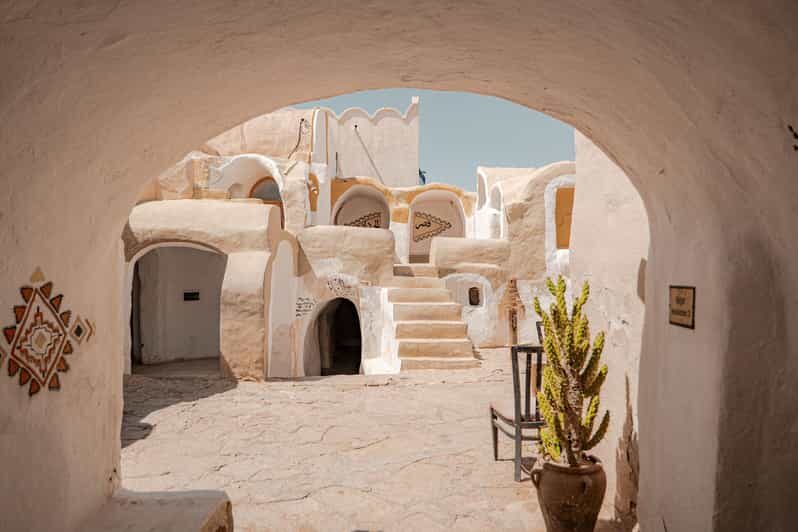
The day begins with pickup at your hotel, followed by a drive across the ancient causeway that links Djerba with the mainland. It is a useful reminder that this is more than a sightseeing loop: the island and the southern interior have long been connected by trade and travel. From there, the route heads toward Tataouine Governorate, where the dry plains and rocky hills feel far removed from the coast.
The journey is a substantial part of the outing. The stated duration is nine hours, but that is best treated as a guide rather than a promise. Some days have taken considerably longer, and the drive back to Djerba can stretch into the evening. If you have dinner plans or an early start the next day, leave room for delays.
Transport is provided, and many accounts describe air-conditioned vans or cars. Some outings use several vehicles, with a guide moving between them or giving explanations at stops. That setup can work well, but it means you should not assume your guide will be beside you during every stretch of the drive. If you want a running commentary, ask how the group and guide are arranged.
You can check availability for your dates here: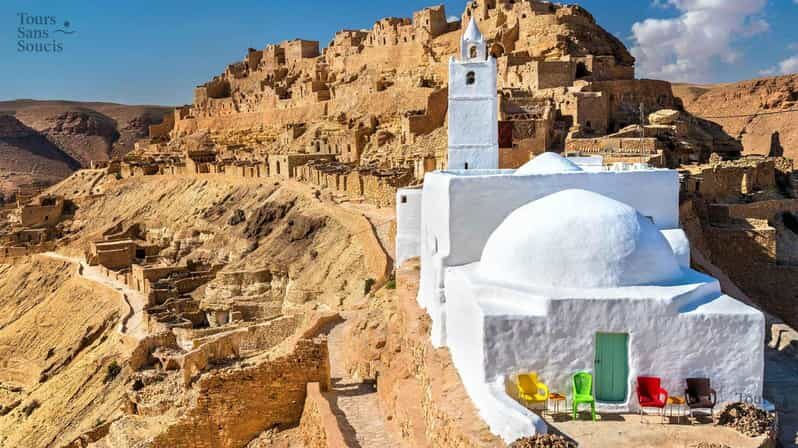
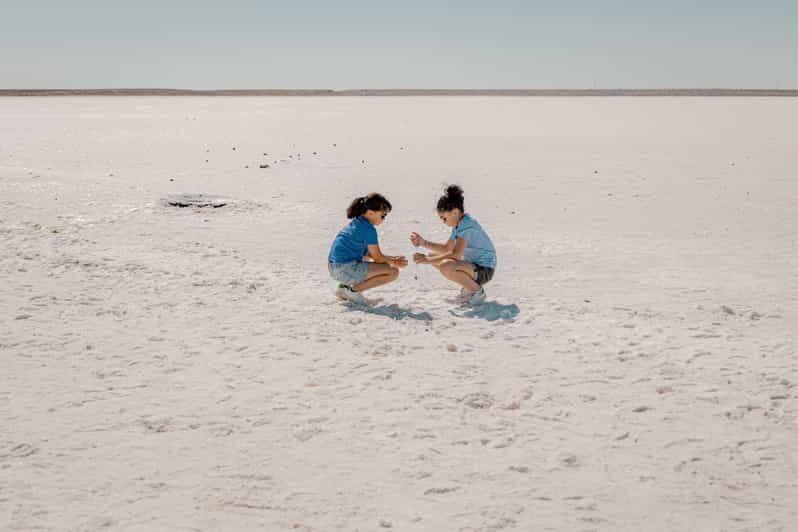
A salt lake is one of the advertised highlights, known for its reflective surface and changing colors. When it is included, the stop offers a sharp visual contrast with the ochre earth and pale stone farther south. It is also a good place to take photographs, though the effect will depend on the light and conditions on the day.
The salt lake’s place in the route appears to vary. Some itineraries include a stop around Zarzis, while others focus on the ksour and Chenini. The historic engineering feature mentioned for the trip is the causeway itself, once a vital link for Djerba. Do not assume the lake or a particular stop is guaranteed without checking the current route.
The drive can feel long, especially in the heat. Short photo stops and a comfortable, air-conditioned vehicle make a real difference. Bring water for the road: drinks are not included, and one account noted that water was scarce during a very hot outing.
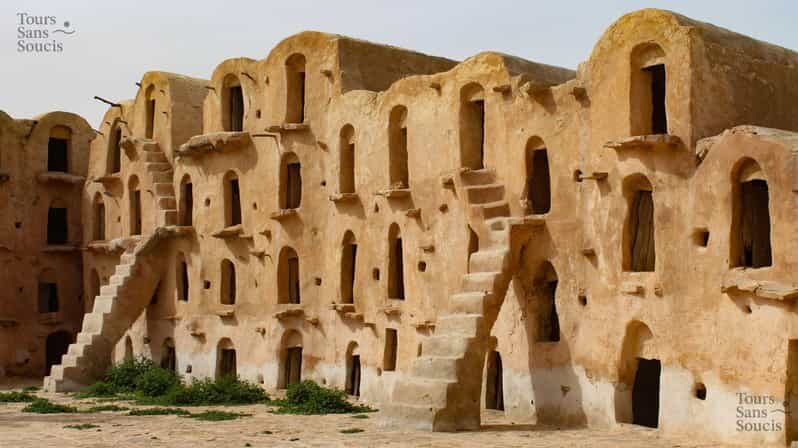
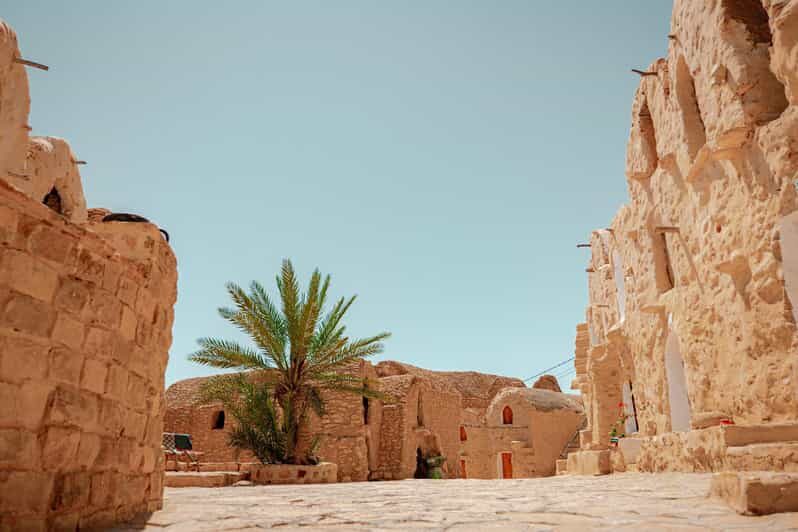
Ksar Haddada is one of the most memorable stops because it brings together two kinds of history. Its stacked clay granaries show how Berber communities stored food and other goods in a dry region, while its role as a Star Wars filming location gives the site an extra pull for film fans. The architecture is the main event: look for the repeated storage cells and the way the complex rises in tiers.
The site is included in the tour, and its entrance is covered. The place has been restored and is visited as a historic site, so expect to explore the built structure rather than encounter a working granary. For Star Wars fans, it is worth knowing that the thrill lies in seeing the real location and recognizing its shapes, not in a recreated film set.
This is a useful stop for anyone interested in how people adapted to the region. The granaries were practical buildings, not monuments designed to impress. That makes their scale and arrangement especially interesting once a guide explains what you are looking at.
Ksar Ouled Soltane is another major granary complex, and it has a different feel from Haddada. Its multi-level form sits on a hill, with broad views over the surrounding plains. Walk through its vaulted passages and storage cells and you get a clearer sense of how a ksar could serve as a protected place to store supplies.
The site’s height and layout make it one of the more photogenic stops, but uneven ground and steps call for sensible shoes. The tour includes entrance here, too. Take your time looking at the rows of small openings and the curved vaults; they are easy to pass by if you treat the visit as only a photo stop.
The two ksour complement each other. Visiting both helps you see that these fortified granaries are not interchangeable ruins, but distinct complexes shaped by local needs and terrain. A guide can add context that a quick walk-through cannot, especially if you are curious about the communities that built and used them.
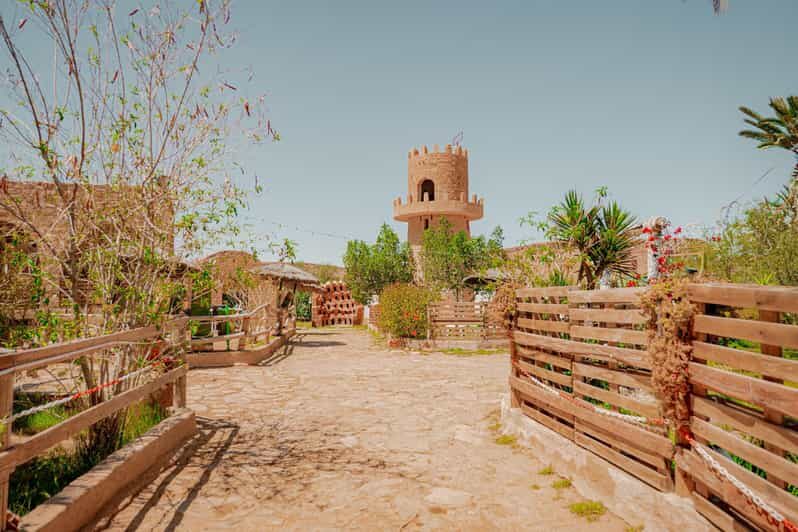
Chenini is the cultural heart of the outing. The village is built along a mountainside, with troglodyte dwellings, old granaries and a mosque on the ridge. The setting is dramatic, but the place is more than a scenic backdrop: it offers a chance to hear about Berber traditions and the demands of life in an arid region.
A local guide may lead the walk and explain the village’s history and customs. Guides named in accounts include Hedi, who has introduced visitors to Amazigh traditions, and Adel, who has shared details of everyday life in Chenini. These names are examples, not a guarantee of who will lead your visit. The tour provider lists Arabic, French, English, German and Italian as guide languages.
Expect short walks on uneven ground. The climb and footing may be tiring if you have limited mobility or are not comfortable on rough paths, and modest clothing is recommended in villages and at historical sites. If you are travelling with children, the route can be manageable at a relaxed pace, but the heat and long day still matter.
Chenini is where a good guide can make the difference between looking at old stone and understanding a living region. The best explanations connect the homes, storage spaces and mosque to how people made a life here. Give yourself time to listen and look around rather than rushing straight to the next photo.
More Great Tours NearbyThe sunset is one of the trip’s biggest selling points, but it is also the detail most worth clarifying. The tour is presented as ending in the desert, and some outings include a ride by quad to reach soft sand and an open view. Accounts describe rides of around 30 to 45 minutes, with an extra charge of about €30 per quad.
That cost is not listed among the included items. Nor is a quad ride explicitly promised in the tour’s standard inclusions, so ask whether it is optional, how many people share a quad and where the sunset stop will be on your date. Some outings have reached a memorable spot with a driver’s help; others have ended at a different location, including by the sea. Do not book solely on the assumption that a specific dune stop is assured.
If you are a Star Wars fan, a photographer or simply keen to see the southern interior at dusk, a sunset stop can be a fine end to a full day. Just separate the basic tour price from any optional ride before you decide what represents good value.
Lunch is included and is described as traditional Tunisian food. One meal included vegetable soup, an egg baked in a brick pastry sheet, couscous and fruit; other outings have included fish. The exact menu and setting can vary, but the meal is generally treated as a proper part of the day, not a token snack. Tell the operator about food allergies in advance.
The guides and drivers are often praised for being attentive, friendly and helpful. Names that come up include Rostom, Nasser, Jalel, Meftah, Chaker and others. That is useful context, but it does not mean you can select a particular person when booking. English, French, German, Italian and Arabic are listed as available languages, though the style and fluency of each guide will naturally differ.
Some drives use a convoy of vehicles. In that case, your driver may be the person answering questions between stops, while the main guide gives fuller explanations at the sites. This is worth knowing if you expect a single guide to stay with your group all day. If storytelling is important to you, ask how the guide is assigned to each vehicle.
At $53 per person, the base price includes hotel pickup and drop-off, transport, a guide, lunch, visits, and entrance to Ksar Haddada and Ksar Ouled Soltane. That is a reasonable bundle for a full day covering several widely separated places. You avoid arranging transport across the region yourself, and you have a guide to help explain the architecture and local history.
The value depends partly on what you expect the sunset to include. Drinks and personal expenses are extra, and a quad ride may add about €30 per quad. If the ride is essential to your idea of a desert sunset, include that potential cost when comparing options. A cheaper trip may not offer the same arrangement or the same level of support, but price alone cannot tell you which operator will suit you better.
The day’s length also affects value. You get several different stops, but you pay with a long stretch on the road and a packed schedule. For someone who wants to see more than Djerba’s coast, that is a worthwhile trade. If you prefer a slow day with plenty of time in one place, this is not the right format.
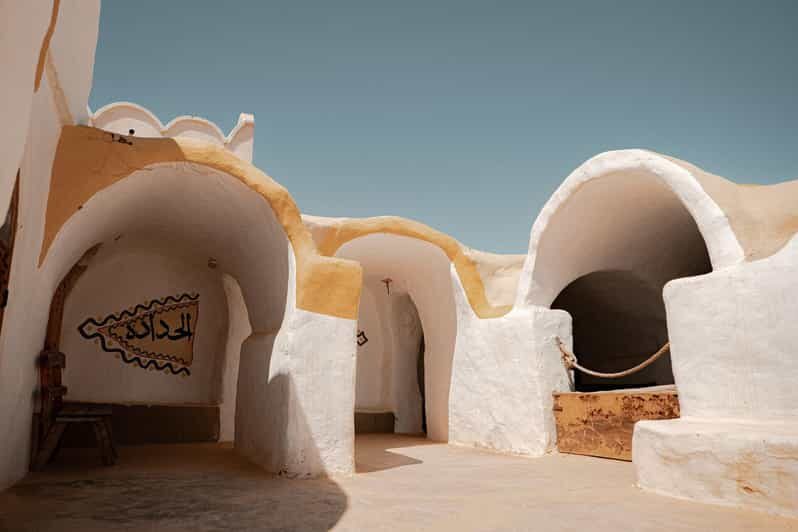
I would choose this outing if you are interested in Berber history, unusual architecture and the country beyond the beach resorts. The blend of two ksour, Chenini and Star Wars sites gives the day a good range, while lunch and hotel transport keep the planning simple. Film fans will find the locations fun, but the historic sites and village are the stronger reasons to go.
It is less suitable if you need a short, predictable outing or want a guaranteed sunset in a particular dune setting. The schedule can run late, the vehicle may be shared with other small groups, and the final stop can vary. You should also be comfortable with short walks over uneven ground and a long day in the car.
Before booking, ask three practical questions: whether the salt lake is on your route, exactly where the sunset stop will be, and whether a quad ride costs extra. If the answers suit your priorities, this is a strong way to trade a day of poolside ease for a closer look at southern Tunisia.
“Great activity! The guides are fantastic and share interesting facts about the history of Tunisia. I recommend it!”
The stated duration is nine hours. The day can run longer, so keep your evening schedule flexible.
The listed price is $53 per person.
Yes. Pickup and drop-off from your hotel are included. Check availability for the specific pickup details.
Transport, a tour guide, lunch, visits and entrance to Ksar Haddada and Ksar Ouled Soltane are included.
No. Drinks and personal expenses are not included.
The listed guide languages are Arabic, French, English, German and Italian.
Yes. A traditional lunch is included. Tell the operator about food allergies in advance.
A quad ride is not listed among the included items. Some outings offer one for an extra charge of about €30 per quad, so confirm the current arrangement before booking.
Modest clothing is recommended when visiting villages and historical sites. You should also be prepared for short walks over uneven terrain.
Yes. The tour may be adjusted for weather or local events, and it can be cancelled and refunded in bad weather.
You can check availability for your dates here: