Physical Address
304 North Cardinal St.
Dorchester Center, MA 02124
Physical Address
304 North Cardinal St.
Dorchester Center, MA 02124

Explore Communist-era Czechoslovakia through reconstructed rooms, original artifacts, archival photos, and a short documentary in central Prague.
Prague’s Museum of Communism brings the country’s recent past down to the scale of an ordinary room: a classroom, a child’s bedroom, a workshop, and an interrogation room. I like that the exhibits pair these reconstructed spaces with original objects and photographs, and that the story reaches beyond politics into school, sport, art, work, and censorship.
I also like the short documentary, which gives you a chance to pause between the panels. The main drawback is that this is a text-heavy museum, not a guided tour, so allow time to read and absorb the material rather than squeezing it into a quick stop.
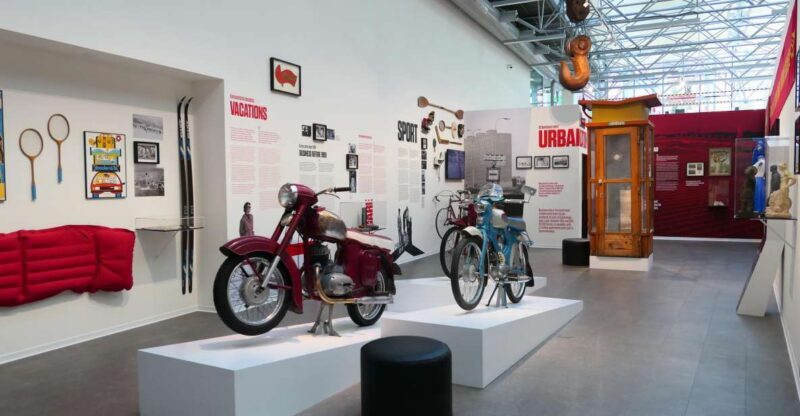
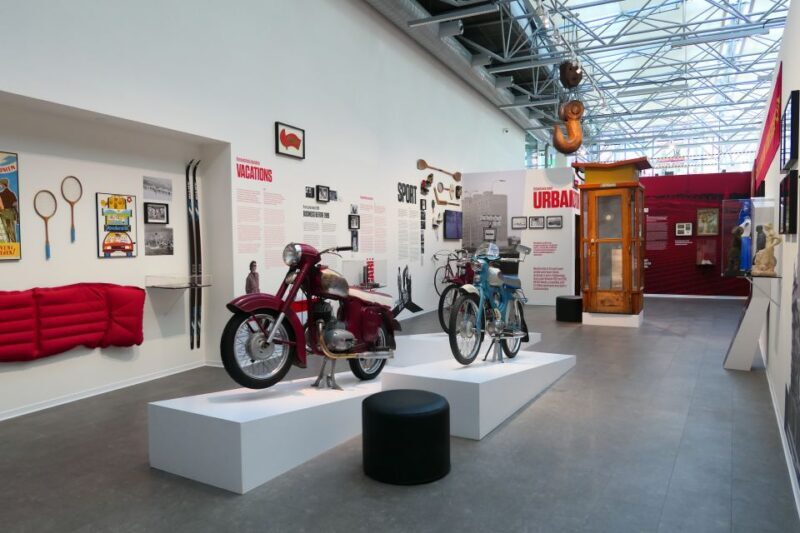
The Museum of Communism takes on a complicated subject in a compact, accessible way. Its exhibition covers the period from the Communist takeover in February 1948 through the Velvet Revolution of 1989, when the regime ended. Rather than treating those decades as a list of political dates, it asks you to consider how the system affected daily life.
That approach is useful if you know the broad outlines of the Cold War but want to understand what they meant inside Czechoslovakia. Political decisions shaped schools, workplaces, the press, art, and public institutions. The museum connects those parts of life to the larger story of authoritarian rule.
The exhibition spans nearly 1,500 square metres and uses 62 panels, along with photographs, videos, posters, and artifacts. That is a lot to take in. You can move through the displays at your own pace, but the experience rewards patience more than speed.
I’d think of this as a small history lesson with rooms and objects to help make the lesson concrete. It is not a live tour, and no live guide is included with the ticket. The information comes through the displays and short videos, so you set the pace and decide how much to read.
You might also be interested in these Prague experiences
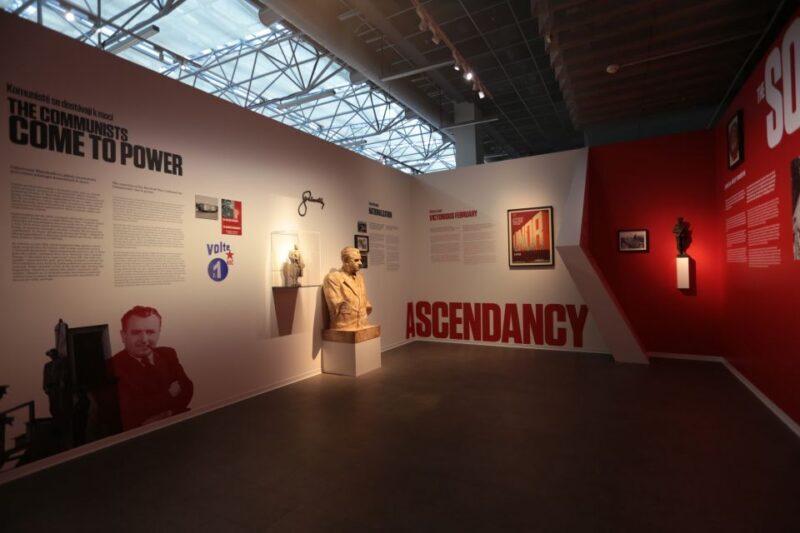
The exhibition’s central frame is the regime’s rule from the February 1948 putsch to the Velvet Revolution. That gives your visit a clear beginning and end, while the museum also places the Communist period within the wider postwar history of the country.
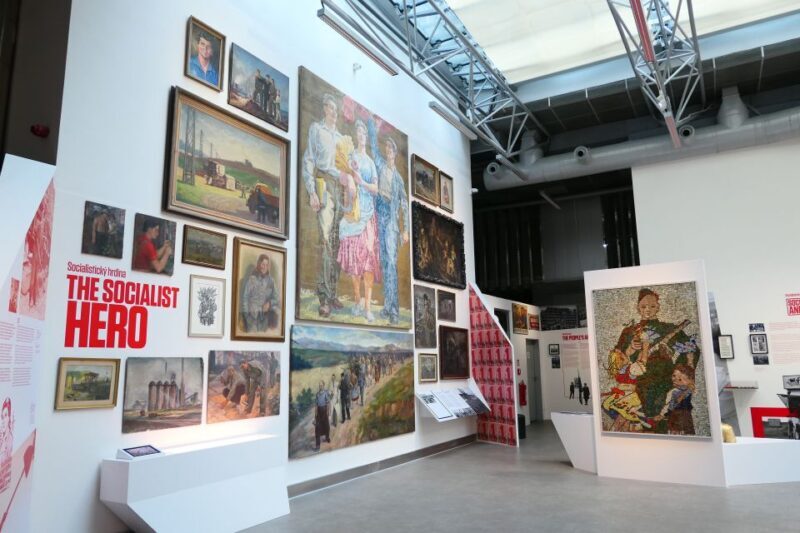
The themes move across public and private life. Politics and economics help explain how the state functioned; education, sport, and Socialist Realist art show how its reach extended into institutions and culture. Sections on propaganda, censorship, courts, and the police examine how the authorities managed information and dissent.
The StB, Czechoslovakia’s secret police, and the People’s Militias are among the institutions covered. These subjects matter because they help explain why a regime could shape more than government: it could also influence what people read, what they learned, and what they felt safe saying.
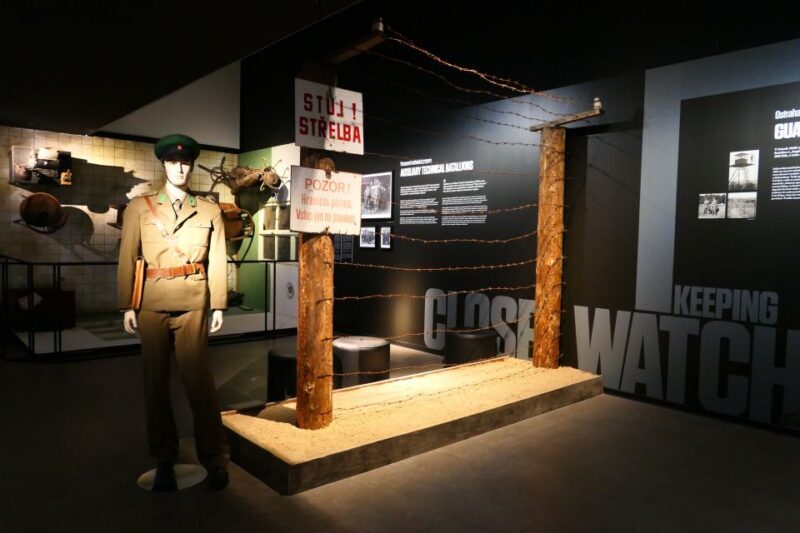
The displays also address show trials and political labor camps during the Stalinist era. Those are some of the hardest material in the museum, and they give the exhibition a sobering edge. If you are visiting with children or anyone who prefers a lighter museum, keep in mind that this is a serious account of repression, not a nostalgic tour of old-fashioned objects.
The museum’s subject is not limited to the regime’s worst moments. It also considers how everyday systems worked, and how official ideals met ordinary needs. That broader scope helps you understand why the period cannot be reduced to a few famous events or slogans.
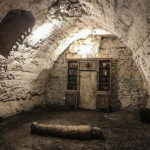
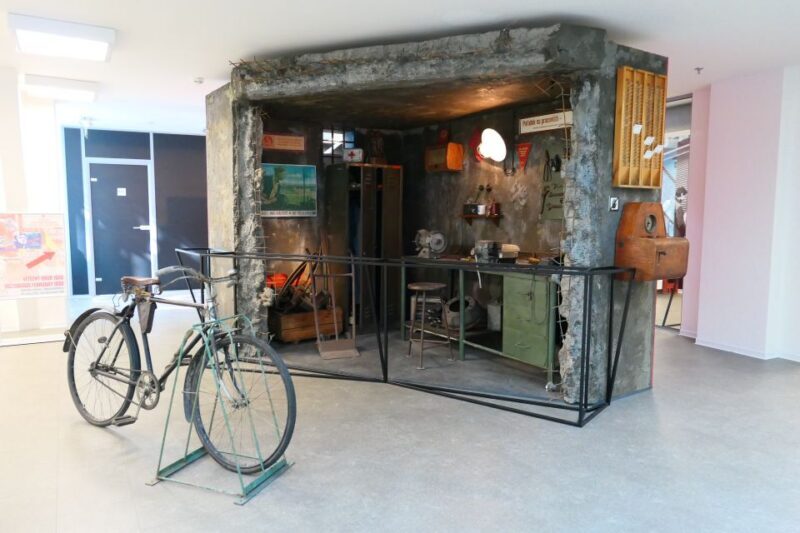
The recreated spaces are among the most useful parts of the visit. You can step into mock-ups of a classroom, a child’s bedroom, a shock worker’s workshop, and an interrogation room. They offer a change of scale from the panels: instead of reading only about institutions, you can look at rooms shaped around work, childhood, and state power.
Each space adds a different kind of context. A classroom connects the political story to education; a bedroom brings the focus into family life. The workshop points to labor and the ideal of the model worker, while the interrogation room makes the machinery of policing more immediate.
These are mock-ups, not preserved rooms from one particular household, so approach them as interpretive displays. Their value is that they give the written history a physical setting. If you usually skim museum panels, pause here and look at how the objects and room details support the themes around them.
You will also see original artifacts throughout the exhibition. The mix of objects, reconstructed spaces, and images helps break up the reading. Still, the displays are not a substitute for the text: the museum’s explanation is largely carried by its panels and short videos.
Photography is a strong thread through the exhibition. The museum draws on material from the Archive of the Czech News Agency, the Security Services Archive, the Archive of the Association of Forced Military Camp Laborers, and the personal collections of leading Czech photographers.
That range matters. Official and press images can show how a state wanted events to be seen; other photographs can help bring lived experience into view. Taken together with posters and artifacts, the images offer a visual record alongside the written account.
The collection is especially helpful if you want to connect the political history to people and places. Photographs can make a period feel less abstract, while the accompanying text gives you context for what you are seeing. But you will need to read: some visitors may find the amount of writing demanding, especially if they prefer audio or object-led museums.
Everything in the exhibition is translated into English, which makes the museum workable for international visitors. The displays are informative, but an audio guide is not included in the ticket details. If you like to listen rather than read, this may not be your ideal museum format.
More Great Tours Nearby
Your ticket includes a 15-minute documentary about communism in Czechoslovakia. It is shown at regular intervals in the museum cinema, so you can fit it into your visit when the timing suits you.
The film gives you a change of pace after the panels and artifacts. It can also help tie together the larger political story before you return to the details of daily life. Since it runs for only 15 minutes, it is a manageable addition rather than a major time commitment.
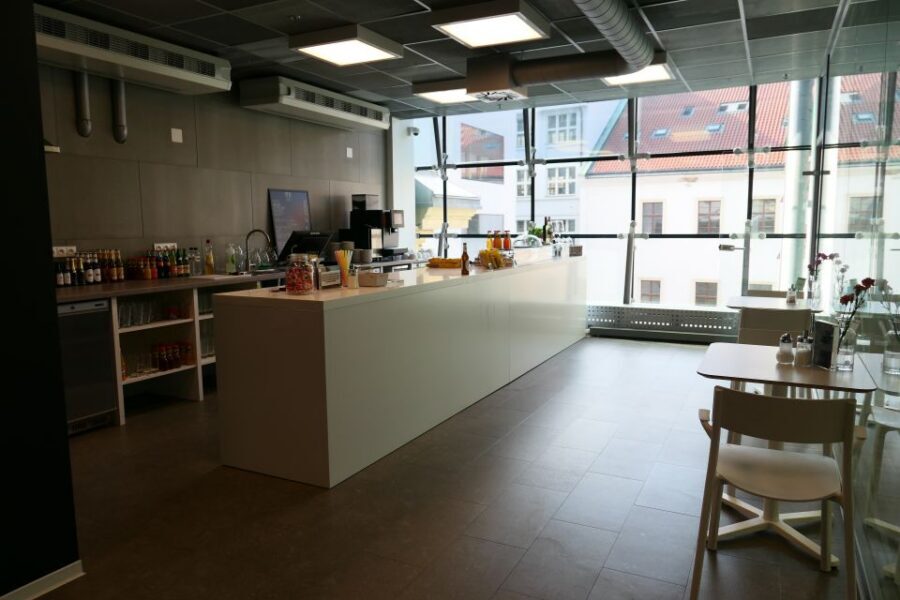
There is a museum café where you can take a break during your visit. Treat it as a convenient place to pause, not as a reason to plan a meal around the museum: café service and availability may vary. If you want to keep moving, you can simply continue through the exhibition and stop for the documentary when it fits.
Culture seekers can explore more Prague museums and galleries
The ticket is valid for one day from its first activation, so you are not working against a short entry window. The more important question is how much time you want to give the exhibits. Allow 1.5 to 2 hours for a solid visit, including time for the film. If you read every panel, you could easily spend around three hours.
I would not schedule this as a rushed 45-minute stop. The exhibition is large enough to merit attention, and visitors who want the full story will need time to read. If you have limited time, choose your priorities: the overview panels, the reconstructed rooms, the sections on political repression, and the documentary make a useful route through the material.
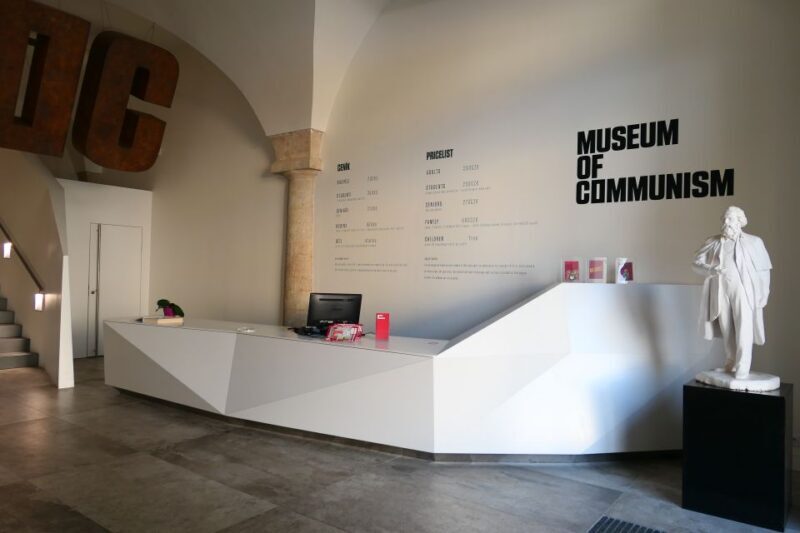
The museum is at V Celnici 1031/4 in central Prague. It is wheelchair accessible. One timing detail is easy to miss: the cash desk closes 30 minutes before the museum itself, so do not arrive at the last minute and expect to buy admission.
If you are planning your day around other museums, this one works best when you have enough energy for reading. A thoughtful visit asks for attention, and the subject matter is heavy. You can take a break at the café, but the museum is not designed as a quick, light diversion.
At $18 per person, the ticket buys access for a full day to a substantial exhibition and the included documentary. The value is strongest if you want more than a quick introduction: 62 panels, archival photos, artifacts, reconstructed rooms, and several thematic sections give you plenty to work through.
The price may feel less compelling if you only want a brief look or if you dislike reading in museums. There is no live guide included, and much of the interpretation is on text panels. You are paying for access to the exhibition, not a guided experience or a hands-on activity throughout.
For a history-minded visitor, the mix of political context and ordinary settings makes the fee reasonable. It is also a practical choice if you want a clearer understanding of Czech and Czechoslovak history beyond the city’s older landmarks. The museum gives you a place to consider the recent past that shaped the country.
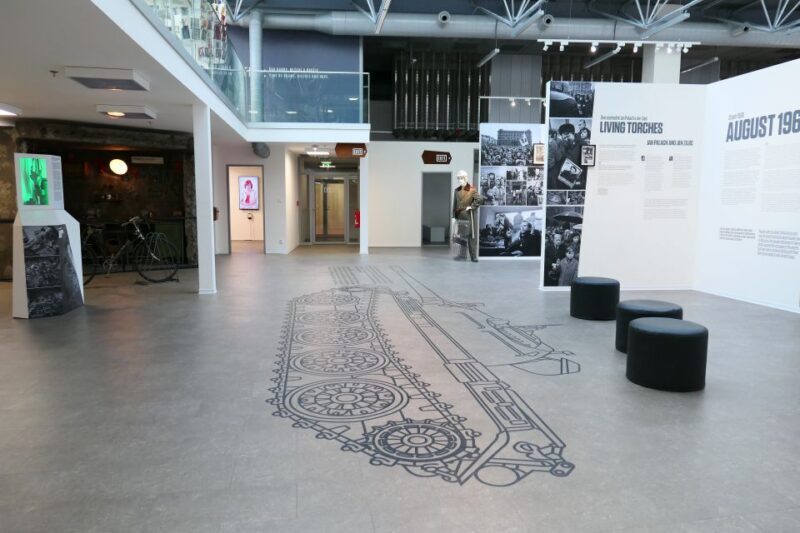
This is a good fit if you are interested in 20th-century European history, the Cold War, or the daily effects of authoritarian rule. It is especially useful if you were born after the Communist era and want more context for events such as the Soviet invasion of 1968 and the Velvet Revolution.
You do not need to arrive as an expert. The exhibition explains a broad period and gives you a starting point through its chronology, themes, and visual material. If you already know the history well, you may still value the photographs and room reconstructions, though you may wish for more objects or a stronger account of particular turning points.
I would also recommend it to visitors who want a serious change of pace from Prague’s grand architecture and older history. The subject is local, but the themes of propaganda, censorship, surveillance, and political control have wider relevance. Just come ready to read, and give yourself room to think about what the displays show.
Book it if you want a structured, visual introduction to life under Communist rule in Czechoslovakia and have at least a couple of hours to spare. The reconstructed rooms, historical photographs, and coverage of daily life give the subject more texture than a timeline alone.
Skip it if you are looking for a guided tour, a light attraction, or a museum you can race through without reading. For $18, it offers a solid amount of material, but the experience depends on your interest and attention. If the subject matters to you, set aside the time and let the panels, images, and film build the picture piece by piece.
“I loved this museum. I have a great interest in WW2 and post WW2 and this covered all of it.”
It is at V Celnici 1031/4, 110 00 Prague, Czech Republic.
The ticket price is $18 per person.
It is valid for one day from its first activation.
Plan at least 1.5 to 2 hours if you want to read the displays and watch the film. A detailed visit can take longer.
Its main focus is the Communist regime in Czechoslovakia from the February 1948 putsch to the Velvet Revolution in 1989.
No. The ticket includes museum admission and a 15-minute documentary, but not a live tour guide.
Yes. A 15-minute documentary about communism in Czechoslovakia is included and is shown at regular intervals.
Yes, the museum is wheelchair accessible.
The exhibition information is translated into English.
The cash desk closes 30 minutes before the museum closes.
You can check availability for your dates here: