Physical Address
304 North Cardinal St.
Dorchester Center, MA 02124
Physical Address
304 North Cardinal St.
Dorchester Center, MA 02124

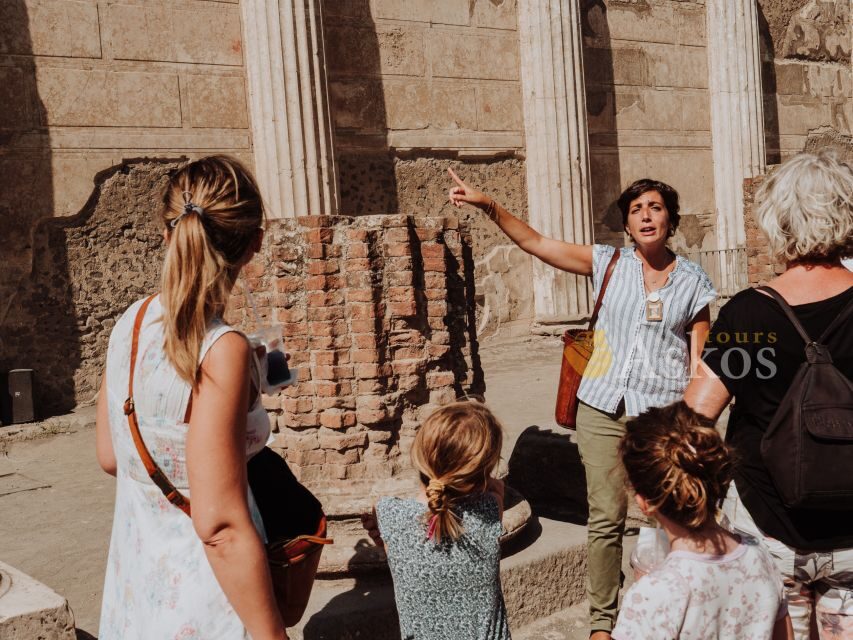
Visit Pompeii and Herculaneum with an archaeologist guide, skip-the-line tickets, and minibus transport from Naples.
Herculaneum’s charred wooden doors, painted walls, and mosaics make the ancient town feel startlingly close. Pompeii gives you the wider civic picture: forums, shops, baths, and homes buried when Vesuvius erupted in 79 AD. Seeing both in one day helps you understand how the same disaster left two very different records of Roman life.
I like two things especially: an archaeologist guides you through both sites, and a shared minibus links them without the hassle of arranging separate transport. The group is limited to 20, and skip-the-line tickets help keep the day moving.
The trade-off is time. Two hours at each site is enough for key sights and a guided introduction, not for a slow, independent wander through every street. Expect plenty of walking on uneven ground, stairs, and slopes.
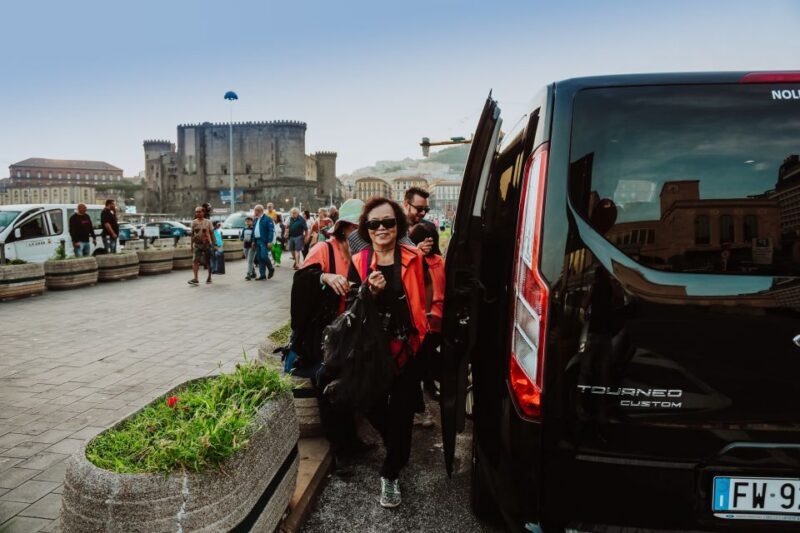
Meet the guide in front of the Starhotels Terminus, opposite Naples Central Station. Look for the ASKOS TOURS sign. The pickup point is handy if you are arriving by train, but be ready at the agreed time: the driver waits for late arrivals for up to five minutes.
The first minibus ride takes about 45 minutes. It gives you a break from navigating on your own and gets the group to Herculaneum together. The vehicle is described as modern, and the driver handles the transfers between the city and the archaeological sites. Keep in mind that this is a shared minibus, not a private car, so space is limited. Large bags and luggage are not allowed.
The tour is listed as seven hours, with the day split between the two sites and transfers. The timing gives you a useful overview without requiring you to plan train connections or buy separate tickets. It also makes for a full day, so wear comfortable shoes and bring water. The tour runs rain or shine; pack a raincoat if the forecast looks unsettled.
If you prefer having a local expert, these guided Naples experiences could work well
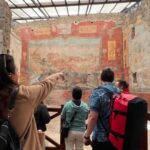
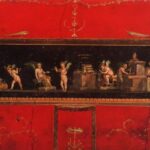
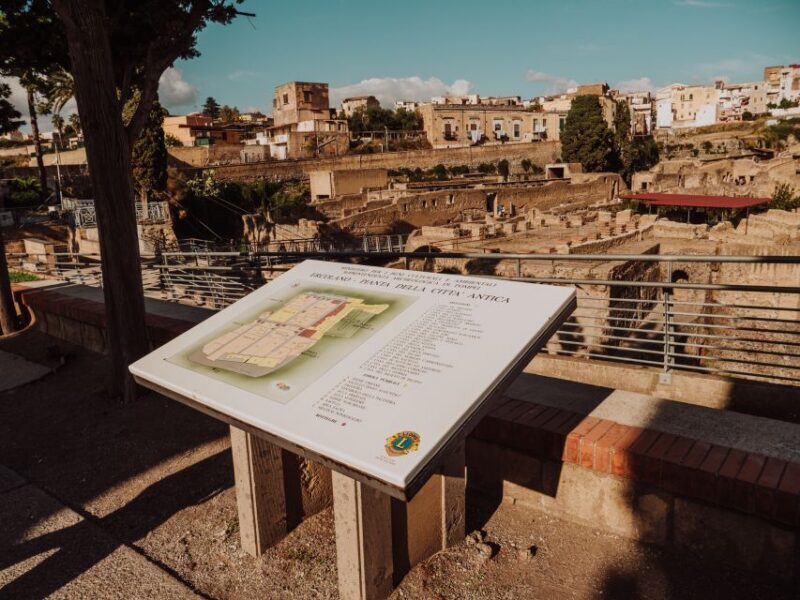
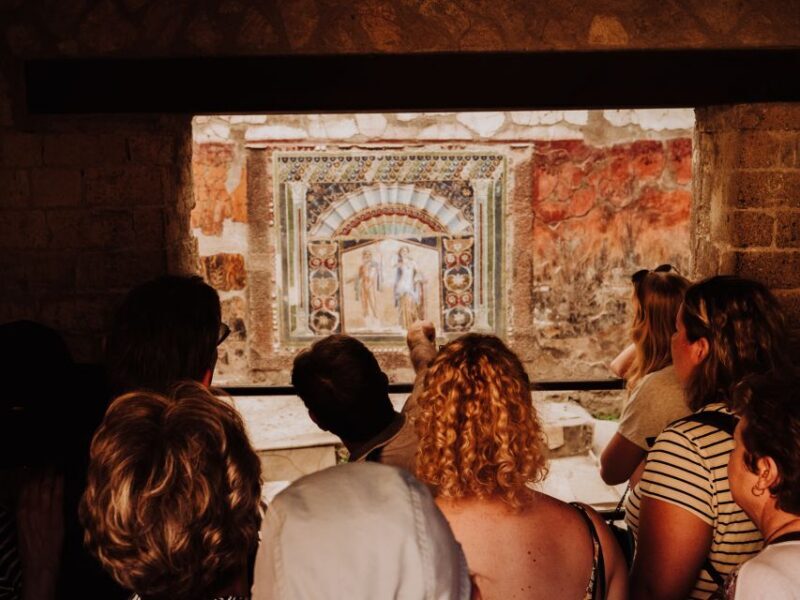
You spend about two hours walking through Herculaneum with the archaeologist guide. The site was buried under a deep mudflow during the eruption, and its preservation gives you a different view of Roman life from the one you get at Pompeii. Painted walls, mosaics, and carbonized wooden objects help make the homes feel lived-in rather than like empty ruins.
The tour’s route takes in major public and private landmarks, including the Temple of the Augustali, the thermal baths, the Forum, the Samnite House, the Gymnasium, and the House of the Deers. You also visit the beach area, where more than 300 skeletons were found. That discovery gives the site a sobering human dimension: the eruption was not just a natural event in a textbook, but a disaster that overtook people trying to escape.
I would pay close attention to the small details the guide points out. The value of an archaeologist-led tour is not only getting from one famous building to the next. A guide can explain what a particular object, room, or decoration tells you about daily life, and help you notice features you might otherwise pass without understanding.
Two hours is a good introduction, but it is not enough to inspect every corner at your own pace. If Herculaneum is your main interest, or you like lingering over architecture and objects, you may wish you had longer. For a first visit paired with Pompeii, though, the guided route gives you a clear sense of why the site matters.
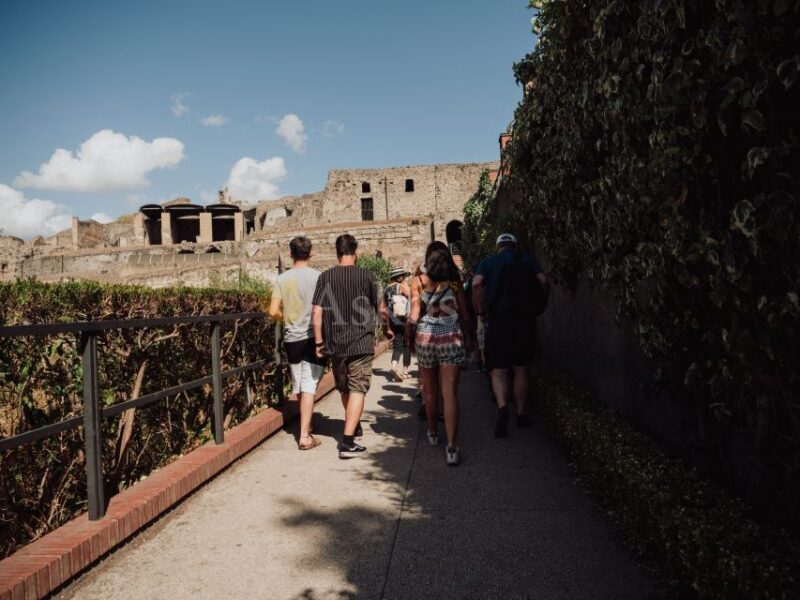
After Herculaneum, the minibus takes about 30 minutes to reach Pompeii. The schedule includes a break of roughly 40 to 45 minutes before the guided walk. Meals are not included, so this is the time to eat.
Plan ahead if you are watching your budget. One participant found a restaurant meal costly, around €30 per person, and suggested bringing food instead. That is not a fixed price for lunch, but it is a useful reminder that the tour’s advertised cost does not cover your meal. You may want to carry snacks as well, especially if you prefer a quick bite and want to use the break to rest.
The pause matters because Pompeii is a large site and the afternoon includes another two-hour walk. Use the time to eat, refill your energy, and take a seat if you can. The schedule is organized around a group, so this is not a long, open-ended lunch stop.
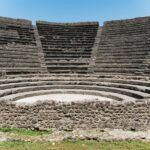
Pompeii’s two-hour guided walk focuses on major public buildings and private houses. The route includes the Marina Gate, Basilica, Forum, Forum Baths, Lupanar, Bakery, House of the Faun, Termopolium Capuano, House of the Tragic Poet, and the plaster casts. These stops give you a cross-section of the Roman city, from civic and religious life to food, bathing, and commerce.
The Forum and Basilica help you picture the public heart of Pompeii. In the baths, you can consider how Romans used shared facilities, while the bakery and thermopolium offer a glimpse of everyday food and work. The Lupanar is a well-known stop, but the broader route keeps it in context alongside homes and public spaces rather than making it the whole story.
The House of the Faun and House of the Tragic Poet bring the focus back to domestic life. Their names are familiar, but a guide can help make sense of how houses were arranged and what their decoration says about status and taste. The plaster casts are among the site’s most affecting sights. They show the final moments of some victims, preserved by the process used to fill voids left in the ash.
A guide-led route is particularly useful in Pompeii because the site is so extensive. You can spend several days exploring it all, so two hours means choosing highlights rather than seeing everything. The guide keeps the group focused and gives shape to the ruins. Some people will appreciate that structure; others may wish for more time to stop, take photographs, or explore side streets alone.
The tour’s strength is its comparison between Pompeii and Herculaneum. They met the same catastrophe, but the sites preserve different evidence and have distinct characters. Herculaneum’s surviving materials can bring individual homes into sharp focus, while Pompeii’s scale makes it easier to imagine a whole Roman town. Together, they offer more than a checklist of famous ruins.
More Great Tours Nearby
The guide is central to the value of this excursion. Guides reported on past departures include Raphael, Roberta, Gennaro, Vito, Julia, and Michele. The guide assigned to your date may differ, so do not book expecting a particular person. The experience is designed around an English-speaking archaeologist who explains the sites, answers questions, and selects the route.
A strong guide can turn a walk among old walls into a story about homes, work, public life, and the eruption. Past groups have praised guides for explaining small details, keeping a good pace, and bringing Roman life into focus with humor and clear answers. One guide, Michele, had worked at Herculaneum, a useful kind of site-specific experience, but the guide you meet will depend on the departure.
The maximum group size is 20. That is not a private tour, but it is more manageable than a large coach group. You can ask questions and stay close enough to follow the explanations. One past group used headsets, but they are not listed as a standard inclusion, so do not count on them.
The pace is active, with guided walks at both sites and transfers between them. Several slopes and stairways can make the day tiring, especially in heat or rain. The tour is not recommended for people with limited mobility and is not suitable for wheelchair users. If you have concerns about walking or balance, consider whether two archaeological sites in one day are right for you.
At $168.79 per person, the price includes shared minibus transport, a Pompeii Express ticket, Herculaneum entry, the archaeologist guide, and tolls and parking. The Herculaneum ticket is listed at €16. Meals are extra.
The value comes from combining two entry tickets, transport, and guided visits in one day. You avoid arranging separate journeys between Naples, Herculaneum, and Pompeii, and the guide helps you make sense of both sites in a limited amount of time. Skip-the-line entry can also save time at the entrances, though it does not mean the archaeological sites themselves will be quiet.
If you prefer to explore at your own pace, a self-guided visit may give you more freedom. But you would need to plan the transport and tickets yourself, and you might miss the connections between the two sites that an archaeologist can provide. This tour makes the most sense if you want a structured overview and value expert explanation over unhurried, independent exploration.

Bring a passport or ID card, as requested, and leave large bags and luggage behind. Wear comfortable walking shoes: the sites include uneven surfaces, stairs, and slopes, and there is no way to avoid the walking if you want to see the main sights.
Carry water and consider bringing food for the lunch break if you want to keep costs down. A raincoat is sensible because the tour continues in wet weather. Baby seats are available on request, so arrange one in advance if you need it.
The tour returns to the Starhotels Terminus meeting point in Naples. The listed final minibus ride is about 45 minutes, but you should still leave a buffer before a train or other onward departure. The day is planned to return you to the station, not to guarantee a connection at a particular time.
Book it if you want to see both Pompeii and Herculaneum in one organized day, value an archaeologist’s explanations, and are comfortable walking for several hours. The combination of transport, entry, and a group capped at 20 makes the price reasonable for a guided visit, especially if arranging the logistics yourself would be a burden.
Skip it if you want a slow, highly flexible visit or need more time at either site. Two hours per stop delivers the highlights, not the full story. For many first-time visitors with a solid day to spare, though, this is a practical way to see two extraordinary places and understand what each reveals about life before Vesuvius erupted.
“Excellent, must do day trip to see the Amalfi coast. Highly recommend the boat ride addition. Pepe and Enzo did an amazing job. Highlight of my trip!!”
Meet in front of the Starhotels Terminus entrance, opposite Naples Central Station. The tour ends back at the same meeting point.
The tour lasts about seven hours. It includes minibus transfers, around two hours at Herculaneum, a lunch break, and around two hours at Pompeii.
Yes. The tour is led by an English-speaking archaeologist guide. The guide assigned to your date may vary.
Yes. The price includes a Pompeii Express entrance ticket and a Herculaneum entrance ticket.
No. Meals are not included. There is a break of about 40 to 45 minutes at Pompeii for lunch.
No. The tour is not suitable for wheelchair users and is not recommended for people with limited mobility. The sites involve walking, stairs, and slopes.
You can check availability for your dates here: