Physical Address
304 North Cardinal St.
Dorchester Center, MA 02124
Physical Address
304 North Cardinal St.
Dorchester Center, MA 02124

Explore Trevi Fountain’s close-up perimeter and underground aqueducts on a 50-minute guided tour, with Roman history, myths, and practical crowd tips.
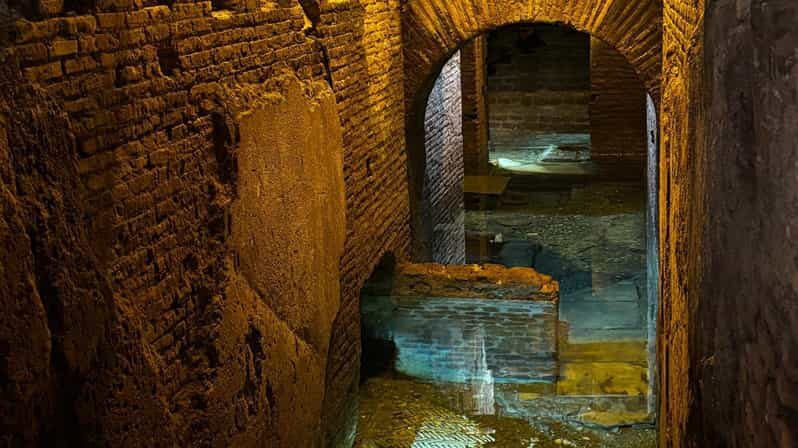
The surprise here is not just the Trevi Fountain’s grand marble show, but the ancient waterworks and Roman remains below street level. In 50 minutes, you get a guided look at the fountain and a visit to subterranean chambers that many people passing through the piazza never see.
I like two things in particular: the guide links the fountain’s myths and design to Rome’s aqueduct system, and the tour can bring you closer to the basin than the general crowd behind the rails. Guides such as Dina, Diana, Fina, and Dani are praised for clear English, lively explanations, and keeping groups together in the crush.
One consideration: the fountain area can be extremely crowded, especially around midday, and this short tour does not make the crowds disappear. Go early if you can, wear comfortable shoes, and remember that the underground visit is not suitable for wheelchair users.

The tour begins at the fountain’s exterior, where the scale is hard to miss. The sculpted figures, stonework, and rushing water make Trevi one of Rome’s most dramatic public monuments. Even if you have already seen it from across the piazza, a guide gives you a reason to pause and look more carefully.
You will hear about the fountain’s story and the myths that have grown around it. The experience is not a long art-history lecture. It is a compact introduction that helps you understand what you are looking at before the tour moves underground.
Access to the closest part of the fountain’s perimeter is a major practical advantage. General viewing can mean standing behind rails in a dense crowd, while this tour brings its group nearer to the basin. Some people have also been able to toss a coin from this closer position, though you should treat that as a possible bonus rather than the sole reason to book.
The guide’s job here is part storytelling and part crowd management. Dina, Diana, Fina, and Dani are among the guides named by people who have taken the tour. The names may vary on your date, but the recurring strengths are clear explanations, humor, and the ability to keep a group together while making space to see the fountain.
Looking for more options in Rome? Here are some other experiences worth considering.
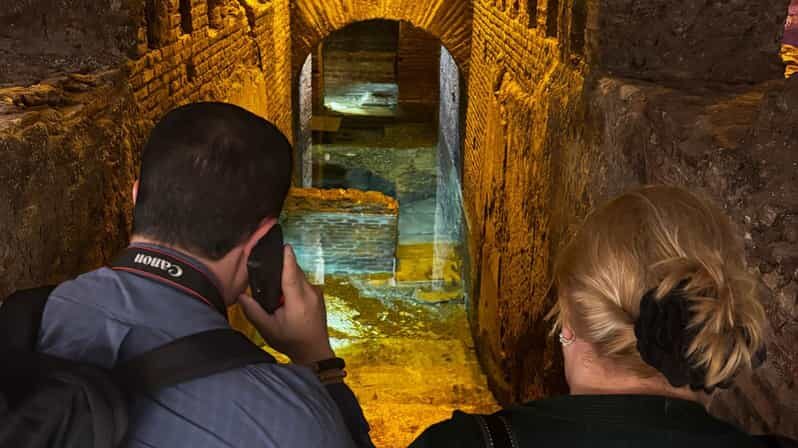
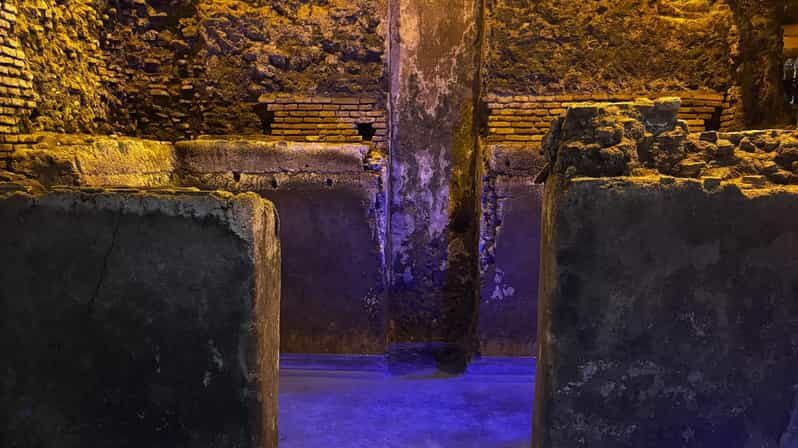
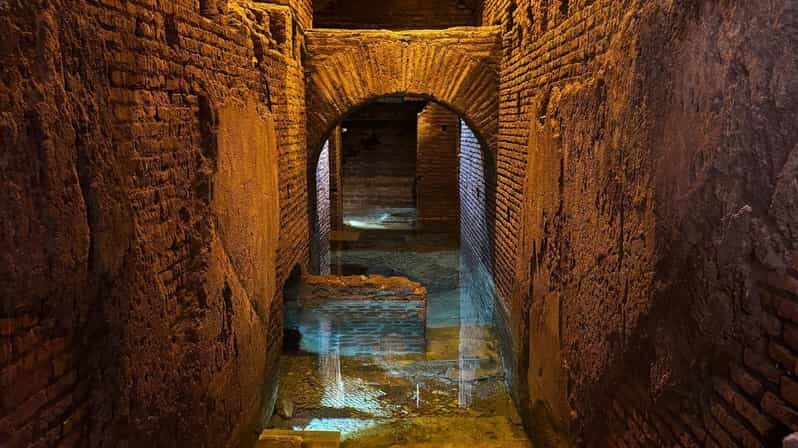
The underground portion changes the mood. Instead of a packed piazza and an imposing façade, you enter a quieter archaeological space with remains of old Roman streets and forgotten chambers. The aqueducts make the visit more than a brief look at an impressive building: they connect the fountain to the practical system that brought water into Rome.
You are not simply looking at a fountain’s hidden basement. The tour presents the subterranean area as part of an ancient Roman district, with traces of built spaces and water infrastructure. Seeing those remains helps explain that Rome’s famous monuments sit within a city shaped by many layers of construction and daily life.
One especially interesting detail is that water still runs underground in the aqueduct area, according to the experience described by visitors. That gives the remains a sense of continuity: the water system is not only an archaeological subject but something you can see at work. Your guide can explain the aqueduct and its place in the city’s history, while the chambers and street remnants give you something concrete to picture.
The underground visit is a strong fit if you like history that comes with physical evidence. It is less suited to anyone expecting a large, fully staged museum or a lengthy archaeological tour. The attraction here is the contrast between the grand fountain above and the simpler, older remains below.
A 50-minute tour does not leave much room for a slow, self-directed visit. The guide is what ties its two parts together, explaining the fountain’s stories, the aqueduct, and the remains below in a clear order. Visitors have specifically praised guides for speaking clearly, answering questions, using humor, and making the information accessible without overloading the group.
Dina is frequently named, while Diana, Fina, and Dani also receive warm mentions. You cannot count on a particular guide, but the reports point to a consistent style: personable, well-organized explanations and a close eye on the group in crowded conditions. That last skill matters at Trevi, where it is easy to get separated or lose sight of the guide.
Headsets are included, which is useful in both the busy outdoor setting and while moving through the visit. Clear sound can make the difference between catching the story and simply following the group. English is the stated tour language, so this is a straightforward choice if you want live commentary in English.
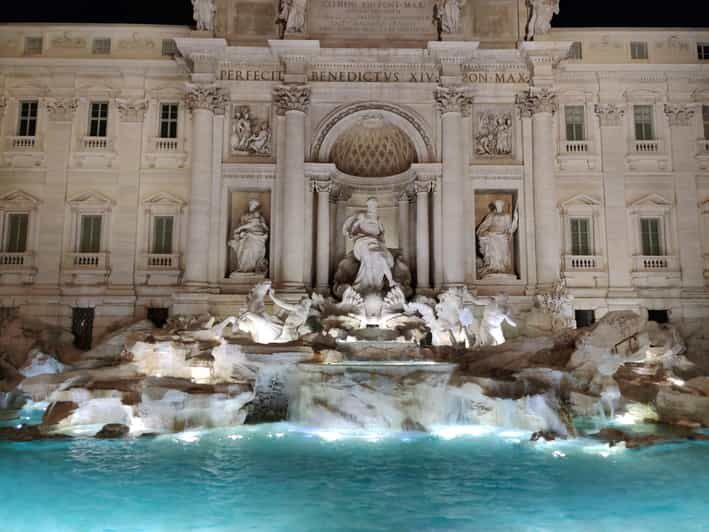
Trevi Fountain is visible without a ticket or a guided tour. You can come to the piazza, admire the monument, and take photographs on your own. What the tour adds is guided interpretation, access to the closest perimeter area, and the underground aqueduct visit.
The tour does not turn a popular landmark into a private one. At around 1 p.m., the fountain can be very crowded, and the surrounding area may feel hectic even with a guide. One practical tip is to choose an early morning start if the available schedule allows it. The tour’s starting times vary, so check the choices for your date rather than assuming a particular hour is offered.
Skip-the-line access is listed, and the closer fountain access can save you from joining the general queue for that area. Still, it is best to think of this as a way to improve your access, not a promise of a crowd-free photo. The piazza remains a public place, and the number of people around the fountain can change by time and day.
More Great Tours Nearby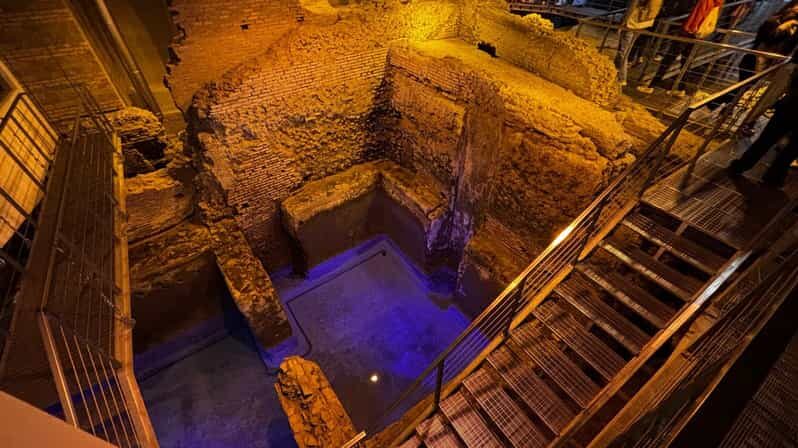
At $32 per person, this is not the cheapest way to see Trevi Fountain, since the fountain itself is visible without a ticket. The value comes from combining a guided explanation with entry to the underground aqueduct area and access nearer the basin. If you would otherwise only stop for a photograph, the tour adds a different kind of visit.
The short duration helps if your Rome plans are full. You can fit the experience into a day without setting aside half a day, and the two-part format makes good use of the time. It is particularly worthwhile if you are curious about Roman engineering or want a guide to make sense of the fountain’s setting and stories.
If you already plan to visit several archaeological sites with guides, you may find this less essential. But if you want an easy, focused way to connect a major landmark with a less visible part of the city, the price is reasonable for the combination. Food, drinks, and transportation to the meeting point are not included, so plan those separately.
I would recommend it to first-time Rome visitors who want more than the standard fountain photo, especially anyone interested in ancient infrastructure. It also suits people with limited time who like having a guide explain a site rather than relying on plaques or a phone.
The tour can work well for couples, families with older children, and small groups who enjoy a compact history visit. The underground rooms and remains give the experience a change of pace, while the fountain access adds a clear payoff above ground. The group size is not specified, so do not assume you will have a private or very small-group tour.
It is not a good choice for wheelchair users, as the activity is listed as unsuitable for them. Anyone who prefers a long, unhurried exploration should also bear in mind that 50 minutes is a concise visit. You will get an introduction and a meaningful look, not an exhaustive tour of Rome’s aqueducts.
Wear comfortable shoes, since the tour includes movement between the fountain and the underground area. Bring a camera if you want photos, but expect other people to be part of the scene at busy times. The guide’s headset helps you follow along, yet you will still need to keep close to the group in the crowded piazza.
The tour is in English and lasts about 50 minutes. It includes a guided visit to Trevi Fountain, the subterranean aqueduct, stories and myths about the fountain, and headsets. Transportation, food, and drinks are not included.
You can reserve now and pay later, and cancellation up to 24 hours in advance is eligible for a full refund. Check the available start times for your date, and use an early option if you want a better chance of a less crowded fountain visit.
Book it if you want to understand the fountain as more than a famous photo stop, and if the idea of seeing ancient waterworks and Roman street remains appeals to you. The combination of close fountain access, a short underground visit, and a lively English-speaking guide makes this a useful, well-paced add-on to a Rome day.
Skip it if you only want a quick look at the fountain, since you can see it without paying, or if stairs and access limitations make the underground portion unsuitable. For most curious visitors, the added context and below-ground visit are what make the $32 worthwhile. If you book, try for an early start and keep your expectations realistic: the guide can help you navigate the crowd, but Trevi remains one of Rome’s busiest sights.
“Interesting to see the aqueducts below ground and get the chance to toss a coin into the Trevi fountain. We did this tour around 1pm and it was ver…”
The tour lasts 50 minutes.
The live tour guide speaks English.
The tour includes a guided visit to Trevi Fountain, exploration of the subterranean aqueduct, stories and myths about the fountain, and headsets.
Yes. The fountain is visible to the public without a tour or ticket. This tour adds access to the closest area of the fountain’s perimeter and the aqueducts, along with a guide’s explanations.
Skip-the-line access is listed for the activity. The tour also provides access to the closest area of the fountain’s perimeter.
No. The activity is listed as not suitable for wheelchair users.
No. Food, drinks, and transportation to the meeting point are not included.
Yes. You can cancel up to 24 hours in advance for a full refund.
You can check availability for your dates here: