Physical Address
304 North Cardinal St.
Dorchester Center, MA 02124
Physical Address
304 North Cardinal St.
Dorchester Center, MA 02124

Compare Caesarea’s Roman ruins, Haifa’s Baha’i Gardens, Rosh Hanikra’s sea caves, and Acre’s old city on an 11-hour coastal tour.
The best part of this coastal day is the change of scene: Roman stonework at Caesarea gives way to Haifa’s carefully tiered gardens, then to sea caves at Rosh Hanikra and Acre’s old port. You cover a lot of ground without having to sort out buses, transfers, and directions yourself.
I like two things in particular: the mix of ancient sites and Mediterranean views, and the chance to see both Haifa’s Baha’i Gardens from above and the wave-carved grottoes at Rosh Hanikra. Guides such as Aviva, Udi, Itamar, and Erez have led the route, and good guiding matters when the day moves quickly.
The trade-off is time. Four stops in 11 hours makes this an overview, not a leisurely visit, and you see the Baha’i Gardens from a viewpoint rather than entering them. Add about $34 per person for entrance fees, plus lunch and other spending, to the $120 tour price.
This is a full-day outing from Tel Aviv, Herzliya, or Netanya, with hotel pickup and drop-off and an air-conditioned coach. The route links Caesarea, Haifa, Rosh Hanikra, and Acre, taking you from the central coast to Israel’s far north and back.
That distance explains both the tour’s appeal and its limits. You get a broad introduction to places that would take more planning to connect independently, but travel time and a fixed group schedule leave less room to linger. If you want to study every archaeological feature or explore Acre at your own pace, a two-day plan would suit you better.
The guide is a key part of the experience. Past guides have included Aviva, Udi, Itamar, Erez, and others. The guide assigned to your departure may differ, but the best version of this route is more than a series of photo stops: clear commentary helps connect Roman rule, later empires, religious history, and modern Israel.
The available guide languages are English, Spanish, French, and German. Some departures may be bilingual, so check your booking details if you need commentary in one language only. The tour provider sends a final pickup time and hotel by email; read that message carefully, and contact the provider if it does not arrive.
You can check availability for your dates here: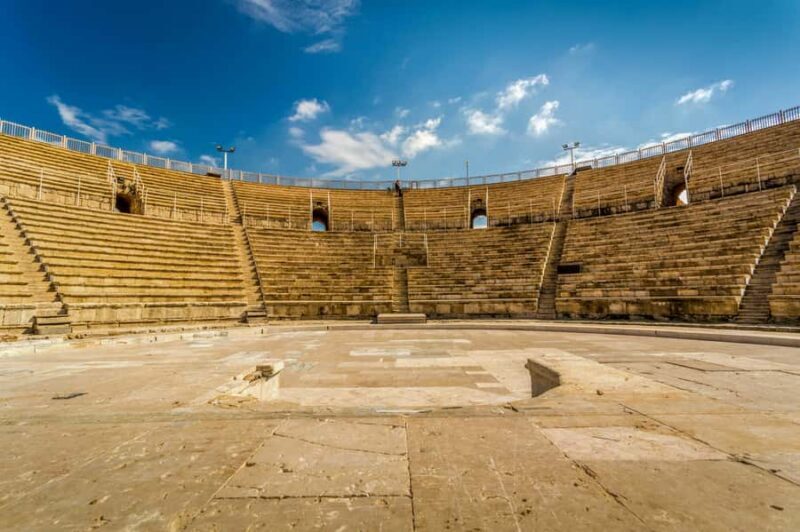
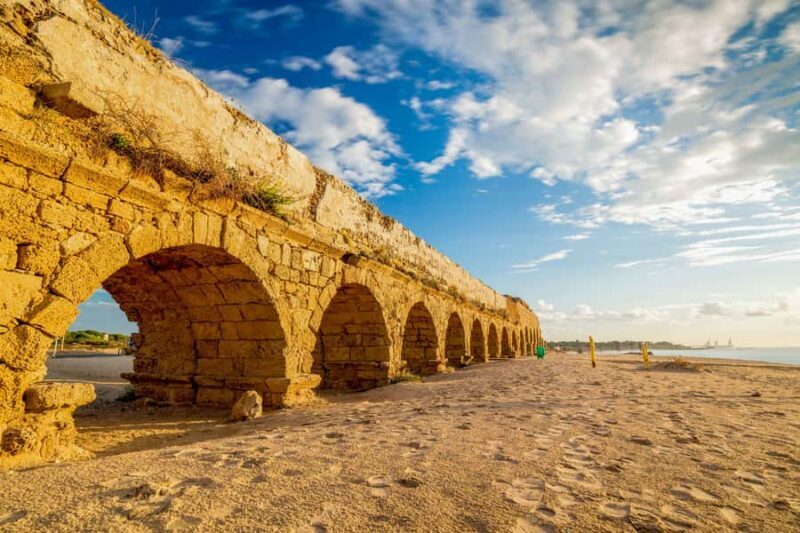
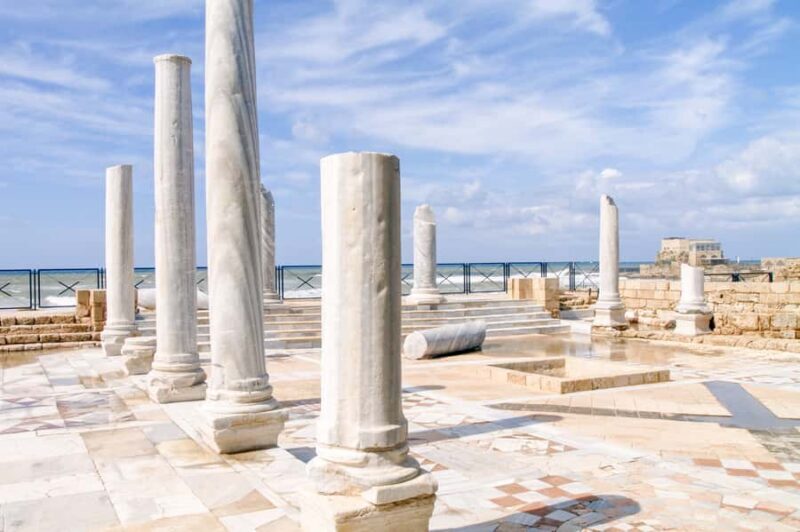
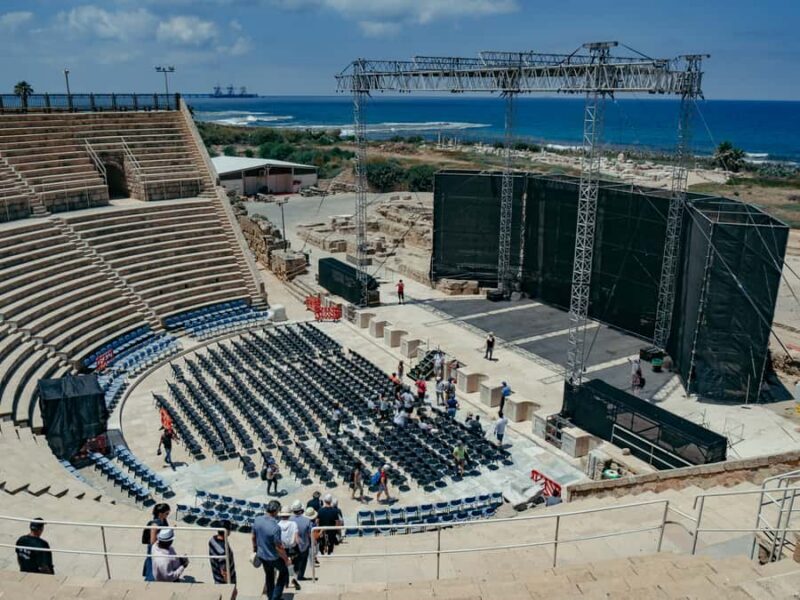
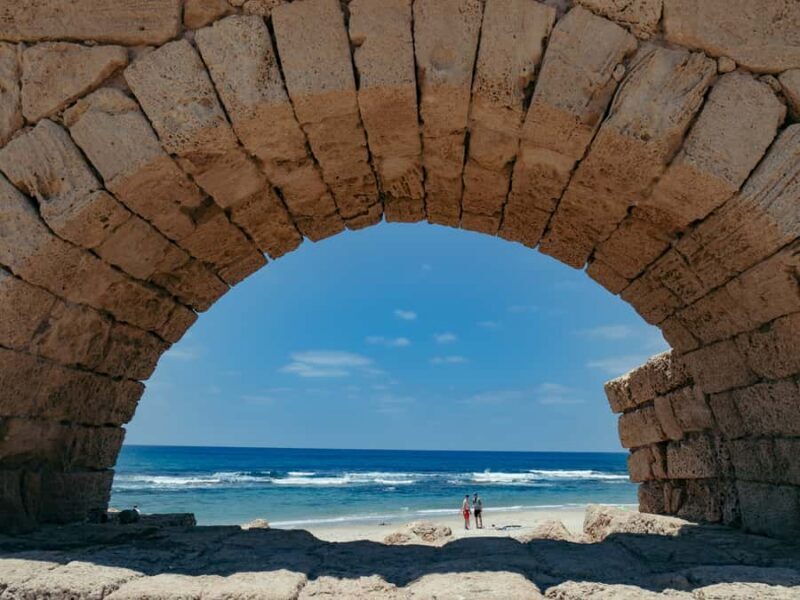
Caesarea opens the day with the remains of a Roman port city. The main draw is its ancient amphitheater, described as one of the largest built in the Roman era, alongside other ruins that make the site’s former scale easier to picture.
I like starting here because the stones set a useful historical baseline for the rest of the coast. The route later brings you through places shaped by Greek, Byzantine, and Ottoman rule, and Caesarea offers a direct glimpse of Roman urban ambition. A good guide can turn scattered walls and foundations into a story rather than a quick walk past old stones.
The visit is still an introduction. The day includes several major stops, so don’t expect unlimited time to explore the archaeological site or to pause at every feature. If Caesarea is your main interest, consider whether a separate visit would let you spend longer there.
You might also be interested in these Tel Aviv experiences
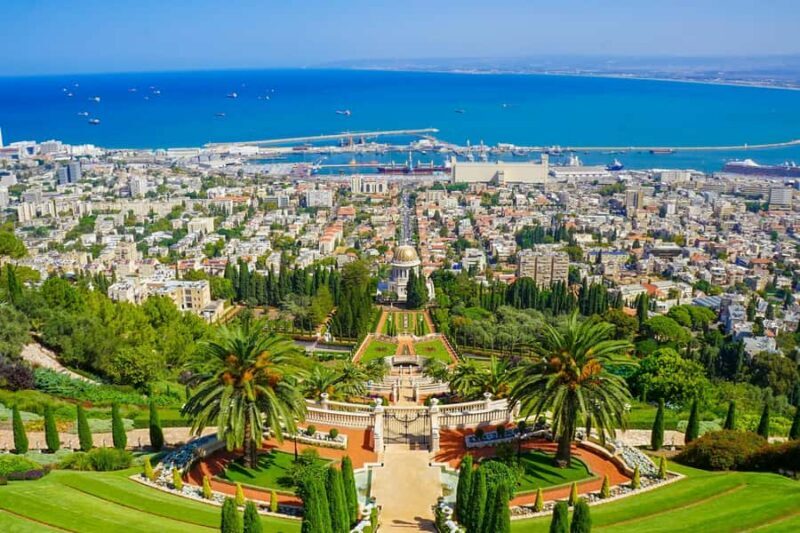
In Haifa, the main sight is the Baha’i Gardens, whose formal terraces climb the hillside above the city. From above, you can take in the orderly design and the contrast between the gardens, the urban setting, and the Mediterranean beyond.
Be clear about what you are booking: this tour offers a viewpoint, not entry to the gardens. The Baha’i Gardens are protected as part of the UNESCO-listed Baha’i holy places, but a view from outside is a different experience from walking the terraces. If entering the gardens is important to you, this day trip does not provide that visit.
Time in Haifa can feel brief. One itinerary account described only a short stop at the viewpoint, while another included views from both above and below, so the exact experience may vary. Treat this as a scenic introduction rather than a full tour of the city or the gardens.
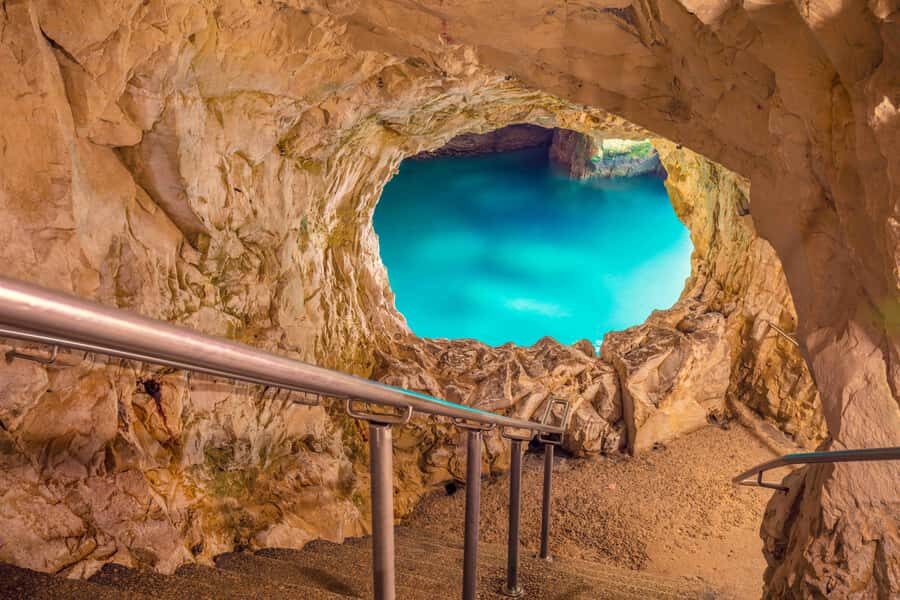
At Rosh Hanikra, white-chalk cliffs meet the water, and natural limestone grottoes open along the shore. The sound and movement of waves inside the caves give this stop a different feel from the city ruins and formal gardens earlier in the day.
The grottoes are the most elemental part of the route: you are there to see how the sea has shaped the rock, and to look out from the cliffs toward the Mediterranean. The site also sits by the border with Lebanon, a striking reminder of how far north the coach has brought you.
Bring shoes you can walk in and sun protection for the exposed areas. One practical advantage is that the grottoes offer shaded spots, but don’t count on every part of the stop being cool or sheltered. The terrain and stairs may also make this visit difficult if you use a wheelchair; the tour is not suitable for wheelchair users.
Acre, also called Akko, closes the sightseeing route with a walled Old City, a historic port, and an oriental bazaar. Its streets carry traces of several periods, including Greek, Byzantine, and Ottoman history, giving the guide plenty to interpret as you walk.
Acre is also a UNESCO World Heritage Site, and it rewards attention beyond the headline monuments. The bazaar brings everyday commerce into the picture, while the harbor and walls help you understand the city’s role as a coastal stronghold. This is the stop where I would most like extra time: an old city can’t be fully absorbed in a short group visit.
The schedule may include lunch before or during the Acre visit, but food and drinks are not included in the tour price. Lunch arrangements and time at the site can vary. Bring cash in shekels, since a lunch venue on this route has been cash-only, and keep a little room in your schedule for browsing or a snack if the group has free time.
Some departures may include more of Acre’s underground or historic sites than others, while others focus on the walls, port, and bazaar. Don’t assume that every interior attraction is part of the standard route. If a particular site matters to you, confirm what your departure includes before booking.
More Great Tours Nearby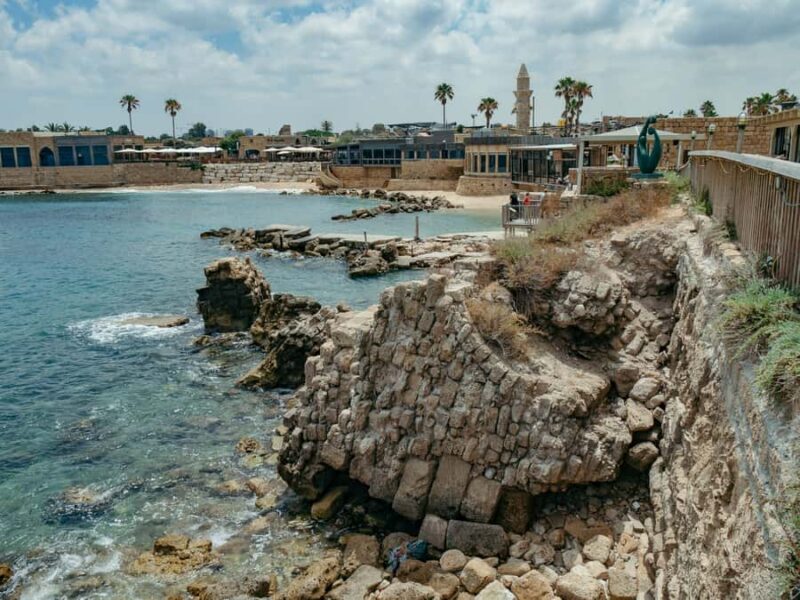
At $120 per person, the tour buys you a full day of transport, hotel pickup and drop-off, and a professional guide across a wide stretch of coast. That is useful value if you want to see several places in one day without arranging the connections yourself.
The listed entrance fees are about $34 per person and are paid separately on site. Food and drinks are also extra, so the practical cost is higher than the advertised price. Set aside money for admissions, lunch, water, and any small purchases; carrying some cash is prudent.
The value depends on how you like to travel. If convenience, context, and a fast survey of northern Israel matter most, the package makes sense. If you prefer slow visits, long meals, or the freedom to choose how much time to spend at each stop, the fixed itinerary may feel tight.

Start with comfortable walking shoes, sunglasses, a hat, and sunscreen. The route includes outdoor sightseeing, and the shade available at Rosh Hanikra won’t protect you at every stop. Pack water and a few snacks as well; the schedule is long, and food is not included.
The coach is air-conditioned, which helps on a warm day and makes the longer stretches between sites easier. Still, the day begins with pickup and ends with a return transfer, so plan for a substantial outing rather than a quick excursion. The listed duration is 11 hours, though the final pickup time and exact schedule are confirmed by the provider.
This trip is not suitable for children under four or for wheelchair users. For families with older children, consider whether they will enjoy a day of bus travel, historic sites, and timed stops. The route offers variety, but it is not built around a slow pace or long stretches of unstructured time.
I’d choose this tour if I had limited time in Israel and wanted a useful overview of the Mediterranean coast beyond Tel Aviv. It connects four distinct places and gives you a guide to explain what you are seeing, while the coach takes the strain out of arranging a long northbound route.
It is especially suited to first-time visitors who want a mix of archaeology, architecture, scenery, and city streets in one day. You don’t need to be a history specialist to enjoy it, but you should be ready for a long schedule and a brisk pace.
I’d look elsewhere if your priority is entering the Baha’i Gardens, spending hours at Caesarea, or exploring Acre in depth. Those aims call for more time than this route can offer. For a first taste of the northern coast, though, the variety is the point: Roman ruins, hillside terraces, sea caves, and a historic port make a strong day out.
“Although it was a but rushed, overall it was a good way to see a lot in a short period.”
The tour lasts 11 hours. The exact starting time depends on availability and is confirmed by the provider.
Departures are available from Tel Aviv, Herzliya, and Netanya. Hotel pickup is optional, and the provider sends your final pickup time and hotel by email.
Live guides are available in English, Spanish, French, and German. Some departures may be bilingual.
No. You view the gardens from above, but entry to the gardens is not included.
The route includes Acre’s Old City and the Baha’i holy places in Haifa, which include the gardens.
No. Entrance fees are about $34 per person and are paid directly on site.
No. Food and drinks are not included, so bring money for lunch and any refreshments.
The tour is not suitable for children under four or for wheelchair users.
You can check availability for your dates here: