Physical Address
304 North Cardinal St.
Dorchester Center, MA 02124
Physical Address
304 North Cardinal St.
Dorchester Center, MA 02124

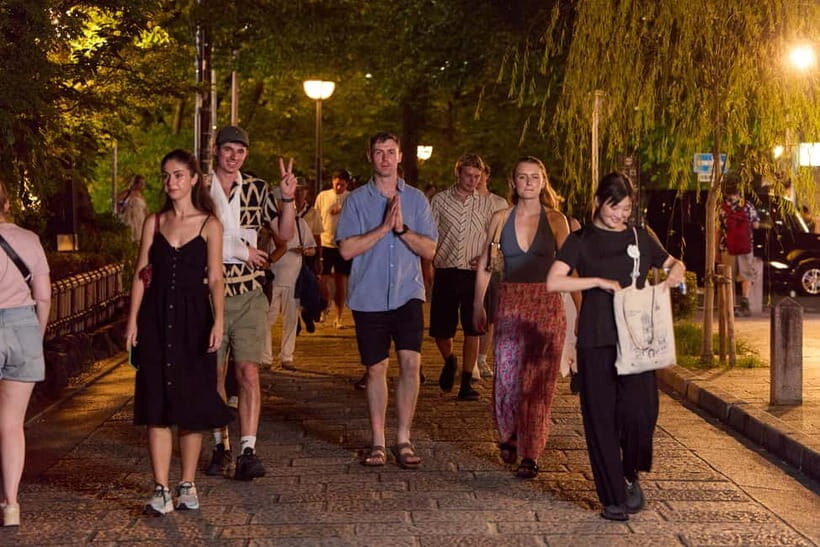
Walk Gion and Pontocho after dark with a local guide, learn about geiko and maiko traditions, and visit Kyoto’s old teahouse streets.
At night, Gion’s narrow lanes and old wooden teahouses offer a striking glimpse of Kyoto’s geisha districts. This two-hour walk links Pontocho and Gion, with local stories that help you understand what you’re seeing beyond the lantern-lit streets.
I like two things in particular: the route joins atmospheric streets with places such as Yasaka Shrine, and the guide can explain geiko and maiko traditions as you walk and ask questions. The chance of seeing a performer on the way to an appointment is a rare bonus, not a promise.
One consideration: this is an outdoor walking tour, and the streets can be busy. The route ends in Gion rather than clearly returning to the meeting point, so plan your next stop from there.
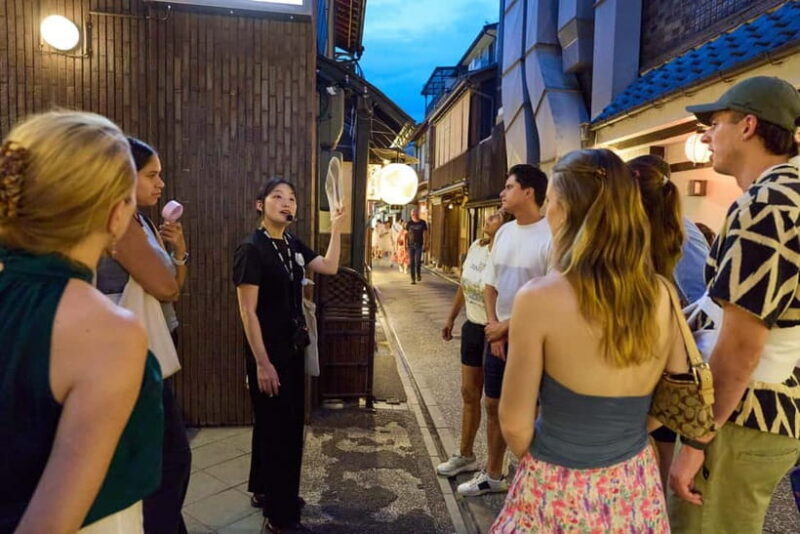
Gion is more than a photogenic row of wooden buildings. It is a working entertainment district, with traditional teahouses and appointments taking place behind closed doors. Pontocho has a similar mix of narrow lanes and traditional eateries, alongside elite clubs. A guided walk can help you read these streets with more care than a quick stroll allows.
The tour is designed around explanation rather than access to private venues. You walk through the districts, stop at well-known sites, and learn about the history and current traditions of geiko and maiko. You should not expect an audience with a performer or a visit inside a teahouse. Instead, you get a street-level introduction, with a local guide to answer questions as they come up.
That distinction matters. Geiko and maiko are not simply costumes in a scenic backdrop. The tour gives you a framework for understanding their training and place in Japanese culture, so the district becomes more than a set of attractive alleys. It also asks you to observe respectfully: if you happen to see someone heading to an appointment, let the moment pass without turning it into a spectacle.
If you enjoy exploring Kyoto on foot, these walking tours might also suit your style
The meeting point is in front of Ben’s Cookies Kyoto Shijo, where your guide will hold a sign board. That is a practical, easy-to-identify rendezvous in a central part of the city. Arrive with enough time to find the shop and gather before the group sets off.
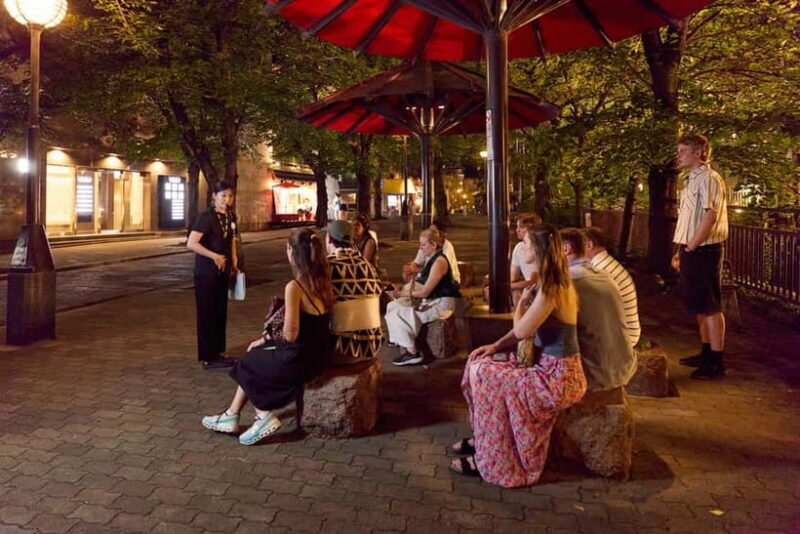
The first ten minutes are listed as a guided introduction. Use this moment to tell the guide what you already know and what you are curious about. The tours are led by different guides, including Yuki, Nami, Yukari, Kenji, and Deborah. Their approaches vary, but the focus is consistent: clear explanations, local history, and room for questions.
Several guides are described as warm and good at adjusting their explanations for people who are new to the subject as well as those who already know a little. That matters on a short tour. A strong guide can make a two-hour walk feel like a conversation rather than a lecture, and can help you connect the sights to the stories.
The route does not appear to be a loop back to the cookie shop. The listed final stop is Hanamikoji Street, and you should be ready to continue from Gion when the walk ends. If you have a dinner booking or onward plans, check the finish point with your guide before setting out.
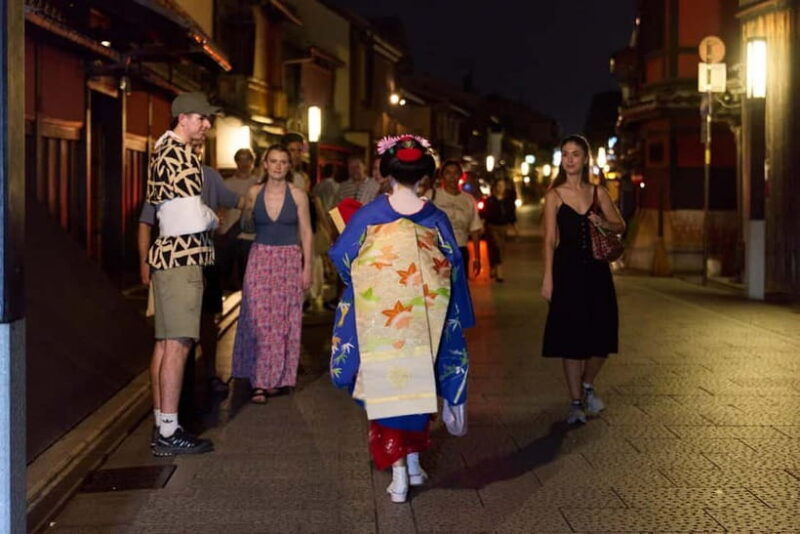
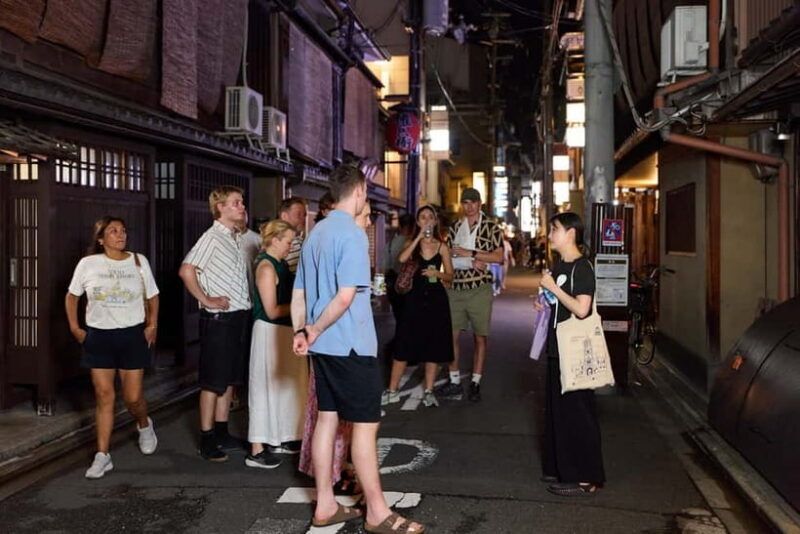
Pontocho Alley is the first major stop, with about 15 minutes for a visit and explanation. Its narrow lane is lined with traditional Japanese eateries and elite clubs. The setting is atmospheric, but it is also part of a real dining and entertainment district, not a museum street built for sightseeing.
Your guide can give you context for the buildings and the role of the area. That makes this stop useful early in the walk: you begin to see how Kyoto’s old entertainment quarters functioned and continue to function, rather than treating every wooden façade as a relic. The lane itself is compact, so the guide’s interpretation is the main value here.
The trade-off is that a quick visit cannot explain every establishment or open its doors to you. This is an overview from the street. If you are looking for a restaurant, ask your guide for suggestions, but don’t assume a tour stop includes a meal or tasting. Food is not listed as part of the experience.
After Pontocho, the group crosses the river and stops at the statue of Izumo-no-Okuni for roughly 15 minutes. Here, the guide introduces the woman credited with inventing kabuki. This is a welcome shift from architecture to performance history, and it helps place Kyoto’s entertainment culture in a wider context.
A statue can be a brief stop on its own. The useful part is the story attached to it: who Okuni was and why she matters to the development of kabuki. If you enjoy learning how one tradition connects to another, this stop gives the walk a broader cultural thread instead of keeping the focus only on geiko and maiko.
Keep the pace in mind. There are several stops to cover in two hours, so this is an introduction, not an extended lesson at each landmark. Ask the questions you most want answered while you are there. Guides have been praised for making space for questions without letting the walk lose its rhythm.
More Great Tours Nearby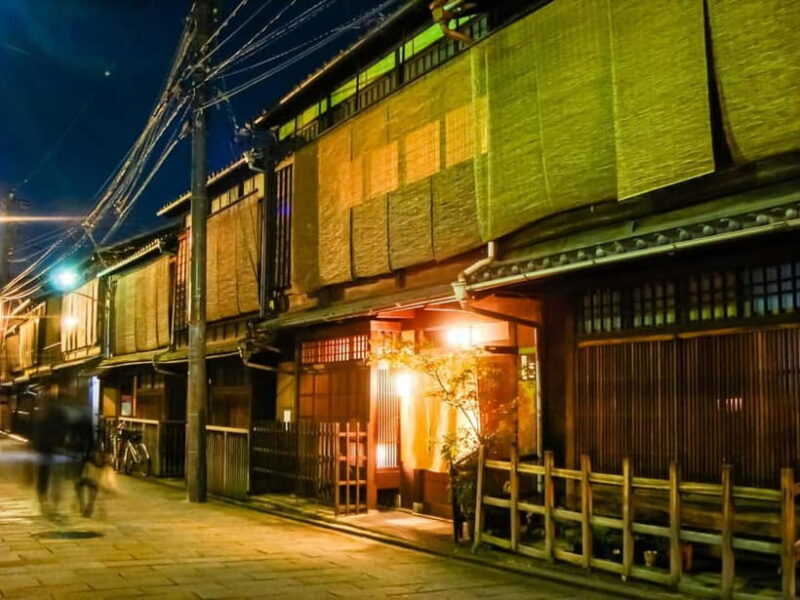
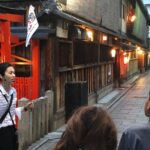
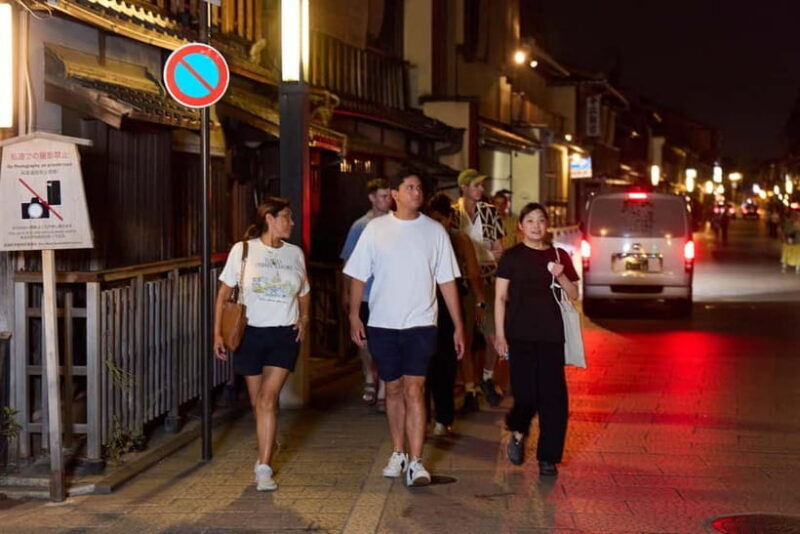
Gion receives about 30 minutes of guided time and is the heart of the tour. You walk through streets lined with old wooden teahouses in classic Japanese style, while your guide explains the district and the traditions associated with it. This is where the value of a local guide becomes clearest: the buildings are beautiful, but the stories explain why the area matters.
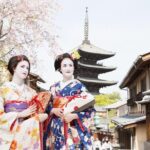
You will hear about geiko and maiko, the Kyoto terms used for geisha and apprentice geisha, and about their training and cultural role. The distinction is useful because visitors often use geisha as a catch-all word. A guide can help you understand the terms and the stages of training without reducing the subject to a costume or a photo opportunity.
The evening timing adds atmosphere, and it may put you on the streets when performers are heading to appointments. Some people on this route have seen a maiko or a geiko; others have not. Treat a sighting as a possibility rather than the measure of whether the tour succeeds. The explanations and the walk through Gion are the reliable parts.
Gion is also a busy place, especially around its best-known streets. You may need to share narrow lanes with other pedestrians, and the quiet, private nature of teahouse life is part of the setting. Listen to your guide about how to behave and keep a respectful distance. The point is to understand the district, not to chase after someone going about their work.
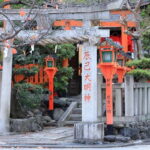
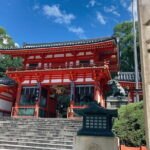
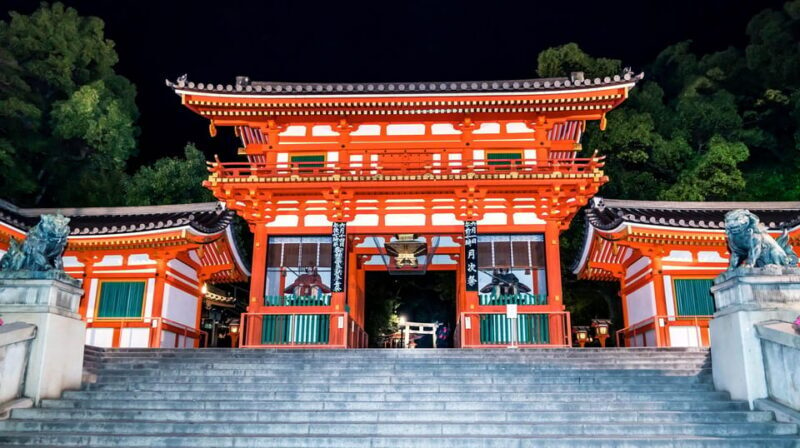
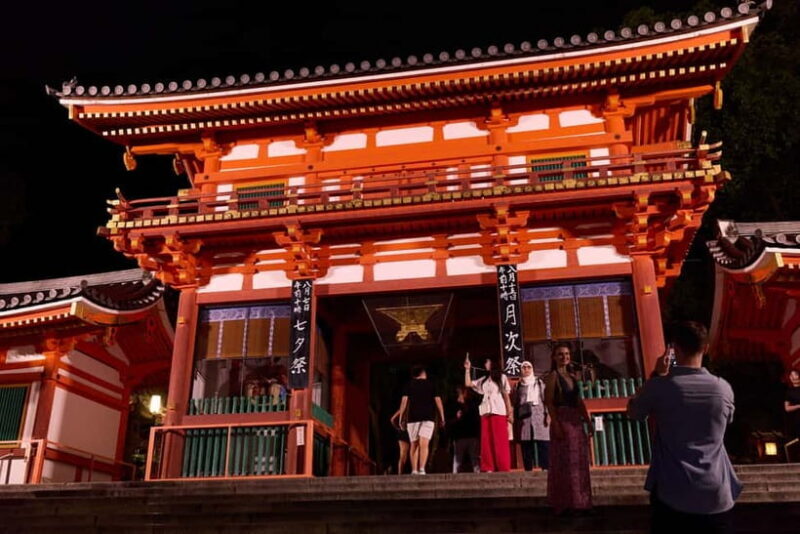
The tour spends about 25 minutes at Yasaka Shrine, one of the longer stops. It gives the walk a change of pace and a clear landmark amid the smaller lanes. Your guide explains the site as part of the story of Gion and Kyoto, helping you place the entertainment district in its wider setting.
This stop is useful if you have arrived in Kyoto without much background. Rather than seeing the shrine and Gion as unrelated items on a checklist, you get a guide’s account of how the places fit into the city’s cultural life. It is also a chance to pause, listen, and ask questions before the final streets.
The tour does not list an extended shrine visit or a special ceremony. Think of this as a guided stop, not a full independent visit. If you want more time at the shrine, you can return later on your own.
The itinerary includes a short stop at Gion Corner, followed by about 15 minutes on Hanamikoji Street. Together, they bring the walk back to the area’s performance traditions and well-known streets. Hanamikoji is an important place to watch for the district’s everyday rhythms, though seeing a performer is never guaranteed.
The time on these final stops is limited. That is a sensible way to cover more than one part of Gion in a two-hour walk, but it means you should not expect a long stop at every site. Ask your guide to clarify the route if there is a particular place you hope to understand better.
The finish near Hanamikoji is a useful point from which to continue your evening, but don’t assume the group returns to the starting location. One practical choice is to keep your next plans flexible, especially if you want to linger in the district after the guide wraps up.
At $20 per person, the tour offers a straightforward value: two hours on foot, a local guide, and a carefully chosen route through Pontocho and Gion. You are paying for interpretation and orientation, not transport, food, or entry to private venues. If you would otherwise wander through the same streets without knowing what you were looking at, the guide can add real value.
Two hours is enough for an introduction, not a full account of Kyoto’s geiko culture. The stops are short, and the walk covers several sites, so there is little time for a long discussion at any one place. Still, the format suits a first evening in the area. You get the main landmarks, an explanation of the traditions, and a chance to ask questions while the streets are in front of you.
Group size may vary. Some groups are small and feel personal, while a larger group can make it harder to hear or see in a narrow lane. The guide’s ability to manage the pace and keep people together matters. If you have a choice of starting times, consider choosing one that fits your energy and leaves you room to enjoy the district afterward.
The tour is offered in English and Spanish. It is not suitable for children under 10, and you should bring water. Alcohol and drugs are not allowed. Since the experience is outdoors and involves walking, wear shoes you can comfortably use on city streets.
I’d choose this walk if you want an informed first look at Gion and Pontocho, especially if you are curious about geiko and maiko but wary of relying on pop-culture ideas. It also suits a short Kyoto stay: you can get a useful overview in one evening, then decide which parts of the district you want to revisit.
It is a good fit for people who like asking questions and hearing stories as they walk. Guides such as Yuki, Nami, Yukari, and Deborah have been singled out for their engaging explanations and easy manner, though your guide will depend on the date and group. You should not book on the assumption that you can select a particular guide or will see a geiko or maiko.
I would skip it if you want a private cultural performance, a meal, or entry to a teahouse. None of those is included. The strength here is the street walk and the context a local guide brings to it.
Book if you want to understand the old entertainment districts while you walk through them, and if the modest price and two-hour format suit your plans. The combination of Pontocho, the Izumo-no-Okuni statue, Yasaka Shrine, and Hanamikoji gives the evening a clear shape, while the guide’s explanations make the geiko and maiko traditions easier to grasp.
Keep expectations grounded: a sighting is luck, not a guarantee, and this is an introduction rather than a deep account of every aspect of the culture. If that sounds right, it is a practical, engaging way to start your time in Gion. You can reserve now and pay later, with free cancellation up to 24 hours in advance.
“Manuel is an incredible guide, learned so much about geisha culture throughout the tour and was able to explore the hidden gems of the district.”
The walking tour lasts two hours. Starting times vary, so check availability for your preferred date.
Meet your guide in front of Ben’s Cookies Kyoto Shijo. The guide will be holding a sign board.
The live tour guide is available in English or Spanish.
You may encounter a geiko or maiko heading to an appointment, but a sighting is not guaranteed.
It is not suitable for children under 10.
Bring water. The price includes the walking tour and a local guide. Food and drinks are not listed as included.
You can check availability for your dates here: