Physical Address
304 North Cardinal St.
Dorchester Center, MA 02124
Physical Address
304 North Cardinal St.
Dorchester Center, MA 02124

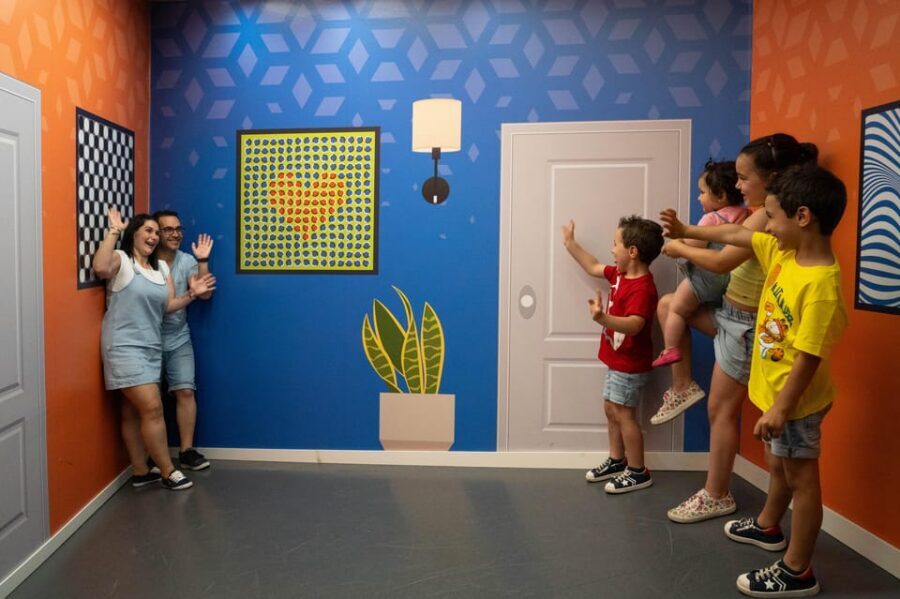
See Madrid’s Museum of Illusions in about an hour, test your perception, try playful mind tricks, and take photos that make reality look rather less reliable.
Reality gets a playful shake-up at Madrid’s Museum of Illusions. You’ll meet visual tricks, perspective puzzles, and hands-on displays that make your eyes question what your brain thinks it sees.
I like two things here: the exhibits invite you to experiment, rather than simply look, and many are set up for memorable photos. It’s also an easy, one-hour change of pace from Madrid’s grand museums and busy streets.
The main drawback is the museum’s size. You may be through in about 35 to 60 minutes, especially if you move quickly or come without someone to help take photos. At $17 per person, the visit makes the most sense if you enjoy interactive exhibits and will take your time with them.

The Museum of Illusions is a compact, interactive stop in central Madrid. Instead of looking at objects behind glass, you move through displays designed to trick your vision and challenge the brain’s first impression. The point is playful, but there’s a small lesson in each surprise: perception is not always as dependable as it feels.
This is not a traditional art museum, and you should not expect a long sequence of galleries. The experience is closer to a collection of visual puzzles and photo setups. You look, test what you see, read the explanation, then try to understand how the illusion works.
The visit is listed as one hour, a useful guide for planning your day. In practice, your pace matters. If you stop to read each display and line up photos, an hour is sensible. If you move briskly, you may finish in around 35 to 45 minutes. Children who want to retry the puzzles can take longer.
The venue is in the Community of Madrid, close to Tirso de Molina Metro station on Line 1. Buses 6, 26, 32, and M1 also stop nearby. That central location makes it a practical indoor break, particularly if you want a short activity rather than another full afternoon commitment.
You can check availability for your dates here: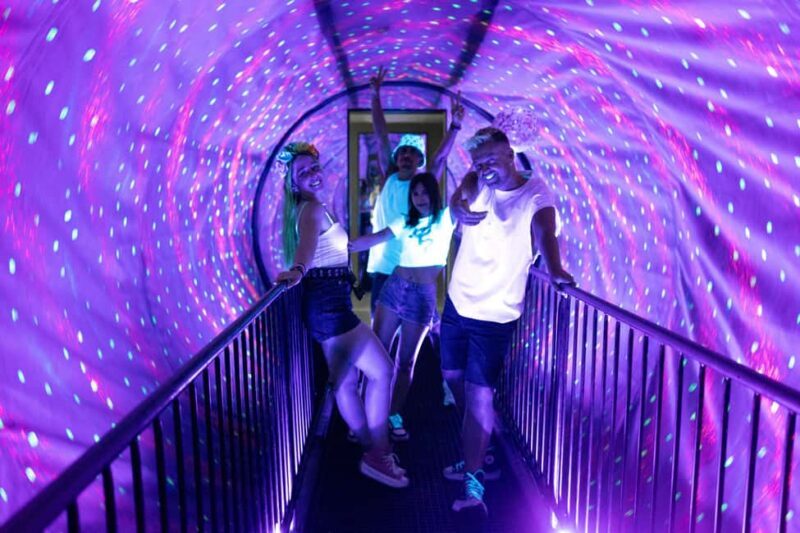
Once inside, give yourself permission to slow down. The displays are meant to be tested, not simply passed. Look at the instructions, try the suggested position, and then change your angle or viewpoint. Some illusions make more sense after you have seen the trick; others are fun precisely because your eyes keep insisting on the wrong answer.
You may encounter familiar types of optical and photographic illusions, alongside more unusual interactive setups. Examples include a moving yellow cube, an Einstein image, and a bridge set inside a rotating drum. Exhibits can change, so treat those as useful examples rather than a promise that every display will be there on your visit.
The rotating-drum footbridge is a particularly good example of the museum’s approach. The challenge is not just to look at a strange scene, but to experience how a visual cue can affect your sense of movement and balance. It can feel odd even when you know what is happening. That small gap between what you understand and what your body seems to register is the fun.
Other displays invite you to play with scale, perspective, or the camera’s point of view. A photo may make one person appear unusually large or place someone in an apparently impossible position. These setups reward a little patience. If you rush, you might understand the idea but leave without the picture that shows it off.
You might also be interested in these Madrid experiences
Bring a phone with a full battery. Many of the displays are designed to be photographed, and a picture can make the illusion easier to appreciate than a quick glance does. Some stations include instructions for where to stand and how to frame the shot, so take a moment to follow them before you press the shutter.
A companion makes this easier. Some photo spots are difficult to enjoy fully on your own because the picture works best when another person is in the scene and someone else holds the camera. If you arrive solo, you can still explore the exhibits, and staff may be able to help with a photo, but it is better not to rely on that.
Families and groups of friends get a natural advantage here. You can take turns posing, comparing what each person sees, and checking whether the image worked. That turns the visit into a shared activity rather than a series of displays you inspect alone. It also explains why children often find the museum especially engaging: there is something to try, not just something to read.
The photo element does not make the museum merely a backdrop for pictures. The better moments come when you first puzzle over the display, then work out how to show the trick clearly in a photo. If you only aim for quick snapshots, you may miss some of the explanations and experiments that give the exhibits their point.

This is a flexible outing for families. Younger children can respond to the surprising shapes and visual effects, while older children and adults can spend more time working out how the illusion is made. A 10- or 11-year-old who enjoys puzzles may find plenty to test, and even toddlers can enjoy some of the visual displays with an adult.
The museum’s interactive format is also handy when you want an activity that does not demand a long attention span. You can move at your own pace, pause at a favorite exhibit, or keep going if a display does not catch your interest. That makes it an easier fit for a mixed-age group than a museum where every room calls for quiet, close reading.
Still, family visits can take longer than the stated hour. Children may want to repeat a trick, swap places for photographs, or wait for a display to be free. If you are planning another timed activity right after this one, leave some breathing room rather than assuming you will be out on the dot.
The museum is also a pleasant indoor option when you want a break from the weather. One visitor described using it to get out of the heat, and the roughly one-hour format is well suited to that purpose. It is not a substitute for a major Madrid museum, but it can be a lively pause between longer sightseeing stops.
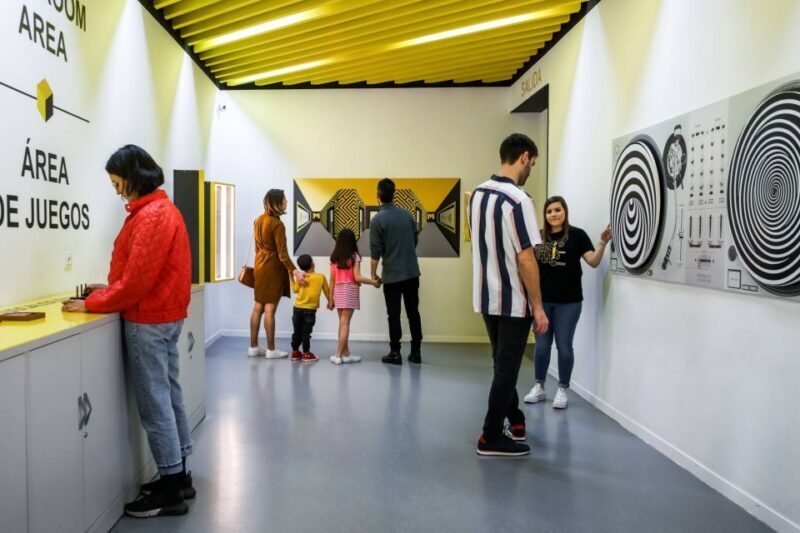
The strongest reason to book is that you like interactive illusions. If you expect a large institution with hours of galleries, this will feel small. Some people finish in less than an hour and wish there were more exhibits for the price. Others spend longer because they read the explanations, try each activity, and take photos.
That difference is worth considering before you buy. At $17 per person, the ticket is reasonable if you treat the museum as an hour of hands-on entertainment, especially for a family or group that will make use of the photo stations. It is less compelling if you only want a quick look and are comparing it with a full-scale museum visit.
There is no need to race through the rooms. Give the exhibits enough time to work, and you will get more from them than a fast walk-through allows. The experience is not about collecting a long list of objects. It is about testing your assumptions, noticing how perspective shifts, and getting a few pictures that make friends wonder what they are looking at.
The listed group size is limited to seven participants. That small-group format suggests a more contained visit than a large tour, though the museum itself is an exhibit space rather than a guided lecture. Spanish and English are the listed languages for the host or greeter. No individual guide is named.
More Great Tours Nearby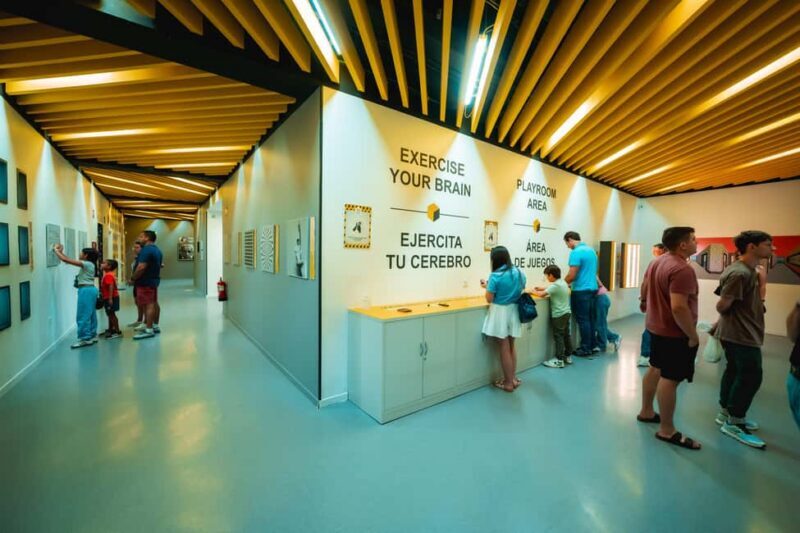
Tirso de Molina is the nearest Metro station, served by Line 1. The nearby bus options are routes 6, 26, 32, and M1. The meeting point is the Museum of Illusions itself, so you can go directly to the venue rather than meeting at a separate landmark.
Book before you arrive. Walk-in entry may not be available, so a pre-booked ticket is the safer plan. The activity is non-refundable, which makes it sensible to check your schedule before confirming. Starting times depend on availability.
The museum is described as wheelchair accessible, but some exhibits are not suitable for wheelchair users. If you use a wheelchair, or are arranging a visit for someone who does, contact the venue before booking to clarify which parts can be accessed. The general accessibility label does not mean every display is usable by everyone.
Culture seekers can explore more Madrid museums and galleries
Book it if you like puzzles, playful science, and photo opportunities, or if you want a short, family-friendly indoor activity near central Madrid. The exhibits give you something to do together, and the moving-tunnel footbridge and perspective tricks offer more than a passive display.
Skip it if you are looking for a large museum, a long visit, or a substantial history lesson. At $17, value depends on how much time you spend experimenting and whether you enjoy the photo setups. For a curious group willing to slow down, it is a fun hour. For a quick lap around the room, it may feel brief.
“Good place to spend an hour. We were there for 2 as my son loves puzzles”
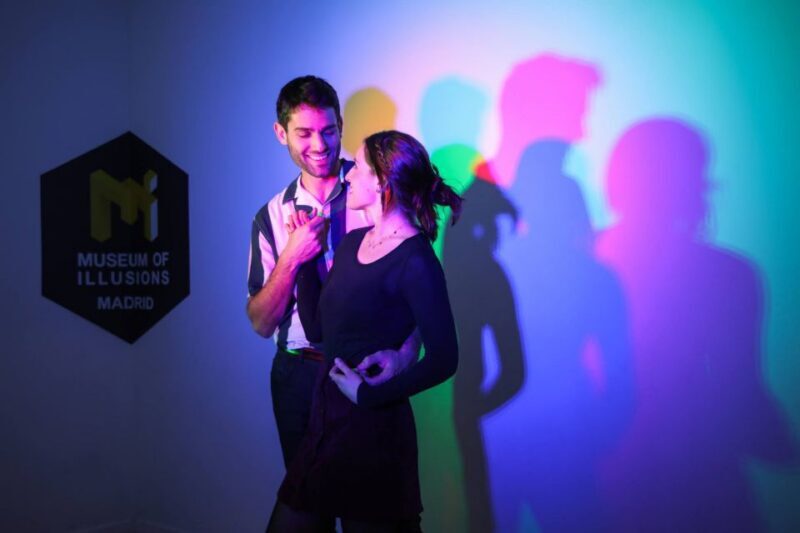
The listed duration is one hour. A quick visit may take about 35 to 45 minutes, while taking photos, reading the displays, and visiting with children can use more of that hour.
The ticket costs $17 per person.
Go to the Museum of Illusions in Madrid. Tirso de Molina is the nearest Metro station, on Line 1.
The nearest listed bus stop is Tirso de Molina, served by routes 6, 26, 32, and M1.
Spanish and English are listed for the host or greeter.
The museum is described as wheelchair accessible, but some exhibits are not suitable for wheelchair users. Check with the venue about access to specific displays before booking.
No. The activity has a non-refundable cancellation policy.
The activity is described as suitable for families, and the interactive displays can appeal to children as well as adults. The visit is not restricted to a particular age group in the supplied information.
You can check availability for your dates here: