Physical Address
304 North Cardinal St.
Dorchester Center, MA 02124
Physical Address
304 North Cardinal St.
Dorchester Center, MA 02124

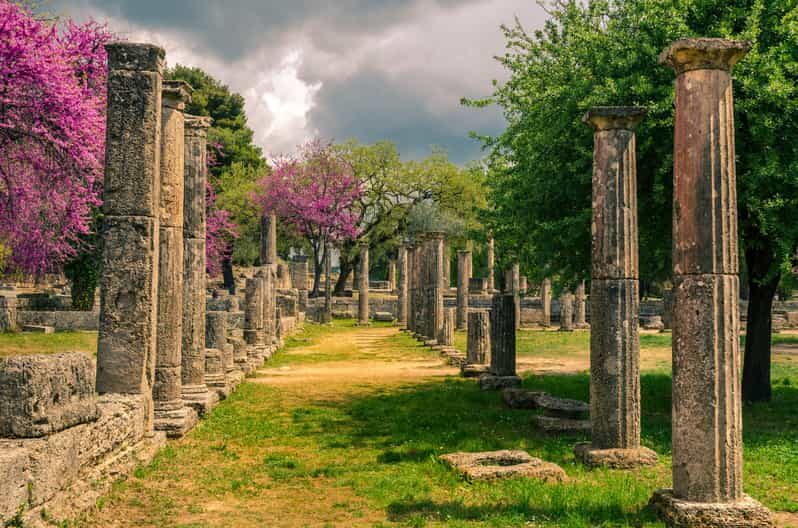
Reach Ancient Olympia from Katakolo by air-conditioned bus, explore the ruins at your own pace, then return to your cruise port on schedule.
Ancient Olympia is a remarkable place to explore at your own pace, but getting there from Katakolo takes planning. This five-hour outing pairs a roundtrip bus transfer with three hours of free time among the ruins, so you can focus on the sanctuary rather than arranging your own transport.
I like two things in particular: the clear return plan, which matters when your cruise ship is waiting, and the chance to choose your own pace instead of following a guided group through the site. Guides such as Chrissy, George and Sabrina have also given helpful history and directions during the ride, though the amount of commentary can vary.
The trade-off is that this is transport, not a full guided visit. You buy your admission separately, explore without a site guide and have a fixed window in Olympia. Three hours is useful, but it may feel tight if you want to see the archaeological site, museums and village at leisure.
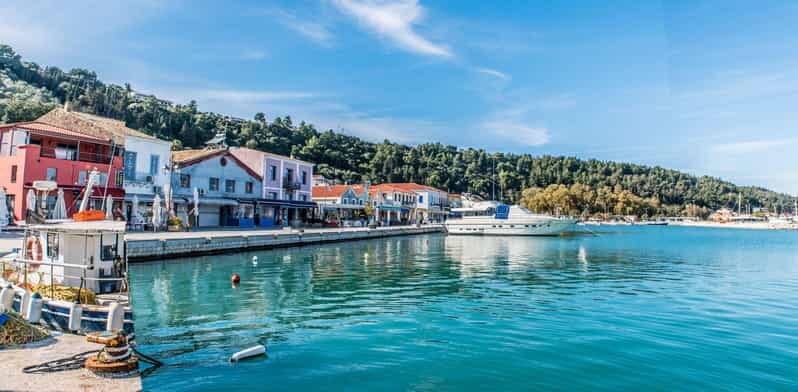
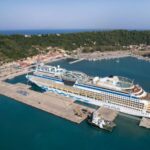
The experience starts outside the cruise terminal, where you meet an English-speaking host or greeter and board the bus. The meeting point is described as easy to find, and the bus transfer is the main reason to book: it removes the need to work out independent transport between the port and Olympia.
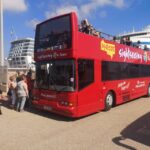
The drive crosses the mainland of western Peloponnese. You’ll travel in an air-conditioned coach, a welcome comfort on a warm day, and the ride gives you a look at the region beyond the port. The exact travel time each way isn’t specified, so the most useful planning figure is the overall schedule: five hours, including three hours of free time in Olympia.
Some hosts add context on the way. Chrissy, George and Sabrina are among the names associated with helpful onboard commentary, including information about the area, the Olympic Games and what to see after arrival. Don’t book on the assumption that you’ll receive a full history lecture, though. The advertised service is a transfer, and commentary may vary by host and departure.
On arrival, the host can point out the route to the site and explain where and when to meet for the return bus. That quick orientation is valuable. Olympia’s remains are spread across an archaeological area, and a few minutes spent getting your bearings can save you from wandering in the wrong direction when your time is limited.
More ways to experience Katakolo from the water include these boat tours
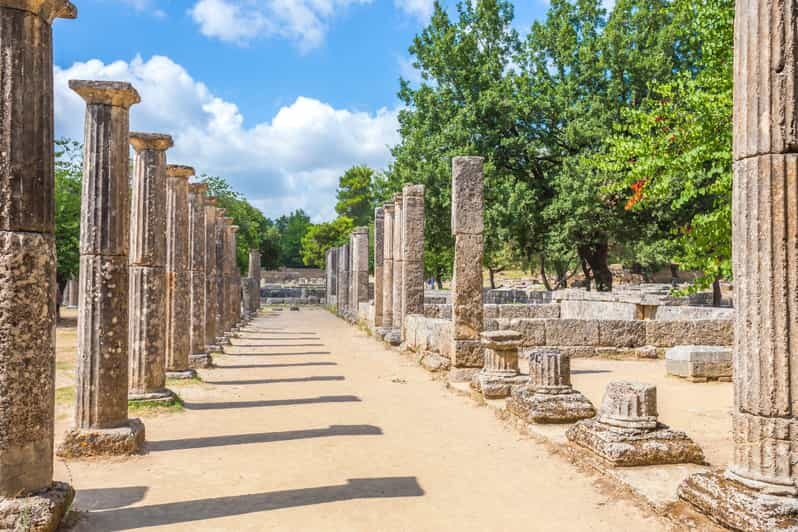
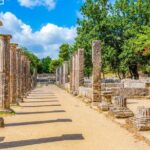
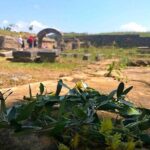
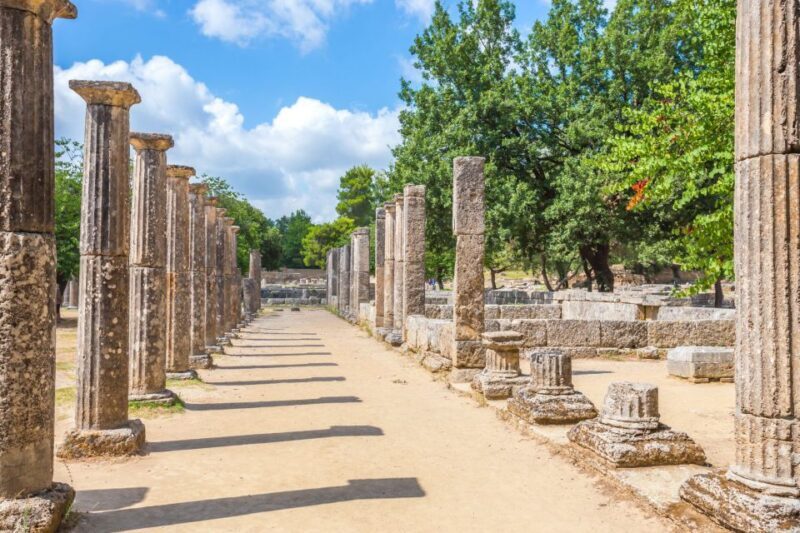
The ancient sanctuary is the main event. The Olympic Games were held here from 776 BC until 393 AD, and walking the site gives you a sense of how sport, worship and public life met in one place. You’re free to choose your own route rather than follow a guide’s timetable.
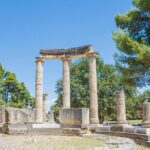
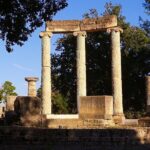
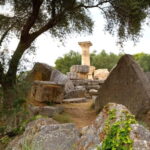
The Temple of Hera is one of the key sights. The Olympic flame is lit here for the modern Games, and its presence links the old sanctuary with an ongoing tradition. Take time to look around rather than treating the temple as a quick photo stop; the setting helps explain why Olympia was more than just a stadium.
The Temple of Zeus is another essential stop. It once housed the enormous gold-and-ivory statue of Zeus, counted among the Seven Wonders of the Ancient World. The statue is no longer there, so you’ll be looking at the temple site and imagining the scale of what once stood within it. That gap between the surviving stones and the lost artwork is part of the visit’s appeal.
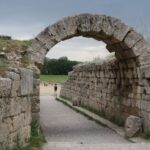
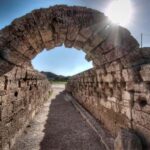
At the stadium, you can see where competitors once raced. The nearby Bouleuterion is associated with the oath taken by athletes to follow the rules. These places make the Games feel less abstract: competition involved ceremony and obligations as well as physical skill.
Three hours gives you room to visit the archaeological site at a steady pace, but it is not unlimited time. Some people may also want to visit museums, and seeing every part of the site and nearby village could mean moving quickly. If the stadium or temples matter most to you, choose those priorities first. Don’t assume you can cover everything in depth and still have a relaxed meal or shopping stop.
This outing works best if you like independence but appreciate help with the practical details. The host may explain the route, recommend an order for the sights and clarify the pickup place and time. Once you’re at the archaeological area, however, there is no included guided tour.
That distinction affects the value. A guided visit can explain the meaning of individual ruins as you stand among them. Here, you get the freedom to pause, take photographs or move on when you’re ready, but you’re responsible for bringing your own background information. If you enjoy learning as you go, consider reading about Olympia before the trip or arranging an audio guide separately.
The site ticket is not included, and you buy admission upon arrival. Food and drinks are also extra. A visitor has reported paying €20 for admission, but that should not be treated as a guaranteed current price. Check the latest fee before sailing and carry enough money for entry and any extras you want.
Comfortable shoes are a must. You’ll be walking around an archaeological site, and a sun hat and water are sensible choices, especially in warm weather. Bring a camera if you like, but don’t let it turn the visit into a checklist. A few minutes looking across the stadium or among the temple remains can be more memorable than another rushed snapshot.
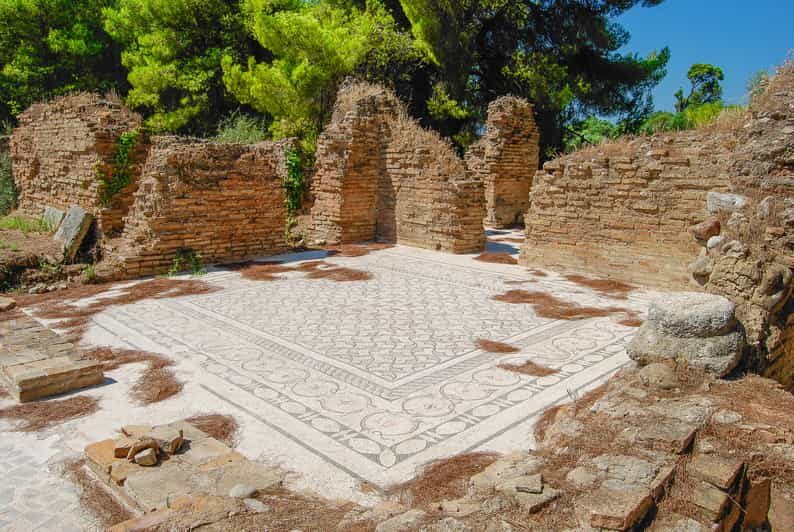
The village of Olympia offers a different pace from the ruins. You can use some of your free time for shops or a traditional meal, then return to the archaeological area if your schedule allows. It’s a useful option if you want a break from ancient stones, but it competes with site time, so decide what matters most to you.
Museums are another possible addition. They can help put the artefacts and sculptures in context, but a visit to the ruins plus museums can use much of your three-hour window. The tour does not promise enough time for every museum, and admission arrangements may differ from the archaeological site ticket. Check what you want to see before you set off from the port.
The outing information also mentions the option of swimming at a nearby beach before returning to the ship. Treat that as a possibility, not the centrepiece of the day. Your available time is limited, and any beach stop needs to fit around the return bus schedule. If the ruins are your priority, keep your attention on Olympia and leave the swim for a longer stay.
More Great Tours NearbyFor a port excursion, the return plan is as important as the destination. The advertised outing lasts five hours and includes roundtrip transport, with three hours of free time. You are given a pickup location and time for the return, so set an alarm and leave enough margin to get back to the meeting point.
Cruise schedules and tender operations can affect when passengers reach shore. The company has accommodated some delays by placing people on a later bus, and there have been cases where departure times shifted to match a ship’s arrival. That flexibility is reassuring, but it isn’t a promise that every delay can be absorbed. If your ship is late or the tender queue is slow, contact the host as soon as you can and follow the instructions given on the day.
The return transfer is designed to bring you back to Katakolo in time for cruise departure. That makes this a more controlled choice than trying to arrange transport yourself, especially if you’re unfamiliar with the area. Still, the schedule is fixed: don’t drift away from the meeting point or assume the bus can wait.
The coach is air-conditioned, and passengers have described clean, comfortable buses and safe driving. Exact group size and vehicle capacity aren’t specified. If you need a wheelchair-accessible option, this activity is not suitable for wheelchair users.
You might also be interested in these Katakolo experiences
At $17 per person, the price covers roundtrip transportation and three hours of free time, not admission, food or a guided tour. The cost is appealing if your main goal is to reach Olympia reliably and explore independently. You’re paying for the transfer and the time-saving convenience, not a complete package of tickets and interpretation.
That distinction matters when comparing it with a more guided shore excursion. If you want someone to lead you through the ruins and explain each site in detail, this may not meet your expectations. If you’re comfortable planning a simple route and want control over your visit, the low transfer price leaves room in your budget for admission, a meal or other personal choices.
There are practical booking protections: you can cancel up to 24 hours in advance for a full refund, and the reserve-now, pay-later option lets you hold a place without paying immediately. Starting times depend on availability. Pets are not allowed, though assistance dogs are permitted.
I’d choose this trip if I wanted to see Ancient Olympia during a Katakolo port call without arranging my own transport. It suits independent visitors, history fans who like to set their own pace, and cruise passengers who value a clear pickup plan more than a guided tour.
It’s less suitable if you want extensive commentary at every monument, several hours for the site and museums, or a fully inclusive excursion with admission and meals covered. Families and people with mobility needs should consider the walking involved and note that wheelchair users are not accommodated.
Book it if the ruins are your priority and three self-guided hours sound like enough. Before you go, check the current admission fee, decide whether you’ll add the village or museums, and keep a close eye on the return time. That small bit of planning can make a modestly priced transfer a very worthwhile way to spend a port day.
“”
The outing lasts five hours in total, including three hours of free time in Olympia.
Meet your host or greeter outside the Katakolo cruise terminal.
No. You buy your admission ticket upon arrival.
No. The site visit is self-guided. An English-speaking host or greeter accompanies the transfer.
Key sights include the Temple of Hera, the Temple of Zeus, the stadium and the Bouleuterion.
Yes. You can use some of your free time to visit the village for shopping or a traditional meal.
No. Food and drinks are not included.
Bring comfortable shoes, a sun hat, a camera and water.
No. The activity is not suitable for wheelchair users.
You can cancel up to 24 hours in advance for a full refund.
You can check availability for your dates here: