Physical Address
304 North Cardinal St.
Dorchester Center, MA 02124
Physical Address
304 North Cardinal St.
Dorchester Center, MA 02124

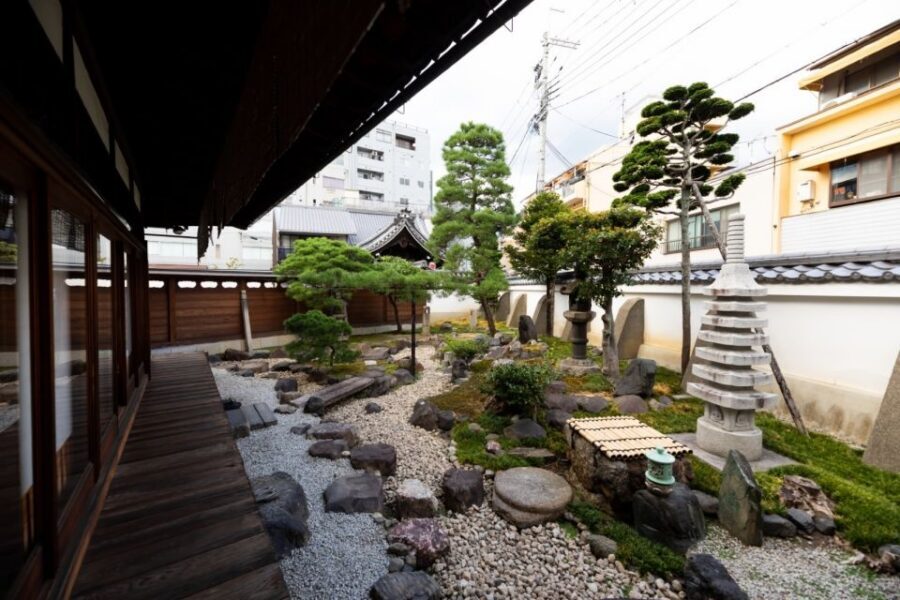
Join a 70-minute matcha ceremony at Kyoto’s Jotokuji Temple, with an English-speaking guide, hands-on tea preparation, and a calm temple setting.
Jotokuji Temple’s Ju-An tea ceremony gives you more than a bowl of matcha: it shows how a carefully performed ritual turns a simple drink into an act of attention. In 70 minutes, an English-speaking guide and tea master lead you from the temple grounds into the Grand Tearoom, where you can watch the ceremony and learn its steps.
I like two things in particular: the temple setting makes the introduction feel grounded in place, and the instruction is interactive, with time to ask questions and, in many sessions, prepare your own matcha. At $29, that combination of cultural context and participation is good value for a short Kyoto activity.
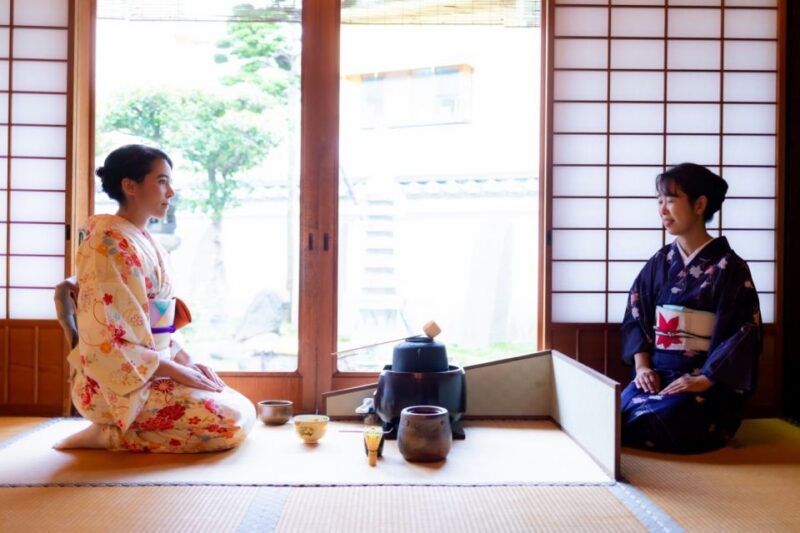
One consideration: the tearoom has three steps and is not wheelchair accessible, even though the temple grounds are. You may also need to sit on the floor, though seats or stools can be provided if that position is uncomfortable.
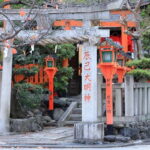
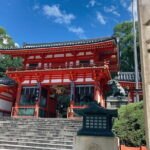
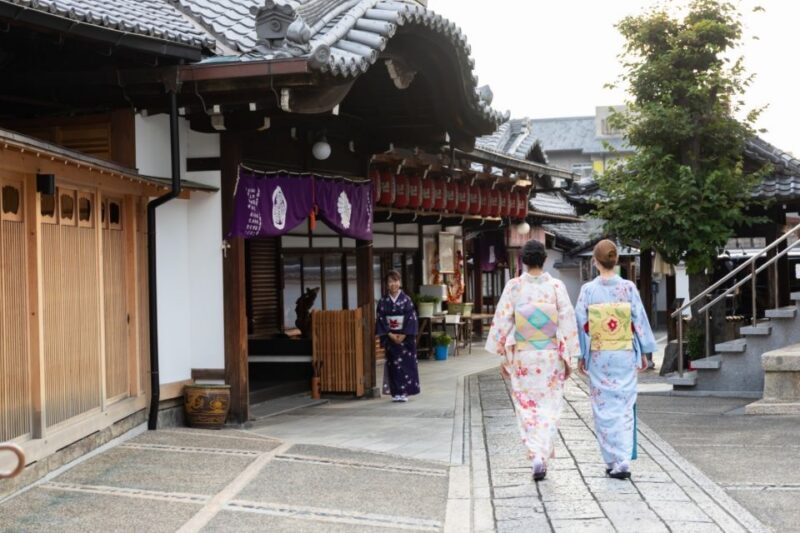
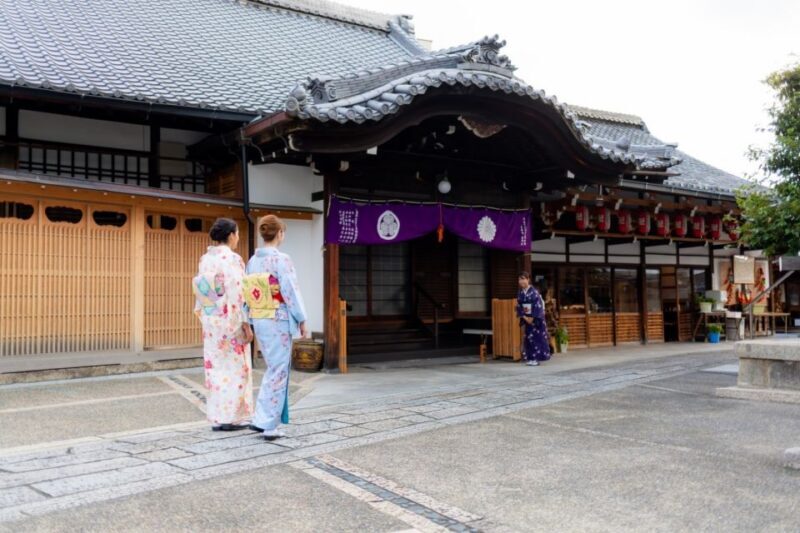
The meeting point is Tea Ceremony Juan at 556 Gojo-sagaru, Tominokoji Dori, in Kyoto’s Shimogyo-ku district. Once inside the temple, face the Main Hall and look to your left for a few steps leading to the tea room. The experience starts outside the Grand Tearoom, not inside it, so take a moment to orient yourself when you arrive.
You’ll pass the Grand Tearoom entrance and a parish shop before reaching the red benches, where your guide waits. This simple pause is part of the appeal. You can look around the temple, rest on the benches in good weather, or stand under the shop’s gable if it rains. The tearoom is also available as a waiting spot in wet weather.
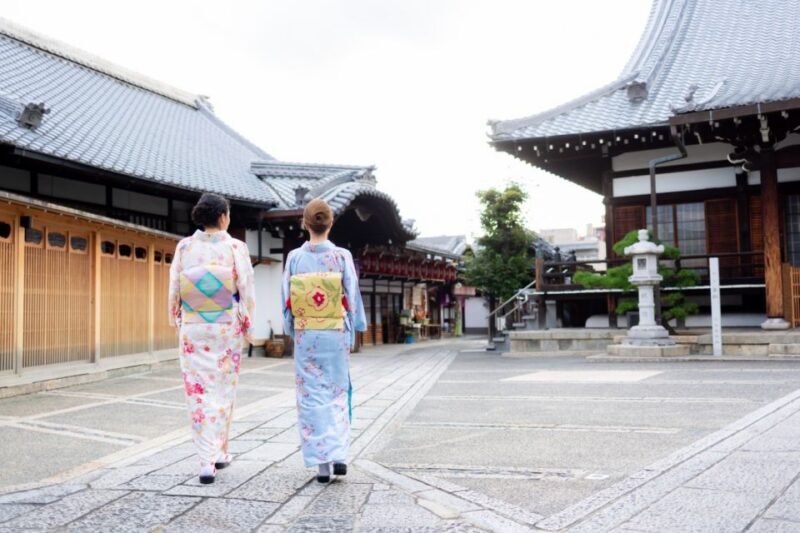
The grounds are not a long sightseeing circuit, and you should not expect an extended temple tour. Instead, the guide offers a brief introduction to the site before taking you through the ceremony. I like that the temple is more than a backdrop: seeing the setting first helps explain why a tea room and its rituals belong within a place of quiet reflection.
Looking for more options in Kyoto? Here are some other experiences worth considering.
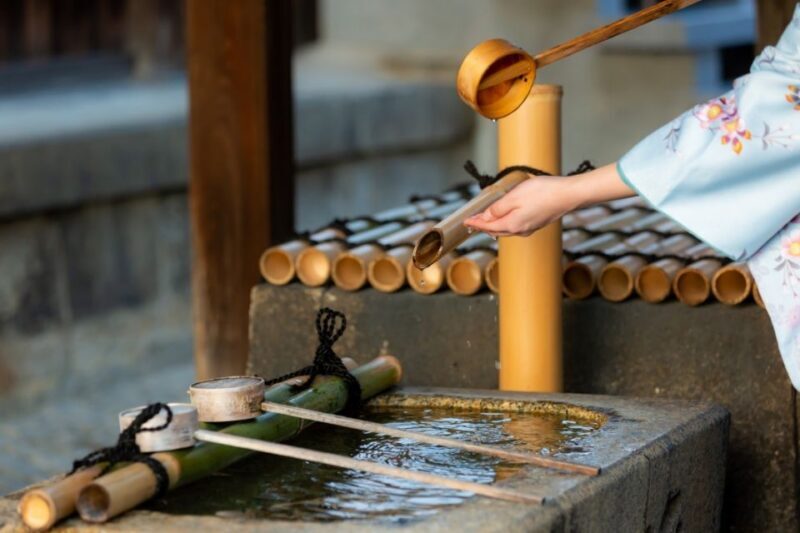
Before entering the tearoom, you take part in a traditional purification ritual. It is a small but meaningful opening, especially if this is your first encounter with a Japanese tea ceremony. The point is not to rush toward the tea. You are invited to pause and prepare before entering the room.
You can also stand by the temple’s purification fountain and look at the architecture while you wait. The available details do not specify a long explanation of every temple feature, so treat this as a short orientation rather than a full historical tour. The focus soon shifts to chanoyu, the Japanese tea ceremony.
For visitors used to sightseeing at speed, this slower start can be a welcome change of pace. The ritual gives you a practical first glimpse of the ceremony’s attention to action and setting. You do not need prior knowledge to take part; the guide explains what is happening as the group moves along.
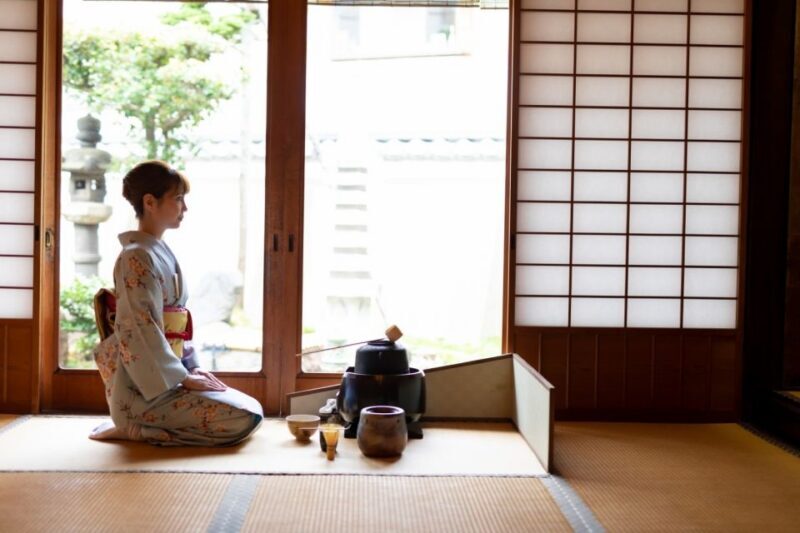
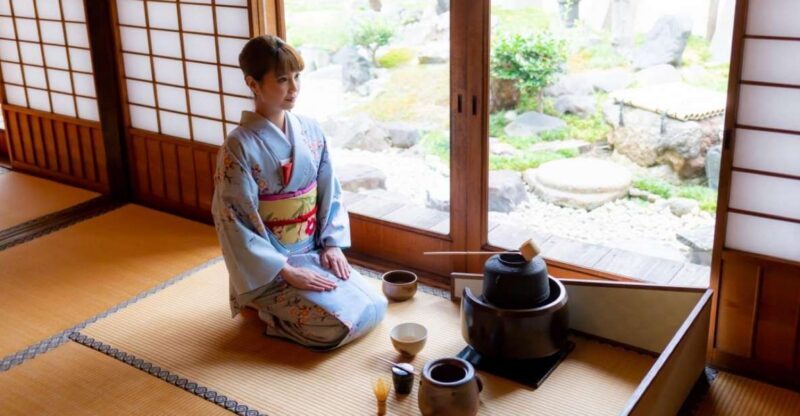
At the tearoom entrance, you remove your shoes and take your place with the group. The room is the heart of the activity, and its traditional setting gives the preparation more meaning than a quick matcha tasting at a counter. The group is capped at 10, so the session stays small enough for people to follow the demonstration and ask questions.
The tea master prepares the matcha while the guide explains the sequence and its significance in English. Visitors have praised the clear explanations and the care taken to answer questions, and the format supports that kind of learning: one person demonstrates, while another makes the details accessible to the group. Guides have included Kate, Taka, and Yaki, though the team may vary by session.
Watch how measured each gesture is. This is not a performance with a dramatic finale. The value lies in seeing how each movement has a purpose, then learning enough about the ceremony to understand what you are watching. Several past sessions have also offered a chance for participants to make their own tea under guidance. If taking part matters to you, ask your instructor how the hands-on portion will work that day.
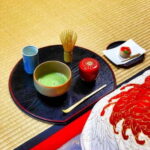
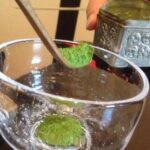
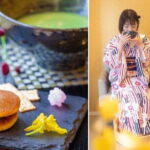
The ceremony includes a chance to sample matcha, and sweets have also been served during sessions. The tea is part of the lesson, not just a refreshment: you learn how to drink it as part of the ritual and how the ceremony shapes the experience around it. For many people, this is the first time they have been shown the etiquette rather than simply handed a bowl.
Matcha’s taste can be unfamiliar if you normally drink sweetened tea or coffee. The setting and instruction help you approach it with some context, and you can ask questions as you go. You are not expected to arrive knowing the proper gestures. The tea master guides the group through them.
If the chance to make your own cup is offered, it adds a useful hands-on element. Watching the tea master first and then trying the process yourself makes the steps easier to remember. Just keep your expectations in scale: this is an introductory workshop, not an extended course in tea practice.
More Great Tours Nearby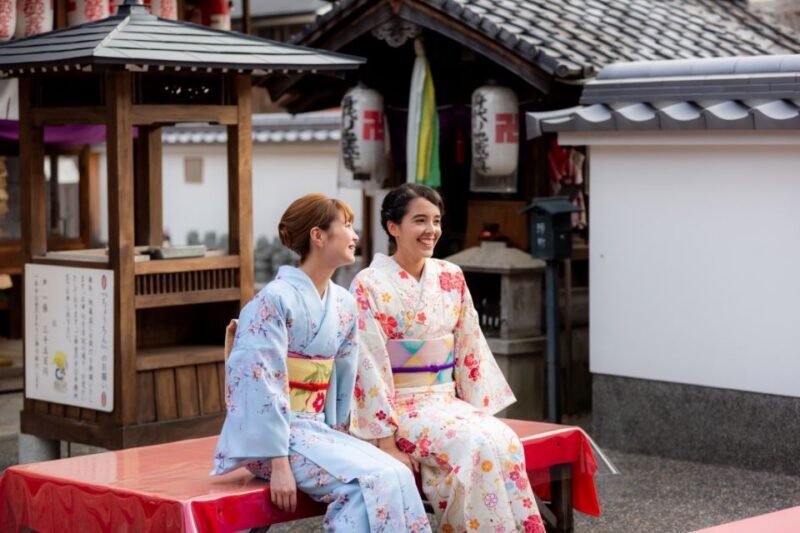
The session lasts about 70 minutes, which gives you a focused introduction without taking over a full day of Kyoto sightseeing. It moves from the temple grounds and purification ritual to the tearoom demonstration, explanation, tasting, and possible participation. That balance suits a first-time visitor who wants more than a photograph but does not have time for a lengthy ceremony.
The experience is also a good fit if you enjoy asking questions. The English-speaking instructor helps explain the history and ideas behind the ritual, and the small group leaves more room for conversation than a large demonstration would. People who have attended sessions led by Kate have especially praised her presentation, while other instructors have been described as warm and patient. Names and staffing can change, so book for the format rather than a specific person.
The ceremony offers a calm counterpoint to a day spent moving between Kyoto’s best-known sights. That does not mean the activity is silent or strictly formal throughout. The teaching is designed to make the ceremony understandable and approachable, so you can learn without feeling that one wrong move will spoil the occasion.
At $29 per person, the price buys a guided introduction in a temple setting, a tea ceremony demonstration, matcha tasting, and a small-group workshop. You are paying for explanation as well as the tea. That is important here: without someone showing you what the gestures mean, it would be easy to watch politely and leave without understanding much.
This is a stronger value if you want to participate and ask questions, rather than simply see a ceremony from a distance. The 70-minute length also makes it relatively easy to fit between other plans. Meals are not included, and kimono rental costs extra, so allow for those separately if they matter to you.
You should not book it expecting a full-day immersion in tea culture or a formal ceremony lasting several hours. It is an introductory experience, and that is its strength. You leave with a clearer idea of how the ritual works, a taste of matcha, and a practical sense of the care involved.
The temple is wheelchair accessible, but the tearoom is not: there are three steps at the entrance. The activity is listed as unsuitable for wheelchair users. If sitting on the floor in the traditional position would be uncomfortable, seats and stools can be provided. It is sensible to mention your seating needs when arranging the session.
Wear footwear you can remove easily, since you take off your shoes before entering the tearoom. Kimono is not included, though it can be rented separately. You do not need to bring a meal; food is not part of the booking.
The activity is conducted in English and has a maximum group size of 10. Starting times depend on availability. You can cancel up to 24 hours in advance for a full refund, and the reserve-now, pay-later option lets you hold a place without paying immediately.
Book this if you want a calm, well-explained first experience of chanoyu, especially if you like learning by watching and trying things yourself. The temple visit, purification ritual, matcha, and thoughtful instruction make the $29 price reasonable for a focused Kyoto activity. It is also a good choice if you want a quieter pause in your sightseeing day.
Skip it if you need step-free access to the tearoom, or if you are seeking a long, advanced study of tea ceremony. For most first-timers, though, Ju-An offers a clear and welcoming introduction without asking you to devote half a day to it. If you have room for one cultural activity between temple visits, this is an easy one to recommend.
“Just wonderful, I wish I could start every day like that. Beautifully and I explained. Great host and tea master. Loved it”
The activity lasts 70 minutes.
The price includes a tour guide and a chanoyu workshop ceremony. Meals and kimono rental are not included.
Yes. The instructor language is English.
Seats and stools can be provided for people who are not comfortable sitting on the floor in the traditional position.
No. The temple is wheelchair accessible, but the tearoom has three steps and is not wheelchair accessible.
Yes. You can cancel up to 24 hours in advance for a full refund.
You can check availability for your dates here: