Physical Address
304 North Cardinal St.
Dorchester Center, MA 02124
Physical Address
304 North Cardinal St.
Dorchester Center, MA 02124

Visit the Third Tunnel, Dora Observatory and Imjingak on a guided Seoul DMZ tour, with optional suspension bridges or a Monday North Korea view.
The DMZ is not just a line on a map. This guided trip brings you to memorials, a tunnel dug beneath the border, and Dora Observatory, where you can look toward North Korea. On Mondays, a different route visits Aegibong and Jogang observatories, with a Starbucks stop facing across the border.
I like the way the core tour pairs the Third Infiltration Tunnel with Dora Observatory: one puts you underground, the other gives you a view across the divide. I also like that you can add a suspension bridge or gondola ride, so you can choose history alone or a longer day with time outdoors.
The trade-off is pace. With several stops and military access rules to work around, the day can feel full, and the tunnel’s steep, sometimes slippery path is not a good fit for everyone. Check which option you are booking, since not every tour visits every stop.
This tour is a practical way to reach the border area from Seoul without arranging transport and access details yourself. Round-trip transport in an air-conditioned vehicle is included, and an English-speaking guide leads the standard tour. A Spanish-speaking guide is available on the specified Spanish-language option for the Red Suspension Bridge tour.
The advertised duration ranges from five to nine hours, depending on the route. Standard departures are listed at 7:00 a.m. or 9:30 a.m.; the Majang Lake and Gamaksan bridge options depart at 7:00 a.m. and run as full-day trips. The Monday view tour follows its own itinerary, so check the selected option and start time before you book.
The central experience is about Korea’s division and the war that led to it, not simply a scenic outing. The guide’s role matters here. The stops are easier to understand when someone explains what you are seeing, and guides such as Judy, Gogo, Kelly, Crystal, Emily and Jenny have been praised for clear explanations, local context and an engaging manner. Jenny, in particular, has shared personal stories alongside the history. That mix can make a difficult subject feel human without turning the day into a lecture.
You can check availability for your dates here: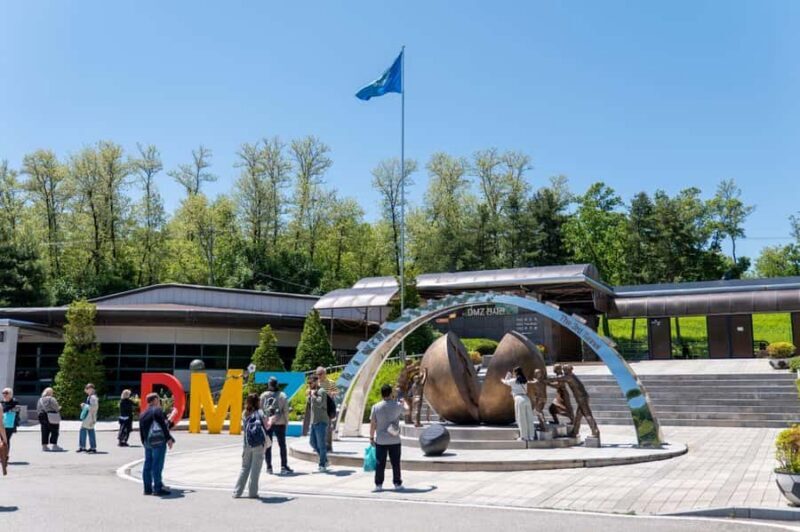
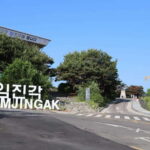
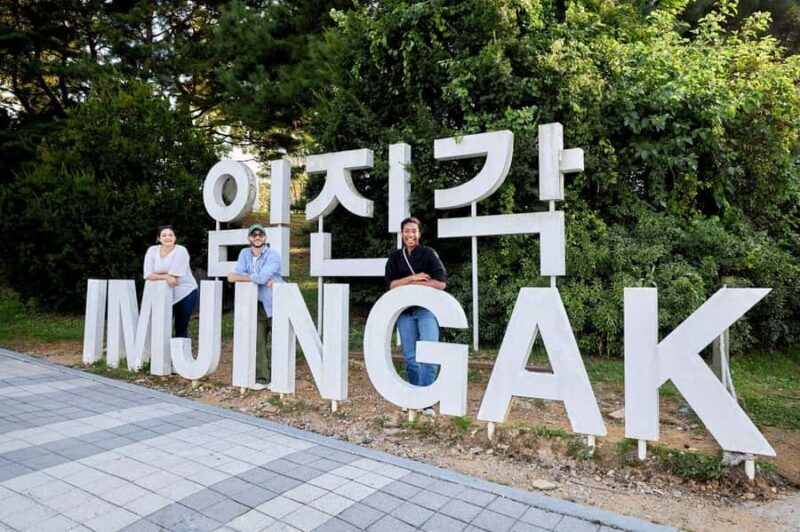
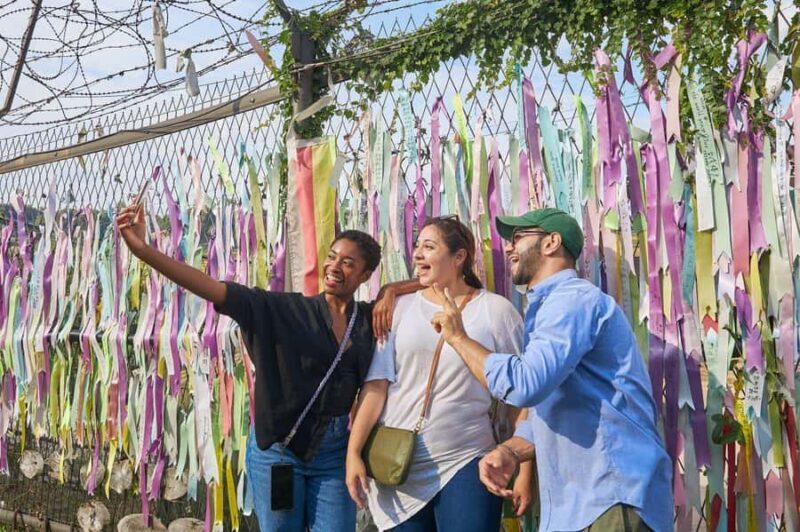
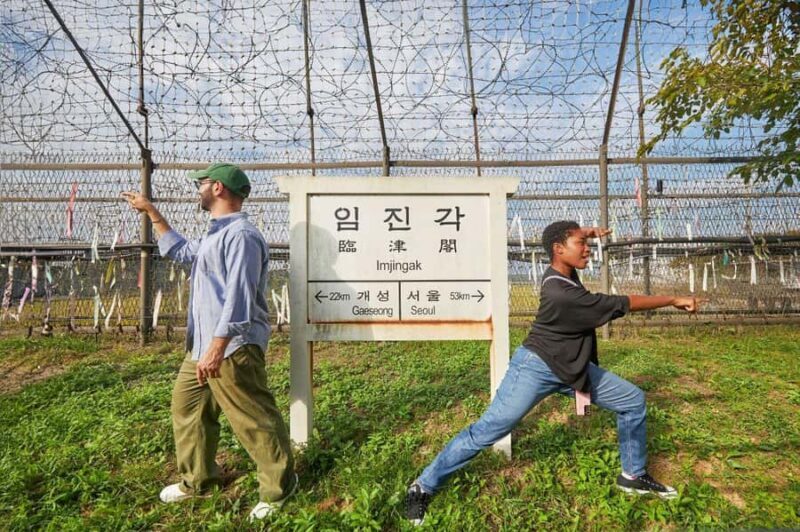
Imjingak Park is a natural place to begin. Its memorials and peace symbols set the tone for the day, and your guide helps connect the site to the division of Korea and the lives shaped by it. You have about an hour here, enough to take in the main points without treating the park as a quick photo stop.
The nearby Freedom Bridge carries the memory of prisoners returning across it after the Korean War. It is a striking place to pause and consider how a bridge can represent both separation and the hope of reunion. The visit is guided and lasts about 30 minutes.
These first stops provide context before you reach the restricted area. That context is valuable: without it, the later views can seem distant and abstract. Take time to listen, and bring questions. Guides are regularly praised for making the history clear and answering them.
Looking for more options in Seoul? Here are some other experiences worth considering.
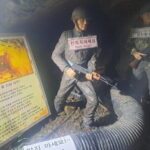
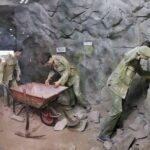
The Third Infiltration Tunnel is the tour’s most physical stop. It was discovered beneath the DMZ and is presented as a passage built for a North Korean incursion. You visit the tunnel and the DMZ Theater and Exhibition Hall, where displays add background to what you have seen. The scheduled visit is about an hour.
Be ready for a steep descent and climb. The tunnel can be slippery, and the route may be difficult if you have mobility concerns. Comfortable shoes are more than a general packing tip here; they make a real difference. If you are unsure about the stairs, factor that in before choosing the standard route.
The tunnel is also a reminder that the border is not only something to look at from an observatory. It has a physical, engineered history beneath your feet. Photography is restricted in some areas, so follow your guide’s instructions rather than assuming you can take pictures throughout.
At Dora Observatory, you look north across the border. The view gives the day a different scale: the division is no longer just a chapter in a history lesson, but a visible boundary between places. The scheduled stop is around an hour, giving you time to hear the guide’s explanation and take in the view.
Bring your passport and keep it with you. The DMZ is a military-controlled area, and entry follows official access rules. The itinerary may change because of military or political conditions, and photography is limited in some places. These restrictions are part of visiting an active border zone, not a flaw in the tour.
The standard route also passes through Unification Village, a community near the border. The stop is brief, around 30 minutes, but it adds a present-day detail to a day otherwise focused on conflict, memorials and observation points.
The add-ons change the character of the trip, so choose based on the kind of day you want. They are not all included in one outing.
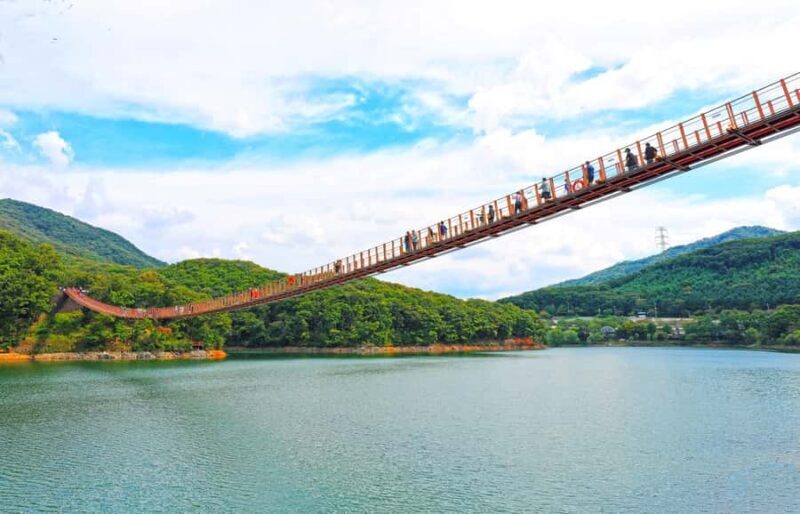
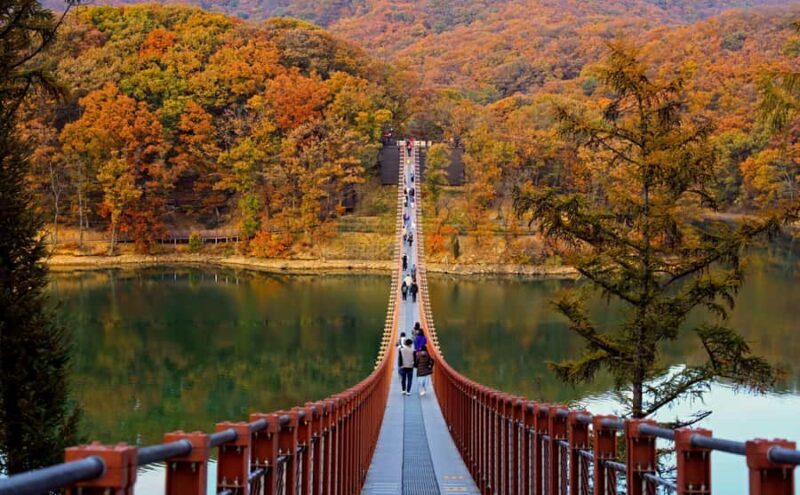
Majang Lake Suspension Bridge is a good fit if you want an easy walk and a nature break after the history stops. The bridge crosses a reservoir in a setting of water and trees, with time for photos and a short stroll. The walk is described as suitable for all ages, and spring and autumn are especially appealing times for the scenery. The full-day option departs Seoul at 7:00 a.m.
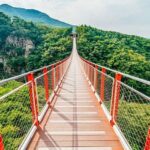
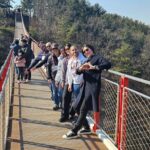
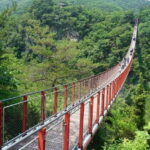
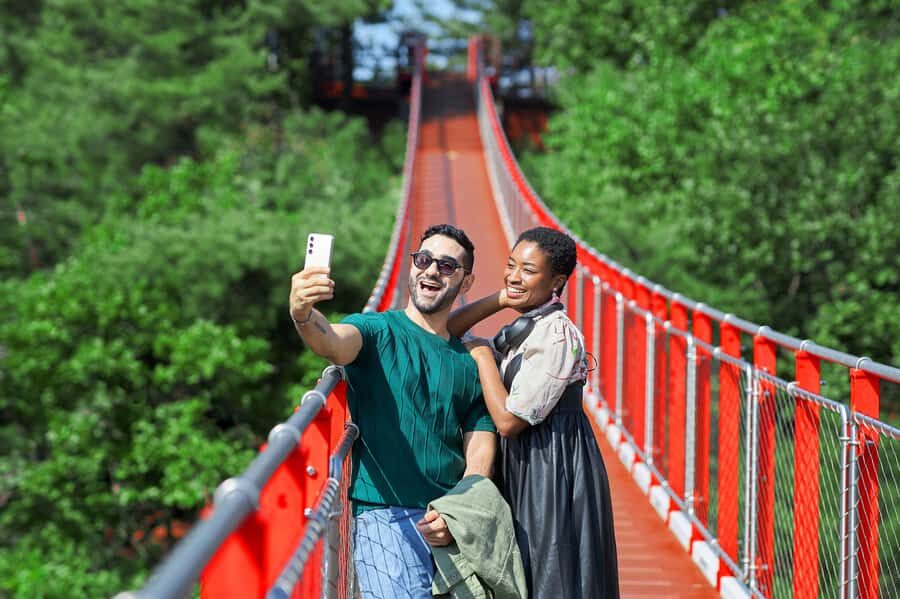
Gamaksan’s Red Suspension Bridge is the more adventurous choice. At 220 meters, it crosses a valley in the mountains, and the route includes some uphill walking and a light hike. Choose it for a little extra activity and broad views, not if you want to avoid slopes. This is also a full-day, 7:00 a.m. departure.
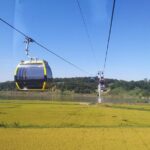
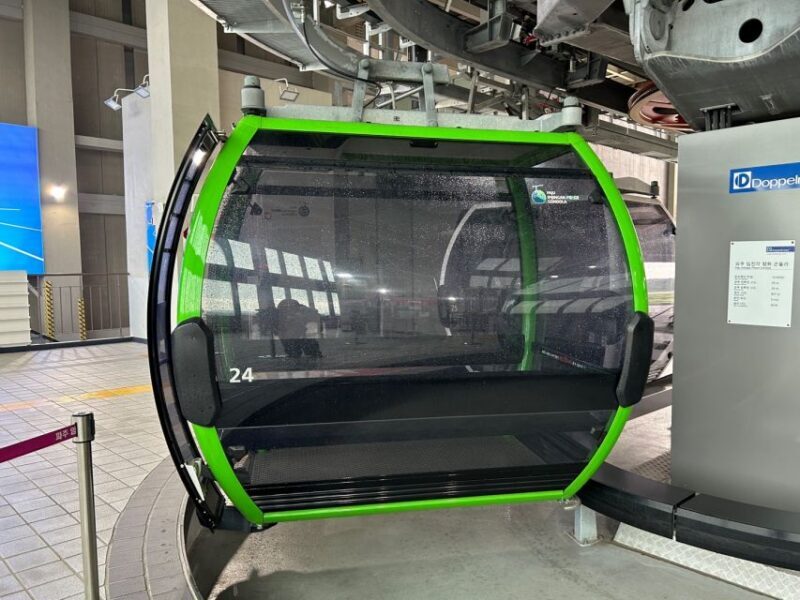
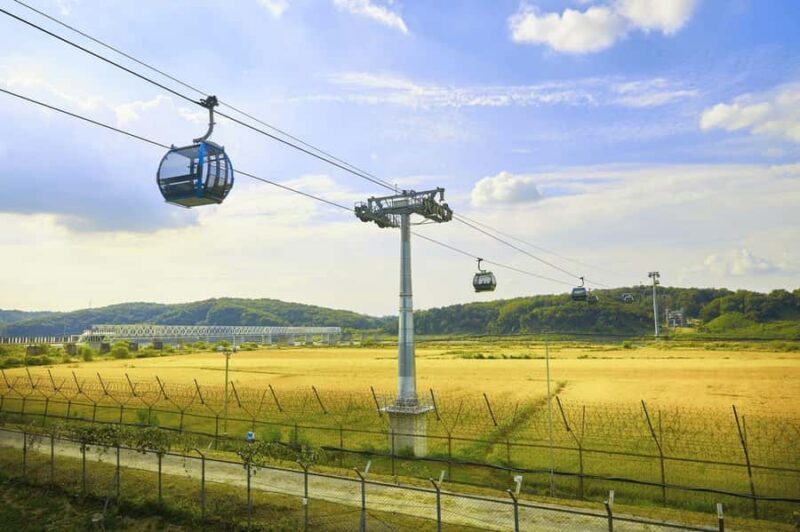
The Peace Gondola is a shorter cable-car ride at Paju, listed as about 20 minutes. It is included only if you select the gondola option, so do not assume it comes with every standard DMZ booking.
The Monday DMZ View Tour is a distinct alternative, not simply the regular route with a coffee stop added. It visits Aegibong Ecopark and Jogang Observatory for views toward North Korea, and skips the usual military base visits for a more relaxed, panoramic itinerary. Its Starbucks stop is memorable because the cafe faces across the border. One person who took this route described the observatory views as unusually close and the cafe as a distinctive part of the day. If the North Korea view is your priority, this Monday option deserves a close look.
More Great Tours Nearby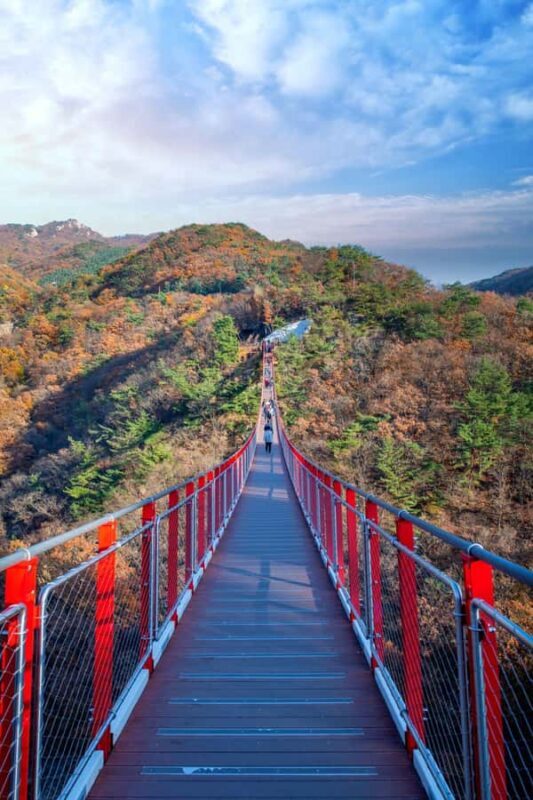
At a starting price of $45 per person, the value comes from the transport, guide and access to several sites in one day. You are not piecing together a route to the border yourself, and entry fees for the core DMZ attractions are included. An optional gondola or bridge visit is included only when you book that version, so compare the exact inclusions rather than treating every add-on as part of the base fare.
Meals and drinks are not included, and personal purchases are extra. Plan to pay for your own food and snacks during the day. The schedule includes time on the road as well as guided stops, so having water with you is sensible. Water may also be available at stops, but bringing your own avoids relying on that.
The private option adds hotel pickup and drop-off and a guide assigned only to your party. There is an important wrinkle: if your private group has fewer than 30 people, you still need to transfer to a local shuttle bus inside the DMZ. Your guide remains assigned to your group, but the private vehicle does not carry you through every part of the military-controlled zone.
The tour’s organization is one of its practical strengths. You meet in Seoul, ride roughly an hour by coach to the border area, and are guided through the main stops. Return transport is included, with drop-off points that can include Myeongdong and Hongik University Station. The exact meeting and drop-off locations depend on your chosen option.
Be at the meeting point at least 10 minutes early. The bus cannot wait for late arrivals, and a missed departure would be a poor start to a day with several fixed-access sites.
Military regulations and weather can change the schedule. The operator may provide alternatives, but refunds are not available for changes of this kind. Think of the itinerary as a plan, not a guarantee that every stop will run exactly as listed. The border’s rules take priority.
The day’s pacing is brisk. One visitor felt short of time at some stops, while others found the schedule orderly and well timed. That difference makes sense: the standard tour covers a lot, and the added bridge routes extend the day. If you want long, unhurried time at each site, a full itinerary may feel compressed. If you want a guided overview with several distinct stops, the pace helps you make good use of one day.
I would choose the standard DMZ route if you want the main historical stops in one trip and are comfortable with stairs. It works well for first-time visitors who want a guide to explain the border’s history and current significance, rather than simply seeing it from a distance.
Choose Majang Lake if an easy nature walk appeals to you after the history. Choose Gamaksan if you want the bridge experience and are happy with an uphill section. The Monday route makes most sense if observatory views toward North Korea are your main goal and you like the unusual idea of stopping at a border-facing Starbucks.
Families can consider the trip, but the Third Tunnel is a key practical point. A parent who took the tour with a four-year-old found it workable, yet the tunnel’s stairs and slippery surface still deserve thought for your own child and circumstances. The tour is not equally comfortable for every mobility level.
Your passport is mandatory. The information also says to bring a passport or ID card, but the know-before-you-go rule specifically requires a valid passport, so take the passport rather than relying on another form of ID.
Wear comfortable shoes, especially for the tunnel and the Gamaksan option. Bring water, and dress for a day that includes time outdoors as well as coach travel. There is no specific dress code. Follow instructions on photography, since some areas restrict it.
At booking, check four things: the route name, the departure time, whether your bridge or gondola is included, and the meeting point. These details vary by option. Free cancellation is available up to 24 hours in advance, and the reserve-now, pay-later feature can help if your Seoul plans are still taking shape.
Book this tour if you want a guided, efficient introduction to the DMZ, especially the Third Tunnel and Dora Observatory. The strongest reasons to go are the combination of physical history, border views and guides who can explain a complicated subject in clear, personal terms.
Choose the route that matches your priorities, and do not book on the assumption that every option includes every listed attraction. If you dislike steep stairs, need a slower pace or want to spend long stretches at each stop, weigh those limits carefully. For most visitors with a free day in Seoul and an interest in Korea’s division, this is a worthwhile use of that day.
“The tour was excellent. Judy, our guide, was friendly, helpful and very informative. Would definitely recommend.”
Yes. Every participant must bring a valid passport on the day of the tour.
The duration varies by option, from about five to nine hours. The bridge options are full-day tours departing at 7:00 a.m.
No. The Majang Lake and Gamaksan Red Suspension Bridge visits are separate options. The Peace Gondola is also included only if you select the gondola option.
It visits Aegibong Ecopark and Jogang Observatory for views toward North Korea, and includes a stop at a Starbucks cafe facing across the border. It skips the usual military base visits.
The tunnel is steep and can be slippery. Comfortable shoes are recommended, and it may not be suitable for people with mobility issues.
No. Meals, drinks, snacks and personal expenses are at your own cost.
Yes. Military regulations or weather conditions may change the schedule. Alternatives may be provided, but refunds are not available for these changes.
You can check availability for your dates here: