Physical Address
304 North Cardinal St.
Dorchester Center, MA 02124
Physical Address
304 North Cardinal St.
Dorchester Center, MA 02124

Walk Tsukiji’s outer market with a local guide, then make sushi, tamagoyaki and miso soup at a Tokyo cooking school.
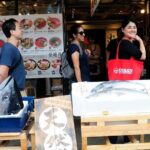
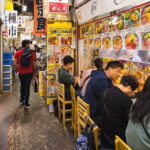
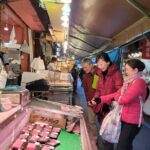
Tsukiji is best understood at walking speed: fish, produce and kitchen goods crowd the market lanes, and a guide can help you make sense of what is on the stalls. This three-hour outing pairs about 70 minutes in the outer market with a hands-on sushi and washoku class.
I like two things about the plan: you get a guide to explain the market’s seafood and food culture, then you make lunch yourself at ABC Cooking Studio. The small group, capped at six, also leaves room to ask questions. The trade-off is time: the market visit is short, and this tour does not enter the inner wholesale market or include the tuna auction.
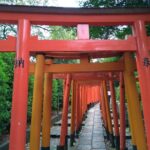
The meeting point is in front of the main gate of Tsukiji Hongwanji Temple, at 3-15-1 Tsukiji, Chuo. Look for a guide holding a sign with your name. The Hibiya Line’s Tsukiji Station is the easiest approach, just a one-minute walk from Exit 1 or two minutes from Exit 2. Tsukiji Shijo Station on the Oedo Line is about seven minutes away on foot from Exit A1, toward St. Luke’s Hospital.
Arrive ready to walk. Comfortable shoes matter on market lanes, where you’ll be moving among shops and other people rather than strolling along a broad promenade. Leave luggage and large bags behind, and don’t bring a stroller; both are listed as unsuitable for this tour.
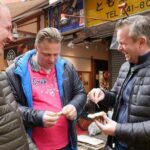
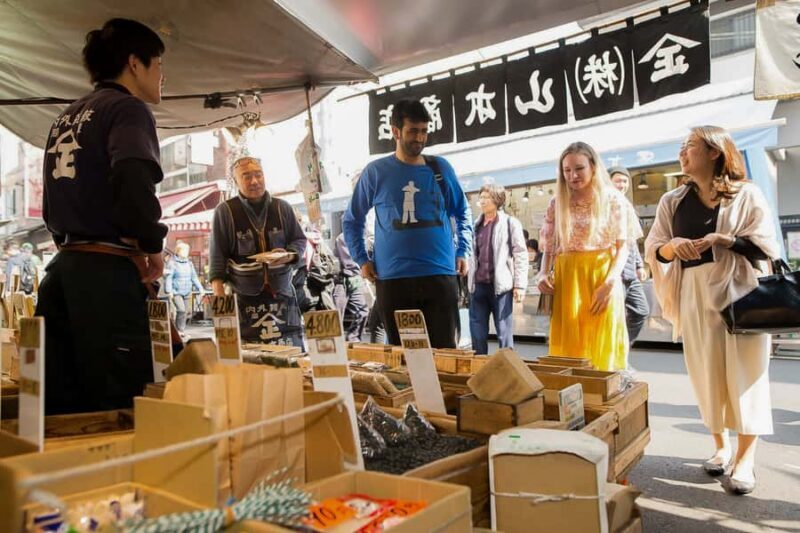
The opening walk gives you a guide’s frame for the market before the cooking class takes over. Seafood is central to Japanese food, but Tsukiji is not simply a place to watch fish being sold. It is a working shopping district of food stalls and shops, and the guide helps explain what you are seeing and how seafood fits into everyday cuisine.
Guides vary. Past tour leaders have included Aki, Akiko, Takeshita, Lucy and Nobu, among others. The cooking instructors also change, with names such as Megumi, Miwa and Yukari appearing in past sessions. You cannot count on a particular person, but expect an English-speaking guide and a professional instructor.
If you enjoy exploring Tokyo on foot, these walking tours might also suit your style
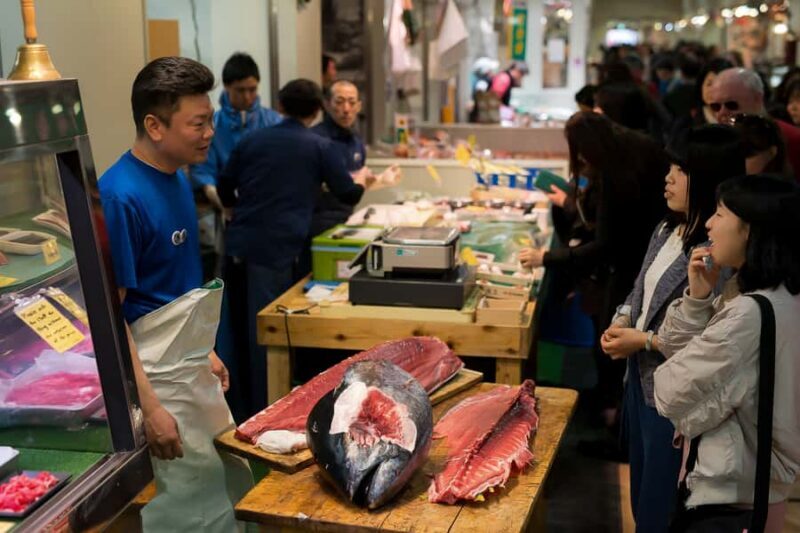
The market portion is a guided walk through Tsukiji Outer Market, not a pass through the inner wholesale fish market. That distinction is important. The outer market is open to visitors and lined with food and shopping stalls; the wholesale operation is a separate place and is not included. The tuna auction is not part of this experience either.
With about 70 minutes here, you get an introduction rather than a full market expedition. That is enough to see the lanes, hear about seafood and Japanese food traditions, and ask questions as you go. Guides have helped past groups identify the wares and navigate the busy rows, which can make a first visit feel less like guesswork.
But the clock is real. If you want to browse at your own pace, compare every stall or linger over lunch before class, this schedule may feel tight. Several people who loved the experience wished for more market time. One person found the public-facing market less compelling after expecting a visit to the old inner market. Keep your expectations clear: this is an introduction to the outer market, not an all-morning exploration of every part of Tsukiji.
You may want to arrive hungry. A past participant advised leaving room to try foods in the market, and the stalls can tempt you to stop. But the tour information does not promise tastings or include a market food allowance, so treat any purchases as an extra rather than part of the set price. If sampling is high on your list, ask your guide what fits the timing.
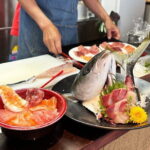
The guide’s role is a major part of the walk. You can wander through a market on your own, but a guide can point out products and explain details you might otherwise pass by. That context helps turn a row of unfamiliar seafood and ingredients into a practical lesson in how Japanese cooking begins with what is fresh and available.
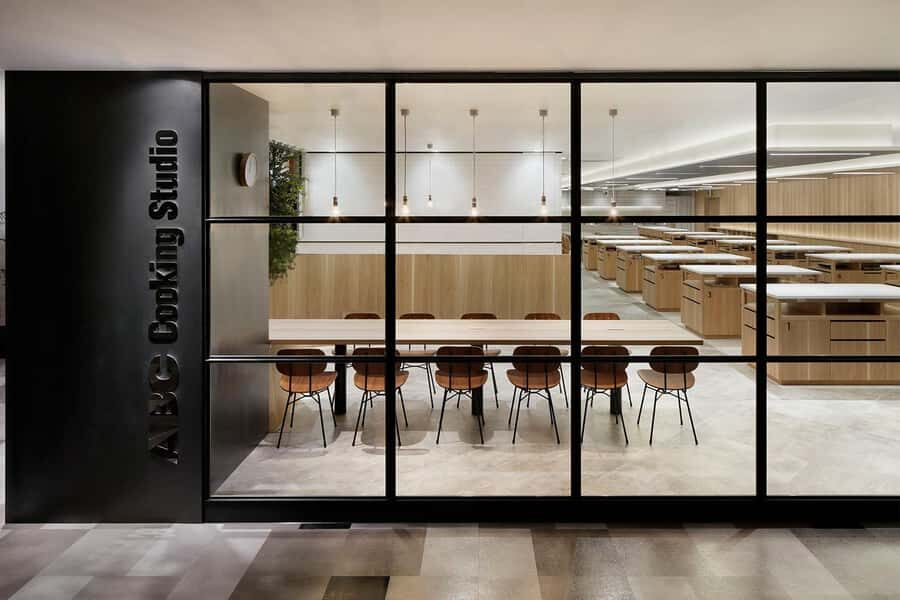
After the walk, you continue to ABC Cooking Studio, described as Japan’s largest cooking school and one of Asia’s largest gourmet cooking schools. The market and classroom make a useful pair: first you see the ingredients and food culture in a real shopping district, then you work with familiar elements of Japanese home cooking.
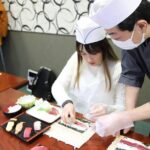
The studio portion is led by a professional instructor. You’ll use an apron, and drinking water is provided. It is a class, not a chef’s apprenticeship, but it gives you a chance to handle the food and learn techniques rather than simply watch someone else prepare lunch.
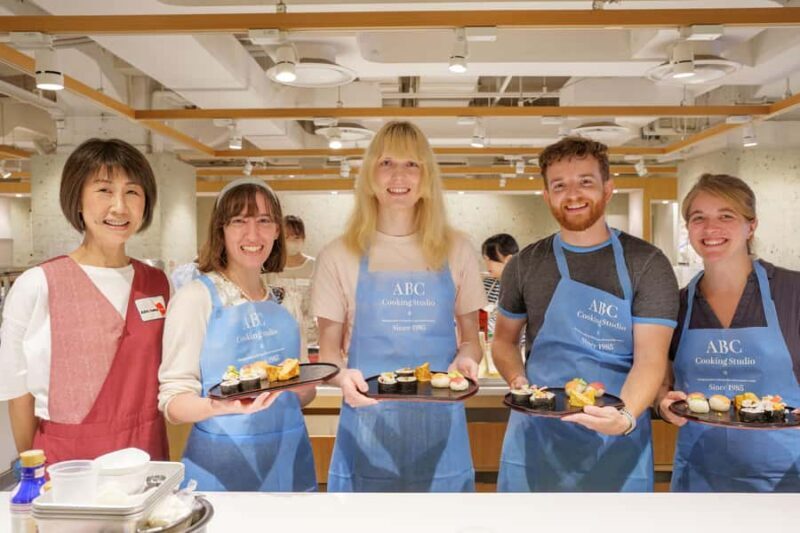
The group limit of six helps keep the class personal. You can ask for help when a roll loosens or a technique feels awkward, and the instructor can demonstrate steps at close range. The small scale is a plus for families and friends, too, though the activity has a minimum age of nine and a minimum height of 4 feet 3 inches, or 130 centimeters.
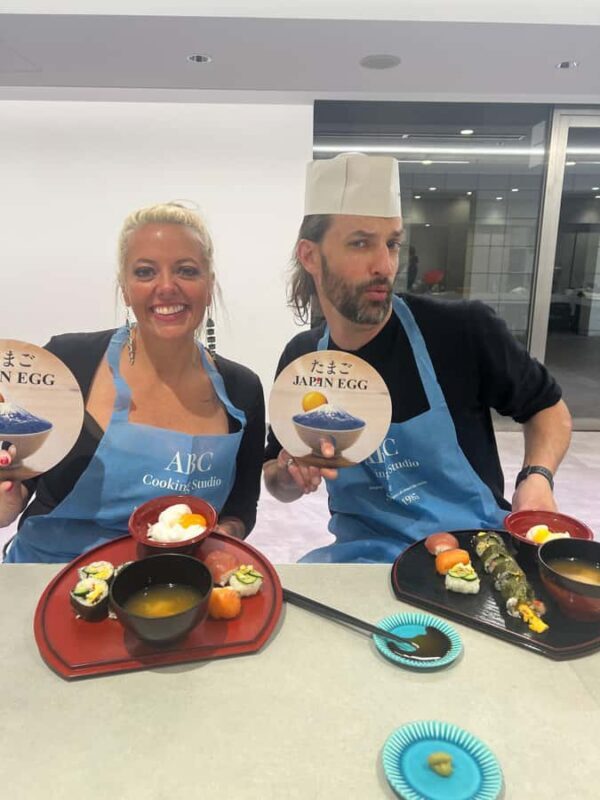
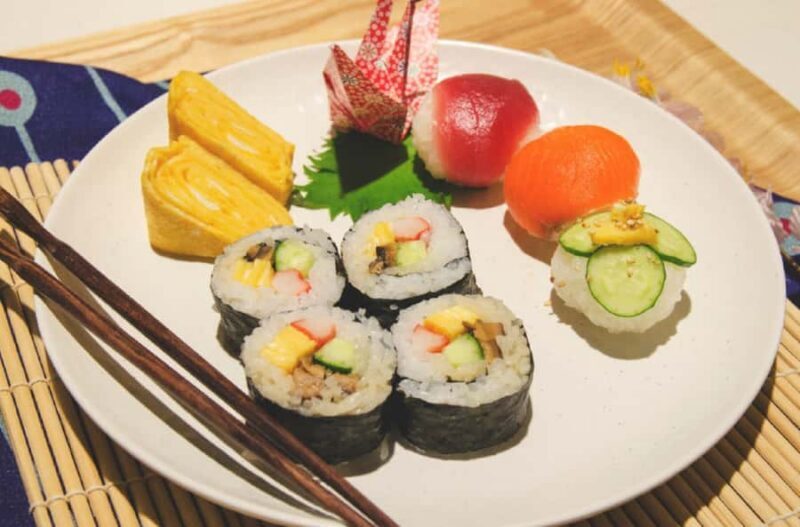
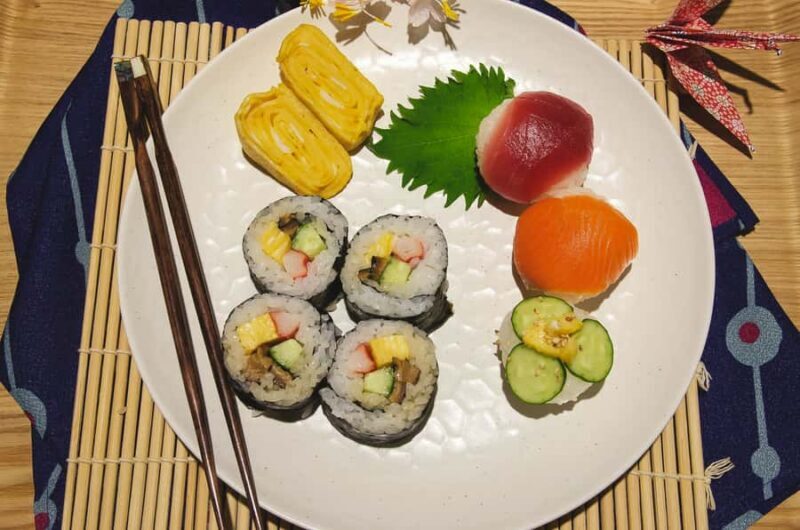
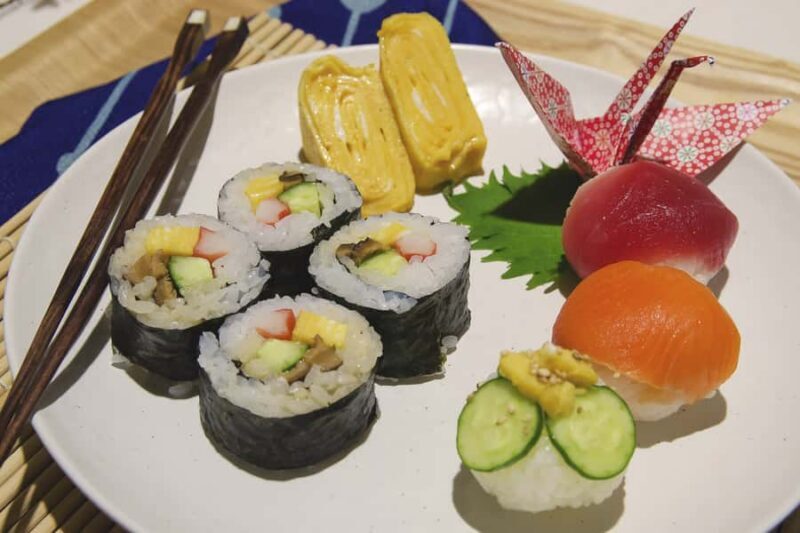
The menu includes temari sushi, round, ball-shaped sushi; maki sushi, rolled sushi; tamagoyaki, a Japanese egg roll; and miso soup. Together, these dishes show more than one way to build a Japanese meal. You get to shape sushi by hand, roll it, work with egg and prepare soup, then bring the components together at the table.
The lesson is designed for participation. The instructor demonstrates cooking techniques, and you follow along to make your own food. That hands-on element is what makes the class worthwhile even if you have already walked through a market or eaten plenty of sushi in Tokyo. You leave with a digital recipe, so you have something to refer to when you want to try the dishes at home.
Expect the exact ingredients or class contents to vary. Seasonal ingredients, what has arrived and other conditions can affect the menu, and ingredients may differ from pictures used to promote the activity. If you are booking for one particular dish or ingredient, don’t assume it is guaranteed on your date.
Some people may find the session a little rushed or less hands-on than they hoped. The class has several dishes to cover within a three-hour experience that also includes the market. If you want to spend a long time perfecting each technique, a standalone cooking course may suit you better. Here, the appeal is the combined experience: a market introduction, a guided lesson and a meal, all in one morning or afternoon slot, depending on availability.
More Great Tours Nearby
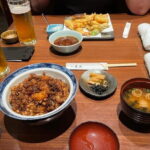
You finish by sitting down to eat the food you prepared. That is a satisfying close, and it gives you a chance to taste each dish as part of a meal rather than as a quick sample during a demonstration. The lunch is included, as are water at the cooking studio and the use of an apron.
There is a small but useful distinction between this meal and market grazing. Your class lunch is included; snacks or tastings bought at stalls are not specified as included. If you hope to sample market food, keep that separate in your budget and appetite. Come hungry enough to enjoy lunch, but not so hungry that the market’s tempting displays become a test of willpower.
The cooking session can be especially good for a family with older children. A family with children aged 11, 13 and 15 enjoyed the outing, and another family found sushi-making a hit with teenage sons. Children under nine cannot take part, and the height minimum also applies, so check both requirements before booking.
Shoppers can discover Tokyo's markets and boutiques through these guided experiences
At $96 per person, this is not the cheapest way to see Tsukiji or eat lunch in Tokyo. You could walk the outer market independently, and you could buy sushi without learning to make it. The price makes more sense if you want a guide, a structured market visit, a professional cooking class and a meal in one three-hour outing.
The small group adds value in a practical way. With a maximum of six, you have a better chance to ask questions than on a large coach tour, and the instructor can work with a handful of participants. The digital recipe and certificate are useful extras, though the main return is the time spent learning and cooking.
The value depends on what you want from Tsukiji. If you are primarily after a long, free-form market browse, the 70-minute visit may not justify the price. If you want someone to explain what you’re seeing and then help you turn Japanese food traditions into a meal, the combination is stronger. You are paying for a guided introduction and an activity, not just access to the market.

I’d choose this tour if you are curious about Japanese cooking but want a friendly, guided entry point rather than a technical course. It suits first-time visitors who value context, families with children aged nine and up who meet the height requirement, and anyone who enjoys learning by doing. The cooking class is a particular draw if making sushi sounds more appealing than only watching it being prepared.
It may be a poor fit if your main goal is the inner wholesale market, the tuna auction or hours of independent browsing. None is included. It also may not suit you if you need a wheelchair-accessible activity, are bringing a stroller or large bag, or have back or heart problems, are pregnant, or have another serious medical condition. The activity is not recommended in those circumstances.
The tour requires at least two participants and runs with no more than six. It also depends on good weather; if poor weather or unavoidable circumstances lead to cancellation, you can receive a full refund, or request rescheduling without a refund. You can cancel up to 24 hours in advance for a full refund, and the reserve-now, pay-later option can help keep plans flexible.
Book this if you want a compact, well-balanced introduction to Tsukiji and Japanese home cooking. The market walk gives you orientation, and the lesson turns that food context into something you can make and eat. Just go in knowing that the outer market gets about 70 minutes, the wholesale market is off the route, and the menu can change with the season.
If you want a long market morning, explore Tsukiji independently and give yourself more time. If you want a guide, a small-group class and lunch in one outing, this is a practical way to fit all three into a Tokyo visit.
“Wish we had more time in Tsukiji Market before going to the cooking class. But the class and instructor was great!”
The experience lasts three hours. The market walk takes around 70 minutes, followed by the cooking class and lunch.
No. The tour visits Tsukiji Outer Market only. The inner wholesale market and tuna auction are not included.
You will prepare temari sushi, maki sushi, tamagoyaki and miso soup. Ingredients and class contents may vary with the season and what is available.
Yes. You eat the dishes you prepare for lunch. Water is provided at the cooking studio.
Meet in front of the main gate of Tsukiji Hongwanji Temple, at 3-15-1 Tsukiji, Chuo, Tokyo. The guide will hold a sign with your name.
Children must be at least nine years old and at least 4 feet 3 inches, or 130 centimeters, tall. Children under either minimum are not suitable for the activity.
You can check availability for your dates here: