Physical Address
304 North Cardinal St.
Dorchester Center, MA 02124
Physical Address
304 North Cardinal St.
Dorchester Center, MA 02124

See Shanghai’s Bund, Yu Garden, Nanjing Road and more by double-decker bus, with flexible 24- or 48-hour passes and multilingual audio.
Shanghai’s sightseeing bus gives you a rolling introduction to a city that can feel vast on foot. From the upper deck, you can watch the Bund’s historic façades give way to Pudong’s high-rise skyline, then use the stops to reach places such as Yu Garden, Nanjing Road and the Jade Buddha Temple area. It is a practical way to get your bearings before choosing what deserves a closer look.
I like two things in particular: the freedom to hop on and off during your pass, and the range of routes linking central Shanghai with the riverfront and Lujiazui. The multilingual audio can add useful context as you ride, and the bus gives your feet a welcome rest between walks.
The trade-off is time. Shanghai traffic can slow the loops, and bus intervals are not always predictable. The upper deck may also be closed or uncomfortable in hot, rainy or poor-air-quality conditions, so treat this as a flexible sightseeing tool, not a fast way to cross town.
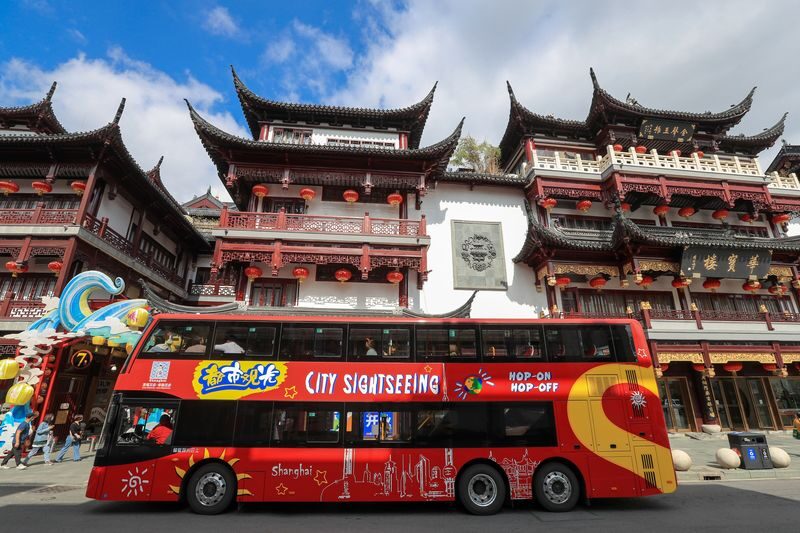
This bus is most useful as a moving city overview. Shanghai’s sights are spread across a large area, and a ride helps you see how the old commercial center, the Bund and the Pudong skyline relate to one another. You can stay aboard for a broad first look, then return to the stops that catch your interest.
The upper deck is the main event when it is open. It gives you a higher view over the street and a clear look at landmark buildings, especially around the river. But do not assume every bus will offer an open-air ride: some passengers have found the roof closed, and the bus can feel hot or stuffy in warm weather. Air-conditioning has also varied from bus to bus.
A seat downstairs is a sensible fallback in rain or strong sun. It is less panoramic, but the bus remains a convenient way to rest while moving between neighborhoods. If the open top matters to you, ask before boarding rather than building your whole day around that expectation.
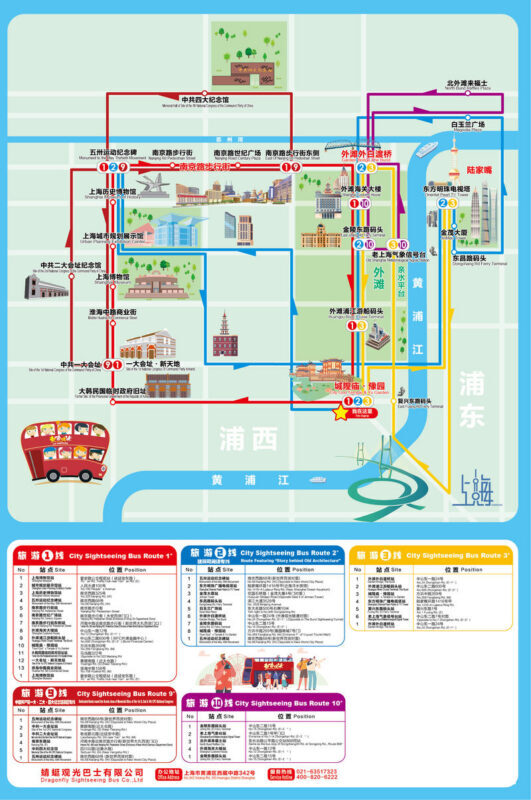
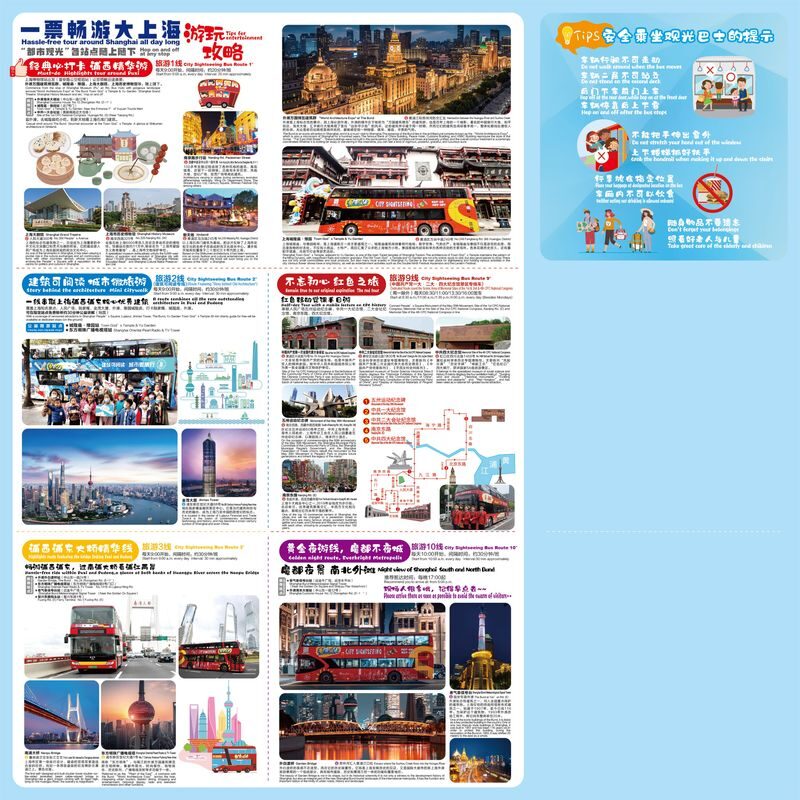
The route network is broad enough to reach many headline sights, but it is not four wholly separate tours. Lines 1, 2 and 3 share several central stops, and the Bund, Yu Garden and nearby riverfront appear in more than one route. Line 9 focuses on sites linked to the Communist Party’s early history. That overlap can make transfers useful, but it also means a 48-hour pass may feel repetitive if you only ride the full loops.
Line 1 is a good first ride for central Shanghai. It links the Shanghai Museum and Urban Planning Exhibition Hall with Nanjing Road, the Customs House, the Huangpu River cruise terminal, City God Temple and Yu Garden, then returns to the museum area. It is a handy orientation loop, mixing civic landmarks, shopping streets and traditional garden district stops.
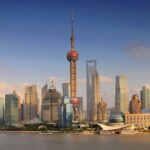
Line 2 connects the Monument to the May Thirtieth Movement with the Oriental Pearl Tower, Jinmao Tower, Dongchang Road ferry terminal and the Bund’s Garden Bridge area. It is the clearest choice if your main aim is to compare the old riverfront with the modern skyline across the Huangpu. The route also serves Yu Garden, making it easy to combine river views with a visit to the older city.
Line 3 is shorter in its list of stops and centers on the Bund, river cruise terminal, Yu Garden and East Fuxing Road ferry terminal. It can work well if you want to focus on the river and old-town side rather than cover every central district. Its operating day ends earlier than Lines 1 and 2, so check the schedule before planning a late stop.
Line 9 visits sites associated with the first, second and fourth National Congresses of the Communist Party of China, along with the May Thirtieth Movement monument and the east side of Nanjing Road. It runs at set departure times rather than at frequent intervals and is closed on Mondays. If this history interests you, plan around its departures; it is not the line to board casually whenever you reach a stop.
The advertised material refers to five routes, but the detailed route schedule provided names Lines 1, 2, 3 and 9. Check the current route information when redeeming your ticket, especially if you are choosing a pass for a particular attraction or neighborhood.
Looking to discover more of Shanghai? Consider these other city tour options
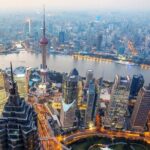
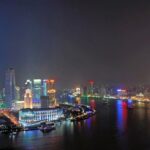
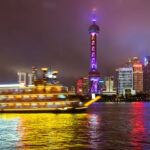
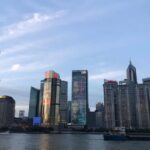
At the Bund, the bus brings you close to the riverfront and the historic buildings facing Pudong. This is one of the most rewarding places to step off: the contrast between the older waterfront and the towers across the river is central to Shanghai’s identity. The Garden Bridge and Customs House stops give you more than one way to reach this stretch.
Nanjing Road Pedestrian Street is a useful stop for a walk through one of the city’s best-known commercial areas. The route also calls at Nanjing Road Century Plaza and the east side of the pedestrian street. Because traffic and stop locations can affect your timing, check which stop best suits your intended walk before you board.
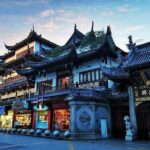
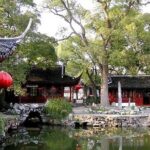
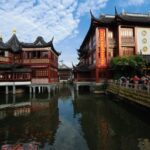
City God Temple and Yu Garden make a natural pairing for a longer break. The bus gets you near the old-town area, but the ticket does not generally cover entry to attractions. Leave time for walking and any admission you decide to buy; this is not a stop to squeeze into a few minutes between buses.
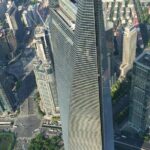
In Pudong, Oriental Pearl Tower and Jinmao Tower give you access to the city’s modern skyline district. The bus can bring you to the area, but observation-deck admission is separate unless you choose a package that specifically includes it. A bundle with the Jinmao Tower 88th Observation Hall is offered, as is one with Madame Tussauds Shanghai, so compare the added cost with your plans before choosing.
The route list also includes the Jade Buddha Temple in the general description, but it is not shown among the detailed stops for Lines 1, 2, 3 or 9. Verify the current stop map if reaching the temple is a priority.
The listed daytime hours are generous, but service frequency differs by route. Line 1 runs from 09:00 to 19:00, with buses roughly every 20 to 30 minutes. Line 2 runs from 09:00 to 20:30, about every 30 minutes. Line 3 runs from 09:00 to 16:00, also about every 30 minutes. Line 9 has departures at 08:30, 11:00, 13:30 and 16:00, and does not operate on Monday.
Those intervals are estimates, not a promise of clockwork service. Traffic can stretch the wait, and some riders have reported long delays without clear arrival updates. During holidays or heavy congestion, a bus ride may take longer than a taxi or metro trip. The bus is best when the ride itself is part of the sightseeing, not when you have a timed reservation across town.
Night service runs from 16:30 to 20:30, but it uses a reduced set of stops. Line 1 lists Nanjing Road Century Plaza, the east side of Nanjing Road Pedestrian Street, Shanghai Customs House, and City God Temple and Yu Garden. Line 2 lists the Oriental Pearl Tower and the May Thirtieth Movement monument. Do not assume the night service offers the same hop-on, hop-off flexibility as daytime routes; confirm the boarding options with staff when you collect your ticket.
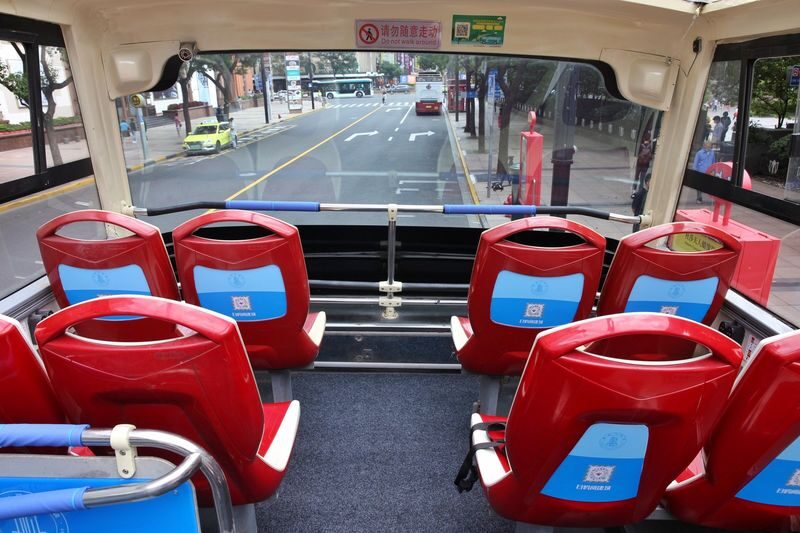
The audio guide is available in eight languages, including English, Japanese, French and Russian. A headset is included, and the commentary can help you identify the places outside the window and add short historical notes. For a first day in Shanghai, that basic context can make the city easier to understand.
Quality and availability can vary. Some passengers have encountered audio that did not work, or found the English and Korean recordings awkward or difficult to follow. The commentary may also finish before the bus reaches the sight it describes, and nearby conversation can make listening harder. Bring modest expectations: think of it as a brief orientation aid, not a detailed guided tour.
The bus passes attractions, but admission is not included as a general rule. The stated inclusion of free entry in promotional highlights conflicts with the specific terms, which say attraction entry is excluded. Only count on admission when your selected package explicitly names it.
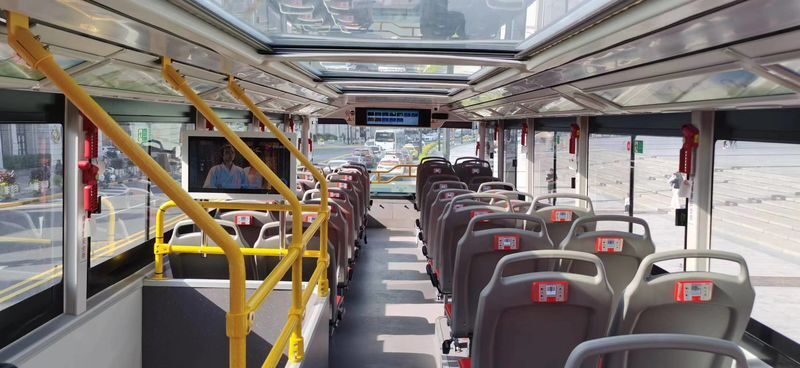
The listed starting prices are about US$8.99 for a 24-hour ticket and US$11.99 for a 48-hour ticket. A two-person 24-hour deal starts around US$13.65, while the 24-hour ticket bundled with Madame Tussauds starts around US$28.19 and the Jinmao Tower package around US$20.69. Prices can change, so compare the options at booking.
For most people, the 24-hour ticket is the better bet. It gives you time to ride an orientation loop, get off at one or two places, and perhaps take an evening ride without paying for a second day of similar routes. The 48-hour option makes more sense if you plan to spread visits across two days or want a slower pace, but it does not add new routes in the information provided.
You must exchange the voucher for a physical paper ticket at the booth near the Monument to the May Thirtieth Movement, at 68 Nanjing West Road, or the booth at the Oriental Pearl Tower, at 1416 Lujiazui Ring Road. Redemption hours are listed as 09:00 to 18:00, so do not assume you can pick up the ticket late in the evening. The ticket is valid for 24 or 48 hours from redemption, depending on the pass you bought.
Keep the paper ticket clean, dry and unfolded. A phone screenshot or ticket photo is not accepted for boarding, and a lost, damaged or stolen ticket cannot be replaced for free. One paper ticket is shared by everyone on the same booking, and all passengers using it must board together. If you need separate tickets for people to travel independently, book separately.
Children 130 cm tall or shorter ride free, with one free child per adult, and each child must be accompanied by an adult. The standard ticket includes a brochure and one headset for the audio guide. Meals, drinks and personal expenses are not included.
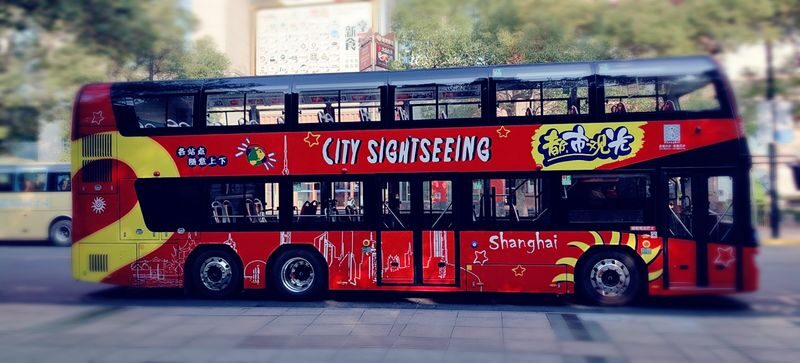
I would use the bus to get an overview, enjoy the riverfront from above street level and save some walking between major sights. It suits first-time visitors, families who want a flexible day, and anyone who would rather rest between walks than navigate every leg by metro. It can also be a welcome change on a rainy day, provided you are comfortable with a more enclosed ride.
I would not rely on it for tight connections, a fixed schedule or fast cross-city transport. If you prefer detailed interpretation at each landmark, a walking guide may be more satisfying. If you mainly need to get from place to place, taxis and the metro may be more practical, especially when traffic is slow.
Book it if the ride, views and flexible stops are part of what you want from the day. Choose 24 hours unless you have a clear two-day plan, check the line hours before setting out, and ask about the roof and audio before boarding. The bus can give you a useful first map of Shanghai, but it rewards a relaxed schedule more than a checklist.
“worthwhile to join, include a short night sightseeing trip. note ticket redemption start at 10am not 9”
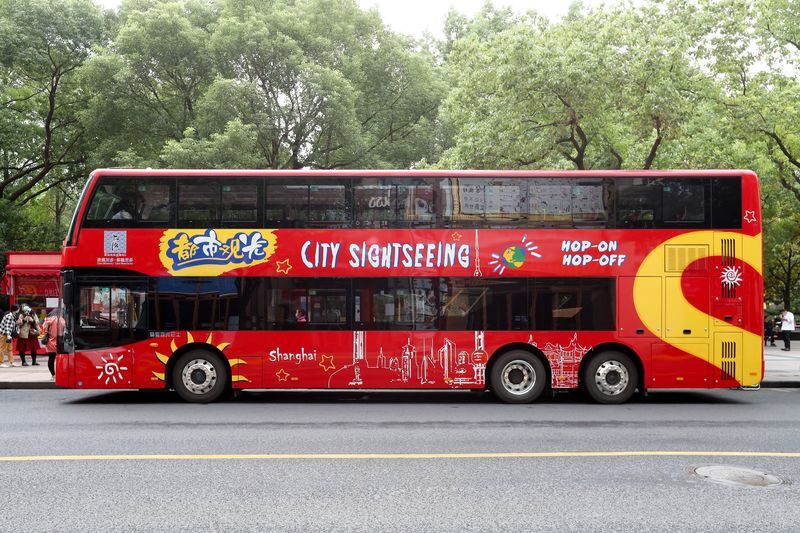
The pass is valid for 24 or 48 hours from the time you redeem it, depending on the option purchased. You can board and get off at stops on the designated routes during their operating hours.
You can redeem it at the booth at 68 Nanjing West Road, near the Monument to the May Thirtieth Movement, or at the booth at 1416 Lujiazui Ring Road by the Oriental Pearl Tower. Redemption hours are listed as 09:00 to 18:00.
Audio commentary is listed in Chinese, English, Spanish, Russian, Japanese, German, Korean and French. A headset is included, though audio availability and function may vary by bus.
Generally, no. The bus passes attractions, but admission is not included unless your chosen package specifically names an attraction, such as the Madame Tussauds or Jinmao Tower bundle.
Children 130 cm tall or shorter ride free when accompanied by an adult. Each adult may bring one free child.
The night service runs from 16:30 to 20:30 and lists a smaller set of boarding stops than the daytime routes. Confirm the available boarding and stop arrangements with staff when you redeem your ticket.