Physical Address
304 North Cardinal St.
Dorchester Center, MA 02124
Physical Address
304 North Cardinal St.
Dorchester Center, MA 02124

See Chongqing 1949, a history play staged on rotating platforms, then plan your seats, translation, timing, and optional Yangtze River cableway ride.
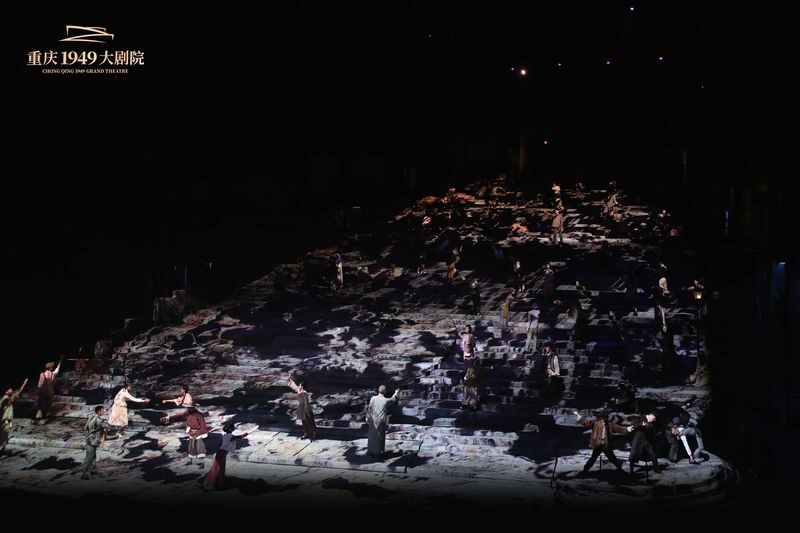
Chongqing 1949 turns a theatre into a moving stage: sets shift, sections of the audience rotate, and the story unfolds from changing angles. The production follows Chongqing in 1949, as the city approached liberation and prisoners held at Zhazidong and Baigongguan faced torture and death.
I like two things especially: the rotating auditorium makes the staging part of the story, and the production gives you a way to encounter a weighty chapter of Chongqing’s past beyond a museum display. The large cast, music, lighting, and detailed sets carry much of the story even if you do not understand Mandarin.
One consideration: the production presents history from a particular political perspective, and translation devices can be hard to hear clearly against the show’s loud sound. A little background reading and a careful seat choice can make the evening more rewarding.
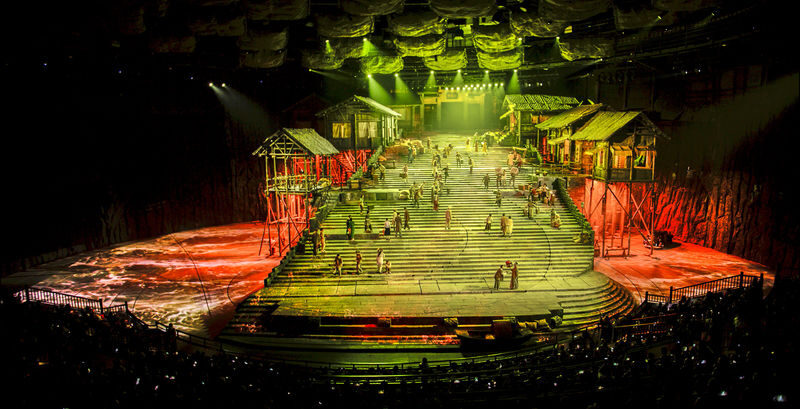
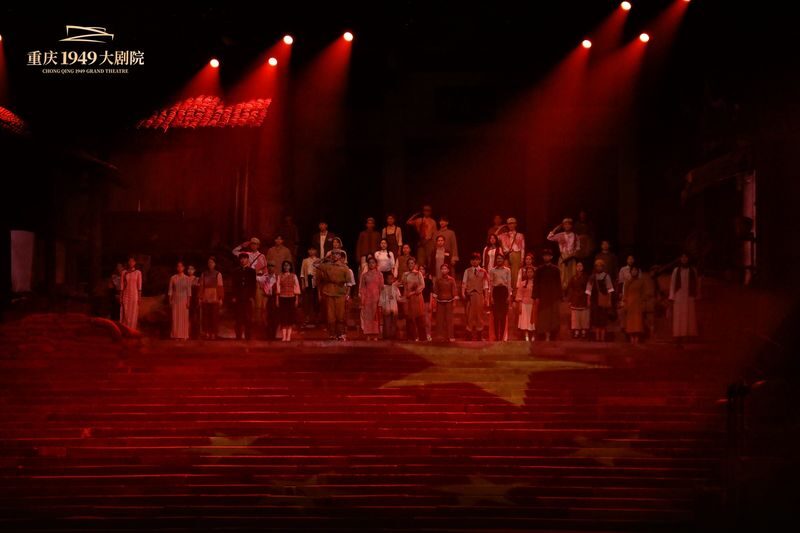
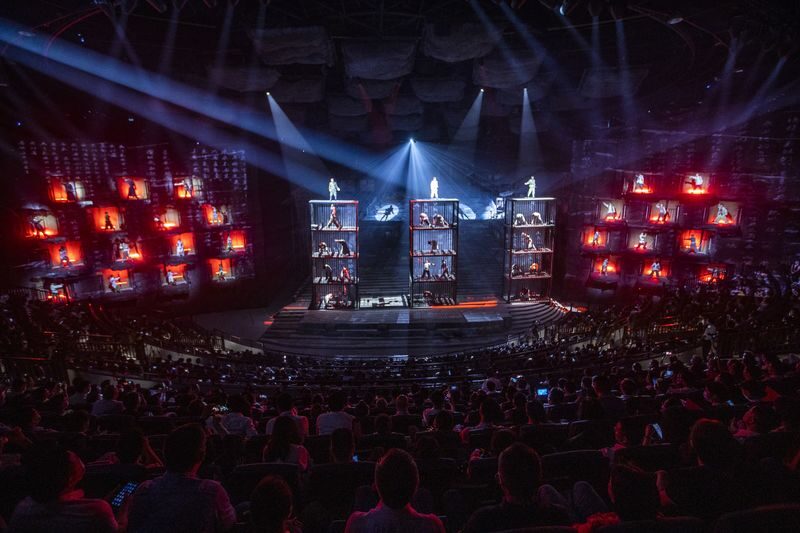
Chongqing 1949 Grand Theatre was purpose-built for this production, rather than adapted from a conventional playhouse. It covers 25,000 square metres, stands 28.6 metres high, and can seat 1,497 people. Those numbers help explain why the show feels closer to a large-scale event than a small, intimate drama.
The unusual feature is the relationship between stage and seating. Moving sets and rotating audience sections alter the view during the performance, so you see different parts of the action from different angles. It is not just a clever extra: the changing perspective is the reason many people choose the production over a standard stage show.
The theatre’s scale also has a trade-off. A large room and forceful sound can make the action feel grand, but they may also make spoken dialogue and translation harder to follow. If words matter to you, arrive early enough to collect and check a translation device, if your ticket option includes one.
Looking for more options in Chongqing? Here are some other experiences worth considering.
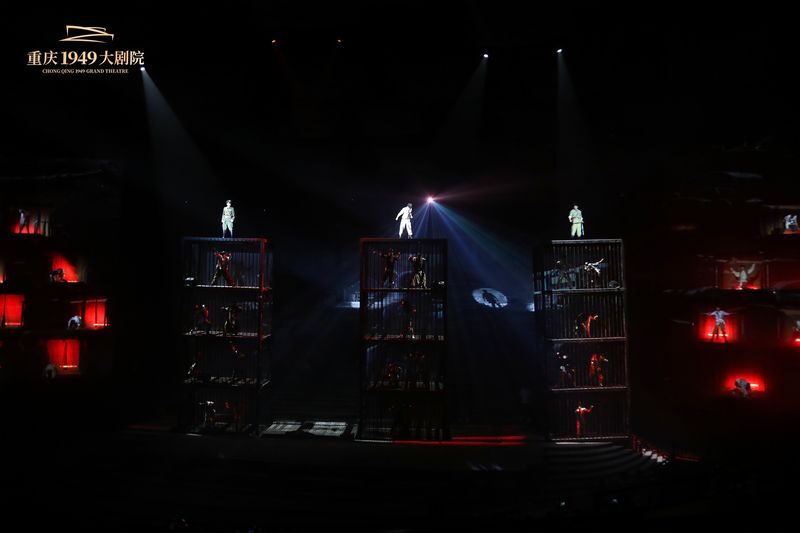
The play looks back to the final period before Chongqing’s liberation in 1949. Its central figures are Communist Party members imprisoned at Zhazidong and Baigongguan, who are shown enduring torture and refusing to surrender. The story culminates in the city’s liberation and the deaths of revolutionary martyrs.
The production presents these events as a tribute to the Hongyan Spirit, linking personal sacrifice with the wider cause of Chinese liberation. That framing is important to understand before you go. This is a commemorative historical drama, not a neutral survey of the Chinese Civil War or a documentary account that weighs competing interpretations.
For an international audience, some context can help. The plot draws on a specific period in modern Chinese history, and some scenes may be difficult to place if you arrive without knowing the basic outline. Even a short read about Chongqing in 1949 and the sites of Zhazidong and Baigongguan can make names and events easier to follow.
If you do not speak Chinese, do not assume that translation is essential to enjoying the production. Music, movement, lighting, and facial expression carry emotion and broad story beats. But translation can help with the details, especially if you want to understand how the scenes connect.
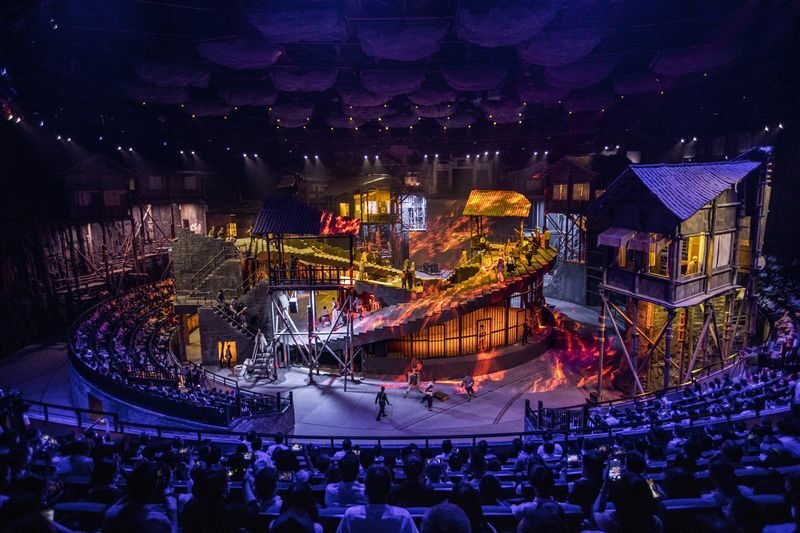
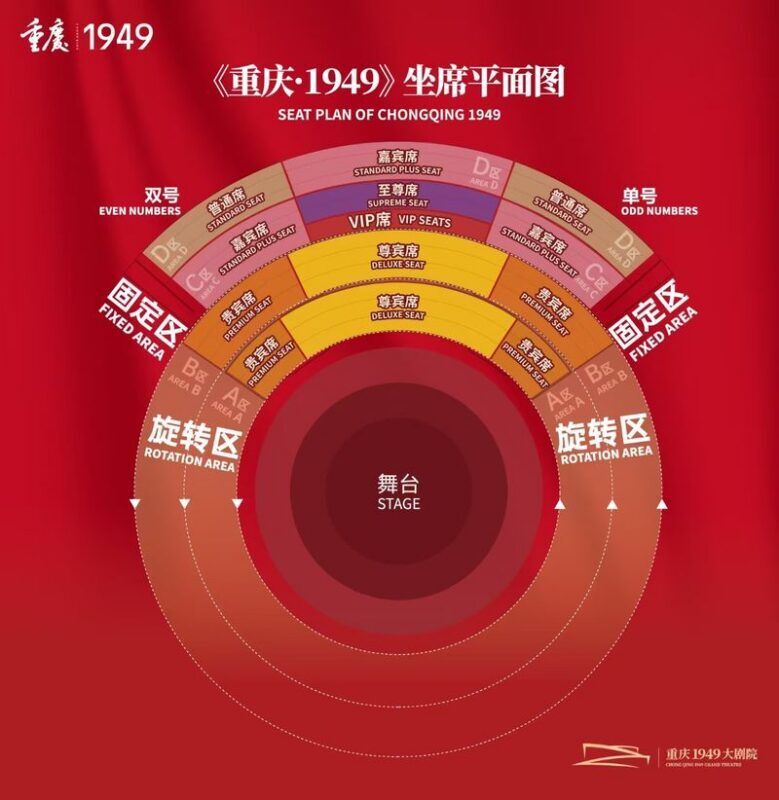
The rotating sections make this show unusual, but they also make seat selection worth a little attention. Sections A and B are described as revolving, and the motion brings different stage areas into view. If you want the full mechanical effect, check whether your ticket is for a moving section rather than assuming every seat rotates.
Section B is a practical option to consider. One attendee found its view more comfortable at eye level and said it avoided the need to strain the neck. That is useful advice, but not a guarantee: exact sightlines depend on the seat and the scene. Another audience member seated at the far end of the front row found that the shifting stages did not provide a clear view of every moment.
The basic lesson is to look at the seating plan before paying extra, and avoid choosing a seat only because it is in the first row. The staging changes, so a position that seems close may not offer the broadest view. If rotating seats cost more, weigh the added movement against your comfort and how much you value seeing the production from several angles.
The action is carefully timed around the moving stage and audience. That precision is part of the spectacle, but it is also why late entry is a poor gamble. Admission stops five minutes after the performance begins, and latecomers are not admitted or refunded for arriving late for personal reasons.
Expect a large, dramatic production rather than a quiet history lecture. The cast, music, lighting, props, and changing sets work together to recreate scenes from the city’s past. The scale gives the story force, while the rotating auditorium keeps the view shifting instead of leaving you facing one fixed stage for the whole performance.
The emotional tone is serious. The story centres on imprisonment, resistance, sacrifice, and liberation, and the ending is framed as a tribute to those who died. If you prefer light entertainment, this may not be your ideal evening. If you want a theatrical encounter with Chongqing’s modern history, the subject and the elaborate staging give you plenty to think about.
Sound and translation deserve realistic expectations. The show is in Mandarin, and translation devices are offered with some packages or may be available at the theatre. Availability and language can vary, so read the selected ticket details carefully. Some audience members have found the translation difficult to hear alongside loud stage audio, while others have used it successfully. Test the device before the show, and do not rely on it as your only way to follow the action.
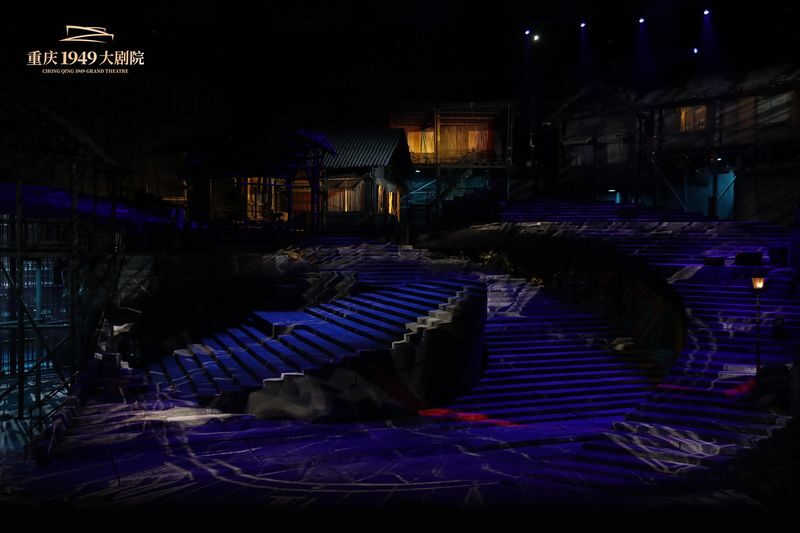
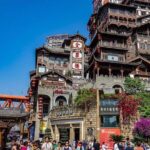
The theatre is at No. 999 Jinbi Main Street in Ciqikou Subdistrict, Shapingba District, next to Ciqikou Ancient Town. That location makes a half-day plan easy to imagine: spend time in the old-town area, then attend a performance. The theatre is outside the central Jiefangbei area, so account for the journey rather than treating it as a quick walk from downtown.
Sessions listed include 14:00, 16:00, and 19:30, though available times can change. Choose one that gives you breathing room. The 19:30 performance works well after an afternoon nearby, while an earlier show leaves the evening free. Allow time to find the theatre, exchange the electronic QR code for a paper ticket, and sort out any translation device before the doors close.
The Yangtze River Ropeway North Station one-way ticket is a separate add-on in some packages, not a ride from the theatre. North Station is at No. 151 Xinhua Road in Yuzhong District, near Xiaoshizi Metro Station Exit 5B. Its listed boarding window is 13:00 to 13:59, which calls for advance planning if your show is later in the day. Confirm how the cableway ticket is issued and accepted before setting out, and keep the show ticket and ropeway details easy to find.
Prices vary by package and session. The supplied options include show-only tickets from about US$41.25, a show-and-ropeway package from about US$41.15, and packages with cultural products and translation devices from about US$55. A separate starting price is also shown at US$45.25, so treat displayed prices as changeable and compare the final package details before you book.
For value, the show-only ticket is the clearest choice if the performance is your priority. The combo can be worthwhile if you genuinely plan to take the cableway, but the North Station location and its short boarding window mean it is not a casual add-on to use whenever convenient. The translation and cultural-product options may suit you if their exact inclusions match your needs.
Ticketing requires your real name and a photo of your passport or other ID document. After ordering, customer service may contact you to confirm the performance session, so keep an eye out for calls or messages. At the theatre, exchange the merchant’s electronic QR code for a paper ticket. Bring the same identification used for the booking, as the ropeway admission information also specifies a valid ID.
Children under 120 centimetres can enter free without a seat, with a limit of one child per adult. Children 120 centimetres and taller pay the adult rate. The voucher is valid only for the date and time specified, and once tickets are issued, cancellations and rescheduling are not supported unless the performance changes or is cancelled.
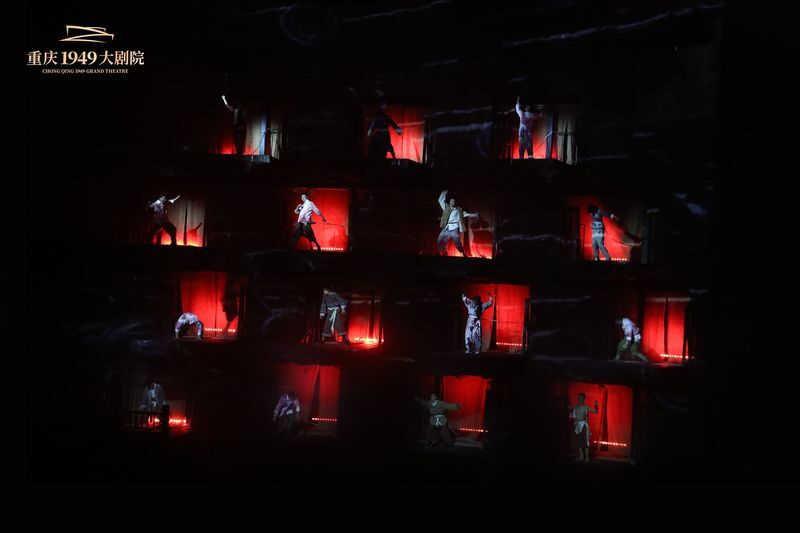
I would put this high on the list if you are curious about Chongqing’s modern history, enjoy large-scale stagecraft, or want an evening that feels distinct from the city’s food and sightseeing stops. The moving auditorium is a genuine reason to go, not a small gimmick around an otherwise conventional play.
It is less suitable if you need perfectly clear English dialogue, dislike loud productions, or want a politically neutral account of the period. You can still follow much of the story through the staging, but a little preparation helps. For the best chance of a smooth visit, choose a rotating seat if that feature matters to you, check translation availability, and arrive well before the start.
Book it if the history and theatre appeal to you, and treat the cableway as a separate outing to plan carefully. Skip the bundle if you are unlikely to reach North Station during its listed time window. The show itself is the main event.
“Highly recommend this production, featuring an impressive cast and stage. Every person involved, including the stage and backend crews, left me ver…”
It is at No. 999 Jinbi Main Street, Ciqikou Subdistrict, Shapingba District, Chongqing, next to Ciqikou Ancient Town.
Set in 1949, it tells a story of Communist Party members imprisoned at Zhazidong and Baigongguan, their resistance, and Chongqing’s liberation.
Sections A and B are revolving sections. Check your ticket and the seating plan, since not every seat is specified as rotating.
The listed sessions include 14:00, 16:00, and 19:30. Confirm the available time when booking, as schedules and ticket options may vary.
The performance is in Mandarin. Translation devices are included with some ticket options or may be available separately, but availability and languages can vary.
Take the electronic QR code sent by the merchant to the box office at Chongqing 1949 Grand Theatre and exchange it for a paper ticket.
The theatre requires real-name ticket purchases and asks for a passport or ID document photo through customer service. The ropeway information also specifies admission with valid ID.
Only selected packages include a one-way ticket from Yangtze River Ropeway North Station. The listed boarding time is 13:00 to 13:59, so check the package details and plan the trip separately from the theatre visit.
Once tickets have been issued, cancellations and rescheduling are not supported unless the performance changes or is cancelled.