Physical Address
304 North Cardinal St.
Dorchester Center, MA 02124
Physical Address
304 North Cardinal St.
Dorchester Center, MA 02124

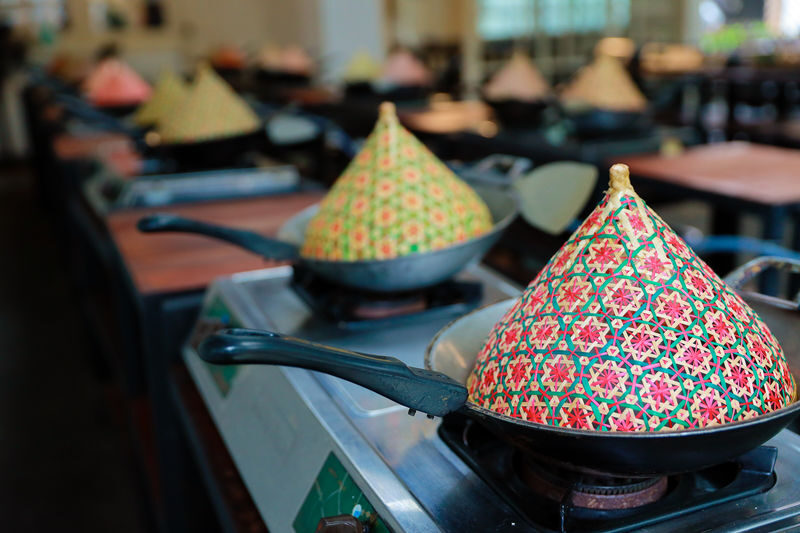
Cook four Thai dishes from scratch at House of Taste in Bangkok, with a morning market visit or mango carving in later classes.
Thai cooking makes more sense when you handle the ingredients yourself. At House of Taste, you learn what goes into curry paste, coconut milk, soup, salad, and dessert, then cook and eat the results. I like that the morning class adds a local market stop, and that every session includes hands-on cooking rather than a long demonstration from the sidelines.
I also like the practical take-home value: you make four dishes, get a recipe, and can ask about ingredient substitutions. One thing to weigh up is the market visit. It is a brief stop at a small market, not a grand food-market tour, so choose a later class if cooking matters more to you than shopping for ingredients.
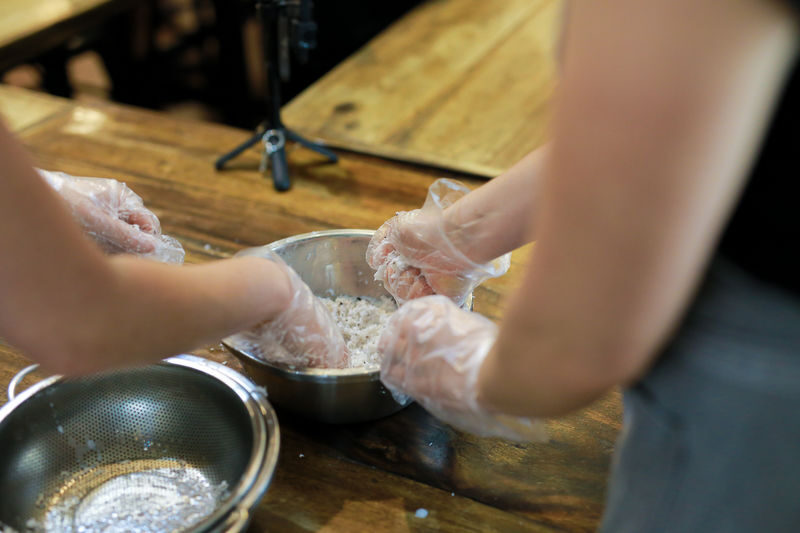
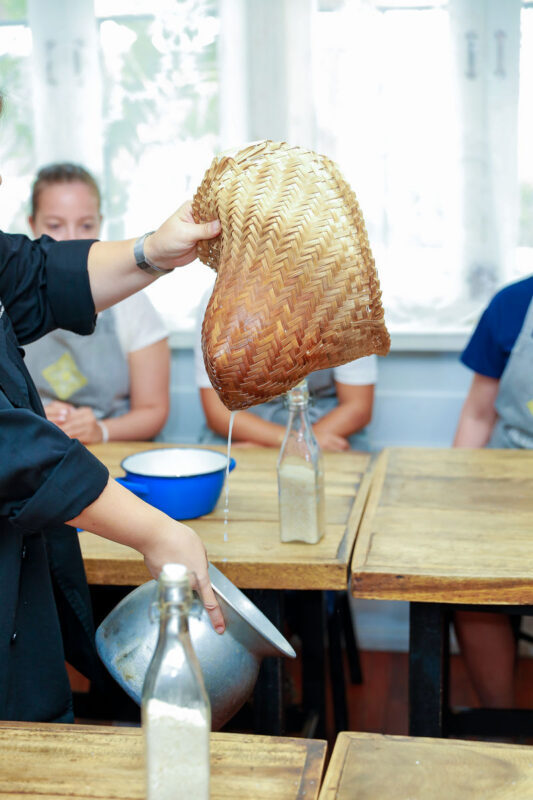
This class is built around doing, tasting, and learning ingredients in context. You handle vegetables, rice, herbs, and spices, and see how coconut milk and curry paste are prepared. That matters if you want to cook Thai food at home: recipes alone rarely explain how a herb should smell, how a paste should feel, or what gives a dish its balance.
The instructors named in class accounts include April, Jay or J, Kay, and May. You cannot choose a particular teacher from the details provided, but the teaching style described is patient and hands-on. Instructors explain ingredients before each dish, guide you through preparation, and help with cooking. English is used, and people with limited English have still been able to follow the steps.
You do not need to arrive with cooking skills. The recipes are taught in manageable stages, and you get a turn preparing the food rather than simply watching a chef work. If you already cook Thai food, the value is more in learning the ingredient combinations and techniques than in mastering an advanced kitchen skill.
The school describes its groups as ranging from one to 18 people. That upper limit is worth keeping in mind. At a busy session, you may share equipment and instructor attention, although the class is designed to give participants a hand in the cooking. If individual coaching is your top priority, a smaller group is always preferable.
Shoppers can discover Bangkok's markets and boutiques through these guided experiences
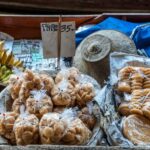
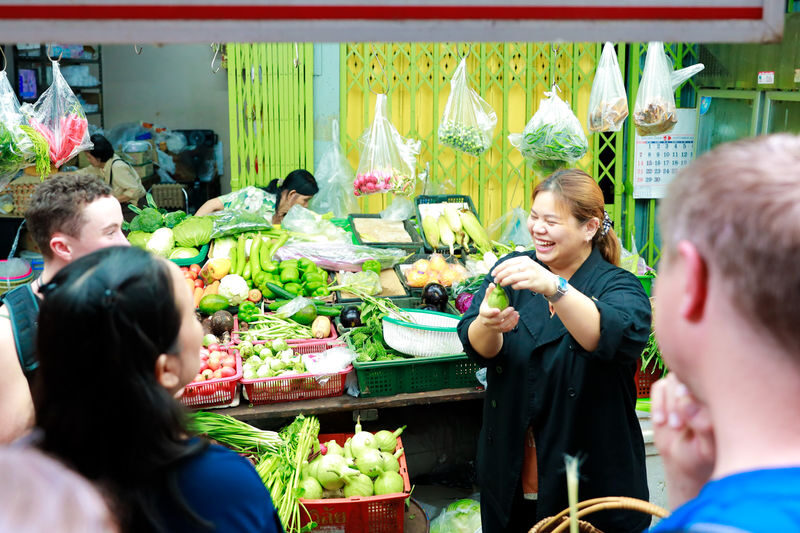
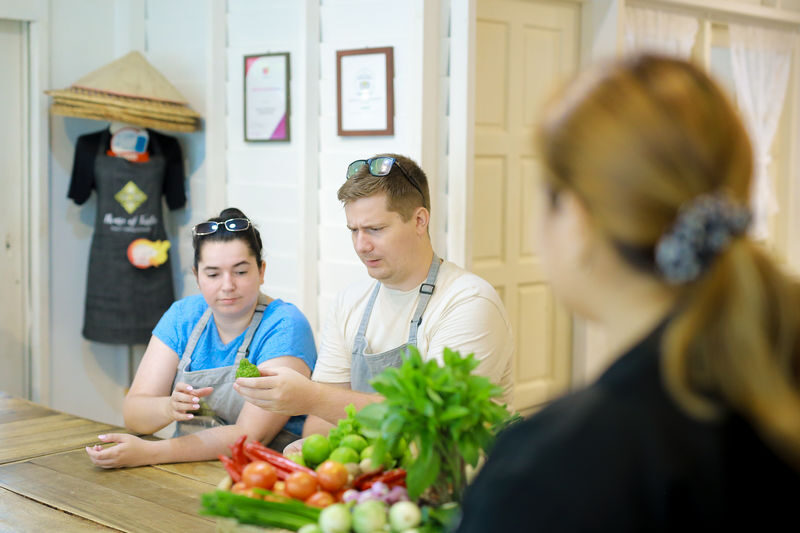
The morning class begins near Asoke, where you meet for a walk through a nearby market. You look at fresh ingredients for the day’s cooking and get introductions to produce, herbs, and other staples. This is a good way to connect the finished dishes to the things you might otherwise pass without recognizing.
Keep expectations sensible. The market visit is short, and the market itself is small. It is not a full-scale food tour with a long route through several neighborhoods. Some people find the stop worthwhile for seeing unfamiliar ingredients and getting a local snapshot; others may feel the cooking lesson is the main event. The market closes at 11 a.m., which is why this visit is limited to the morning class.
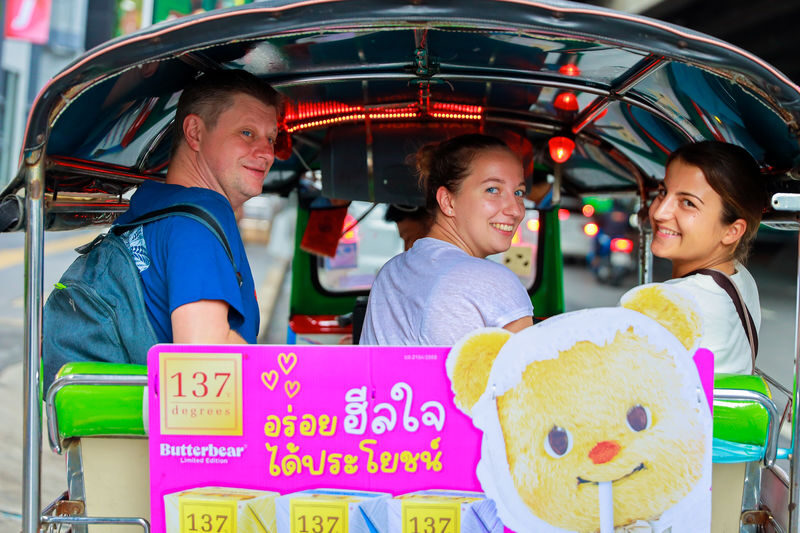
After shopping, the group heads to the cooking school. One morning group has described travelling by tuk-tuk, but transport is not included, so do not assume that every session uses the same arrangement. The important practical point is to arrive at the stated morning meeting place and follow the school’s directions for the onward trip.
If you are staying near Asok, this format may be especially convenient. The market meeting point is close to the Asoke and Sukhumvit transit area, according to class accounts. Still, check the exact meeting point on your voucher: the supplied address details are inconsistent, with both Sukhumvit 4 and Pan Road in Silom appearing in the information. Confirm the location before you set off.
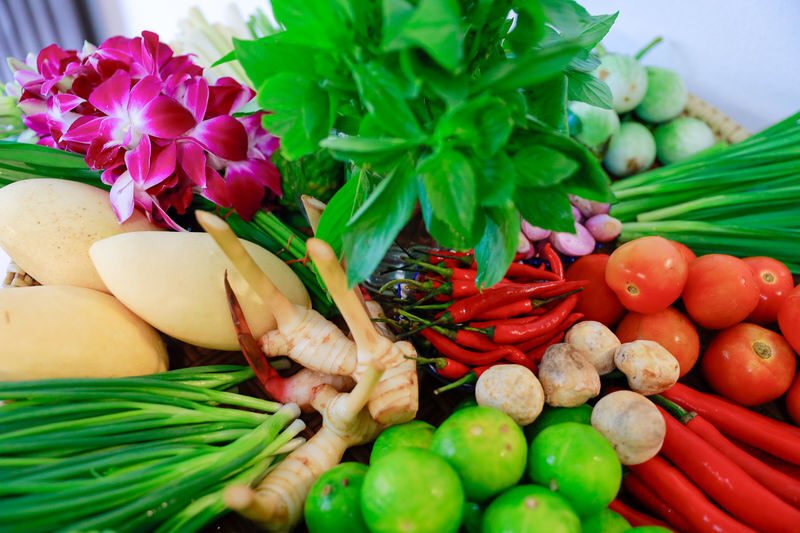
Later sessions skip the market because it is closed. Instead, you meet at the school and take part in mango carving. That gives the afternoon and evening classes a lighter start, and you still get an activity connected to the meal rather than losing time to a transfer.
The evening schedule runs from about 5:30 p.m. to 9 p.m. The listed sequence begins with an introduction to vegetables, rice, and herbs, along with coconut milk and sticky rice preparation. You then work through four cooking sessions: soup or stir-fry, salad, curry, and dessert. The curry includes making paste from scratch, and the final session includes mango carving.
The schedule breaks the cooking into short stages, with time to enjoy each dish as you finish it. That is a lively way to learn, but it also means the meal does not arrive as one neat spread at the end. You cook, eat, and return to the next dish. I would keep breakfast or a late lunch modest if you are taking a morning or afternoon session, and leave room for dessert.
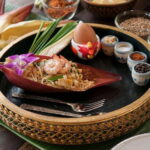
Menus can vary by day. Dishes that have appeared include Tom Yum Gai, Pad Thai, green curry, red curry, papaya salad, and mango sticky rice. One menu may use a different dessert or substitute ingredients, so treat those examples as a guide, not a promise. If a particular dish matters to you, check the current menu before booking.
You make three savory dishes and one dessert. The exact choices can change, but the lesson covers a useful spread of Thai cooking: soup or stir-fry, salad, curry, and something sweet. That variety lets you compare different methods and flavors in a single class.
Cooking curry paste by hand is one of the more distinctive parts. Pounding spices gives you a direct sense of how aromatic ingredients combine before they meet coconut milk or other components. Papaya salad can also be a fun hands-on moment, with ingredients prepared using a mortar and pestle. These are small skills, but they help make the food feel less like a mystery once you return to your own kitchen.
A practical bonus is that you eat each dish after making it. You can taste how the ingredients work together while the cooking steps are still fresh in your mind. The trade-off is that you may be full before the final course. A class is both a lesson and a meal, not a quick demonstration followed by a single dinner service.
The school provides the ingredients and a standard recipe to take home. That makes the class more useful than a one-off cooking activity: you have a reference for trying the dishes again. The recipe is a starting point, though. Ingredients available at home may differ, and the instructor can explain possible substitutions during class.
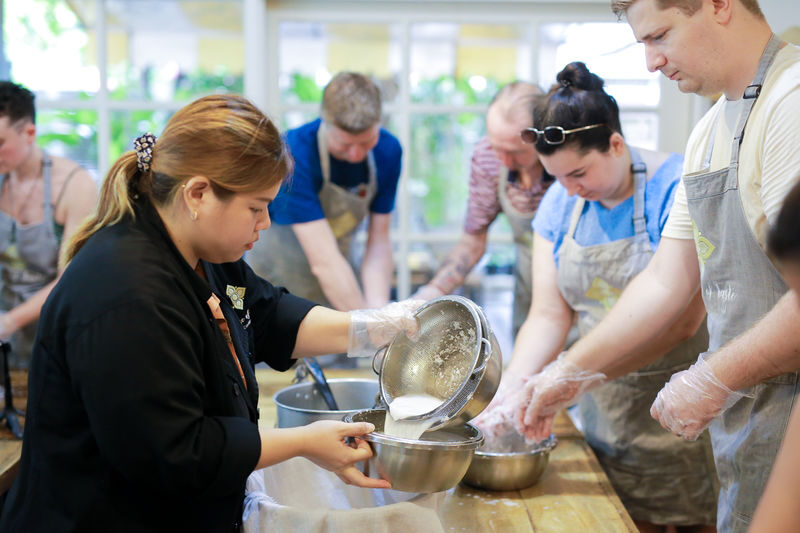
The school is described as having a clean cooking space and good equipment. The flow is organized around ingredient explanations, preparation, cooking, and tasting, so you are not left wondering what to do next. Some class accounts describe food preparation indoors and cooking at a separate station, with staff clearing work areas as the class progresses.
Safety deserves attention, especially around hot stoves, pans, and knives. Follow the instructor’s directions and keep an eye on your cooking station. The class is hands-on, which is part of its appeal, but it is still a working kitchen rather than a staged demonstration.
Children aged zero to six cannot cook in the kitchen for safety reasons. They may observe and help their participating guardian with food preparation, and they share the dishes made by that guardian. Child-ticket inclusions are limited to the market tour and food prepared by the guardian, so check the ticket details before booking for a family.
The school says it can accommodate dietary needs, including allergies, gluten intolerance, and vegetarian diets. Tell the provider about your requirements when arranging the class, and confirm that the specific menu will work for you. The supplied information does not specify how each dish is adapted, so it is sensible to ask rather than assume every recipe can be changed.
You might also be interested in these Bangkok experiences
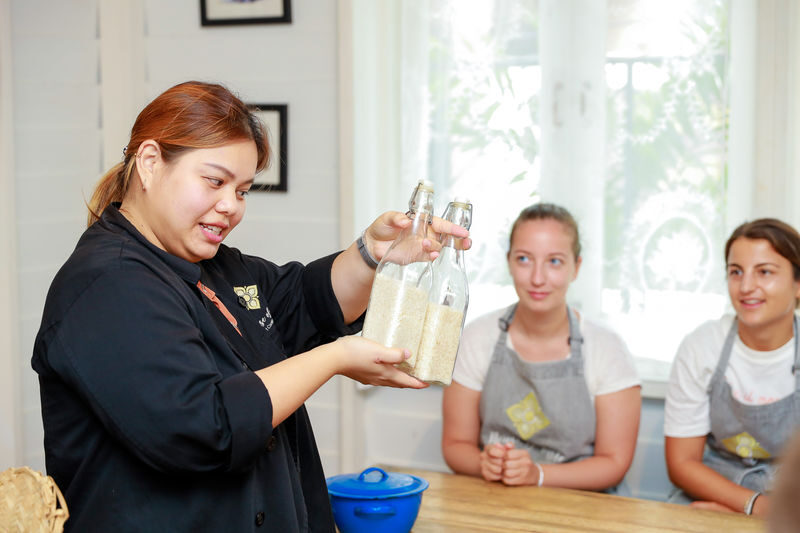
Prices start at about $41.65 for the evening class and $41.75 for morning or afternoon sessions. For that fee, the class includes ingredients, four dishes, a recipe, and instruction. You also get a meal, so the value is not only in the cooking lesson.
The morning class adds the market visit, which can make the small price difference worthwhile if you want to see local ingredients before cooking. But do not pay extra in time or rearrange your day just for a quick market stop if your main goal is learning recipes. The afternoon and evening formats offer much the same cooking core, with mango carving in place of the market.
Transport, personal expenses, and tips are not included. For families, note that a child’s ticket does not mean the child gets to cook independently. The class can be a good shared activity, but the adult should expect to prepare the dishes that the young child will eat.
I would choose this class if Thai food is a central part of your Bangkok plans and you want to learn by cooking, not just eating. It suits first-time cooks, food-minded couples, and families with children old enough to participate safely. The clear recipe and ingredient instruction make it useful even if you are not confident in the kitchen.
Choose the morning session if the market adds value for you and you are staying near Asoke. Choose afternoon or evening if you would rather go straight to the school and try mango carving. Skip it if you want a long, in-depth market walk, a guaranteed specific menu, or one-on-one instruction in a tiny group.
At roughly $42, this is a practical way to spend several hours with Thai food and take home skills you can use. Confirm the meeting address, tell the school about dietary needs, and arrive ten minutes early. If those details suit your plans, I would book it.
“very nice experience!!”
Prices start at $41.65 for the evening class and $41.75 for the morning and afternoon classes.
The class includes three savory dishes and one dessert. The menu can vary by day.
No. The market visit is available only in the morning, because the market closes at 11 a.m. Afternoon and evening classes include mango carving instead.
The evening schedule runs from 5:30 p.m. to about 9 p.m.
The activity can accommodate allergies, gluten intolerance, vegetarian diets, and other dietary needs. Share your requirements with the provider in advance.
Children aged zero to six are not allowed to cook in the kitchen. They may observe and help their guardian with food preparation, and share the dishes prepared by that guardian.
Ingredients, a standard recipe, mango carving for afternoon and evening sessions, and the three-dish plus dessert menu are included. Transport, personal expenses, and tips are not included.