Physical Address
304 North Cardinal St.
Dorchester Center, MA 02124
Physical Address
304 North Cardinal St.
Dorchester Center, MA 02124

See North Korea from Aegibong Observatory, walk the peace park’s suspension bridge, and visit its famous Starbucks on a guided half-day trip from Seoul.
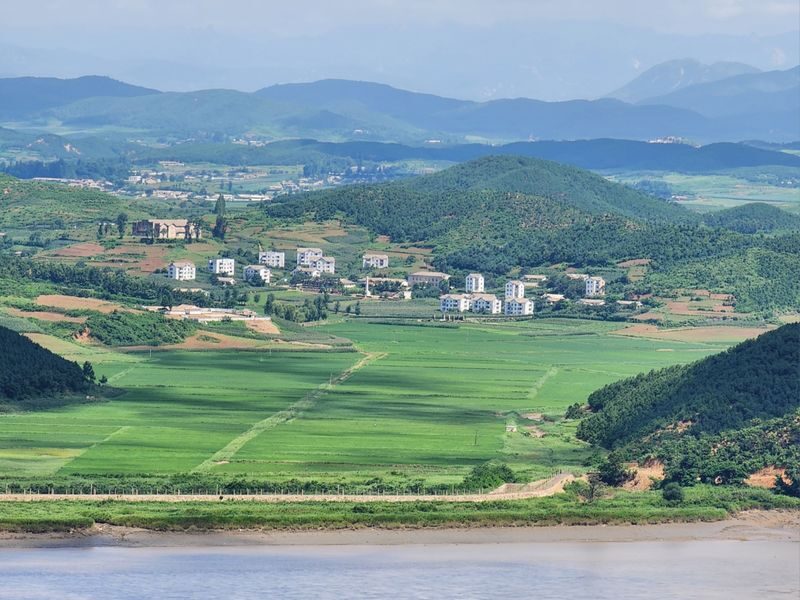
At Aegibong, a coffee shop sits within sight of North Korea. From Jogang Observatory, telescopes point toward villages reported to be about 1.4 kilometers away, making this a rare chance to pair a close-up view of the divided peninsula with a very ordinary Starbucks stop. I like that contrast, and I like that a guide puts the view into historical context rather than leaving you to guess what you are seeing.
The park is also worth visiting for its peace-themed bridge and gardens, which lead toward the observatory and Sky Forest Garden. One thing to keep in mind: visibility depends on weather, and military restrictions can sometimes send the tour to Ganghwa Observatory instead. A clear day makes a real difference.
Aegibong Peace Ecopark occupies Hill 154, a site where fierce fighting took place during the Korean War. It sits near the meeting of the Hangang and Jogang Rivers, in an area that became important to people displaced from homes in the North. After the war, some came here to look toward the places they had left behind.
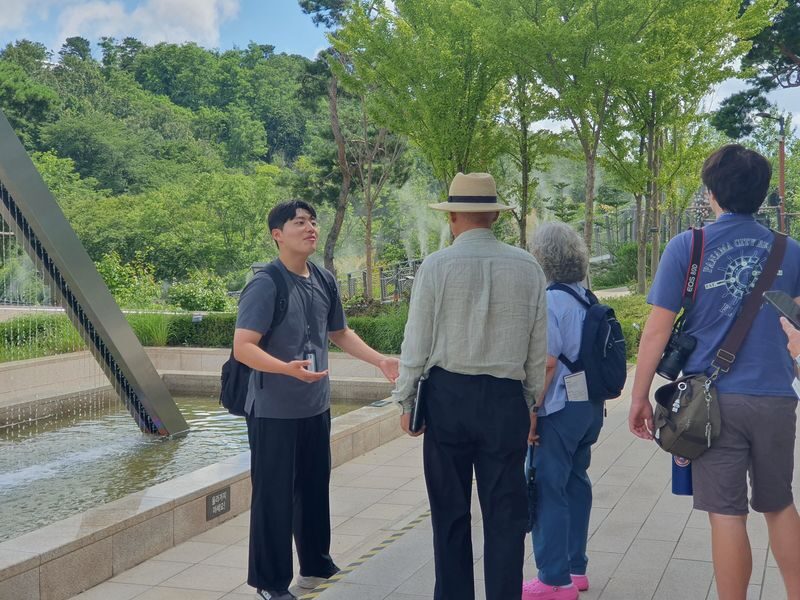
That history gives the observatory a human scale. The view is not only a geopolitical sightline: it is also a view toward places that once belonged to families now separated by the border. Your guide helps explain why the location matters, and why the peninsula remains under an armistice rather than a formal peace treaty.
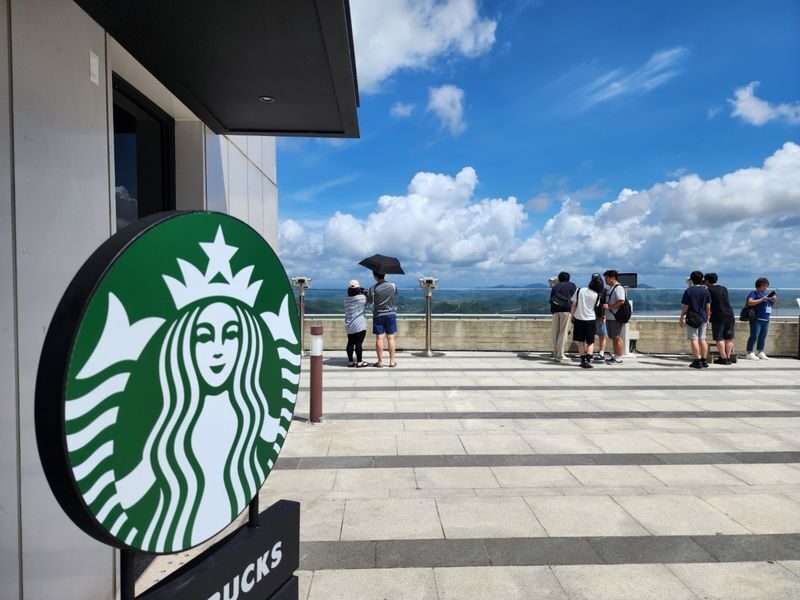
Then there is Starbucks. The cafe is an unusual stop in a sensitive border area, but it is not just a gimmick. It gives you time to sit, look out, and take in the setting after the more focused experience of viewing through telescopes. If you enjoy an odd pairing of everyday routine and major history, this one delivers.
Aegibong was once known for a large Christmas tree whose bright lights raised tensions with North Korea. The tree was removed, and bridge structures shaped to suggest a tree now serve as symbols of peace. That story helps explain why the park’s design emphasizes reconciliation rather than spectacle.
The tour departs from Seoul, with morning meeting points outside Exit 9 of Myeong-dong Station at 08:00 and outside Exit 2 of Hongik Univ. Station at 08:30. Arrive at least ten minutes early. Late arrivals and no-shows are not refundable, so allow room for a slow subway ride or a wrong exit.
The journey to Aegibong takes about an hour according to the schedule, though the return drive is listed at roughly an hour and a half. Traffic and weather can change the timing, and some people may find the ride longer than expected. The drive is useful, though: it gives your guide time to explain the Korean War and the division of North and South before you reach the observatory.
The guide’s role is a strong part of the experience. English-language guides named Nara and Dragon have been praised for clear explanations, practical help, and taking photos. Japanese-language guides including Im, Song-young, and Park Chan have also been singled out for patient explanations and help navigating the cafe. These names are examples, not a guarantee of who will lead your departure.
This is not a long, lecture-heavy excursion. It is a short trip with a guide who can make the history easier to follow and help you spend your limited time well. Confirm the language for your selected package before booking. The available half-day option is listed in English, while some departures may also be offered in Japanese.
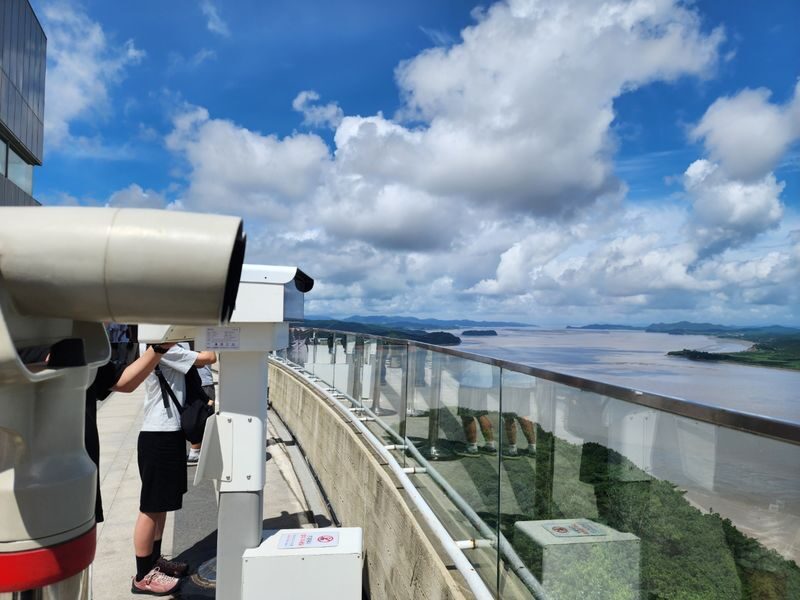
The main reason to come is the chance to look north from Jogang Observatory. Telescopes and viewing platforms offer a line of sight toward North Korean villages, described as roughly 1.4 kilometers away. On a clear day, you may be able to make out buildings, fields, flags, or people going about their day. The view changes with visibility, so no particular sighting is guaranteed.
That uncertainty is part of the deal. A sunny, clear morning can make the scene vivid; cloud or fog can flatten it or hide it altogether. Some visitors have found that fog lifted while they were at the site, but you should not count on that. If the North Korean view is the main reason for booking, check the forecast and keep expectations flexible.
The observation area gives you a more direct experience than a distant museum display. You are looking across a real boundary, with ordinary life on the other side. The telescopes help bring details into view, but the emotional impact often comes from the scale: the places you are seeing are close, yet access is restricted.
A military closure can alter the plan. If tours are stopped at Aegibong, the operator may visit Ganghwa Observatory instead. That means the precise viewpoint is not fully within the tour’s control. Consider the change a practical safety measure, not a failure of the trip, but book with the understanding that the day’s destination can shift.
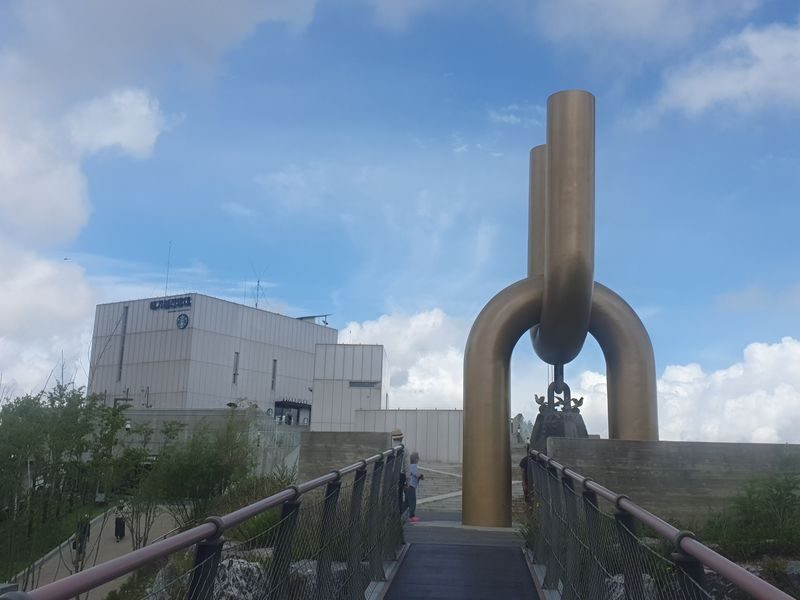
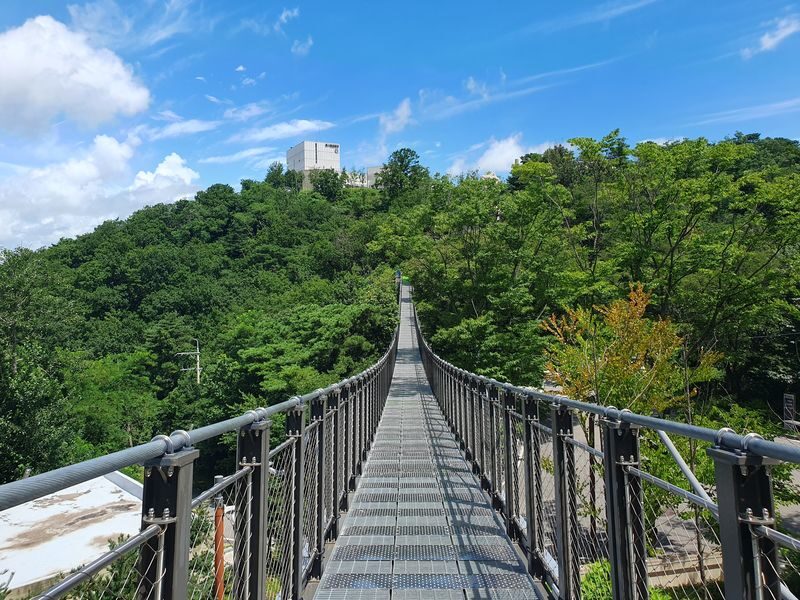
The suspension bridge links themed gardens to the raised Sky Forest Garden and continues toward Jogang Observatory. It gives the visit a gentle walk between stops, rather than making the whole park a quick dash to a telescope and back. The bridge structures also echo the Christmas tree that once stood here, tying the park’s design to its story of tension and peace.
The walk is described as manageable, including for a six-year-old in one family’s experience. Still, the tour does not provide detailed accessibility information, so do not assume every path or feature will suit every mobility need. The park includes outdoor platforms and a bridge, and the weather can affect how comfortable the visit feels.
There is little shade in some parts of the site. On a bright day, sunscreen or a parasol is a sensible addition, particularly if you are sensitive to strong sun. The same exposed setting can feel cold or windy in poor weather, so dress for the forecast rather than for the cafe alone.
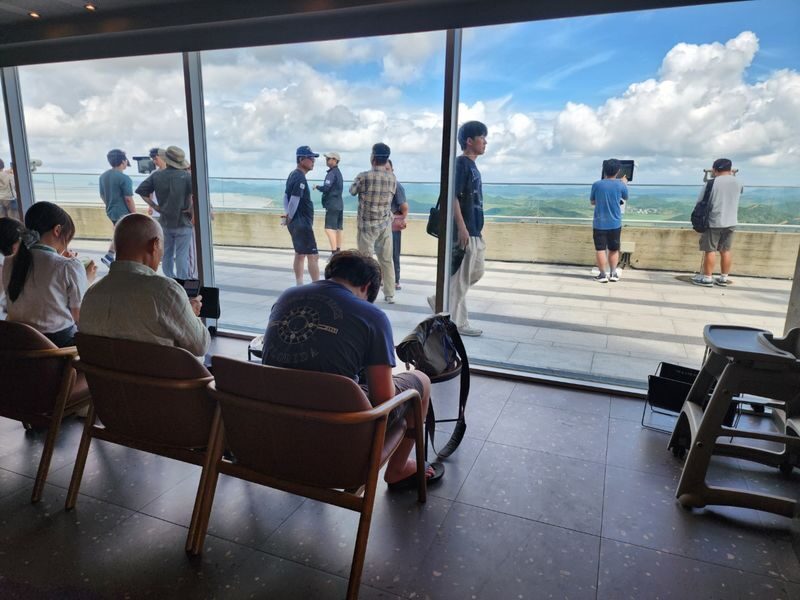
The Starbucks is one of the most talked-about parts of the outing, and it can be busy. The tour gives you time there, but the queue for drinks and the search for a seat can take longer than expected. Your guide may help explain the menu, assist with ordering, or help the group find seats, as guides such as Dragon and Park Chan have done.
That assistance matters if you do not read Korean or want to use the break efficiently. A guide may even help arrange a drink while you wait, but treat that as a helpful extra rather than a guaranteed service. You pay for your own food and beverages, and neither is included in the tour price.
The cafe’s novelty is obvious, but it is also a useful pause after the outdoor viewing. You can sit with a drink and reflect on the unusual setting. Just remember that the Starbucks is not the whole attraction. If you are uninterested in the history or the observatory, the cafe alone may not justify the trip.
This is a compact outing from Seoul, not a full-day DMZ circuit. You meet in the morning, travel by car to Aegibong, spend about an hour and a half at the park on a guided visit, then return to Seoul. The scheduled end is around 13:00 to 13:30 near Myeong-dong Station.
The allotted time is enough for the observatory, gardens, bridge, and cafe, but you will want to keep an eye on the clock. Starbucks can be crowded, and the tour has a return schedule. A guide who manages the timing well can help you see the main points without feeling rushed, but the cafe queue may compete with time for the view.
Round-trip transfers and attraction admission are included, which simplifies a visit to a controlled area outside Seoul. You do not have to arrange your own transport or work out the site’s access procedures. Meals, drinks, tips, insurance, and personal expenses are not included.
The supplied pricing shows a headline price from US$51.75 and a half-day English package from US$45. Prices can depend on the option and booking details, so check the amount for your chosen date and language before paying.
For the price, you are buying more than a cafe visit. The value lies in round-trip transport, admission, a guide who explains the history, and access to an observatory in a Civilian Control Zone. Doing the same visit independently may be difficult, and the guide can help you understand the site rather than simply arrive, look, and leave.
The trade-off is that the visit is short and the headline attraction depends on visibility and access. You pay for the chance to see North Korea, not a guarantee that the view will be clear or that Aegibong will remain open that day. If you want a broader DMZ itinerary with several major sites, this half-day outing may feel too focused. If you want a close, guided look at Aegibong without giving up the whole day, the price is easier to justify.
I would choose this tour if you are curious about the division of Korea, want a view toward North Korea, and have limited time in Seoul. It also suits visitors who like unusual places where history and daily life meet: a solemn border area, a peaceful park, and a Starbucks in the same outing.
Families can consider it, too. Children aged three and older pay the adult rate. Children aged zero to two may join free if they do not need a separate seat. The outdoor walk and short duration may suit a family better than a full-day excursion, though the cafe and visibility are still subject to crowds and conditions.
You may want a different trip if you need guaranteed clear views, dislike scheduled group transport, or are looking for an extensive exploration of the DMZ. This tour concentrates on Aegibong and its observatory. Its strength is the combination of a close northern viewpoint, a meaningful local history, and an easy half-day format.
Before you book, confirm the tour language and bring your passport. Every participant must carry one, with six months of validity specified. Vouchers are valid only on the booked date, and changes are allowed until 24 hours before the activity, subject to the stated exceptions. Cancellations at least 24 hours before the activity date qualify for a full refund.
“It was great to be able to visit places I wouldn't normally be able to go on my own, and to see them and hear the explanations.”
It is a half-day tour. The morning departure is scheduled for 08:00 or 08:30, depending on the Seoul meeting point, with a return near Myeong-dong around 13:00 to 13:30.
You can meet outside Exit 9 of Myeong-dong Station at 08:00 or outside Exit 2 of Hongik Univ. Station at 08:30. Arrive at least ten minutes early.
Yes. Every participant must bring a passport. The stated requirement is a passport with six months of validity.
The half-day package described here is available in English, and Japanese departures are also listed. Confirm the language for your selected package before completing the reservation.
Jogang Observatory has telescopes and viewing platforms directed toward North Korea, including villages described as roughly 1.4 kilometers away. Visibility depends on weather, and the view is not guaranteed.
If military restrictions stop tours at Aegibong, the tour may visit Ganghwa Observatory instead.
No. Meals and beverages are not included. Admission, round-trip transfers, and an English-speaking guide are included.