Physical Address
304 North Cardinal St.
Dorchester Center, MA 02124
Physical Address
304 North Cardinal St.
Dorchester Center, MA 02124

Visit Itoshima’s waterfalls, coastal photo spots, ramen home and two major shrines on a convenient day trip from Fukuoka.
Itoshima’s appeal is its quick change of scene: one day can take you from a cool mountain waterfall to open sea, a ramen factory, and two historic shrines. This 10-hour trip from Fukuoka links those scattered stops without asking you to piece together multiple bus and train connections.
I like the contrast between Itoshima’s coastal photo stops and the quieter grounds of Munakata Taisha and Miyajidake Shrine. I also like that there is time to eat at Ichiran no Mori, the ramen chain’s Itoshima home, rather than only snapping a photo and moving on.
The trade-off is a tightly scheduled day, with several long drives and short visits. The guide service is Chinese-speaking, and some English-speaking participants have found the explanations difficult to follow. Check your expectations before booking, especially if you want a slow-paced outing or detailed English commentary.
Itoshima is a coastal area west of Fukuoka, while Munakata and Miyajidake Shrine lie in another direction. That geography is the point of this tour and its main compromise. By vehicle, you can visit the coast and the shrines in one day; on your own, connecting all these stops by public transport would take more planning and may force you to choose between areas.
The advertised price starts at $44.25, a low entry price for a 10-hour outing with round-trip transport. The real value is not just the fare. You are also paying to avoid the transfers, route research and timing risks involved in reaching several spread-out attractions. Meals, drinks and personal purchases are extra, so leave room in your budget for lunch and any snacks or souvenirs.
This is a group trip, not a private car hire. The minimum group size is stated as six or more, but no maximum group size is given. The vehicle makes the day practical, while fixed stop times mean you will need to keep an eye on the clock.
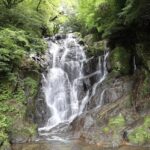
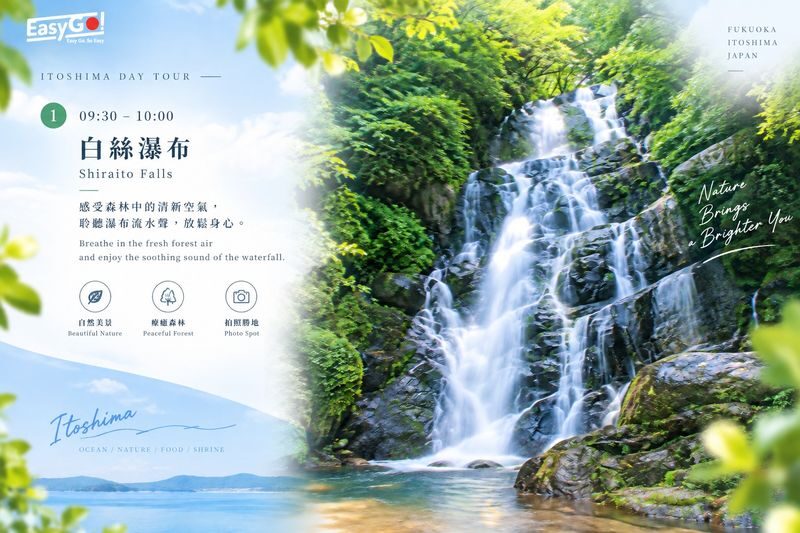
The first listed stop is Shiraito no Taki, or Shiraito Falls, reached at about 9:30 a.m. The waterfall drops 24 meters in a mountain setting, a welcome change from the coast and city. You have about 30 minutes to walk around and take in the water and cool air.
In summer, the falls offer seasonal flowing somen noodles, a fun local-style meal where noodles travel along a stream for diners to catch. The tour details do not confirm that the noodle activity will be available on your date, so treat it as a seasonal possibility, not a guaranteed part of the visit. The stop itself is short; you will have time for a look and photos, not a long hike.
Wear shoes with good grip. The tour advises comfortable, non-slip footwear, and the area may be damp. Sunscreen and water matter on hot days, but a light rain layer can be useful too, since weather can shift the feel of an outdoor day.
You might also be interested in these Itoshima experiences
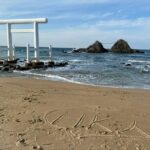
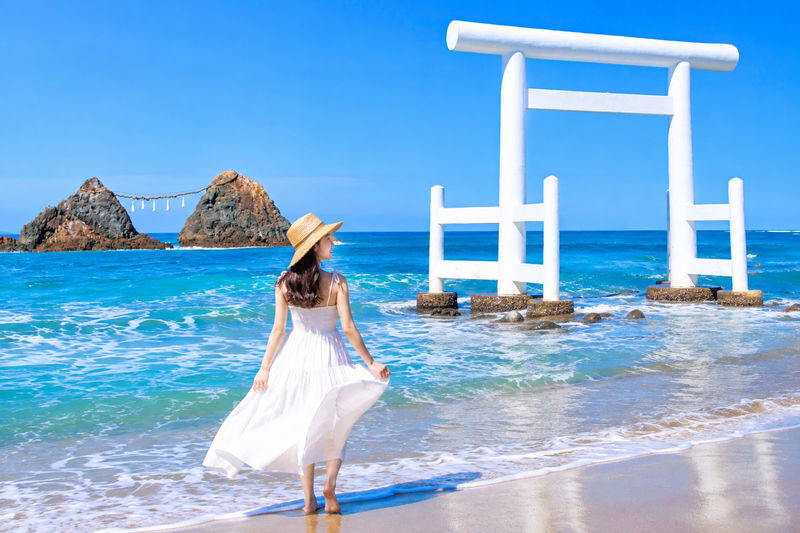
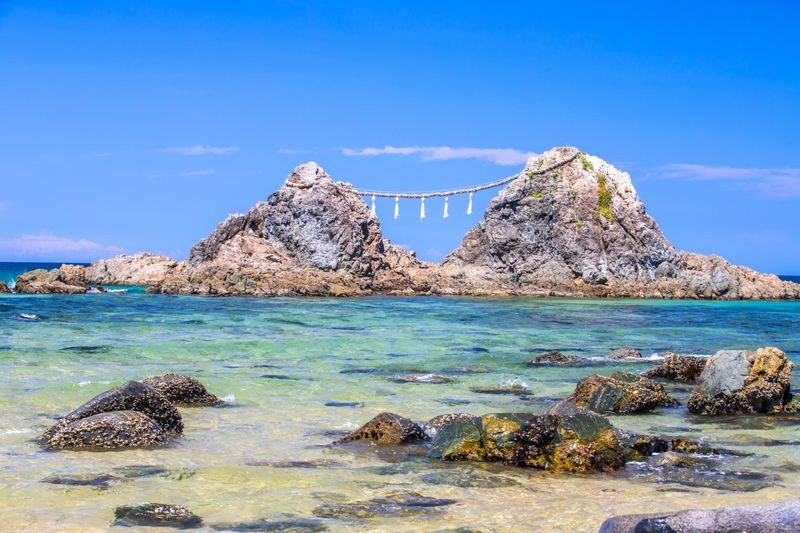
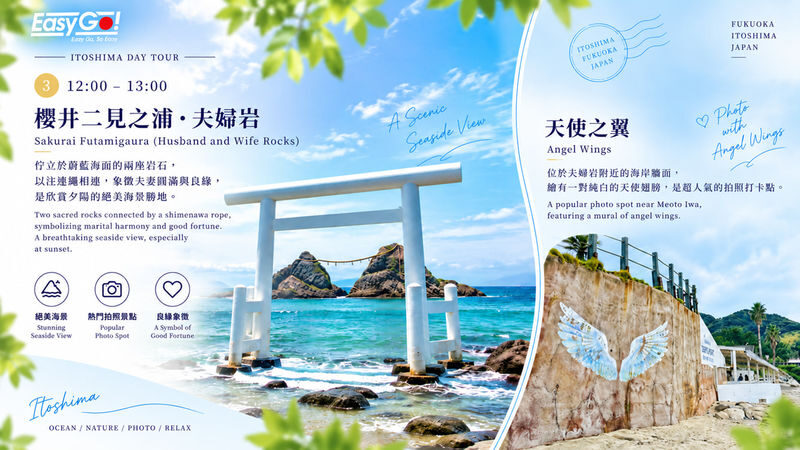
Sakurai Futamigaura’s Meoto Iwa, often called the Married Couple Rocks, is the coast’s best-known landmark on this route. Two rocks rise offshore, linked by a sacred rope, with the sea and shoreline setting the scene. The schedule allows about an hour here, enough to look around and take photos without making this a beach day.
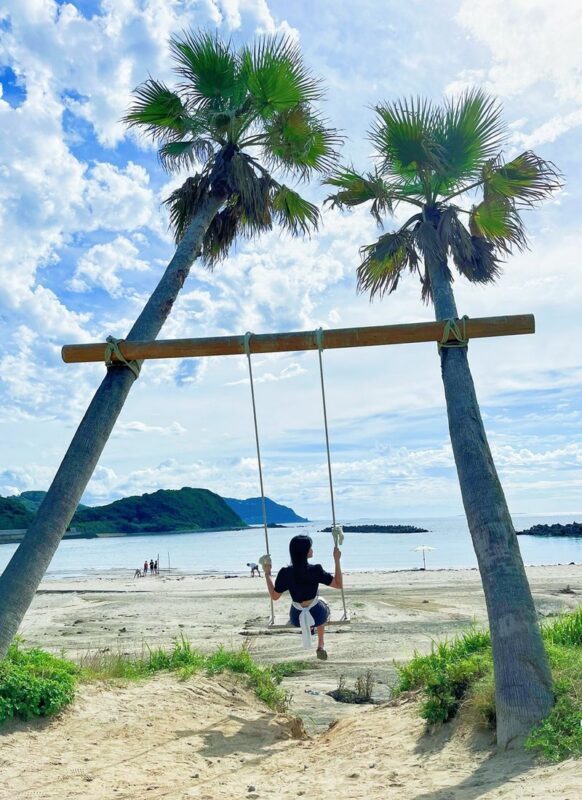
Angel’s Wings is a nearby photo installation, and the tour also stops at a palm-tree swing, where you can sit facing the water. These are popular photo spots, so your visit is partly about taking turns and finding a moment for a clear shot. Guides on past departures have helped with photos, but you should not count on a specific guide or a private photo session.
The swing stop is scheduled for about 40 minutes. That is generous enough for a few turns and pictures, though not a long stretch to lounge by the sea. Wind can be strong on the coast, so take care near the water and keep your phone secure while framing a shot. The operator also recommends bringing a power bank, sensible advice on a long day when you may be taking many photos.
The view depends heavily on the weather. Clear skies show off the sea and make the rocks and swing more photogenic; rain can make the coastal stops less comfortable. A rainy day does not make the itinerary impossible, but bring an umbrella and be ready for wet shoes or a shorter outdoor wander.
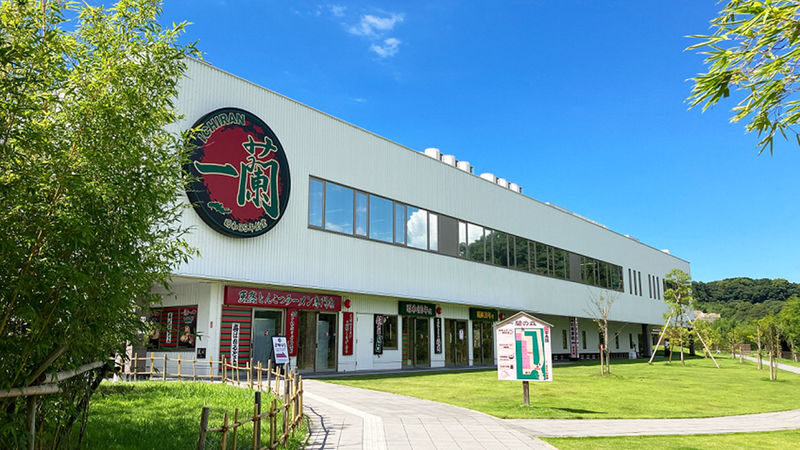
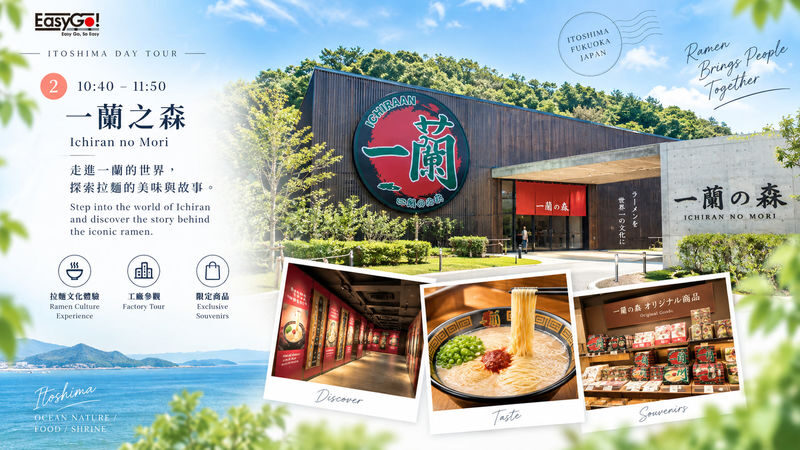
Ichiran no Mori is more than a lunch stop. It is associated with the origins of Ichiran ramen, and you can eat, browse the site, see the noodle-making area and look for limited-edition goods. The planned visit is about 70 minutes, with food and drinks paid separately.
That time can work well if the restaurant is not crowded. On busy days, a wait may cut into your meal or browsing time. A few people have found that guides adjusted the timing to avoid queues, while one departure shifted lunch unusually early to beat a crowd. The schedule can change, so if an early meal would be a problem for you, bring a small snack and ask the guide about the day’s plan.
There is a noticeable gap between the listed ramen stop and the 3:10 p.m. arrival at Munakata Taisha. That reflects the long distances covered, though the exact use of the time is not specified. Keep expectations flexible rather than assuming every hour is filled with sightseeing.
Ichiran is familiar to many ramen fans, but eating at its Itoshima site gives the meal a different context: it is a chance to visit the brand’s home base, not simply another city branch. If ramen is a priority, the stop is a highlight. If it is not, you can use the time to browse or rest, while remembering that purchases and meals are on your own tab.
At about 3:10 p.m., the trip reaches Munakata Taisha for a 40-minute visit. The shrine is dedicated to the Three Goddesses of Munakata and is described as more than 1,600 years old. It is also connected with the World Heritage property known as the Sacred Island of Okinoshima and Associated Sites in the Munakata Region.
The grounds offer a calmer counterpoint to the coast’s photo stops. The shrine is associated with prayers for safe travel and good fortune, themes that make particular sense on a day built around a long journey. Forty minutes is enough for a walk through the grounds and a visit, but not an extended exploration.
A guide can add useful context here, especially if you are interested in the shrine’s religious role and regional history. The tour’s guide service is Chinese-speaking, however. Some English-speaking participants have found that commentary in English was limited, so do not book on the assumption that you will receive full English explanations at every stop.
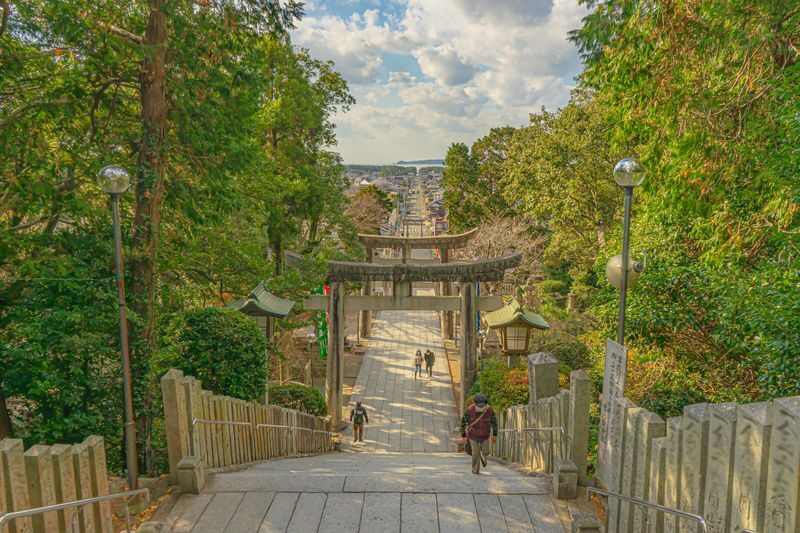
The final major visit is Miyajidake Shrine, scheduled for around 4:10 p.m. with an hour on site. Its best-known sight is the Path of Light, a long approach that aligns with the setting sun at certain times of year. The effect is associated with February and late October, though the exact view depends on the date, sunset and weather.
A special Path of Light and Sunset Festival is scheduled from October 10 to October 20, 2026. During that period, traffic controls and site arrangements may change the sightseeing order. If you are visiting then, check the latest departure information rather than assuming the stops will follow the usual sequence.
The shrine is also noted for cherry blossoms from late March to early April. Seasonal timing matters here: the same visit can feel quite different depending on the calendar, and neither blossoms nor the golden sunlit approach should be treated as a year-round guarantee. On other days, the shrine grounds still make a worthwhile final stop, but the famous light effect may not appear.
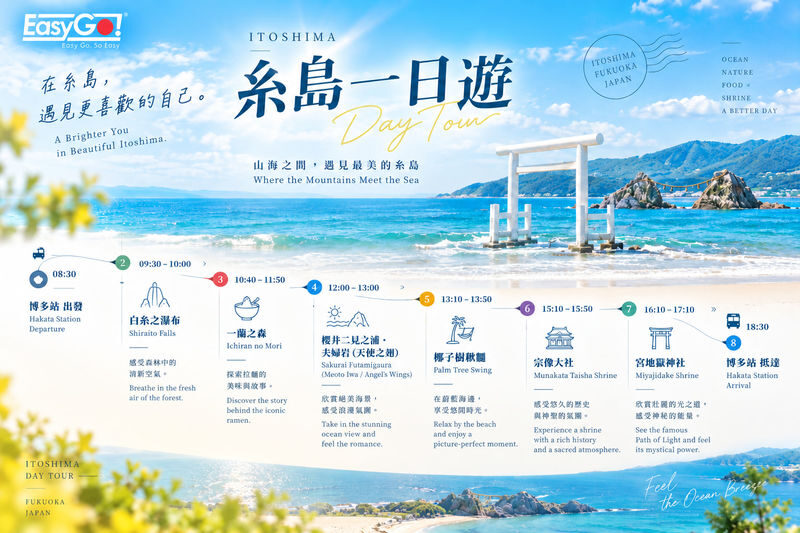
The planned day begins with an 8:20 a.m. meeting for an 8:30 departure and returns to Hakata Station at about 6:30 p.m. The meeting point is the Lawson store at Fukuoka Oriental Hotel. Arrive 10 minutes early and confirm the exact group and vehicle details in the message sent around 7 p.m. Japan time the night before. Some people have had trouble finding their group when that message did not arrive, so check your spam folder and contact the operator if it is missing.
At each stop, you have independent time to explore. The guide and driver help the group move between locations, but this is not a guided walking tour with a leader beside you throughout every visit. Be back at the vehicle on time; latecomers and no-shows are not refunded.
Past guides have included people called Wang Qi, Chen Yun and Xiao Chen, among others. The names are not a promise of who will lead your departure. Feedback has particularly praised guides for keeping time, giving historical introductions, and helping with photos. One practical point remains: the tour is primarily in Chinese, and English ability can vary.
Traffic and weather can change the order or timing. The return time is an estimate, not a firm appointment, and the operator advises against booking an important activity for that evening. Long weekends can bring heavier traffic, while rain can reduce the appeal of the outdoor stops. Be flexible and treat the day as a broad sampler, not a set of guaranteed perfect photo conditions.
This outing makes the most sense if you want to see several places outside central Fukuoka without managing transport yourself. It suits couples, friends and families who like scenic stops, casual photos, ramen and shrine visits, and who are comfortable spending much of the day in a vehicle.
It is less suited to anyone with impaired mobility, as the tour is not recommended for people with limited mobility and child seats are not available. Children aged 0 to 2 can ride free if they do not need a separate seat; children aged 3 and older pay the adult rate. Each person may bring one standard-size piece of luggage, but you need to declare it when booking.
For a first visit to the area, I see the appeal: mountains, coast, food and shrines in one full day, without a transport puzzle. The price is attractive if you would otherwise need to book separate rides or skip some of the farther stops. The cost is a brisk pace, limited flexibility and possible language barriers.
Book it if your priority is to cover Itoshima’s main photo stops and two major shrines in one go, and you are happy to follow a group schedule. At a starting price of $44.25, transport does much of the heavy lifting, while the ramen stop adds a practical lunch break and a distinct local attraction.
Skip it if you want an unhurried coastal day, long time at each shrine, guaranteed English commentary, or the freedom to change plans on the spot. For most people choosing between a complicated self-guided route and a busy but varied day out, this is a useful-value option. Go with comfortable shoes, a power bank, sun protection, water and realistic expectations about weather and timing.
“This was my first time joining a one-day tour as an independent traveler, and it turned out to be a really great experience. The tour guide helped …”
The trip runs for about 10 hours, with departure from Fukuoka at 8:30 a.m. and an expected return to Hakata Station around 6:30 p.m. Traffic or weather may affect the return time.
Meet at the Lawson store at Fukuoka Oriental Hotel. Assembly is at 8:20 a.m., and the vehicle departs at 8:30 a.m.
The stops include Shiraito Falls, Sakurai Futamigaura’s Married Couple Rocks, Angel’s Wings, the palm-tree swing, Ichiran no Mori, Munakata Taisha and Miyajidake Shrine.
No. Meals and drinks are at your own expense. The visit to Ichiran no Mori is about 70 minutes, but restaurant waits may affect how much time you have to eat and browse.
The included guide service is Chinese-speaking. English commentary may be limited, and the guide can vary by departure.
Each person may bring one standard-size piece of luggage. Declare it in the special requirements section when booking.
Children aged 0 to 2 can join free if they do not occupy a separate seat. Children aged 3 and older are charged the adult rate. Child seats are not available.
Bring comfortable, non-slip shoes, sunscreen, sunglasses, water and an umbrella. A power bank is useful for taking photos throughout the day.