Physical Address
304 North Cardinal St.
Dorchester Center, MA 02124
Physical Address
304 North Cardinal St.
Dorchester Center, MA 02124

Compare sunrise and sunset Angkor Wat tours, temple stops, guide options, transport, ticket costs, and practical tips for a full day in Siem Reap.
Angkor is a vast temple complex, and this full-day tour gives you a way to see its headline sites without arranging every ride and stop yourself. You can choose a sunrise or sunset version, then travel with a guide through Angkor Wat, Bayon, Ta Prohm, Ta Nei, Angkor Thom, and Phnom Bakheng.
I like two things in particular: the mix of famous temples and the quieter Ta Nei, and the practical support between stops. Guides explain the carvings and local context, while the driver can have cold water and towels ready when you return to the vehicle. Past guides have included Ben, Sen, Vuthy, and Da Rith, though you cannot count on a specific person.
The main catch is that the attractive starting price does not include the required Angkor Pass or lunch. It is also a long, hot day on foot, and the shared tour needs enough people to run. Check the exact pickup time for your chosen sunrise or sunset option, since the schedule varies.
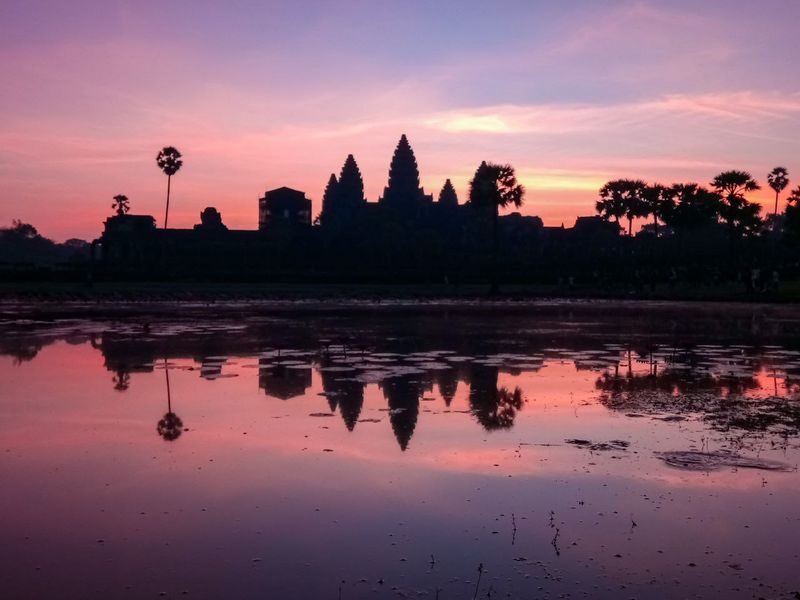
The sunrise version starts before dawn, with pickup times set for the selected package. Seeing the sky brighten behind Angkor Wat can be a memorable opening to the day, but weather has the final say. Clouds can cover the sunrise, so treat the moment as a bonus rather than the whole reason to book.
After the early visit, the day continues through the temple circuit. That makes this a substantial outing, not simply a short sunrise stop. You will get a broad look at the major sites, but you should expect several hours of walking, stairs, uneven stone, and time in the sun.
Choose sunset if you would rather begin later and finish around the evening light. The published day schedule lists a 9:00 a.m. departure and an 6:15 to 6:30 p.m. return, but those times may not match every sunrise package. Pickup arrangements depend on the option you book, so confirm the operator’s message before setting your alarm or planning dinner.
In either case, light and weather are not under the tour’s control. Rain, cloud, heat, and traffic can affect the pace and the views. The schedule may change for weather or traffic, so keep your expectations flexible.
Looking for more options in Siem Reap City? Here are some other experiences worth considering.
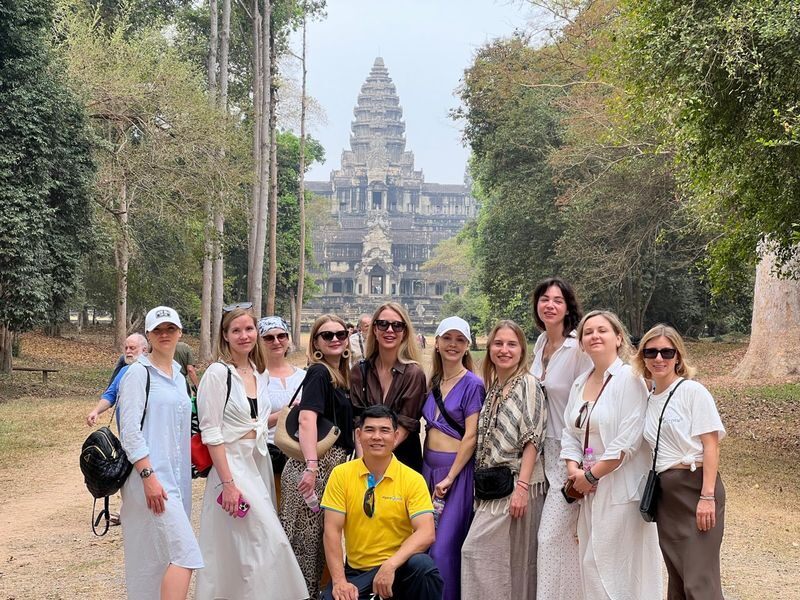
The first major stop is Angkor Wat, the complex’s vast temple centerpiece. The tour allows about two hours here, with a guide to help you make sense of its layout, carvings, and religious background. Without context, the scale is impressive but can also make it hard to know where to focus.
A good guide helps connect the architecture to Khmer history and belief. Tour guides have been praised for explaining the site clearly, answering questions, and finding good photo angles. Some also offer to take pictures, a useful kindness if you are travelling solo or want more than a quick selfie.
Do not expect to have the temple to yourself, especially at sunrise. The site is a major draw, and other tour groups will be there too. Your guide can help you use your time well, but the visit still involves moving through a busy, large complex.
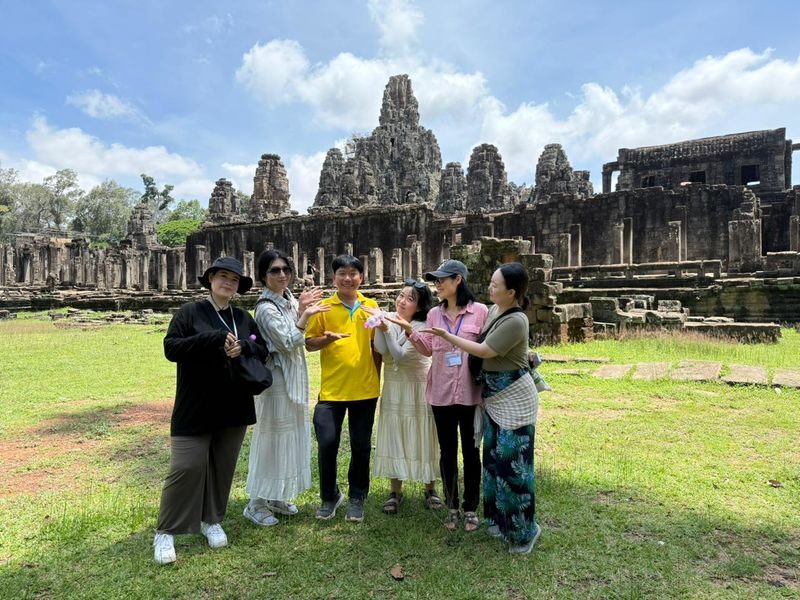
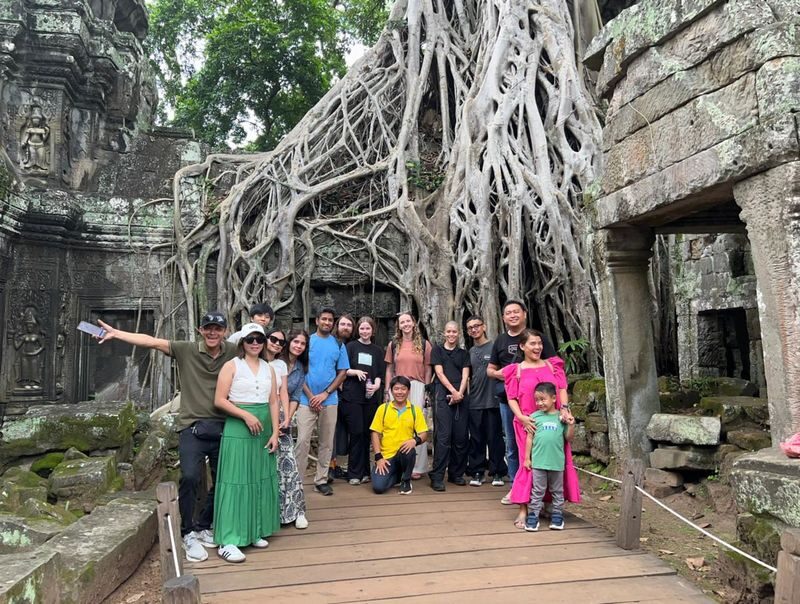
Ta Prohm gets about an hour and a half, the longest stop after Angkor Wat. Its crumbling stone and large tree roots make it visually different from the grander, more formal temple spaces. This is one of the stops where a camera comes out almost by instinct.
The guide can also help you look past the best-known photo spots and notice how the trees and stone meet. That said, the famous corners can be crowded, and taking photographs may use up time quickly. Listen for the group’s meeting time before wandering off to frame one more shot.
The physical setting matters here. Surfaces are uneven, and exploring means walking rather than viewing everything from one spot. Keep your pace comfortable and save some energy for the remaining temples.
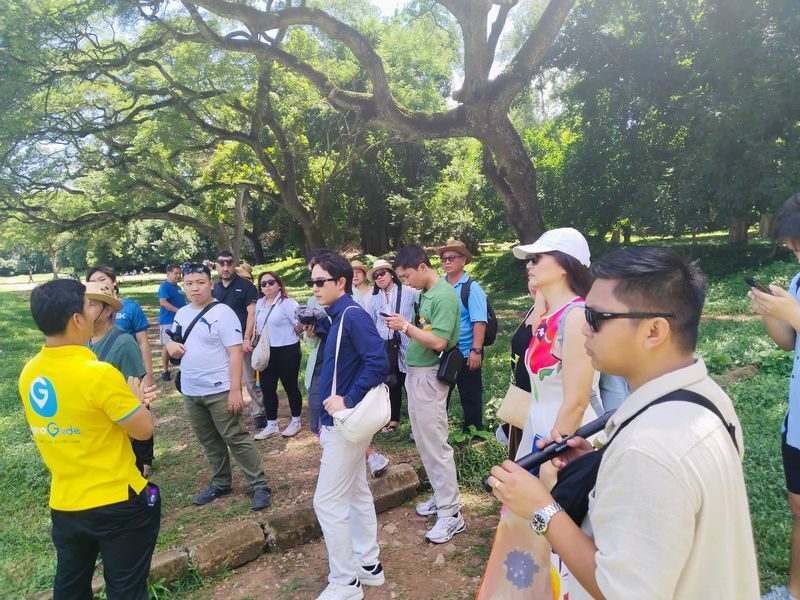
Ta Nei is allotted about an hour. Compared with Angkor Wat and Ta Prohm, it is a less familiar name on the standard circuit, which gives the day a welcome change of pace. Its inclusion adds variety beyond the temples most people already recognize.
This stop also shows why a guide can be useful across a full day. The main sights have obvious visual impact; a guide can give the smaller or less famous stops a reason to linger. If your group is moving quickly, ask questions while you are there rather than assuming you will have extra time later.
The schedule is tight enough that Ta Nei is not a long, unhurried visit. Think of it as a meaningful stop within a broad overview, not a deep exploration of every corner.
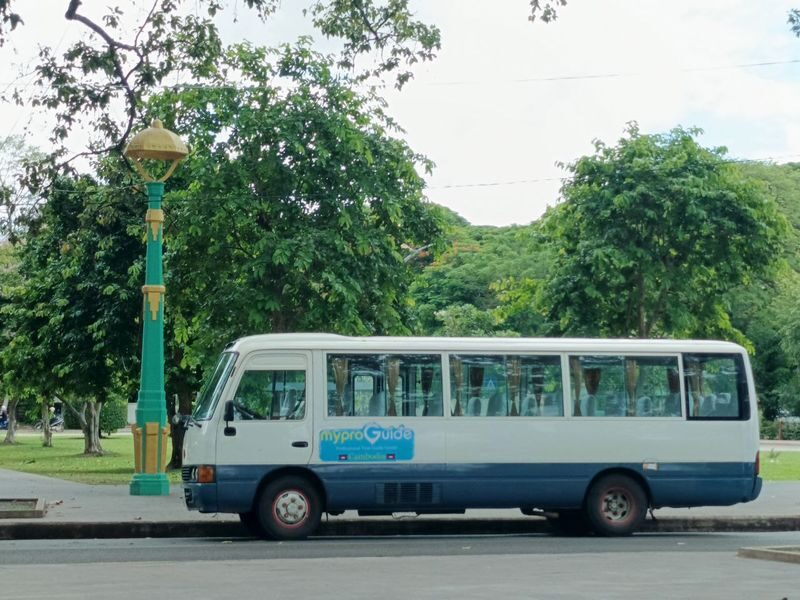
The tour gives about an hour to Angkor Thom, the historic walled city, followed by around an hour at Bayon Temple. Bayon is known for its distinctive carved faces, which give the temple a very different character from Angkor Wat’s monumental symmetry.
These two stops work well together. Angkor Thom helps place the temples within a larger urban and historical setting, while Bayon rewards close looking at the stonework. The guide can connect architecture, religious ideas, and the people who built and used these spaces.
The timetable does not leave unlimited time for either stop. If you are especially interested in Bayon’s carvings or want to take photographs, be ready to use your hour well. The guide’s explanations can help you focus on details instead of trying to see every surface at once.

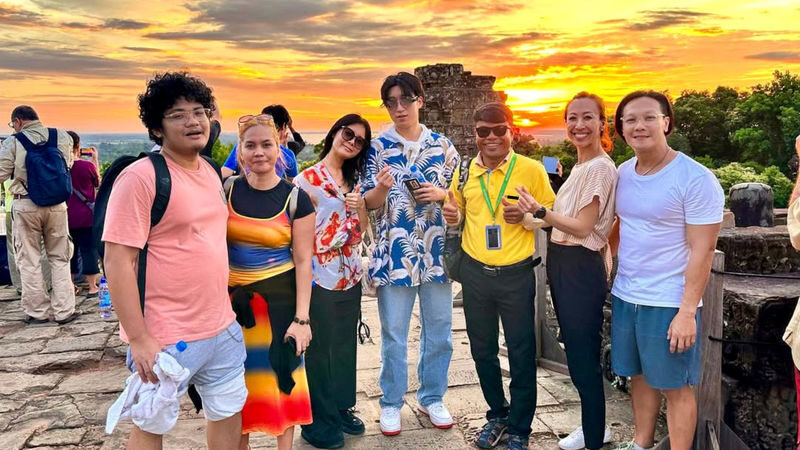
Phnom Bakheng is listed as a one-hour stop and is the tour’s sunset viewpoint. The hilltop setting gives you a different perspective from the close-up temple visits earlier in the day. If the light cooperates, it can be a fitting end to a long circuit.
The sunset is not guaranteed to be dramatic. Cloud, rain, and the day’s timing can change what you see, and the schedule may shift with conditions. Think of Phnom Bakheng as a chance to pause and look out over the area, not a promise of a perfect sky.
This final stop also comes after many hours of walking and riding. Bring water, pace yourself, and avoid spending all your energy early in the day. The tour includes drinking water and refreshments, but you still need to pay attention to your own comfort.
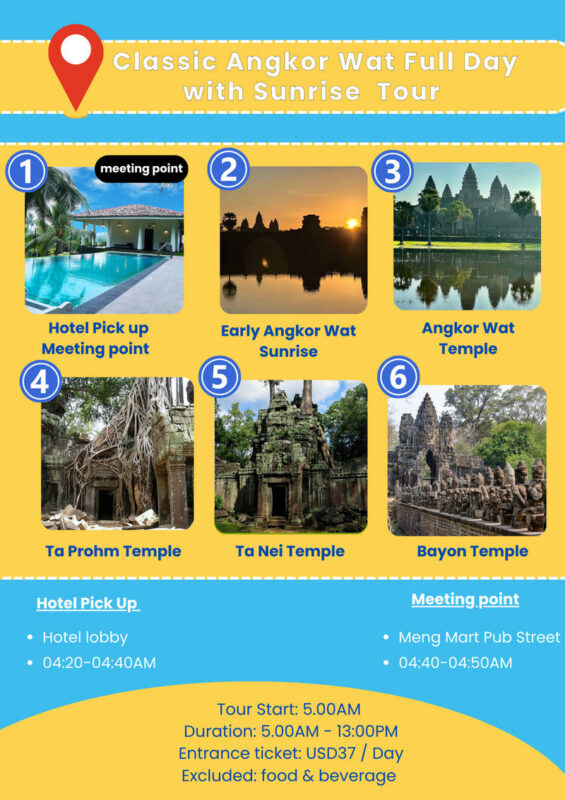
Hotel pickup and round-trip transport remove one of the day’s main hassles: working out how to get between distant sites. Shared tours may use an air-conditioned van, and some smaller groups may travel by tuk-tuk. For groups of fewer than three, the shared tour may be arranged by tuk-tuk instead of van.
That difference is worth considering. A van offers air conditioning between visits, which can be a relief in Cambodian heat. A tuk-tuk can feel more open and fun, but it leaves you more exposed to the weather. The exact vehicle depends on the arrangement, so do not assume every package uses a van.
The driver is an important part of the day, not just the person behind the wheel. Past tour assignments have included drivers known as James Bond, 007, and Sal. The specific driver is not guaranteed, but the service often includes cold water and towels between walks, small comforts that matter after climbing over hot stone.
A shared trip can also make the day easier for solo visitors. You meet other people and have a guide handling the timing, while a private package gives you more control over the experience. Shared group sizes can vary, with one reported group of 14, so do not assume every departure is tiny just because the tour is described as small-group.
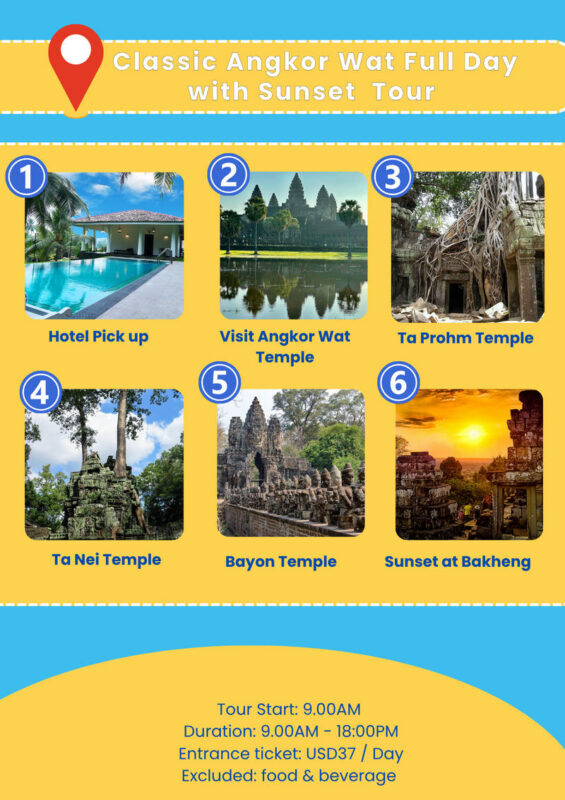
The advertised entry price is only part of the budget. You must buy an Angkor Pass separately: US$37 for one day, US$62 for three days, or US$72 for seven days. The multi-day passes must be used on consecutive days. For a single day at the main temples, the one-day pass is the simplest fit.
Lunch is also excluded, as are personal expenses and tips. A meal stop may be arranged during the day, but food is at your own cost. One practical note: a designated restaurant can cost more than eating in town, so bring enough cash and decide whether convenience is worth the markup.
Package prices vary by group type, language, and pickup arrangement. Shared English options are listed from roughly US$15 to US$18, while private options begin at higher prices, with rates varying by language and sunrise or sunset selection. The tour’s value is not just the ride: you are also paying for a guide, a planned route, and help making sense of a large complex in one day.
If you have limited time in Siem Reap, that can be a sensible trade. If you have several days and want long visits at each temple, a one-day circuit may feel brisk. The three-day pass gives you room to return to the temples independently, but the tour itself remains a single-day overview.
Wear long pants and a shirt with sleeves to meet the stated dress requirement. Casual clothing and walking shoes are recommended. Bring sun protection and any personal medication you may need, particularly if you are sensitive to heat. The day involves plenty of walking, and hot, humid weather can make even a well-paced visit tiring.
Arrive in the hotel lobby at least 10 minutes before the confirmed pickup time. Pickup is shared, so it may be early or late, and missing the arranged time is treated as a no-show without a refund. Enter your hotel name and address when booking, then watch for the operator’s message confirming pickup.
The shared tour requires a minimum number of participants. The information gives both four as the minimum for the activity and three as the threshold for rescheduling, so check the final confirmation if numbers are a concern. If the minimum is not met, the tour may be rescheduled or you can request a refund.
Children aged 12 and up pay the adult rate. Children aged 0 to 2 are free, while those aged 0 to 11 must be accompanied by a paying adult and included in the passenger count. Child seats are not available, and pregnant women are not recommended for the shared tour.
I would choose this tour if you have one day for Angkor, want an expert to explain what you are seeing, and value having transport sorted between the temples. The route covers a useful mix of monumental, famous, and less familiar sites, while sunrise or sunset gives the day a clear focal point. For a first visit, that is a practical way to get oriented.
Choose a private package if personal pacing and a more tailored day matter enough to justify the higher cost. Choose shared if price is the priority and you are comfortable with other people setting the group’s pace. If detailed commentary in a particular language is essential, consider the language option carefully: guide fluency and depth can vary, so a private tour may be worth the extra expense.
Skip this format if you dislike early starts, heat, long walking days, or a set schedule. And if you want to study each temple at length, split Angkor across multiple days instead. For a time-limited visit, though, the combination of transport, a guide, and six landmark stops makes this a strong-value introduction, provided you budget for the pass and lunch.
“The bus ride with air conditioning was comfortable. The tour guide thoroughly explained the historical background of each ruin, and we enjoyed the …”
No. You must buy it separately. The listed prices are US$37 for one day, US$62 for three days, and US$72 for seven days. The three-day and seven-day passes must be used on consecutive days.
The route includes Angkor Wat, Ta Prohm, Ta Nei, Angkor Thom, Bayon Temple, and Phnom Bakheng. The schedule may change because of traffic or weather.
Pickup and return to your hotel are included in pickup packages. Enter your hotel name and address at checkout, then check the operator’s message for the confirmed pickup time. A sunrise meet-up package is also available.
No. Lunch is at your own expense. The day may include a stop at a restaurant, so bring money for a meal and drinks beyond the bottled water and refreshments provided.
Wear long pants and a shirt with sleeves, as these are required for the activity. Casual clothing and walking shoes are recommended.
Yes. Package options include shared and private tours, with English, Chinese, Japanese, Korean, and Russian options listed. Availability and prices vary by package.
The activity has a minimum participant requirement. If the minimum is not met, the tour may be rescheduled, or you may request a refund.