Physical Address
304 North Cardinal St.
Dorchester Center, MA 02124
Physical Address
304 North Cardinal St.
Dorchester Center, MA 02124

Compare Amanohashidate, Ine Funaya, Miyama and Tango Railway routes on this long but convenient day trip from Osaka or Kyoto.
Amanohashidate’s long green sandbar, seen upside down between your legs from a hilltop, is one of Japan’s classic views. This day trip pairs it with Ine’s waterfront boat houses, and you can choose a route that adds Miyama’s thatched-roof village or a ride on the Tango Railway.
I like that hard-to-reach sights become manageable in one day, and that the options let you choose between the train, rural Miyama, or more time for the two coastal stops. The main trade-off is the long journey: traffic can eat into your free time, and the standard Osaka departure starts at 7:20 a.m.
At a glance
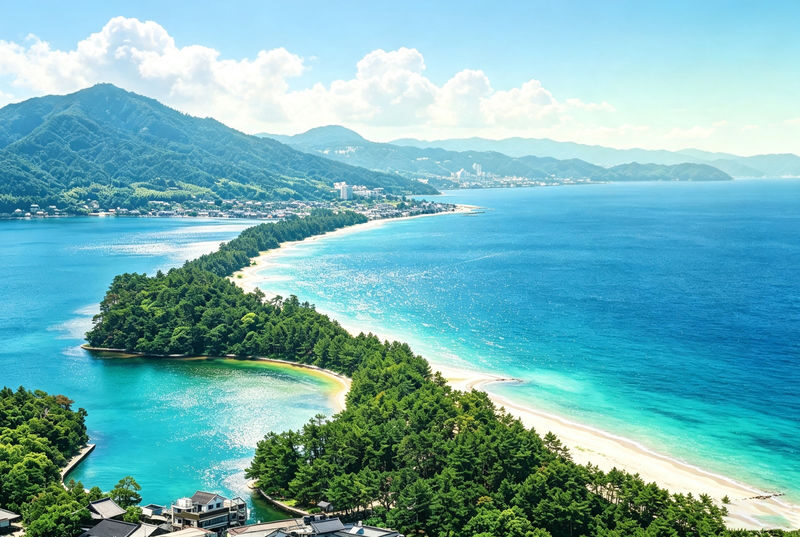
This is a day trip for seeing a slice of northern Kyoto Prefecture that takes more effort to reach independently. The headline stops offer distinct experiences: Amanohashidate is a sweeping view over a pine-lined sandbar, Ine is a quiet fishing village of boat houses, and Miyama is a rural settlement known for its thatched roofs.
You’ll need to choose a package with care. The standard route focuses on Amanohashidate and Ine. The Miyama route adds the thatched village, while the Tango Railway route includes a local train ride between Nishi-Maizuru and Amanohashidate. Some packages depart from Osaka, others from Kyoto, and cable car and boat tickets may be included or left for you to buy.
The advertised starting price is $51.19, but it applies to a particular package and can change with route and inclusions. A low starting price may not include the cable car or boat, so compare the exact option before booking. The value is less about a bargain bus ride than about reaching several distant sights without planning the connections yourself.
For the Osaka version described here, meet at 7:20 a.m. outside Kani Doraku Dotonbori East Store, and arrive about ten minutes early. The day is scheduled to end at the same spot at 5:15 p.m. That is a full ten-hour outing before any delay, so leave your evening flexible, particularly on weekends, holidays, or public holidays.
The drive is a real part of the experience, and also its main drawback. Amanohashidate and Ine are far from Osaka, and traffic may delay the return by two to five hours. The operator can adjust the order of stops or shorten the time at attractions; Japanese vehicle-use rules also limit the day’s vehicle time. If you have dinner plans or a train to catch, do not make them tight.
The trip runs as a shared ride. Vehicles are assigned to group size; with fewer than 12 people, the vehicle may have a driver but no separate guide. Larger groups are assigned a driver and guide. Guides have included Takahashi Toshiki, Batu, Huahua, and others, but you should not count on a particular person. The stated guide languages are English, Chinese, Japanese, and Korean, though the exact setup can vary.
You might also be interested in these Miyazu experiences
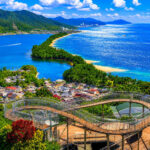
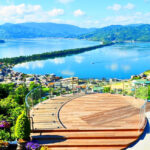
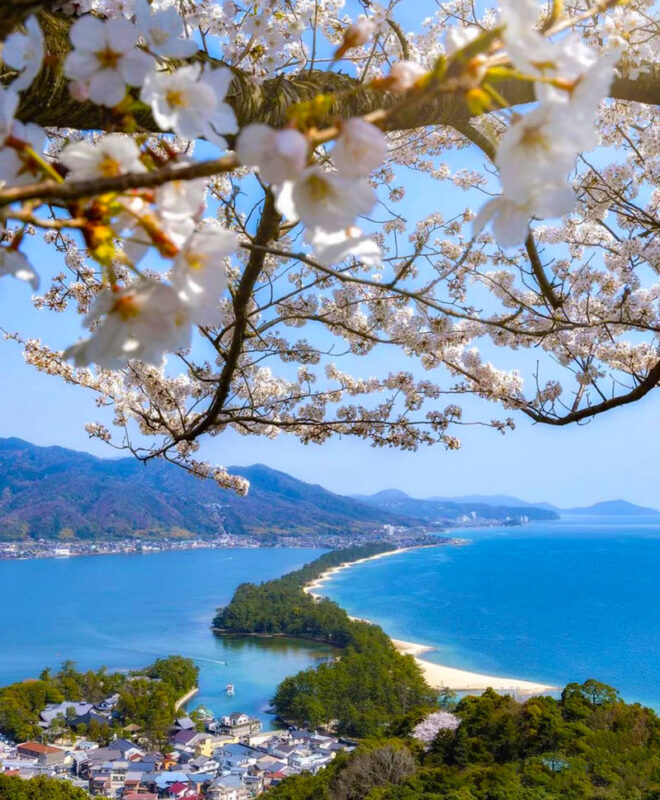
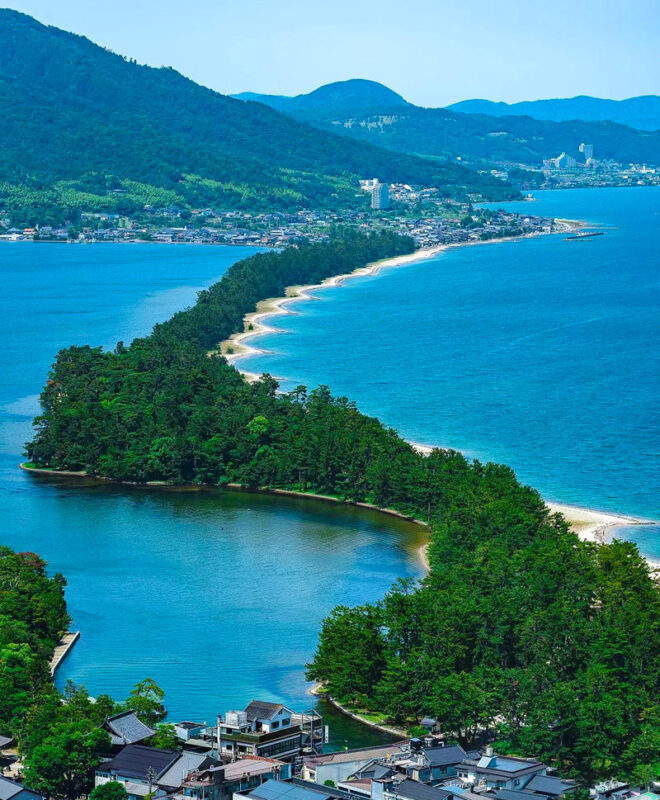
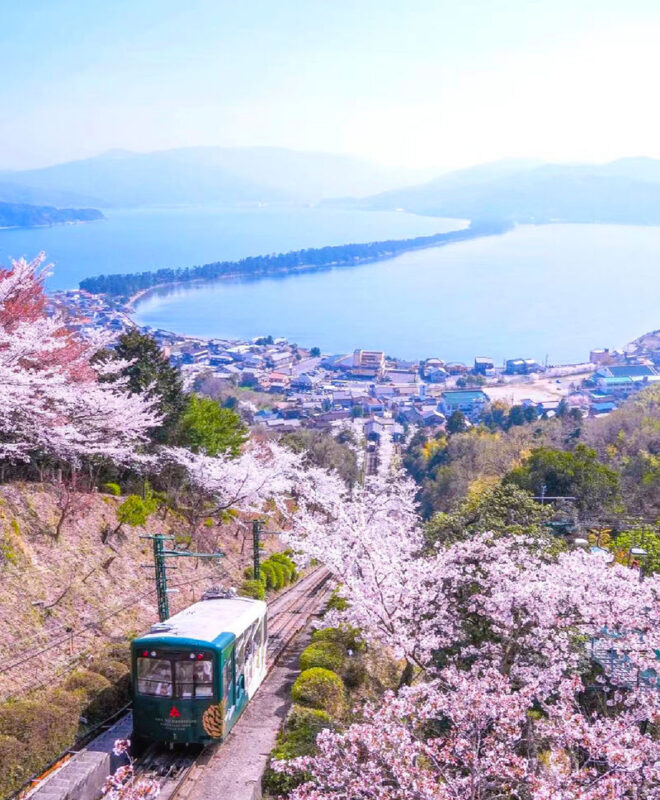
Amanohashidate is the visual centerpiece. From the observation area, you can look through your legs at the narrow sandbar and imagine it rising toward the sky. The tradition is said to be about 400 years old. It is a simple, slightly silly pose, and that is part of the fun: the view changes when you stop trying to admire it in the usual way.
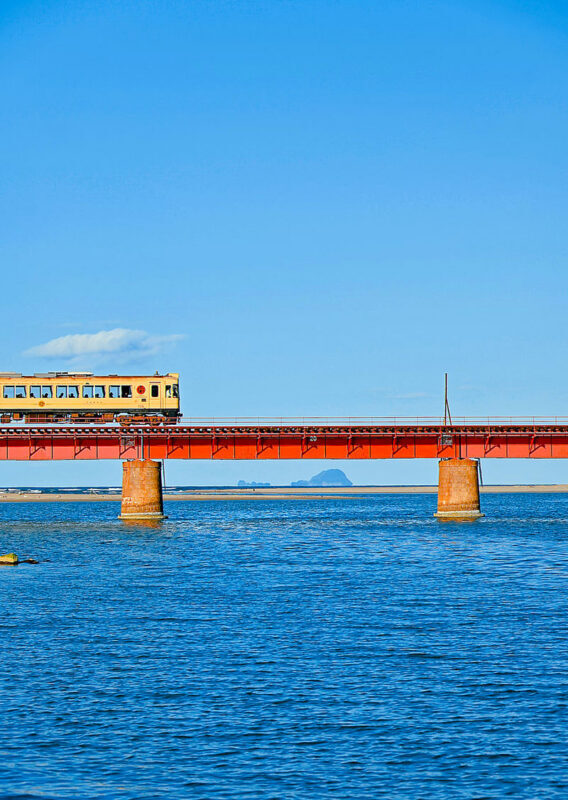
The Tango Railway package has a specific sequence. After reaching Nishi-Maizuru Station, you have about 25 minutes of free time before boarding local train 223D at 9:44. The train is scheduled to reach Amanohashidate Station at 10:28, crossing the Yura River bridge and passing the Nagu Coast. The rail segment is about 40 to 50 minutes, a pleasant way to trade bus windows for coastal and rural scenery. Check the package details, because this train ride belongs to the Tango option, not every version.
At Amanohashidate, the scheduled free time is about two and a half hours. You can take a cable car or monorail up to Amanohashidate View Land, then spend time at the viewpoint. Those tickets are not included in every package. The view is the main reason to pay for the ride up, but if you prefer to stay at ground level, you can walk through the pine forest, listen to the surf, and see sights such as the revolving bridge and spring. Bicycle rental is also mentioned as an alternative to taking the cable car.
This stop asks you to choose how to spend limited time. The viewpoint, pine forest, beach, and nearby sights cannot all be explored at length in a short visit. Some attractions may be skipped because of weather or capacity, so decide what matters most before you arrive. If the cable car is important to you, consider a package that includes it, and confirm which route and facility apply on your date.
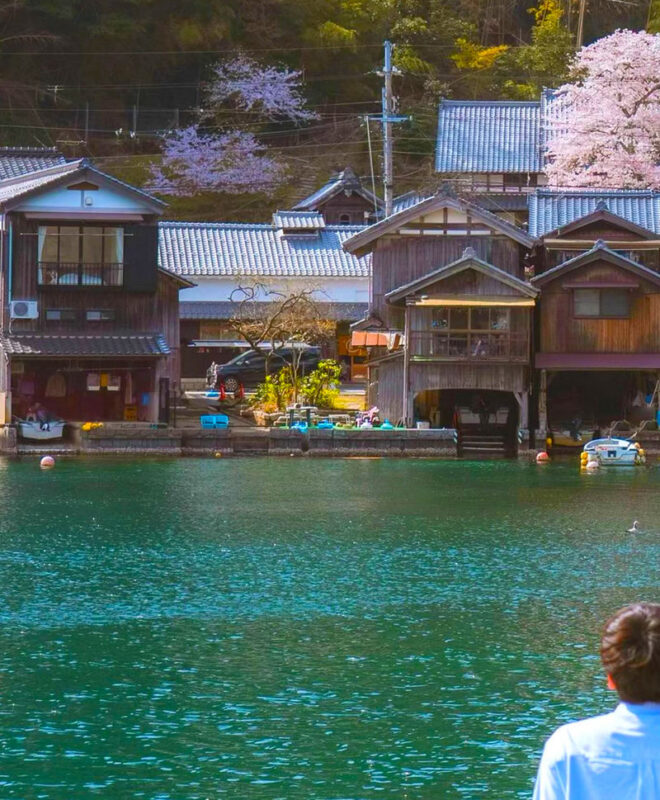
The next major stop is Ine, a settlement often called Japan’s Venice of the Sea. Its funaya are boat houses lining the bay, with a working waterfront that feels quite different from Amanohashidate’s open view. You can admire the village from shore, walk its lanes, browse distinctive shops, or pay for an Ine Bay sightseeing cruise.
The boat ride brings you close to the row of buildings and gives you a broad view back toward the village. Shrimp crackers for feeding birds are included, and the birds chasing the boat can make this the most playful part of the day. Bring your camera, but keep a firm hold of your snacks: the information for the trip notes that eagles may also swoop in.
The scheduled stop is about 1 hour and 10 minutes. That is enough for a boat ride and a short look around, but not an unhurried exploration of every lane. The cruise ticket is excluded from some packages, so check before you book. If you are prone to motion sickness or seasickness, prepare in advance; the operator specifically advises doing so.
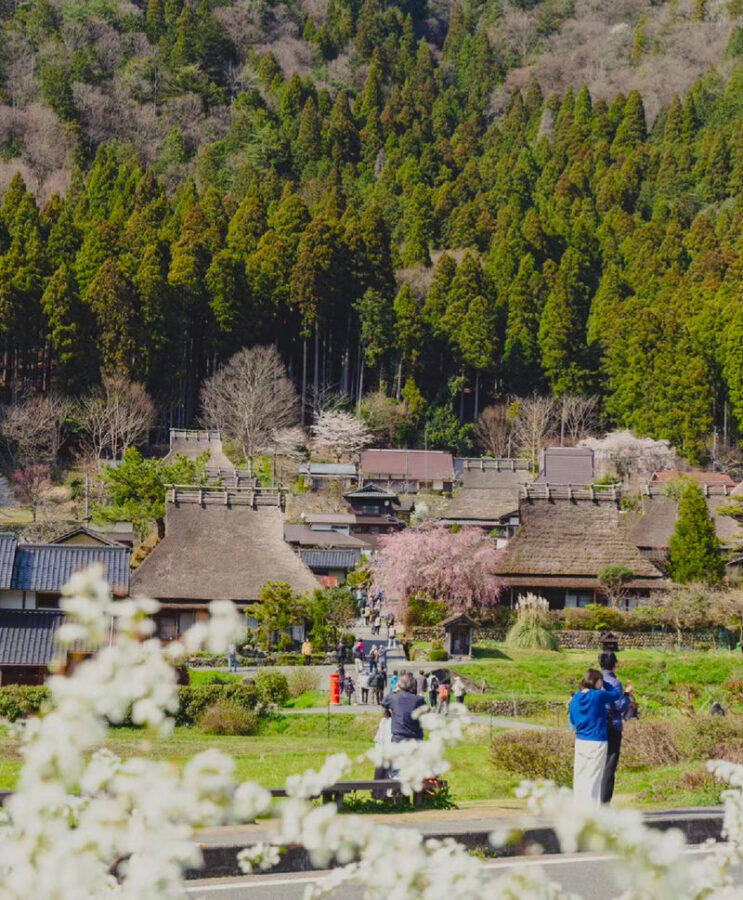
The Miyama route adds Kayabuki no Sato, a village where about 40 traditional thatched-roof houses remain. The thick roofs and wooden walls give the settlement a very different feel from the coast. A red post box is a familiar photo stop, and Miyama milk ice cream or pudding is a local treat to look for if time allows.
The village is especially appealing if you want a rural contrast to the water and sandbar. Its appearance changes with the seasons: green fields in spring and summer, autumn color, and snow in winter. Those are seasonal possibilities, not guarantees for your visit. The key trade-off is time. Adding Miyama to distant coastal stops means more driving and less lingering, so choose this route for variety rather than a slow village visit.
The Tango Railway version swaps some road travel for the train segment from Nishi-Maizuru to Amanohashidate. Crossing the Yura River bridge is the distinctive moment, with water and coast visible from the carriage. The route has been compared with the over-water train view in Spirited Away, but the practical appeal is simpler: the train is a scenic interlude and a change of pace on a long excursion.
Neither option is automatically better. Choose Miyama if thatched architecture and rural streets are high on your list. Choose the train if the rail crossing is part of the appeal, and choose the standard route if you would rather keep the focus on Amanohashidate and Ine.
The day is structured around timed stops, not independent travel at your own pace. The guide gives meeting times and locations, and the group is expected to stick to them. If you miss a regrouping, the guide may wait only five minutes, after which you may need to make your own way to the next stop. Keep your phone accessible and save the guide’s contact details.
There is a reassuring pattern in the way the day is managed: guides commonly give the key information, then let the group rest on the bus between stops. Names such as Takahashi Toshiki and Batu appear in past tour schedules, and guides are often praised for clear reminders, multilingual explanations, and helping families keep together. Still, the service can depend on group size and the guide assigned to your departure.
The bus may feel compact, especially on a long ride. One passenger specifically found the legroom tight when the person ahead reclined far back. If you are tall, or simply value personal space, keep that in mind; the shared vehicle is a practical way to cover distance, not a roomy private car.
At the lowest advertised price, the tour can be good value if you mainly want transport and a guided framework. You avoid arranging connections between Osaka or Kyoto, Maizuru, Amanohashidate, Ine, and possibly Miyama. That convenience matters on a day when missed connections could quickly shrink your time at the sights.
But the base price does not tell the whole story. Cable car or monorail rides and the Ine boat cruise are excluded from some packages. Meals, drinks, personal expenses, tips, and insurance are also not included. Compare the option that includes both the hilltop ride and boat ticket with the lower-priced version, then decide whether buying tickets separately suits you better.
The activity has a strong overall rating of 4.8 out of 5 from 1,735 ratings. The most consistent strengths are the scenery, the guides’ practical help, and the convenience of covering several remote places in one outing. The recurring caution is the same one you should weigh most: the journey is long, and a busy road can turn an orderly schedule into a tighter one.
I’d recommend this trip if you are based in Osaka or Kyoto and want a first look at Amanohashidate and Ine without managing the transport yourself. It also suits families, solo visitors, and people who value clear meeting instructions and a guide to help keep the day on track. The route choices are useful if you have a strong preference for either village scenery or a scenic train ride.
It is less suited to anyone who wants a leisurely day, plenty of time in every village, or a guaranteed return at exactly 5:15 p.m. If you dislike long bus rides, are sensitive to motion, or need a fixed evening commitment, think twice. The route can be adjusted for traffic, weather, crowds, or capacity.
Before departure, check your email for the final meeting time, vehicle details, guide information, and contact instructions. The message is sent the day before, and may land in spam. Infants under three may travel free without a seat, but you must notify the operator in advance; children and infants must be included in the passenger headcount. The tour does not include insurance, so arrange your own if needed. People with certain health conditions, including heart disease, high blood pressure, asthma, epilepsy, or acrophobia, and pregnant women are listed as not eligible.
Book this if you want a practical way to see northern Kyoto’s coast and countryside in one demanding day. For the best fit, choose your route first, then check whether the cable car and boat are included. Go for Miyama if its thatched village is a priority, or the Tango Railway if the river crossing is what you most want to experience.
Skip it if you need a slow pace or a firm return time. The scenery is the reward, but the long distances are part of the deal. Cancellations made at least 24 hours before the activity can receive a full refund; late arrivals and no-shows are not refundable.
“a very amazing experience! with funny guide: carter sasaki. something to improve maybe on the bus, because the leg room was a bit small (someone in…”
Meet at 7:20 a.m. in front of Kani Doraku Dotonbori East Store in Osaka. The scheduled return is to the same location at 5:15 p.m.
Yes. Some package options depart from Kyoto, while others depart from Osaka. Confirm the departure city when choosing your package.
It depends on the package. Options are available with or without the Amanohashidate cable car and Ine Bay sightseeing boat tickets.
No. Miyama is an option on the Miyama route. The standard route focuses on Amanohashidate and Ine, while the Tango Railway route includes a train ride.
The described Osaka Tango Railway route includes a local train from Nishi-Maizuru Station to Amanohashidate Station. It crosses the Yura River bridge and passes the Nagu Coast.
The scheduled return is 5:15 p.m., but traffic and weather can cause delays. The operator advises leaving evening plans flexible.
Children and infants must be included in the passenger headcount. Infants under three who do not occupy a seat may travel free, but you need to notify the operator in advance.