Physical Address
304 North Cardinal St.
Dorchester Center, MA 02124
Physical Address
304 North Cardinal St.
Dorchester Center, MA 02124

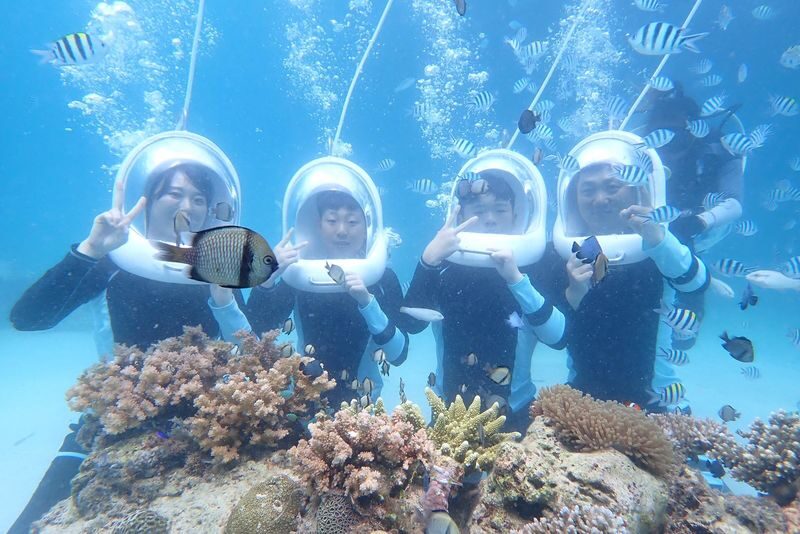
Walk Boracay’s seabed in an air-fed helmet, meet colorful fish, and get photos and video. See what to expect, what it costs, and who should book.
Boracay’s helmet walk puts you on the sandy seabed, looking at fish and coral from a perspective you cannot get while standing on the beach. You wear an air-fed helmet, follow an instructor down into the water, and walk rather than swim. The underwater portion is listed as 15 minutes, so think of it as a short encounter, not a full day at sea.
I like two things about this outing: you do not need to know how to swim, and the included photos and video help you keep a record without bringing a camera underwater. A speedboat carries you to the site, and PADI-qualified instructors give a briefing and guide the group.
The main consideration is that this is a brief activity with real underwater pressure to manage. Your ears may need to equalize as you descend, and a helmet that loses pressure or an inattentive handoff can be frightening. Tell the instructor promptly if you feel uncomfortable, and do not treat the activity as risk-free just because it is designed for beginners.
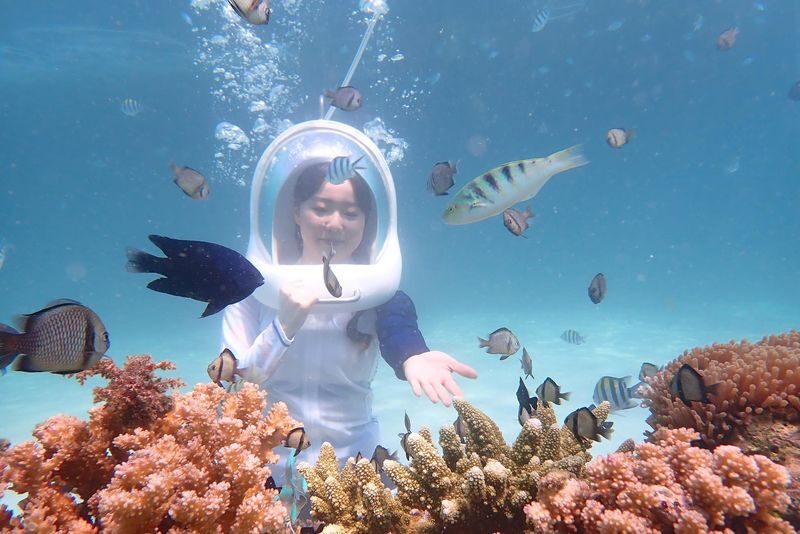
This is an accessible way to get close to Boracay’s marine life without learning scuba skills or relying on your ability to swim. The helmet is supplied with air, and you walk on the seabed while instructors stay nearby. The aim is simple: see fish and coral up close, without the mask and breathing equipment used in scuba.
That simplicity has limits. You are still underwater, and pressure changes as you descend. The briefing covers what to do, including how to manage ear pressure. If you have never been underwater before, this point deserves your attention. Ear equalization can feel more intense than it does in an airplane or elevator, and you should tell the crew at once if your ears hurt or you feel panicked.
The underwater portion is advertised as 15 minutes. Some participants describe a shorter time below, around five to ten minutes, while others say it felt longer than expected. Either way, it is best seen as a compact activity, not a long exploration. The total outing takes longer because it also includes meeting the crew, a boat transfer, the briefing, and getting in and out of the water.
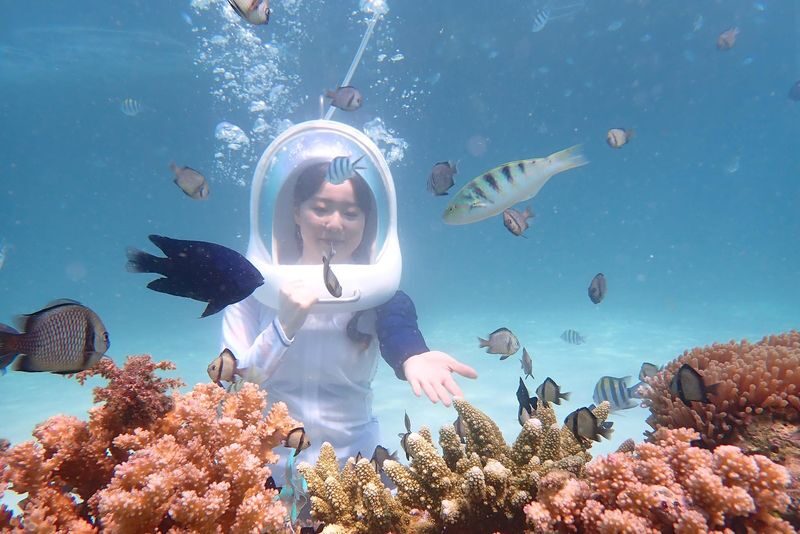
You may see schools of colorful fish and coral around the sandy seabed. Some participants describe fish coming very close, and a few mention feeding them. Treat that as a possible part of the encounter, not a guaranteed feature. The point is the chance to observe marine life at close range, not to expect a particular animal or a pristine reef.
The experience begins at a seasonal meeting point. In regular season, the crew meets you on White Beach in front of Astoria Boracay Station 1. During Habagat season, from June through September, the meeting point moves to the area in front of Moksha Cafe on Bulabog Beach, next to Lucky Tito Divers. Confirm the address and time sent before your activity, since weather and conditions can affect the plan.
Choose from departure times between 9:00 a.m. and 3:00 p.m., in half-hour increments. Arrive 15 minutes early and look for the person holding or wearing a Klook sign. This is worth taking seriously: late arrivals and no-shows are not refunded, and the boat schedule may not wait while you search the beach.
If you need to get to the meeting point, local transport is straightforward but adds a small cost. A tricycle to Astoria Boracay at Station 1 is listed at about PHP50. During Habagat season, an e-trike to Moksha Cafe is also listed at around PHP50. Hotel pickup and drop-off are not included, so factor in your own ride.
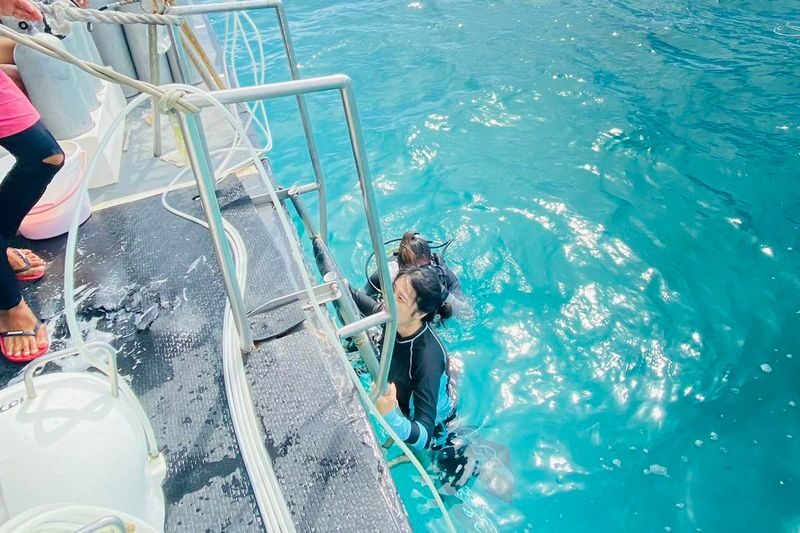
Once the group is assembled, expect a speedboat transfer to the activity site. The ride is part of the outing, but the main event is short. Keep your belongings and beach plans simple, and do not assume the listed 15 minutes covers the full time away from shore.
Looking for more options in Malay? Here are some other experiences worth considering.
At the site, you put on the supplied helmet and receive a safety briefing before entering the water. The crew explains how the activity works and what to do if you feel uneasy. PADI-qualified instructors are included, and the activity is aimed at beginners. No prior experience is required.
During the descent, pay attention to your ears. Pressure changes can cause discomfort, and you may need to equalize as you go down. One useful tip is to keep your head steady and follow the instructor’s directions rather than rushing. If you cannot clear your ears, feel pain, or start to panic, signal the crew and ask for help. There is no prize for pushing through discomfort.
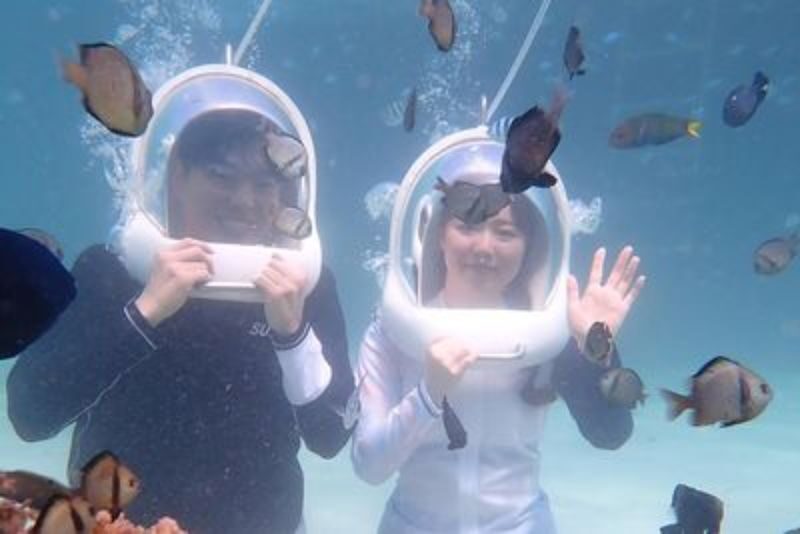
Once you reach the seabed, you walk on the sand and look around at fish and coral. The helmet leaves your hands free, and the experience feels more like standing in an unusual place than swimming through it. That is why it appeals to people who are curious about the ocean but uncomfortable with snorkeling or scuba.
Still, beginner-friendly does not mean that every moment feels easy. One participant described a frightening loss of helmet pressure, with water reaching above the eyes, and another person felt left alone while an instructor assisted someone else. These appear to be exceptions, but they matter. Listen closely to the briefing, stay aware of how the equipment feels, and speak up immediately if something seems wrong. The crew should be able to respond, and you should never feel obliged to continue.
The site is a working marine environment, not an aquarium. You may see a good number of fish, but visibility and wildlife can vary with sea and weather conditions. The sea can also become too rough for the activity to operate. Strong winds may lead to restrictions for children, and low tides during Habagat season can cause delays.
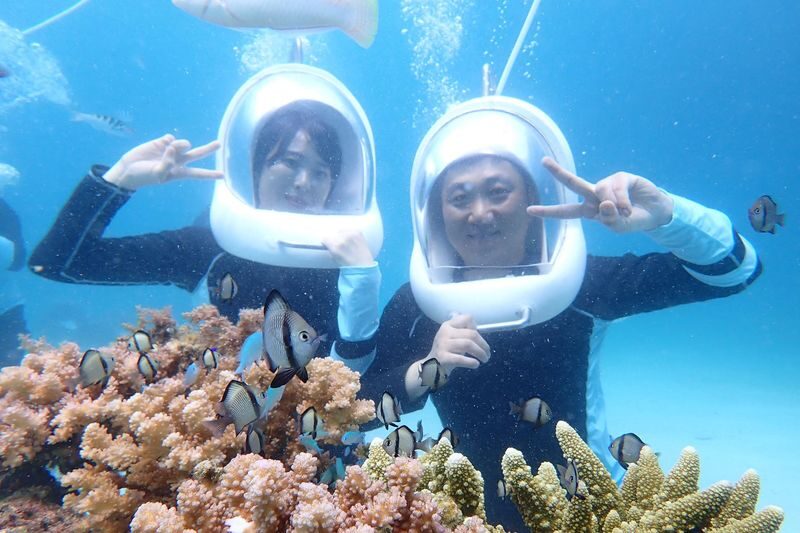
Digital photos and video are included, which adds real value to a low-cost activity. Underwater photography is awkward when you are managing equipment and trying to stay calm. Having someone document the experience lets you focus on what is around you, and the files give you something to share afterward.
The starting price is listed between US$14.65 and US$15.29, depending on the package details shown at booking. At roughly US$15, the price is reasonable for a boat transfer, equipment, instructor support, and digital media. It is not a bargain if you expect a long session or a full reef tour. The value lies in a distinctive, brief introduction to being underwater, particularly if you do not swim confidently.
Check the exact package before paying. Some offers may combine the helmet activity with a crystal kayak, but that is a separate package and should not be assumed to be included in the basic option. The standard helmet experience includes the boat ride, equipment, local English-speaking PADI-qualified instructors, and a soft copy of photos and video. It does not include towels, insurance, or hotel transfers.
The minimum age is 13. Participants aged 18 and older sign a waiver, while an adult must sign for those aged 13 to 17. Anyone aged 60 or older should present a medical certificate before taking part. These requirements are a useful reminder that this is a physical activity, even if you do not need to swim.
The activity is not recommended for people with certain medical conditions, including high blood pressure and epilepsy, or for pregnant women. If you have a medical concern, do not rely on the word beginner as proof that the activity is suitable. Contact the operator before booking and make an informed decision.
Avoid taking part just after eating or drinking alcohol. You should also leave at least 24 hours between the activity and a flight. That rule can affect your final day in Boracay, so plan the timing before you book. Bring a towel, since one is not supplied, and arrive ready to follow the crew’s instructions.
The listed operating hours are 9:00 a.m. to 4:00 p.m., with last admission at 3:30 p.m. Departure options run from 9:00 a.m. to 3:00 p.m., but return times depend on the departure you choose and the day’s conditions. Weather, traffic, low tide, and rough seas can change the schedule or lead to cancellation.
I would consider this if you are curious about marine life but do not want the learning curve of scuba or the swimming demands of snorkeling. It can also work well for a family group with participants aged 13 and over, provided everyone meets the health requirements and is comfortable with the safety briefing. The included photos and video make the short session easier to justify.
It is less suitable if you want a long time underwater, dislike close-fitting equipment, have trouble equalizing your ears, or feel uneasy about relying on an instructor and air-fed helmet. It is also a poor fit for anyone who needs a fixed schedule, since sea conditions can bring delays or cancellation. Check the meeting point, your return plans, and the 24-hour no-flight rule before selecting a time.
Book it for the unusual chance to walk on Boracay’s seabed, not for guaranteed wildlife sightings or a full-length ocean tour. If you are eligible, comfortable with the safety limits, and willing to speak up when something feels wrong, this is a memorable way to see the water from a different angle.
“We had a great time trying helmet diving in Boracay! The staff were accommodating and guided us throughout the experience. It was fun and memorable…”
The underwater portion is listed as 15 minutes. The full outing also includes a safety briefing, equipment, and a boat ride, so it takes longer than the time spent on the seabed.
No swimming experience is required. You walk along the seabed wearing an air-fed helmet, with instructors guiding the activity.
The package includes the necessary equipment, a boat ride, local English-speaking PADI-qualified instructors, and soft copies of photos and video. Towels, insurance, and hotel pickup and drop-off are not included.
In regular season, meet on White Beach in front of Astoria Boracay Station 1. During Habagat season, from June through September, the meeting point is in front of Moksha Cafe on Bulabog Beach. Check the confirmed meeting details before setting out.
Participants must be at least 13 years old. An adult must sign the waiver for participants aged 13 to 17.
The activity is not recommended for pregnant women or people with certain medical conditions, including high blood pressure and epilepsy. Participants aged 60 or older should present a medical certificate.
No. You should not take a flight for at least 24 hours after the activity.