Physical Address
304 North Cardinal St.
Dorchester Center, MA 02124
Physical Address
304 North Cardinal St.
Dorchester Center, MA 02124

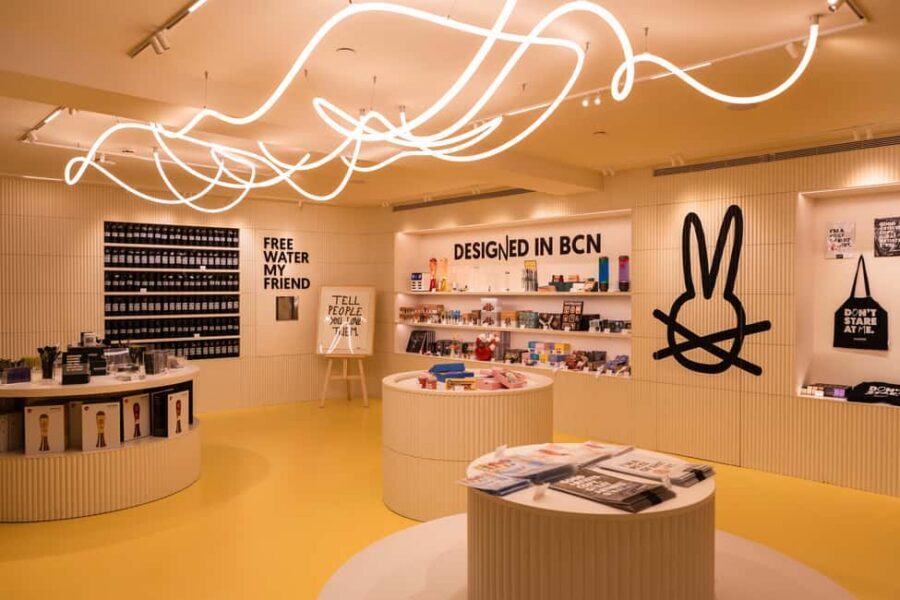
Explore Catalan traditions through 10 interactive art rooms, VR and a large infinity room at White Rabbit, two minutes from Casa Batlló.
Barcelona’s White Rabbit turns Catalan culture into a series of rooms you can step into, play with and look around rather than simply read about. You’ll encounter traditions such as the human towers called castellers and the fire-filled correfoc, alongside art and digital effects.
I like two things in particular: the focus on local stories and artists, which gives the experience a Barcelona identity, and the range of formats, from VR to 360-degree screens and an infinity room. At $18 per person for about an hour, it also fits neatly between visits to the city’s better-known sights.
The main consideration is that White Rabbit is built for fun before formal study. If you want a quiet museum visit with long explanations and historical objects, this is not that; the installations offer a playful introduction, not a full history of Catalonia.
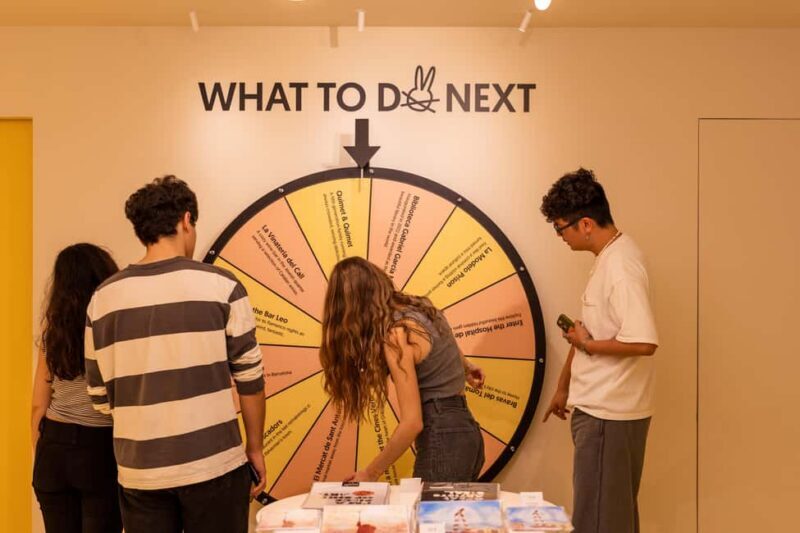
White Rabbit describes itself as an OFF-Museum, a label that signals its difference from a conventional museum. Instead of moving past paintings or reading display panels, you enter a set of installations designed to make art something you experience with your senses and, at times, your own participation.
The route contains 10 rooms, but there is no detailed order or fixed stop-by-stop script provided. Think of it as a sequence of separate works linked by their focus on Barcelona and Catalonia. That makes it a lively introduction, though you should not expect a chronological account of the region’s past.
A recurring strength is the choice of subject. The rooms draw on local traditions and legends rather than relying only on generic digital effects. For visitors with limited time in Barcelona, that link to place matters: technology becomes a way to approach Catalan culture, not just a visual trick.
You can check availability for your dates here: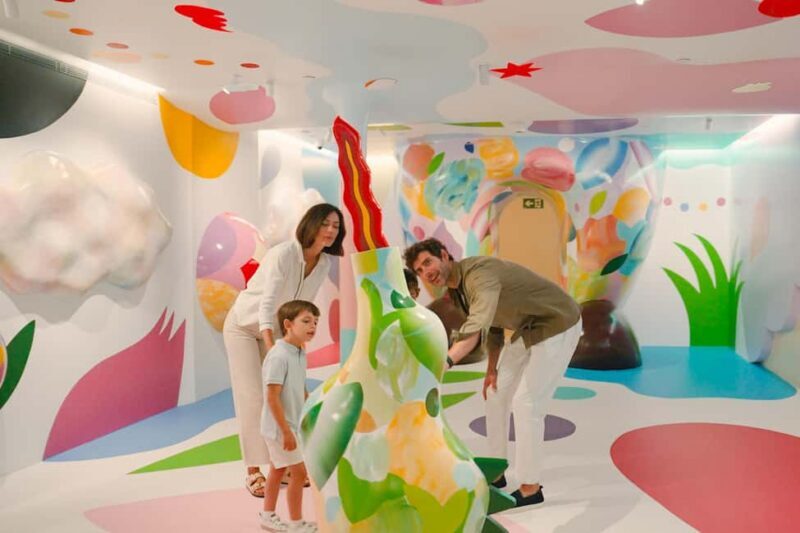
One of the installations reworks trencadís, the broken-tile mosaic style associated with Gaudí, into a 360-degree setting. It offers a more enveloping way to notice the pattern and colour than viewing a mosaic from a distance, while keeping the familiar architectural reference close at hand.
Other rooms turn to Montjuïc and Catalan stories such as Sant Jordi. The experience also brings in castellers, the tradition of building human towers, and correfoc, a fire-running celebration. These references give you useful cultural touchpoints, especially if you are new to Catalonia.
The approach is interpretive rather than scholarly. You may come away with a clearer sense of which traditions matter locally, but the available information does not promise detailed historical lectures or a deep explanation of each practice. If you want context beyond the installations, pair the visit with a dedicated cultural or historical museum.
Looking for more options in Barcelona? Here are some other experiences worth considering.
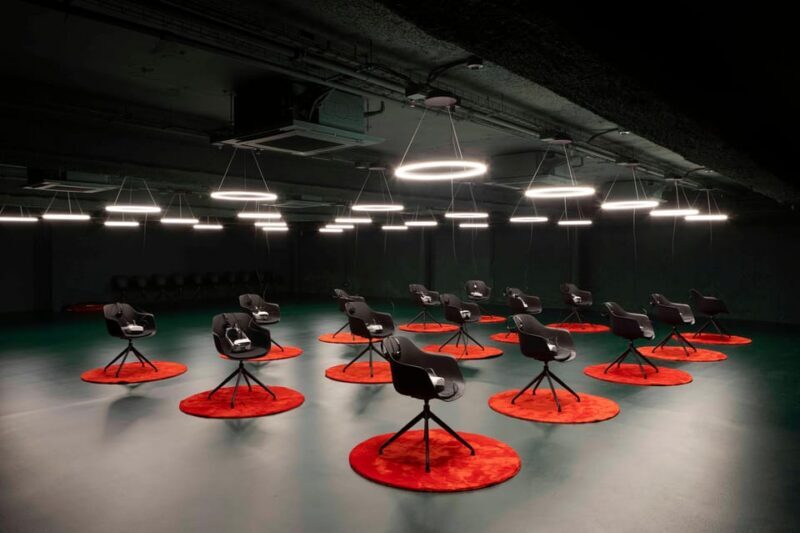
Technology is a central part of the visit. VR is used to tell a story and carry you into what the experience calls the soul of Catalonia. It can make an abstract subject feel more immediate, though anyone who prefers traditional displays may find it less informative than a museum exhibit with text and objects.
The immersive cube and 360-degree screens add scale and movement to the art. They are likely to be among the most visually memorable parts, particularly for children and anyone who enjoys stepping into an image rather than standing in front of one. The largest infinity room is another major feature, using reflections and light to create a sense of space beyond the room itself.
Not every installation will land equally well for every visitor. Some people may find a particular room more engaging than another, and the balance between participation and looking varies. Go expecting a mix of experiences, not 10 equally interactive attractions.

White Rabbit makes sense for a family outing because it gives children permission to explore and engage, rather than asking them to stay quiet and study display cases. Families have found that kids quickly get into the installations, and the visit’s one-hour duration helps keep the plan manageable.
Adults are not merely accompanying children. The themes offer a fresh way to encounter local culture, and the formats can be fun in their own right. Couples and friends looking for a different activity near Passeig de Gràcia may also enjoy the contrast with architecture, shopping and more traditional sightseeing.
The venue has also been appreciated as a way to introduce children to Barcelona’s artistic side. That is a useful distinction: this is not simply a play space with technology. Its subject matter is Catalan, even when the presentation is light and unusual.
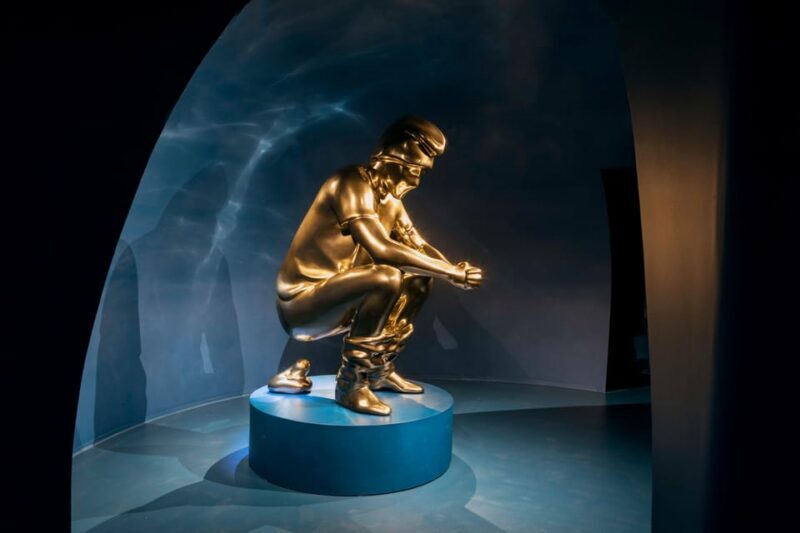
Allow about 60 minutes for the experience. That is enough to explore the 10 installations without turning the visit into a half-day commitment, and the short duration makes White Rabbit an easy addition to a day built around the city centre.
You receive an open-time ticket for your selected date, so you can enter at any point during the opening hours rather than being tied to a specific start time. The last entry is at 7:00 PM, so plan to arrive before then. Check the available hours for your date when booking.
The host or greeter speaks English, Spanish and Catalan. Staff have been appreciated for explaining the experience and helping visitors get oriented. No individual guide is named, and the format is centred on moving through installations rather than following a long guided tour.
More Great Tours Nearby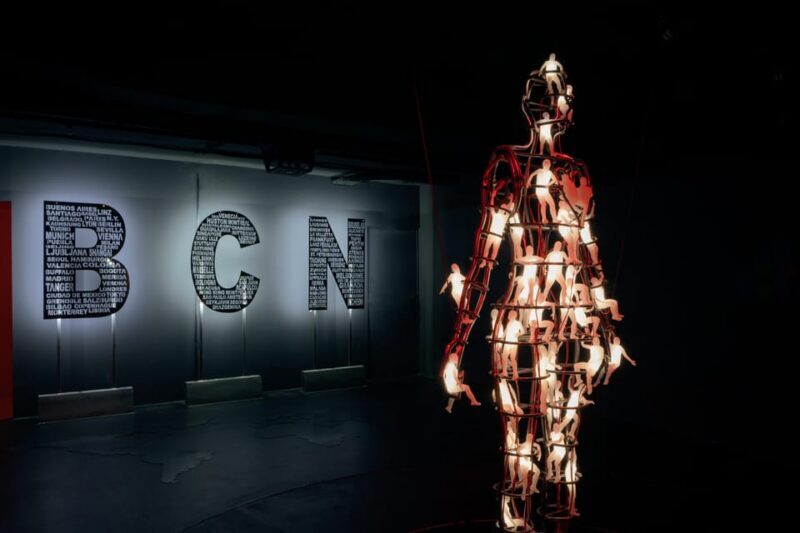
The location is one of White Rabbit’s strongest practical advantages. It is on Passeig de Gràcia, just a short walk from Casa Batlló. You can visit before or after seeing the nearby Modernista architecture, or use it as a change of pace after a stretch of conventional sightseeing.
Entry includes access to the OFF SHOP. It carries exclusive gifts and offers coffee and ice cream from local brands, giving you a convenient place to pause or pick up a souvenir. Food and drinks are not included in the ticket, so treat anything you buy there as an extra.
Hotel pickup and drop-off are not part of the experience. That is unlikely to be a drawback given the central address, but you will need to make your own way to White Rabbit.

At $18 per person, White Rabbit is a fairly easy activity to fit into a Barcelona budget, especially if you want something different from a church, gallery or walking tour. The ticket covers 10 installations and about an hour of entertainment, with the variety of art, VR and interactive rooms helping the price feel reasonable.
Its value depends on what you want from a cultural visit. If you measure a museum by the depth of its historical information, this may feel light. If you want a lively introduction to Catalan stories and traditions, with enough visual variety to keep a family or group engaged, the price is more persuasive.
The experience is also useful on a hot or rainy day, as an indoor activity in a central location. One visitor noted that the space was air-conditioned, though conditions can vary, so I would not book solely on that basis. The larger point is that White Rabbit offers a compact indoor plan close to major sights.
White Rabbit is wheelchair accessible. The ticket allows entry at any time during opening hours on the selected date, but the last entry is 7:00 PM. Check the date’s available hours before setting your schedule.
You can cancel up to 24 hours in advance for a full refund, and a reserve-now, pay-later option is available. Those terms add flexibility if your Barcelona plans are still shifting.
Book it if you want a playful, central introduction to Catalan traditions, especially if you’re travelling with children or enjoy art that uses technology and invites participation. The combination of local legends, VR, the cube and infinity room gives the hour a distinctive focus, while the Passeig de Gràcia address makes it easy to fit into a sightseeing day.
Skip it if you want a traditional museum with extensive historical interpretation, or if you prefer a slower visit focused on objects and quiet observation. White Rabbit works best as an entertaining cultural sampler, not a substitute for a full account of Catalan history.
“Very Unique. More interactive elements would be great. But it was good. The toilet inside was fun too”

The experience lasts about 60 minutes and includes access to 10 art installations.
It is on Passeig de Gràcia, about two minutes from Casa Batlló. The meeting point is White Rabbit, The Off-Museum of Barcelona.
The installations explore Barcelona and Catalan traditions, including Sant Jordi, castellers, correfoc, Montjuïc and Gaudí-inspired trencadís.
The experience includes 10 installations, with VR, 360-degree screens, an immersive cube and a large infinity room.
The ticket allows entry at any time during opening hours on your selected date. The last entry is at 7:00 PM.
Yes, the experience is listed as wheelchair accessible.
The host or greeter speaks English, Spanish and Catalan.
No. Food and drinks are not included, though the OFF SHOP offers coffee and ice cream from local brands.
You can check availability for your dates here: