Physical Address
304 North Cardinal St.
Dorchester Center, MA 02124
Physical Address
304 North Cardinal St.
Dorchester Center, MA 02124

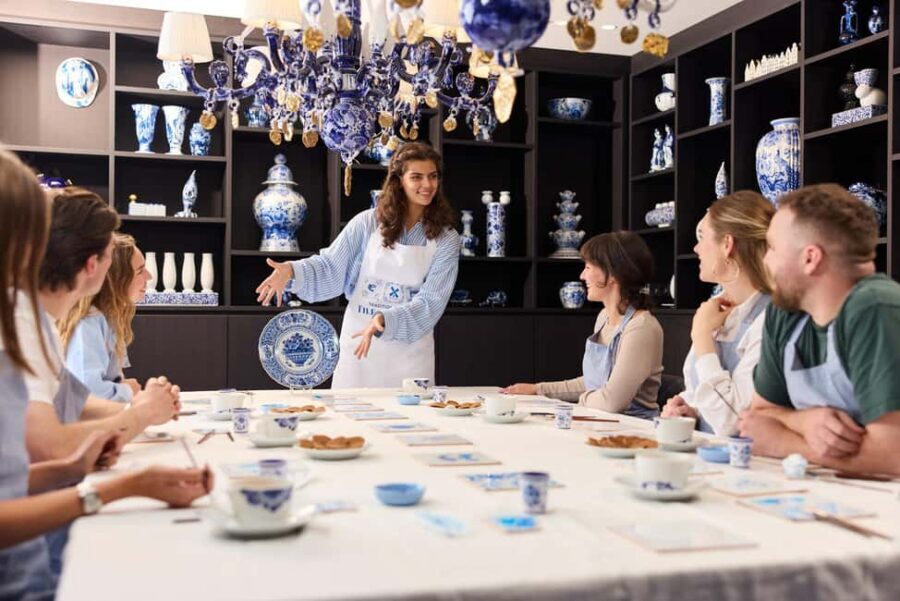
Paint a Delft Blue tile in a 75-minute Amsterdam workshop with local instruction, beginner-friendly stencils, tea, coffee, and stroopwafels.
Delft Blue is more than a souvenir-shop pattern here: you sit down with a blank ceramic tile, learn a little about the Dutch tradition, and make your own version with brushes and paint. In 75 minutes, instructors such as Martina, Erna, Peyaswani, and Belinda guide you from first marks to a tile you can take home.
I like the easy-to-follow stencils, which let you focus on painting instead of worrying about drawing skills. I also like the small, relaxed setting: the instructor can offer help as you work, and tea, coffee, and stroopwafels make this feel like a pleasant pause in a busy city day.
One thing to consider: 75 minutes can feel short if you want to take your time or make a detailed design. Keep your idea manageable, and you’re more likely to finish without rushing.
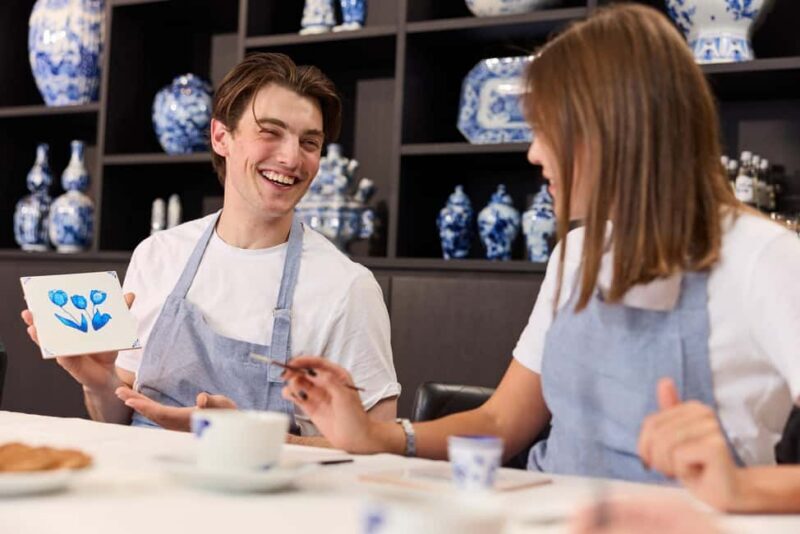
This workshop takes a familiar Dutch image and puts a brush in your hand. Delft Blue ceramics are known for their blue designs on a white ground, and the session introduces the craft before you begin painting your own tile. You get a short piece of cultural context, then move quickly into making something yourself.
That balance is the point. This is not a specialist ceramics course, and you should not expect a long technical lecture or a deep study of pottery. It is a friendly introduction to a centuries-old tradition, followed by a small creative project you can bring home.
The format suits a wide range of people. Couples can make tiles side by side, families can share an activity, and solo visitors can settle in and work at their own pace. Children under four are not suitable, but the workshop is otherwise described as open to all ages and skill levels.
You can check availability for your dates here: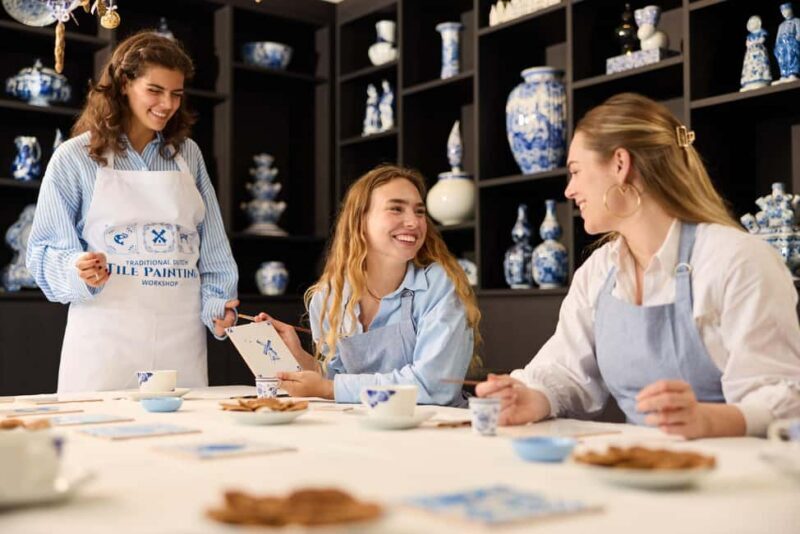
The session begins with your instructor meeting you at the front door. Once you’re settled, you’ll hear about Delftware and the tradition behind the blue-and-white look. Instructors including Martina, Erna, Peyaswani, and Belinda have led sessions, and the teaching style described by participants is patient, clear, and encouraging.
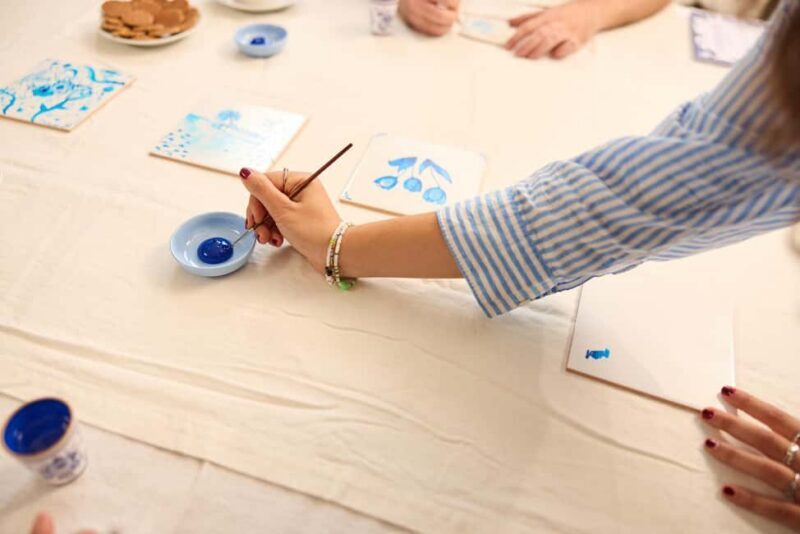
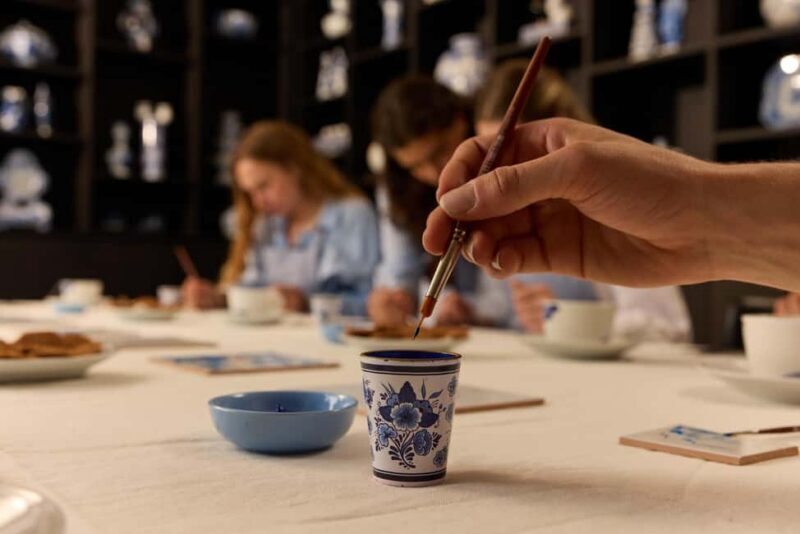
Next comes a demonstration of basic painting techniques. Your materials are provided: a ceramic tile, paint, brushes, and an apron. You can choose a traditional image such as tulips or windmills, or make a design of your own.
Stencils are a practical help, not a shortcut to be embarrassed about. They give you a guide for the outline, so you can spend more of your time painting and less of it trying to draw a perfect shape. If you want to improvise, you can; if you would rather follow a pattern, that works too.
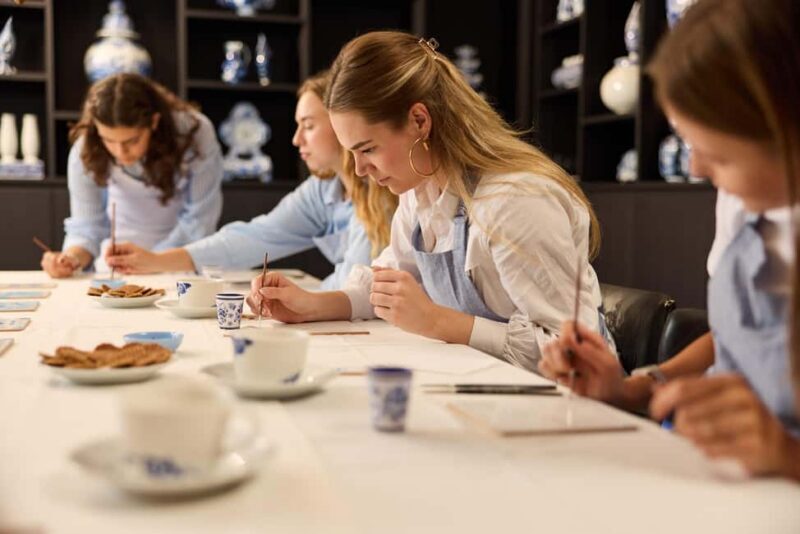
Then comes the main event: painting. Your instructor is there to explain the steps and help when you need it, while you make choices about the pattern and how much detail to add. The task is approachable, but the tile is small and the session is limited, so a simpler design may be more satisfying than trying to fit an entire row of Amsterdam houses onto it.
The workshop closes with your finished tile to take home. Some participants have also received a certificate, though that is not listed as a guaranteed inclusion. The tile itself is the lasting keepsake, a handmade reminder of your time in Amsterdam rather than another mass-produced item.
You might also be interested in these Amsterdam experiences
The workshop is designed for a small group, which makes a difference when you’re learning a hands-on skill. You can ask for help with a brush or stencil without having to catch an instructor’s attention across a crowded room. Some sessions may be especially intimate: one couple described having the instructor to themselves when no other participants had booked that time.
That kind of personal attention is useful for beginners. The instructors’ names that come up include Martina, Erna, Peyaswani (also spelled Payaswani in some accounts), and Belinda, sometimes called BB. Their styles may differ, but the common thread is patient guidance and a friendly atmosphere. You cannot choose a particular instructor from the information provided, so book for the activity itself rather than expecting a named host.
The setting also makes this a good change of pace. Amsterdam can fill a day with walking and sightseeing; sitting down to make something gives you a quieter hour and a quarter. It is not an activity that asks for prior art experience or a confident hand. You only need to be willing to try.
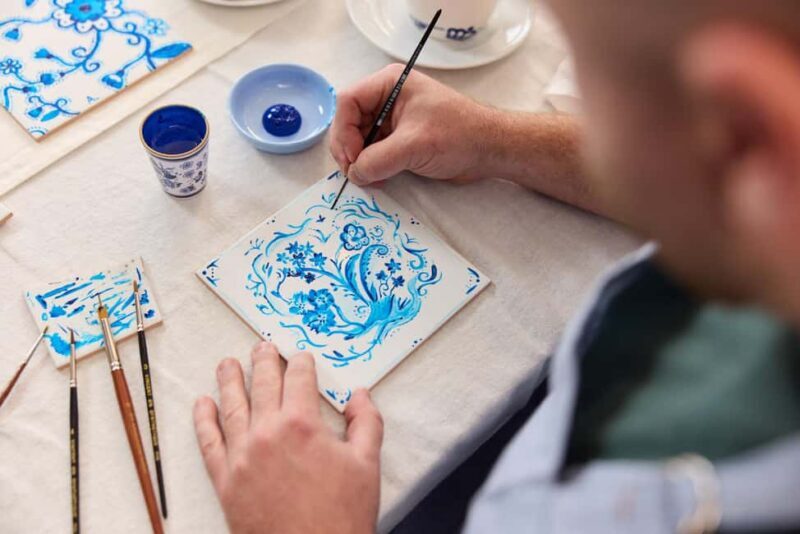
A tile you paint yourself has a different meaning from a shop-bought Delft Blue plate. It may not look like a museum piece, and that is not the aim. The pleasure is in choosing a design, learning a few techniques, and taking home an object connected to a specific afternoon in the city.
If you have modest artistic confidence, start with a stencil and build from there. The patterns help people with different skill levels feel able to take part, and instructors can explain how to handle the brushes and paint. You can still add your own touches rather than copying a design exactly.
There is a useful little lesson in setting expectations, though. One participant joked that trying to paint several buildings was ambitious. In 75 minutes, a single motif or a clean, simple pattern is likely to give you more time to enjoy the process and less pressure to finish a complicated scene.
The tile is yours to keep, but no details are provided about firing, drying time, or special packing for travel. If you are planning to carry it in luggage, ask the instructor how best to protect it before you leave. Don’t assume the workshop includes shipping or a separate finishing service.
At $25 per person, the price covers the instructor’s guidance, tile, paint, brushes, apron, and a finished tile to take away. Coffee, tea, and stroopwafels are included too. That makes the cost easier to judge than a class where the headline price excludes materials or the object you make.
The value is not in the quantity of time alone. You are paying for a structured activity, help from a local instructor, and a hands-on introduction to a well-known Dutch craft. If you would otherwise buy a small souvenir, making one yourself adds an experience to the object.
Still, it is a short workshop. If you want detailed technical instruction, multiple projects, or time to refine every line, 75 minutes may not satisfy you. One participant felt an extra 15 minutes would have helped with finishing touches. Think of this as a light, accessible creative session, not a full ceramics course.
The included drinks and stroopwafels are a welcome extra rather than the main reason to book. They help the workshop feel relaxed, but the strongest value is the chance to make something personal with all the supplies provided.
More Great Tours Nearby
I’d put this high on the list for couples, friends, and families with children over four who want an activity they can do together without needing prior skills. It also works well for solo visitors: the instructor-led format gives you a clear activity, and the small-group setting can make it easy to join in.
It is especially useful on a trip with a packed sightseeing schedule. The pace is seated and creative, so it gives your feet a break while still connecting you with Dutch culture. If rain interrupts outdoor plans, it may also be a practical indoor option, though the supplied information does not specify the room or its facilities.
Art lovers will appreciate the chance to try a traditional style rather than only look at finished ceramics. But you do not need to be an art lover. The stencils, clear demonstrations, and encouragement make the workshop accessible even if you usually avoid arts and crafts.
It is less suited to anyone who wants a long, highly technical class or is determined to produce a perfectly polished piece. The instructor can guide your work, but the design and brushwork remain yours. Children under four should not attend.
The workshop lasts 75 minutes, and starting times vary, so check availability for your date. Instruction is in English. The meeting point is the front door, where your instructor will meet you.
The listed price is $25 per person. Materials, the tile you paint, tea, coffee, and stroopwafels are included. You can reserve now and pay later, and cancellation up to 24 hours in advance is eligible for a full refund.
Arrive with a rough idea, not an elaborate blueprint. Tulips, windmills, and other classic motifs suit the time well, while a personal design is welcome if you keep it manageable. That small bit of planning can help you spend the session enjoying the painting rather than trying to solve your design from scratch.
Book it if you want an affordable, low-pressure activity that gives you both a taste of Dutch craft and a handmade souvenir. The combination of a short history, patient instruction, stencil options, and all materials included makes it easy to join in, even if you are not confident with a paintbrush.
Skip it if your main goal is advanced ceramics instruction or a long, unhurried studio session. For most visitors who want a creative break with a tangible keepsake, though, this is a smart use of 75 minutes in Amsterdam.
“It was a brilliant activity, really chilled and creative. Martina, the session leader gave us all the history and instructions and guided us throug…”
The workshop lasts 75 minutes. Available starting times depend on the date you choose.
No. The workshop is designed for all skill levels, and stencils can help you create a design without drawing it freehand.
Your instructor’s guidance, a ceramic tile, paint, brushes, an apron, and your finished tile to take home are included. Coffee, tea, and stroopwafels are also provided.
The instructor teaches in English.
The workshop is suitable for all ages except children under four, who are not suitable for the activity.
The instructor meets you at the front door.
You can check availability for your dates here: