Physical Address
304 North Cardinal St.
Dorchester Center, MA 02124
Physical Address
304 North Cardinal St.
Dorchester Center, MA 02124

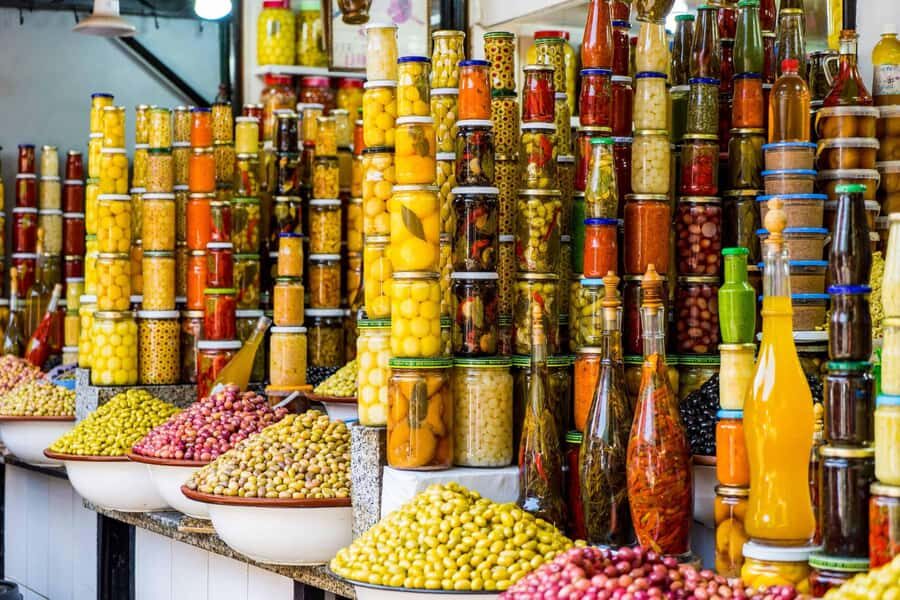
Explore Marrakech’s palaces, madrasa and souks on a four-hour guided walk, with practical tips on entry fees, pacing and what to expect.
Marrakech’s medina is a maze of alleys, workshops and market lanes, and this four-hour walk gives you a useful map of it, along with the stories behind its major sights. You’ll visit Bahia Palace and Ben Youssef Madrasa, then thread through souks selling leather, spices and crafts.
I like two things in particular: the contrast between the palace’s fine decorative work and the everyday business of the markets, and the practical help guides give you in finding your way around afterward. One consideration: the $20 tour price does not cover monument tickets, and the route involves plenty of walking and standing.
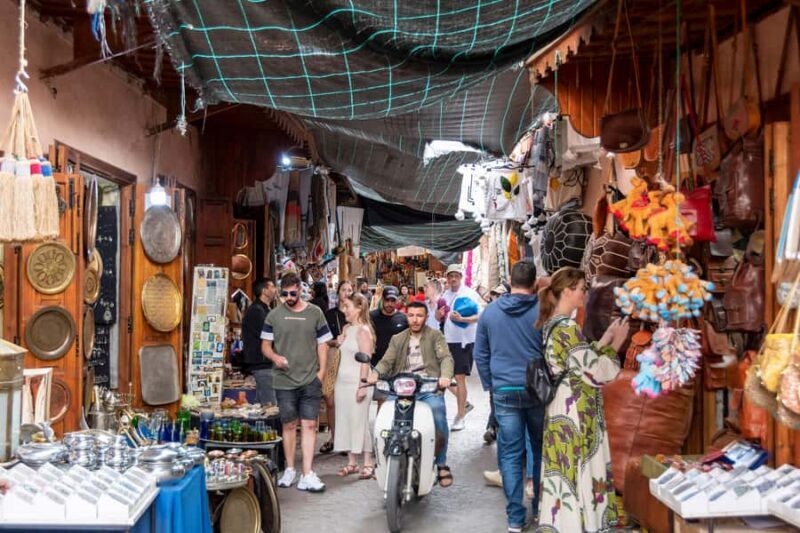
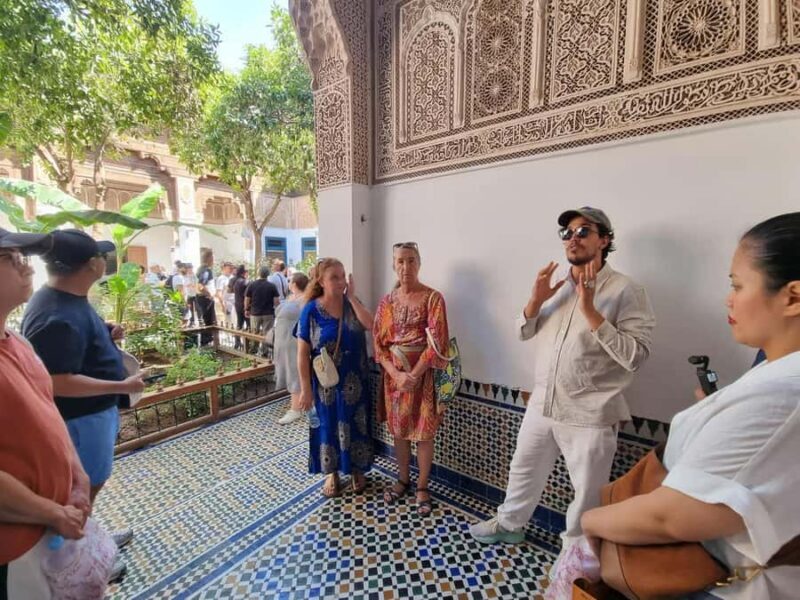
This is a walking tour, not a drive-by sampler. Over about four hours, you move between monuments, markets and the medina’s narrow lanes with a local guide interpreting what you see. The route starts at the meeting point selected for your booking. For the standard option, that is in front of Café de France on Jemaa el-Fnaa; a private option can include pickup at your hotel or riad within the medina.
That distinction matters. Marrakech’s old town can be hard to navigate when you have just arrived, and an early guided walk can make later exploring less of a guessing game. Several visitors used the tour as a first-day orientation, then went back on their own to places they wanted to see more slowly. Your guide can also offer practical tips and recommendations for the rest of your stay.
The listed route includes Bahia Palace, the Mellah, Souk Semmarine, Rahba Kedima, Ben Youssef Madrasa, the medina, Le Jardin Secret and Jemaa el-Fnaa. The actual order and time at each stop can vary with the group’s pace. The plan assigns about an hour to the palace, 45 minutes to the madrasa and shorter stretches to the markets and square.
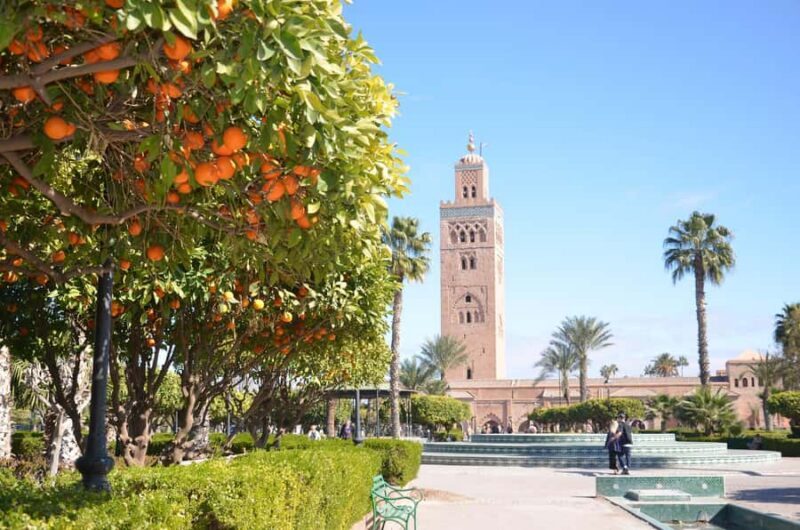
The tour also highlights the Koutoubia Mosque, a major city landmark. It is not listed as a separate stop in the timed route, and one account describes seeing the mosque from outside, so treat it as an exterior sight rather than a promised interior visit.
If you prefer having a local expert, these guided Marrakesh experiences could work well
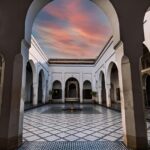
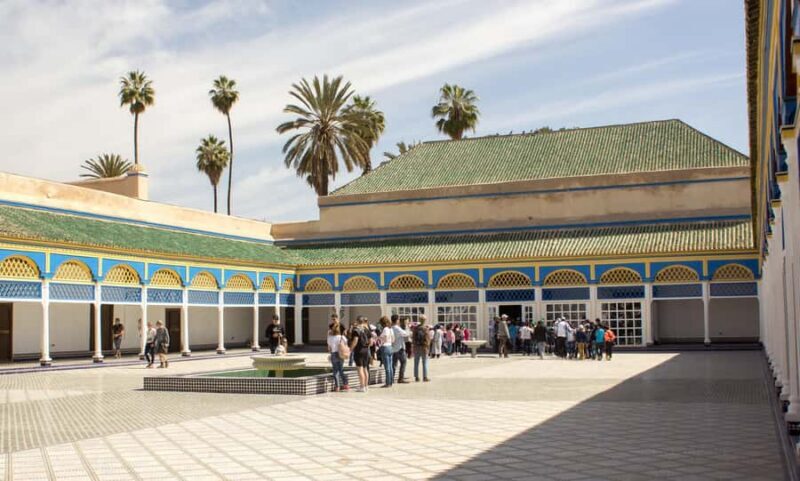
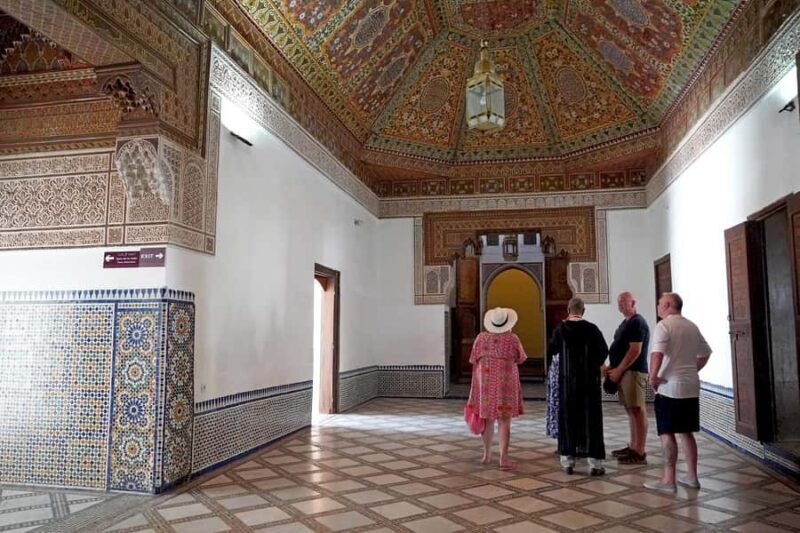
The palace is an early anchor on the walk, with roughly an hour scheduled for the visit. Built in the 19th century, Bahia Palace is known for its elaborate design and craftwork. It offers a close look at the decorative traditions that make Marrakech’s historic buildings so distinctive.
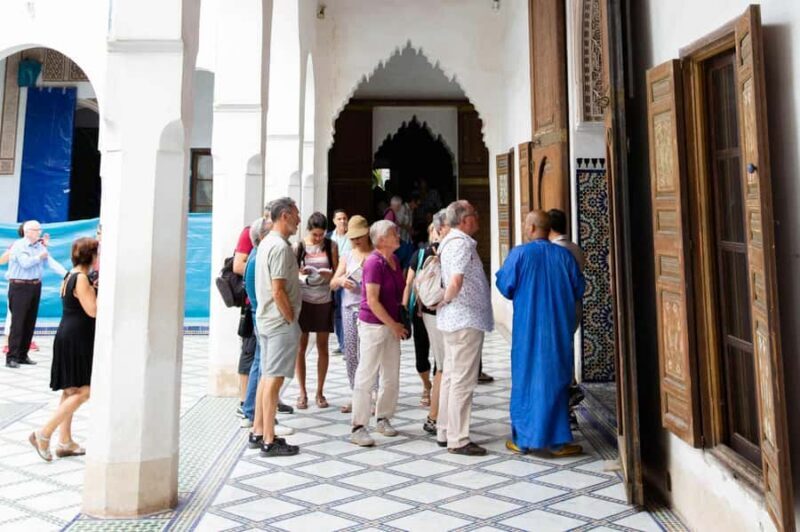
The guide’s explanation helps you read the details rather than simply pass through room after room. Visitors particularly value hearing about the palace’s history and the wider context of Moroccan architecture. You should also have some time to look around and take photos, though the pace is still that of a group tour, not an unhurried solo visit.
Admission costs 100 MAD per person and is not included in the tour price. Skip-the-line access is included, but that is not the same as a free ticket. Keep this distinction in mind when comparing the $20 headline price with the full cost of the morning.
After the palace, the route includes a short stop in the Mellah, followed by Souk Semmarine and Rahba Kedima. This is where the walk shifts from monument interiors to the movement and trade of the old town. In the souks, you may see traditional clothing, leather goods, spices, perfumes and beauty products, along with the shops and workshops that supply them.
A guide makes a real difference here. The medina’s lanes can look similar at first, and the market is easy to experience as a blur of stalls if you do not know what you are looking at. Guides can explain the cultural uses of spices and products, point out craft techniques, and help you notice the work behind the finished goods.
The tour may take you past workshops where artisans make pottery, metalwork and wooden objects. Some guides also introduce visitors to cloth dyeing or local oil and herbal products. Those stops can add useful context, but they may include a shopping element. If you want to browse, ask how much time is available and feel free to say politely when you would rather keep moving.
You are not required to buy anything. A market visit is more rewarding when you can look, ask questions and enjoy the variety without feeling obliged to leave with a bag of spices or oil.
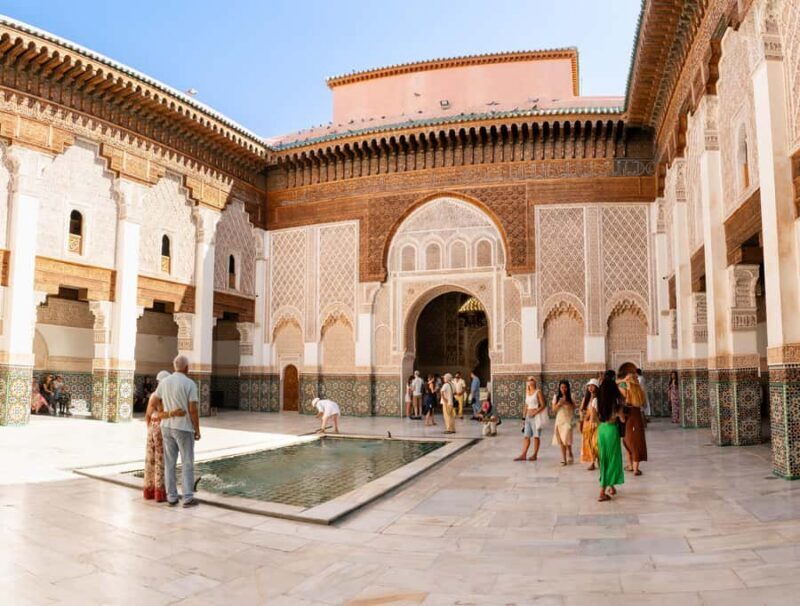
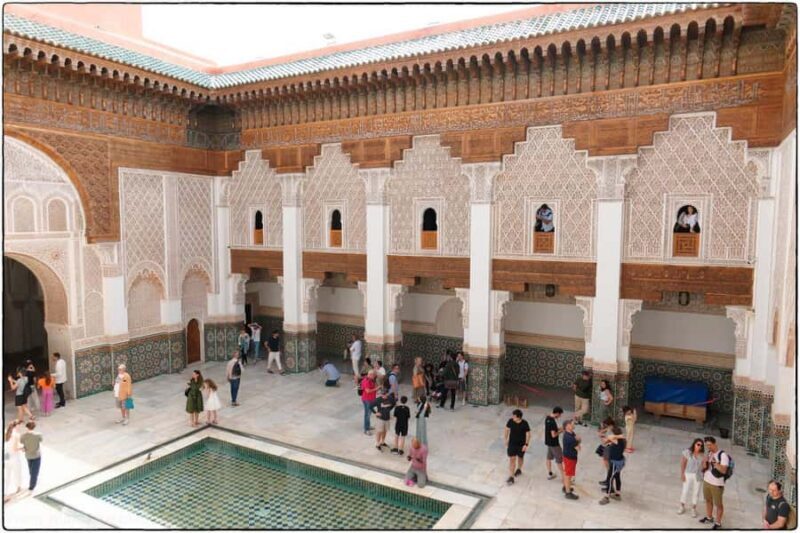
The former Quranic school, also called Ben Youssef Medersa, is one of the tour’s strongest architectural stops. Allow about 45 minutes. Its courtyard and interior details bring together zellij mosaics, carved cedarwood and stucco plasterwork, showing how much skill can be packed into a relatively compact space.
The guide helps connect those patterns and materials to the building’s purpose and the history of the city. This is a good place to pause and look closely: a quick photograph cannot capture the layers of tile, wood and plasterwork. Admission is 50 MAD per person, paid separately.
The palace and madrasa complement each other. One gives you a sense of a grand residence, the other of a place of study. Taken together, they help make the medina’s architecture feel less like a collection of beautiful surfaces and more like part of the city’s daily and historical life.
More Great Tours Nearby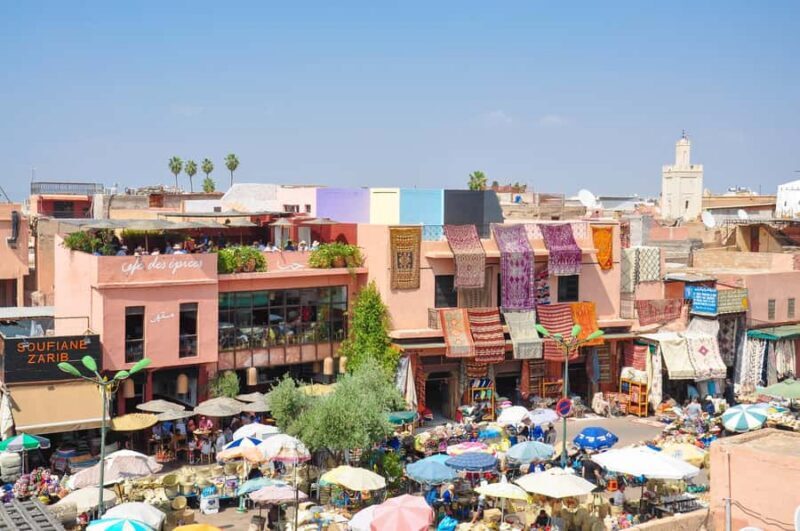
Le Jardin Secret is described as a possible stop if time and the group’s pace permit. The itinerary allows 30 minutes, but the visit is not guaranteed in every outing. If included, it offers a quieter contrast to the market lanes, with Islamic design, fountains and a calmer atmosphere.
The garden has a separate 100 MAD entry fee. If it is important to you, check the plan with the provider before booking rather than assuming it will fit into the walk. With several major stops already packed into four hours, the guide may need to adjust the route to keep the group on schedule.
The tour ends at Jemaa el-Fnaa, with drop-off listed at Café de France or in the medina. The square is a useful place to continue exploring or stop for a break after the walk. It can also feel like a busy finale after several hours on foot, so bring water and save some energy for getting back to your accommodation.
The guide is a big part of the experience. Past tours have been led by people including Kamal, Hassan, Mouhssine, Yassine, Ayoub and Mustapha. You cannot select a particular guide based on those names, but the qualities repeatedly associated with the guiding style are clear: local history, cultural context, humor, answers to questions and useful advice for the rest of a stay.
The tour is offered as a private or small-group walk, depending on the option you choose. Group size can vary: some outings have had just four or eight people, while another group was around 16. A smaller party is easier for hearing explanations and asking questions, but the size on your date is not guaranteed unless you book a private group.
Pace deserves attention. Most groups describe the walk as manageable, but it includes sustained walking and standing, and one person found the guide moved quickly. Comfortable shoes are essential. If you have a slower pace, mobility concerns or want longer at each monument, consider a private tour and raise that before setting out. The activity information says it is not suitable for people with mobility impairments.
At $20 per person, the tour is a low-cost way to get orientation, local interpretation and access to several important sites in one morning. It includes a licensed local guide, a private or small-group format depending on your booking, skip-the-line access at monuments and time to explore each monument. A WhatsApp reminder with the guide’s name, meeting point and helpful tips is also included.
But the monument tickets are extra. If you visit Bahia Palace and Ben Youssef Madrasa, add 150 MAD per person. If Le Jardin Secret is included, that adds another 100 MAD. Transport, food and drinks are not included either. In other words, the tour fee buys the guided route, not an all-in admission package.
That can still be good value, especially for a first visit. A guide can help you understand what you are seeing and make the medina easier to navigate later. If you already know the area and prefer to visit monuments at your own pace, you may get less from the guided structure.
The tour is offered in English, French, Spanish and Italian. Free cancellation is available up to 24 hours ahead, and the reserve-now, pay-later option keeps booking flexible. Bring water, sunglasses and a sun hat, as well as shoes that can handle several hours of walking.
Book it early in your stay if you want a sound introduction to the medina, its major monuments and its market lanes. The strongest reason to go is the combination of architectural stops and practical orientation: you can learn the story of Bahia Palace and Ben Youssef Madrasa, then get a better feel for how the souks fit together.
Go in with realistic expectations. The tour is busy, entrance fees are extra, and the garden visit depends on time. It is not ideal if you need a low-walking outing or want to linger at every stop. But if you are comfortable on your feet and want a helpful guide to turn a maze of lanes into a place you can explore with more confidence, this is a worthwhile start.
“Kamal was absolutely amazing. He was knowledgeable, attentive throughout, and just a genuinely lovely person to spend the time with. We couldn’t …”
The walking tour lasts about four hours. The time spent at individual stops may vary with the group’s pace.
For the standard option, meet your guide in front of Café de France on Jemaa el-Fnaa. With the private option, pickup from a hotel or riad within the medina is available.
No. Bahia Palace costs 100 MAD, Ben Youssef Madrasa costs 50 MAD, and Le Jardin Secret costs 100 MAD per person.
Yes, skip-the-line access to the monuments is included. Entry tickets still need to be paid for separately.
No. It is included if time permits and depends on the group’s pace.
The live guide is available in English, French, Spanish and Italian.
A private group is available. The tour also has a small-group option; the group size depends on the option selected.
Pickup is available from a hotel or riad within the medina when you choose the private option. Otherwise, the meeting point is Café de France on Jemaa el-Fnaa.
Bring comfortable shoes, water, sunglasses and a sun hat.
No. The activity is listed as not suitable for people with mobility impairments, and the route involves substantial walking and standing.
You can check availability for your dates here: