Physical Address
304 North Cardinal St.
Dorchester Center, MA 02124
Physical Address
304 North Cardinal St.
Dorchester Center, MA 02124

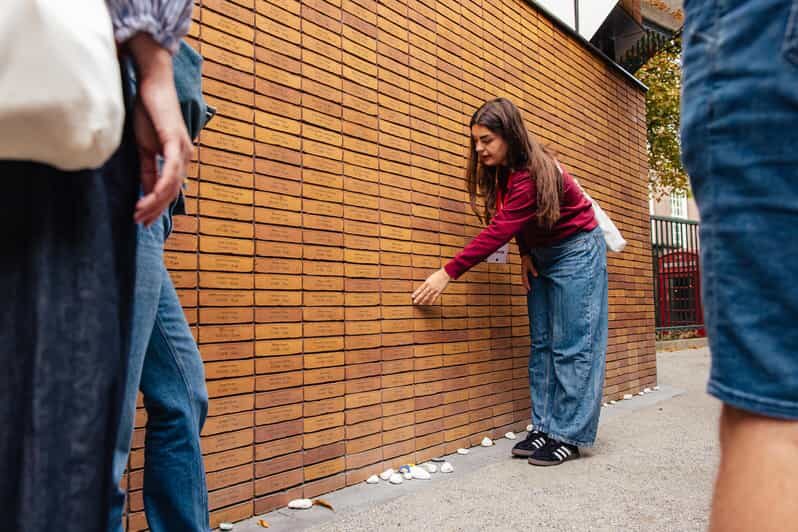
Trace Anne Frank’s story through Amsterdam’s canals and Jewish Quarter on a German walking tour with diary excerpts and memorial stops.
Anne Frank’s story takes shape across the city on this two-hour walk, from the monument beside Westerkerk to the Jewish Quarter and its memorials. At €22 per person, it connects a young diarist’s life with the wider history of Amsterdam’s Jewish community and the Nazi occupation.
I like two things especially: diary passages give Anne’s own words room in the tour, and the route links them to places such as the Portuguese Synagogue, the Auschwitz Monument, and the National Holocaust Names Monument. Guides including Lili, Samuel, Amelie, and Stefanie have been praised for clear, compassionate storytelling and for welcoming questions.
One important limit: you do not go inside the Anne Frank House, and the walk ends in a different part of the city from where it begins. The listed route includes many landmarks, so expect brief stops and plenty of walking rather than a long visit at each site.

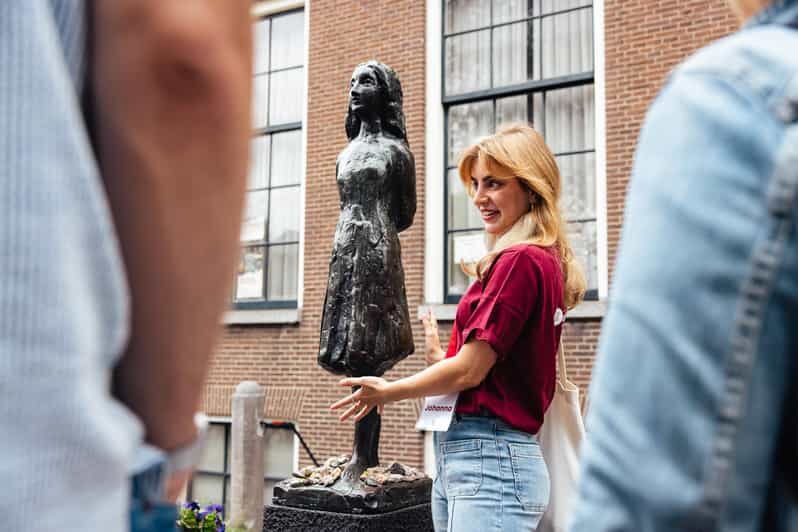
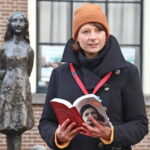
The meeting point is the Anne Frank Monument near Westerkerk, close to the house where Anne and her family hid. Starting here gives the guide a natural way to set the scene: Anne’s story is tied to a real neighborhood and a real building, not just to a book or museum display.
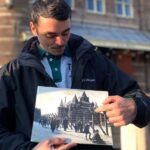
The route passes Westerkerk and the Anne Frank House, with short photo stops at both. You’ll hear about the Frank family’s hiding place, while diary excerpts bring Anne’s voice into the walk. That can help young readers and adults connect the broad facts of wartime persecution with the daily life of one family.
Keep your expectations clear at this point. The tour does not enter the Anne Frank House, and the $22 price does not include admission. If visiting the interior is a priority, you’ll need to arrange that separately. This walk can add context to a house visit, but it is not a substitute for entry.
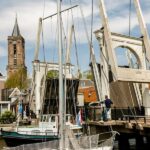
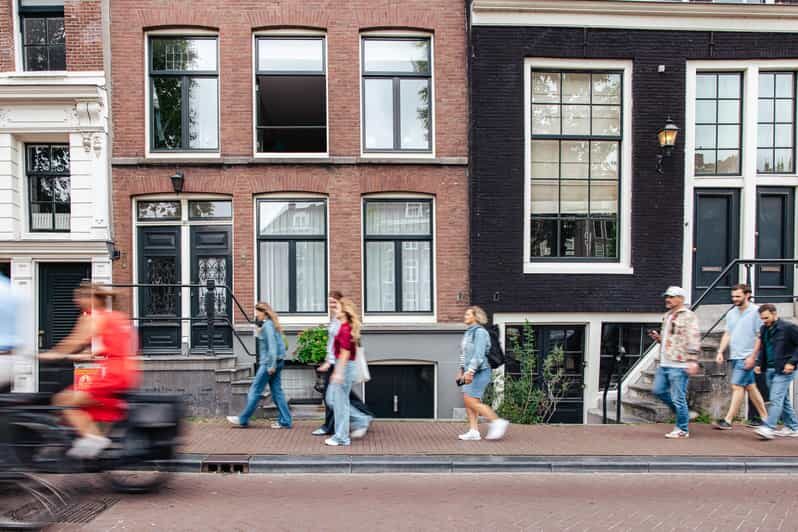
From there, the route uses the canals and central streets to widen the story beyond the Frank family. Stops include Torensluis Bridge, Magna Plaza, Nieuwe Kerk, and Dam Square. These are brief pauses, not visits to the interiors. The changing streets and buildings help orient you in the city while the guide explains how Amsterdam’s past connects to the events of the war.
If you enjoy exploring Amsterdam on foot, these walking tours might also suit your style
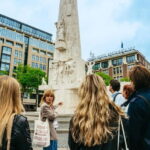
Dam Square brings the tour into the civic center of Amsterdam. The National Monument, the Royal Palace, and Madame Tussauds are all part of this busy central area, but the focus here is remembrance and the city’s experience during Nazi rule.
The National Monument is listed as a guided stop, with time for explanation. You may encounter it more than once in the route details, so don’t assume each listing means a separate, lengthy visit. It is best understood as one of several points where the guide links public spaces to the history of occupation and remembrance.
This balance of city sightseeing and serious history is one of the walk’s strengths. Amsterdam’s central streets are not a backdrop set aside from the story. The guide uses familiar squares and landmarks to show how daily city life changed for Jewish residents and how the persecution affected the wider community.
The stops are short, so the value lies in the guide’s explanation rather than in a long time at each monument. Participants have especially praised guides such as Samuel, Stefanie, and Valentina for answering questions and making difficult material clear. The subject calls for care, and the tour’s strongest accounts sound thoughtful rather than theatrical.
The walk continues toward the historic Jewish Quarter, also known as the Jodenbuurt. Here the subject broadens from Anne Frank’s family to the Jewish community that had shaped Amsterdam over generations. The guide explains how Jews expelled from Spain helped shape the city and how trade and commerce contributed to Amsterdam’s growth.
The route includes Zuiderkerk, Huis de Pinto, and the Rembrandt House, along with the Portuguese Synagogue. These landmarks give the Jewish Quarter a physical shape: a district where homes, worship, work, and commerce all formed part of community life. The Portuguese Synagogue is a particularly important stop, and a photo pause does not mean the tour includes entry.
You’ll also hear that Jewish residents were not the only people living in the district. Rembrandt van Rijn had a home in its heart, a useful reminder that neighborhoods are rarely defined by a single group or story. His presence connects the area to Amsterdam’s artistic life, while the guide’s account of trade helps explain the city’s prosperity.
The tour also touches on the Golden Age and the way commercial success supported art and creativity. Rembrandt and van Gogh are part of this broader story, alongside references to the Rijksmuseum, Van Gogh Museum, Stedelijk Museum, and Heineken Experience. These are listed as photo stops, not museum admissions or brewery visits. Treat them as points of city context rather than a chance to explore their collections.
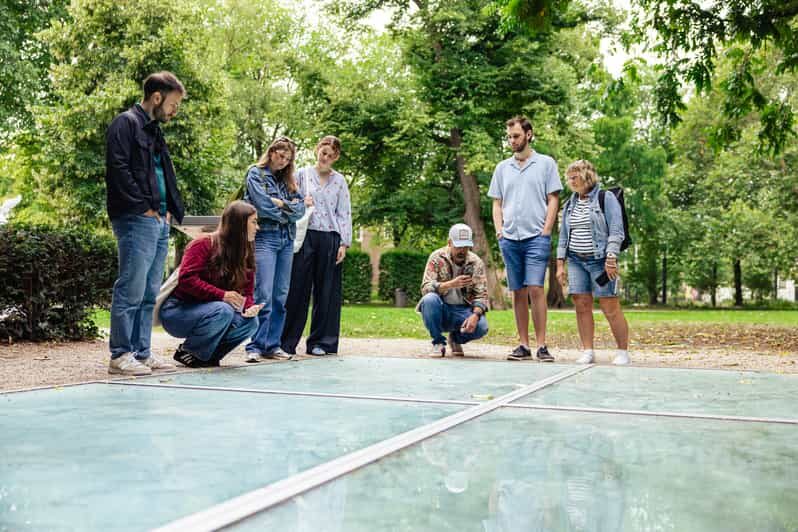
The latter part of the route focuses on persecution and remembrance. Stops include the Auschwitz Monument, the Dokwerker, and the National Holocaust Names Monument, where the walk finishes. The names memorial gives the tour a quiet, fitting endpoint: a place to pause with the scale of the loss in mind.
At the Auschwitz Monument and the Dokwerker, the guide sets Amsterdam’s history within the wider story of Nazi persecution and resistance. The exact emphasis can vary with the guide and the group’s questions, but the route is built to make clear that Anne Frank was one of many Jewish people forced into hiding or deported.
The National Holocaust Names Monument is not just another landmark on a sightseeing list. It helps bring the tour’s wider history back to individual lives and names. Since this is a walking tour in a public city, you should expect to hear the material outdoors and move between sites rather than spend a long time in one place.
The subject can feel heavy, and rightly so. Several stops deal directly with persecution, deportation, and murder. Guides including Amelie, Lili, and Johanna have been praised for handling the material with warmth and sensitivity, while others have connected the historical account to present-day questions. If you want a light, casual city stroll, this is not the right choice. If you want to understand Amsterdam through its wartime history, that seriousness is central to the experience.
More Great Tours NearbyThe tour is advertised as two hours, with short stops at a large number of sites. That is a brisk pace. The route details include many photo points, and the walk covers ground from the western canal area toward the former Jewish Quarter in the east. One participant specifically cautioned that it was a longer walk than expected and did not return to the starting point.
A practical way to plan is to wear comfortable shoes, bring clothing suited to the weather, and leave room in your schedule after the finish. The tour runs in all weather. It is described as wheelchair accessible, but because it covers a substantial route on foot, contact the provider if you need details about the route’s suitability for your particular mobility needs.
There is no food or drink included, and no meal stop is listed. The main product is the guide’s account, the diary excerpts, and the sequence of places. The tour is conducted in German, so you’ll get the most from it if you can follow a spoken explanation in German and ask questions in that language.
The route details include an unusually long list of named stops for a two-hour walk, including several museums and the Heineken Experience. These appear as short photo stops, not visits inside. The itinerary also repeats the National Monument, so treat the list as a guide to the landmarks connected with the route, not a promise of a substantial stop at every one.
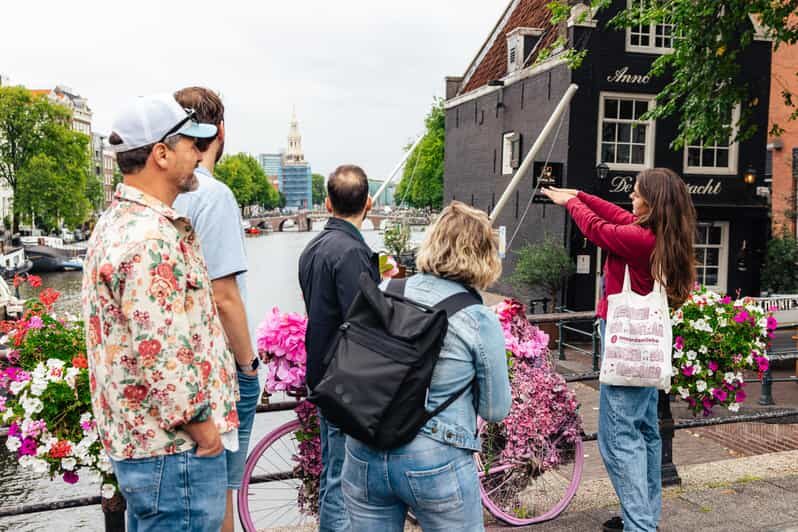
At $22 per person, the value depends on what you want. If you are looking for a museum ticket or a visit inside Anne Frank’s House, this is the wrong purchase. Neither is included, and the tour’s value is not in access to interiors.
For a guided walk that links Anne’s story to Amsterdam’s Jewish history, the price is reasonable. You get a licensed German-speaking guide for about two hours, diary passages, and an account that ranges from the hiding place to the Jewish Quarter and Holocaust memorials. A good guide can add context that is hard to gather by simply walking past these sites on your own.
The guide matters a great deal here. Names appearing in participant feedback include Lili, Amelie, Samuel, Stefanie, Valentina, Henning, Johanna, and Christina. Their strongest praised qualities are clear explanations, sensitivity, energy, and willingness to answer questions. You cannot count on a particular guide being assigned, but the tour’s format gives a thoughtful guide room to shape the experience.
The tour may also suit families with teenagers. Several parents describe their teens as engaged by the stories and diary excerpts, and one family found the walk prompted a young person to want to read Anne Frank’s diary. The content is serious, so use your judgment about younger children and their readiness for discussions of persecution and the Holocaust.
Booking offers free cancellation up to 24 hours in advance, and a reserve-now, pay-later option is available. Those terms can help if plans are still taking shape, but the key decision is the walking route and the German-language format.

Book it if you want more than a quick photo outside Anne Frank’s House and are interested in how Amsterdam’s Jewish community, city landmarks, and wartime memorials fit together. The diary excerpts and the route through the Jewish Quarter give the story a human and local frame.
Skip it if your main goal is to enter the Anne Frank House, avoid a long walk, or hear the tour in a language other than German. For a thoughtful, relatively affordable introduction to Anne Frank’s Amsterdam, this is a worthwhile choice, especially if you come prepared for a brisk pace and a serious subject.
“We really enjoyed the Anne Frank tour with Lili!!!!! The tour offered very interesting insights into the life of Anne Frank and her family, with va…”
No. The route passes the Anne Frank House and explains how the Frank family hid there, but admission to the house is not included.
The tour is conducted in German by a German-speaking licensed guide.
The stated duration is two hours. The route covers many sites, with short photo and guided stops.
It starts at the Anne Frank Monument near Westerkerk and finishes at the National Holocaust Names Monument. It does not return to the starting point.
The route includes the Anne Frank House, canals, Dam Square, the Jewish Quarter, the Portuguese Synagogue, the Auschwitz Monument, the Dokwerker, and the National Holocaust Names Monument. Other landmarks are listed as brief photo stops.
No. The tour price does not include the entrance fee to the Anne Frank House.
Wear comfortable shoes and weather-appropriate clothing. The tour takes place in all weather.
You can cancel up to 24 hours in advance for a full refund. A reserve-now, pay-later option is also available.
You can check availability for your dates here: