Physical Address
304 North Cardinal St.
Dorchester Center, MA 02124
Physical Address
304 North Cardinal St.
Dorchester Center, MA 02124

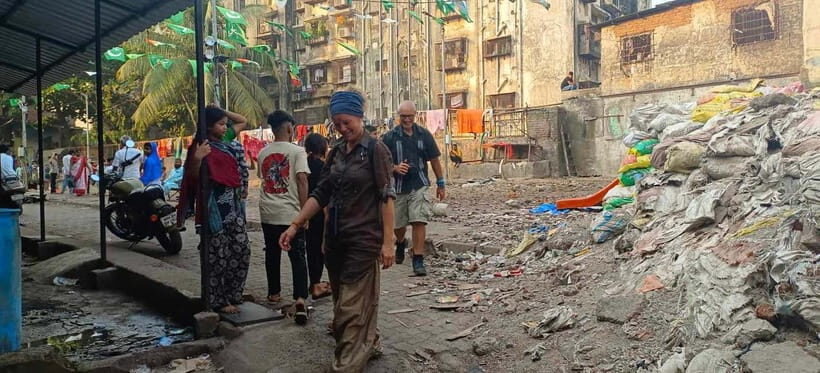
Walk Dharavi with a local guide, explore its workshops and homes, then see Dhobi Ghat’s open-air laundry on this three-hour Mumbai tour.
Dharavi is not just a place to look at from the edge of a train window. On this tour, you walk its lanes with a guide who lives in or grew up in the community, and see homes and workshops alongside the small businesses that give the neighborhood its economic force.
I like two things here: you get a close look at work such as plastic recycling, garment making and leather production, and a local guide can explain the daily routines behind what you see. The visit to Dhobi Ghat, Mumbai’s open-air laundry, adds a second, very different working neighborhood to the same three-hour outing.
One consideration: this is a visit to people’s homes and workplaces, not a staged attraction. You’ll need to follow your guide’s lead, respect residents’ privacy, and accept that the meeting point and exact route can vary with the option you book.

Dharavi can be reduced to a label from the outside. Walking through it with someone who knows the community offers a more useful view: people live here, raise families, work, trade and build businesses. The tour is designed to challenge the idea that the neighborhood can be understood through a single film or a quick glance.
That shift in perspective is the main reason I’d consider booking. Your guide can explain what you are looking at as you move through residential lanes and work areas, and can respond to questions in context. Several guides named on the tour, including Bharti, Ansh, Abi, Alkama and Faizan, have been described as residents or people raised in Dharavi. Your assigned guide may differ, so treat those names as examples rather than a promise.
Expect the route to show everyday spaces, not a polished visitor center. You may pass places where families live, children play and people relax, alongside workshops and businesses. The contrast matters: Dharavi is both a residential community and a place of work, and a walk that covers both helps you see more than one side of local life.
You can check availability for your dates here: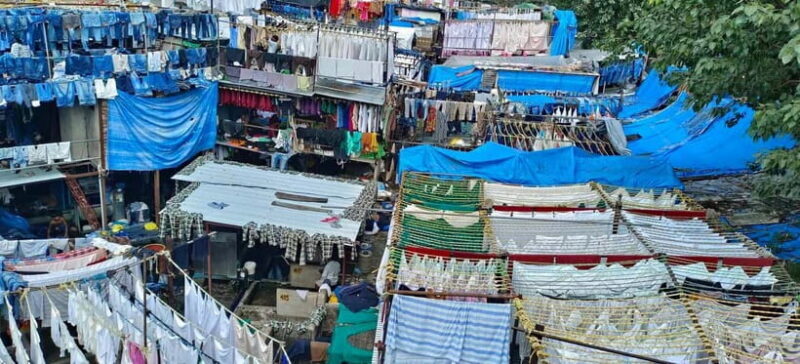
The work areas are among the most revealing parts of the visit. The tour highlights plastic recycling, garment and textile production, leather work and other local businesses. These are not just topics for a guide’s talk. You see the industries within the neighborhood where people earn a living.
The recycling activity is especially useful to understand in person. A guide can explain how the work fits into local business and daily life, and help you make sense of the processes around you. The tour’s description puts Dharavi’s yearly income at about US$1 billion, a figure that gives a sense of the scale of economic activity being presented. It should be understood as an estimate, not a measure you can verify simply by walking through a few lanes.
You may also pass through markets or other working areas, depending on the route. The point is not to treat each workshop as a photo stop. I’d listen first, keep a respectful distance when people are working, and ask your guide when and where photography is appropriate. The tour’s focus is on understanding the community, not collecting images of strangers.
This is a particularly good outing if you are curious about how a large neighborhood functions beyond the familiar landmarks of Mumbai. It gives you an on-the-ground introduction to work, housing and community life, with the guide filling in the context that a visitor might otherwise miss.
Looking for more options in Mumbai? Here are some other experiences worth considering.
The tour also enters residential parts of Dharavi. That is where the ethical question many visitors have becomes most immediate: is it fair to walk through someone else’s neighborhood as a tourist? A locally guided visit does not remove that question, but it can make the experience more thoughtful.
The guides are described as taking care to explain the area without turning residents into a spectacle. One guide, Ansh, was praised for showing daily life while respecting people’s privacy; another, Abi, was described as helping visitors understand both industrial and residential areas. That approach is central to the value of the tour. You are not simply looking around. You are being asked to pay attention, listen and behave as a visitor in a lived-in place.
Keep your camera put away unless your guide says a particular photo is appropriate. Follow instructions about where to walk and where not to linger. A friendly conversation with your guide can be more meaningful than a close-up photograph of someone who has not invited your attention.
The route can be warm and physically demanding, especially on a hot day. One guide has been noted for adjusting the pace and checking that the walk remained comfortable. Still, you should be ready to spend much of the three hours on foot. Water is included, but food and other drinks are not.
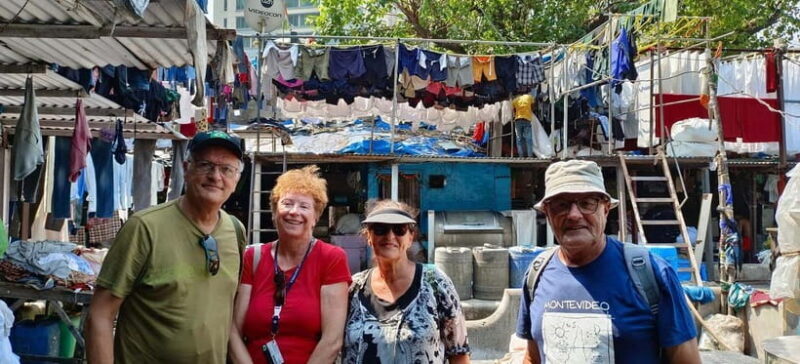
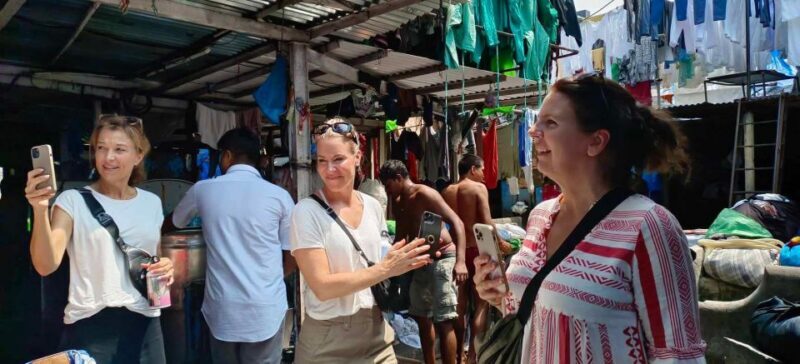
Dhobi Ghat gives the tour a distinct second act. This open-air laundry is a working site, and seeing it with a guide helps you understand the scale and system behind the rows of washing and drying. From a distance, it may look like a striking scene. Up close, the explanation of how the laundry works makes it more than a photo opportunity.
The guide can talk about the laundry’s operation and history, and help you follow the activity around you. That context is useful because Dhobi Ghat is not a display set up for visitors. It is a place of work, and the tour gives you a way to observe it while learning how the operation fits into city life.
Some versions of the outing have included a local train ride between areas. That can be a memorable part of the day: you experience a practical piece of Mumbai transport rather than moving only by private vehicle. The exact sequence and transport arrangements may depend on the booked option, so check the meeting details before you set out.
Several routes have included train travel, sometimes between Dharavi and Dhobi Ghat. This adds a different kind of insight: you see how the tour’s neighborhoods connect to the wider city, and experience a daily mode of transport with someone who can guide you through it.
The train is not a separate attraction with a guaranteed timetable or fixed route stated for every booking. Treat it as part of the experience when included, rather than a certainty for every option. Local transport can also mean the route needs to adapt. One guide was able to arrange a taxi when train service was delayed by construction work, a reminder that flexibility is useful in Mumbai.
For a first-time visitor, going with a guide makes these transitions simpler. You can focus on the places around you instead of trying to work out every connection on your own. The tour includes travel fees, but confirm the precise meeting point and itinerary for your selected option.
More Great Tours Nearby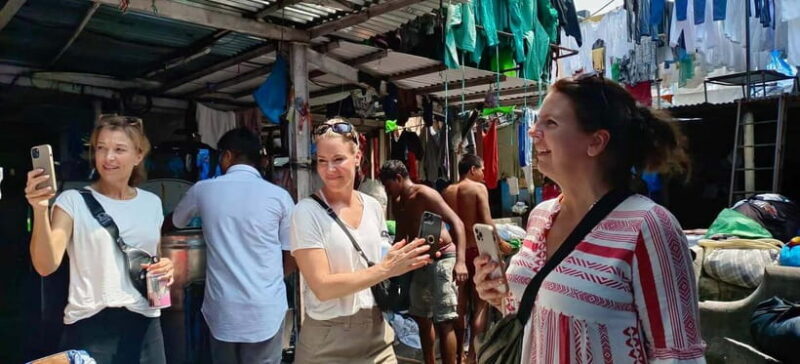
The tour also points out a place inside Dharavi associated with the filming of Slumdog Millionaire. It may be interesting if you know the film, but I would treat this as a small extra, not the main reason to book. The stronger part of the visit is learning about real work and home life beyond a movie’s framing.
That distinction matters. A film location can draw attention, but Dharavi is not a set, and the neighborhood’s life is far broader than any screen story. The guide’s explanations of industries, homes and community are what make the visit worthwhile.
Three hours gives you a substantial introduction to Dharavi and Dhobi Ghat, but not a full account of either place. The tour can show a range of work and residential settings, answer questions and provide transport between stops, while keeping the outing manageable within a Mumbai itinerary.
A private or small-group format is available, depending on the option you choose. Smaller groups can make it easier to hear explanations and ask questions, while a private tour may give you more room to set the pace. These formats are not necessarily available at every time, and the meeting point may vary, so check those details when booking.
The tour is in English, with an optional English audio guide also listed. A live local guide is the heart of the experience: names such as Bharti, Ansh and Abi appear among the guides, but the guide assigned to your booking is not guaranteed. The most consistently praised qualities are clear explanations, patience with questions, a personal connection to the area and thoughtful attention to visitors’ comfort.
At the advertised $4.45 per person, this is an unusually inexpensive three-hour guided outing. The fee includes an English-speaking local guide, entry tickets, travel fees and water. Food and other drinks are not included.
That price makes the tour a compelling value if the listed rate applies to the option and date you want. Do check the price shown for your actual booking, especially if you are choosing a private format or a different group size. The basic value is not just the number of stops. You get local explanation in places that would be difficult to interpret on your own, plus the chance to ask questions as the day unfolds.
The tour is rated 5 out of 5 from 469 reviews in the information available here. That is a strong signal, though your own experience will depend in part on the guide, group size and route. Free cancellation up to 24 hours before the activity and a reserve-now, pay-later option are available.
I’d recommend this tour if you want to understand Mumbai through the lives and work of its residents, rather than spending all your time among major sights. It suits curious visitors who are comfortable walking through active residential and industrial areas, listening carefully and following guidance about privacy.
It can also work for a solo visitor, a small group or a family. One family with children aged 8 and 11 found the experience worthwhile, but each child will respond differently to a long walk through working and residential lanes. If you are unsure about the ethics of a slum tour, choose a local guide-led option and approach it as a learning visit, not a sightseeing spectacle.
You may prefer another activity if you want a passive visit, guaranteed photo opportunities or a fixed route with no changes. The tour’s strongest feature is the chance to ask questions and see daily life with a local guide. Give that feature the attention it deserves, and Dharavi and Dhobi Ghat can offer a thoughtful, unusually grounded view of Mumbai.
“Amazing experience with ANSH. Would highly recommend it.”
The tour lasts three hours.
The live tour guide speaks English. An optional English audio guide is also listed.
Private and small-group options are available, depending on the option you select.
The tour visits residential and working areas, with a focus on local life and businesses such as plastic recycling, garment and textile work, and leather production.
Yes. Dhobi Ghat’s open-air laundry is part of the experience.
No. Food and drinks are not included. Water is included.
You can cancel up to 24 hours in advance for a full refund.
You can check availability for your dates here: