Physical Address
304 North Cardinal St.
Dorchester Center, MA 02124
Physical Address
304 North Cardinal St.
Dorchester Center, MA 02124

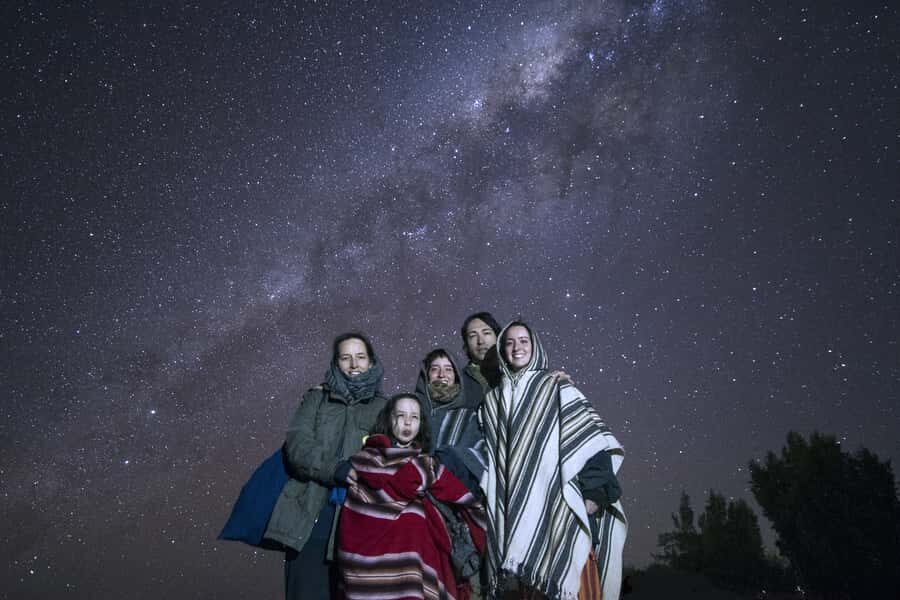
Stargaze beyond San Pedro de Atacama with an astronomy guide, telescope viewing, hot drinks, snacks, and a keepsake photo under the southern sky.
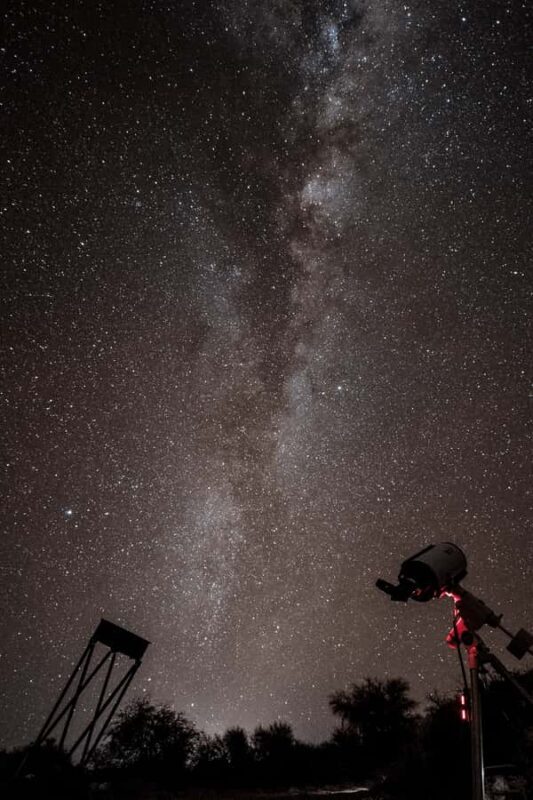
San Pedro de Atacama’s dark desert sky is the main event here: far enough from town to observe with the naked eye, then close enough through a telescope to pick out planets, star clusters, and other objects. Depending on the season and conditions, you may even see the Milky Way or the Magellanic Clouds.
I like two things about this outing: the guide makes the sky easier to read, and the telescopes turn a field of distant lights into individual sights. Blankets, snacks, hot drinks, and a starry-sky photo add comfort and a memento. The main consideration is the cold, along with the fact that the moon and sky conditions can affect what you see.
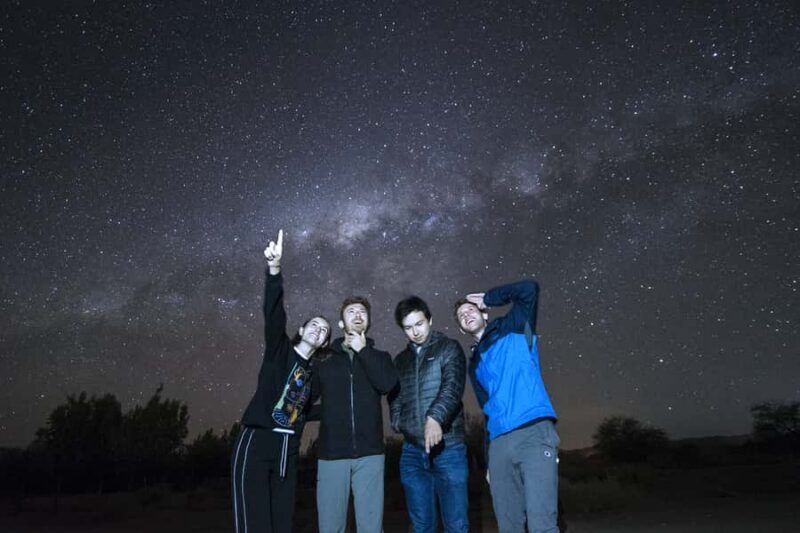
The outing begins at a meeting point that depends on the option you book. From there, the group travels by van for about 15 minutes to an observation site outside San Pedro de Atacama. That quick ride matters: the goal is to get beyond the town’s lights, where the sky is easier to observe.
The site is set up for looking upward rather than walking around. You receive a brief introduction, then spend time observing the sky with the naked eye. There are benches, cushions, and blankets at the site, according to one family’s account, but you should still dress for the cold rather than count on a blanket to do all the work.
The full experience lasts about 150 minutes. Allowing roughly half an hour for transport leaves about two hours for the guided session, drinks, snacks, and telescope viewing. The precise start time depends on availability and the option you choose.
You can check availability for your dates here: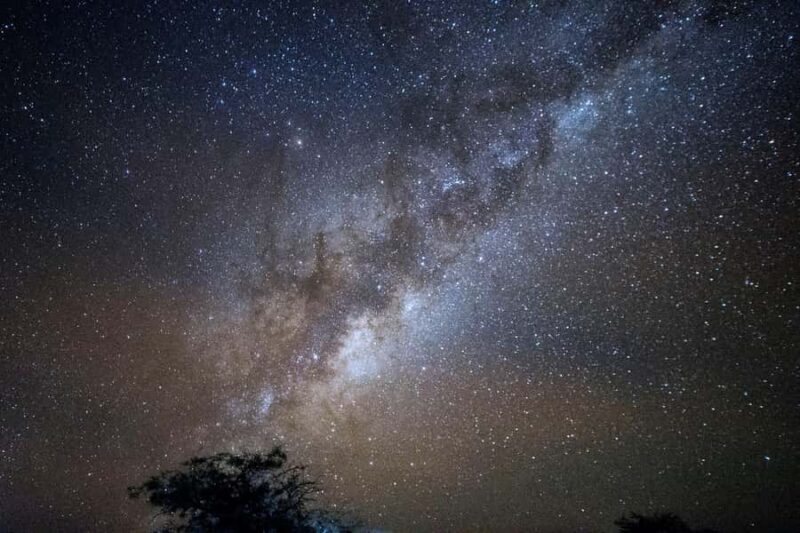
The guide begins with the naked-eye sky. That is more useful than it may sound. A telescope can show you a distant object in striking detail, but the guide’s first job is to help you understand where you are looking and how stars and constellations relate to one another.
The session includes explanations of astronomy and the constellations, with a link to how Ancient Greeks interpreted the night sky. It is a good way into the subject if you know little beyond the names of a few planets. Guides have explained topics such as finding the Southern pole and identifying planets, stars, and constellations. The exact emphasis depends on the guide and what is visible.
Guides including Alberto, Alejandro, Rafael, and Connie have led sessions, but you cannot count on a particular person for your date. The tour is offered in English and Spanish. If you have questions, ask them: the guide’s explanations and willingness to respond are central to what you get for the price.
The Greek perspective is an interesting doorway, though it is not a full survey of astronomy around the world. If you hope to hear extensively about Indigenous southern-sky traditions or the astronomy of cultures outside Europe, ask about the session’s focus before booking. The information provided for this tour specifically highlights the Ancient Greek approach.
Looking for more options in San Pedro De Atacama? Here are some other experiences worth considering.
After the introductory talk, you learn how to look through the telescopes. Depending on the time of year and what is visible, targets may include planets, stars, binary stars, stellar clusters, nebulae, and galaxies. What you see is not fixed. Season, sky conditions, and the moon all affect the night’s menu.
This is where the tour adds something a casual look from town cannot. With the naked eye, the sky can seem like a dense field of lights. Through a telescope, an object such as a planet or cluster becomes a more specific sight, and the guide can explain what you are looking at. Visitors have reported seeing Saturn and its rings, Jupiter and some of its moons, Mars, the Magellanic Clouds, and the Milky Way. Treat those as possible highlights, not promises for every date.
The telescope is shared, so you may need to take turns. In one family outing, the guide adjusted the telescope between viewers and provided a step stool so a child could reach the eyepiece comfortably. That is a useful sign of what attentive guiding can add, especially for children, but you should not assume every detail is guaranteed.
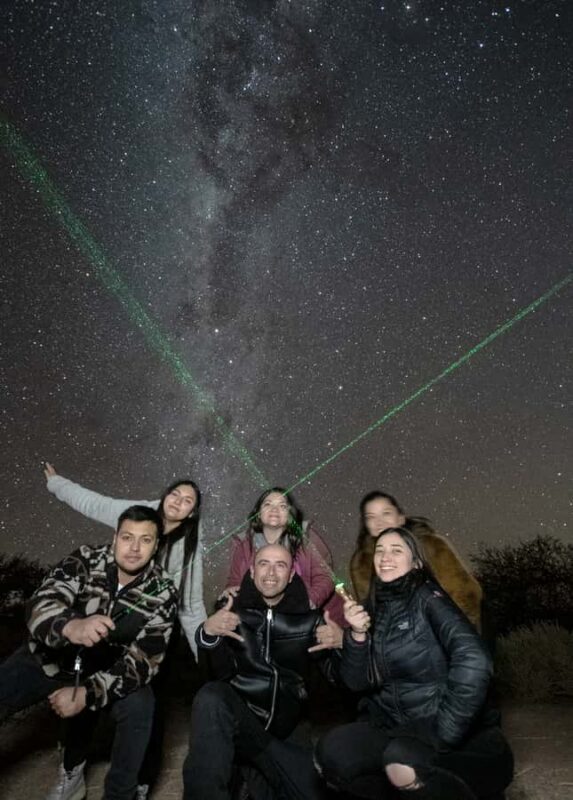
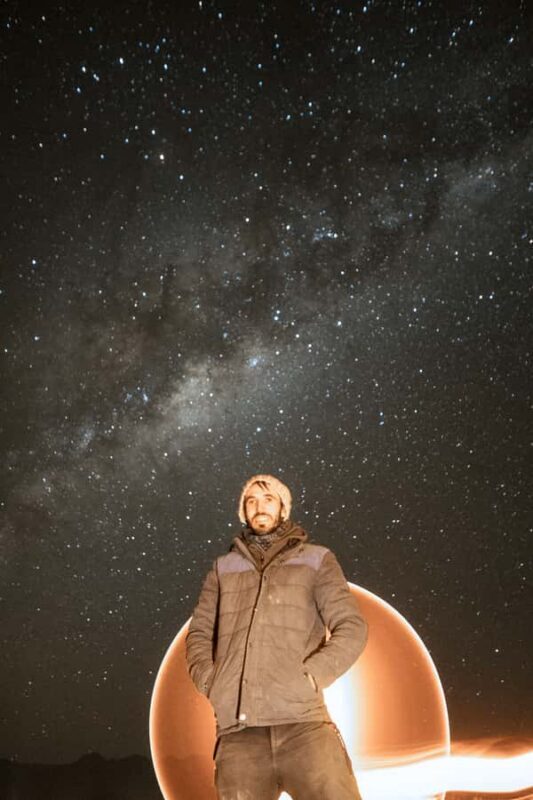
The tour also includes astrophotography. A photo under the stars can be a memorable keepsake, and many people value having one taken for them rather than trying to manage a camera in the dark. Still, photo delivery has not been trouble-free for everyone. If the image matters to you, ask the operator how it will be shared and when to expect it.
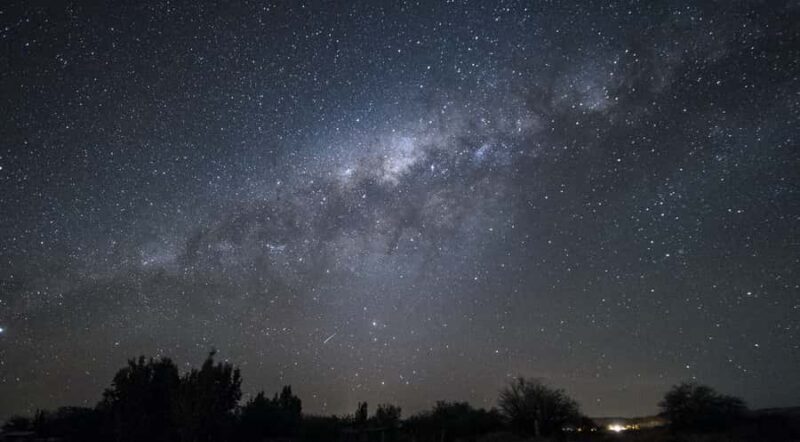
A darker sky generally makes faint stars and galaxies easier to see. Near the full moon, its light can wash out some of those details. If your priority is the Milky Way and faint celestial objects, check the moon phase when choosing a date and, if possible, favour a darker night.
But a moonlit session is not automatically a wasted one. The moon can be viewed through a telescope, and guides can shift the focus to brighter objects and the stories behind them. Some people have enjoyed seeing the moon rise or observing it close up after a full-moon period. The trade-off is straightforward: less darkness for faint objects, but a bright, dramatic target of its own.
Cloud cover and viewing conditions are not specified as guarantees, so keep expectations flexible. Astronomy is an outdoor activity, and the precise objects visible can change. A guide can still offer context and point out what the sky allows, but no telescope can produce a clear view through poor conditions.
The outing includes a snack and a choice of drinks. Listed options include red wine, pisco sour, juice, tea, coffee, and hot chocolate. Some sessions begin with a cold drink and finish with a hot one; the precise serving may vary. The warm drinks are more than a small extra when you are standing or sitting outdoors after dark.
Alcohol and drugs are not allowed, while red wine and pisco sour are listed among the included drinks. If you prefer not to drink alcohol, juice and the hot drinks provide alternatives. Do not bring your own alcohol or drugs.
Bring warm layers, a jacket, and comfortable shoes. The desert may be hot by day, but the night can feel very cold when you are sitting still and looking through a telescope. A blanket is included, but it is a backup, not a substitute for a warm coat and layers. If you are sensitive to cold, dress more warmly than you think you need.
There is no bathroom included. Plan ahead before leaving town, particularly if you are travelling with children or expect to need a facility during the roughly two-and-a-half-hour outing.
More Great Tours Nearby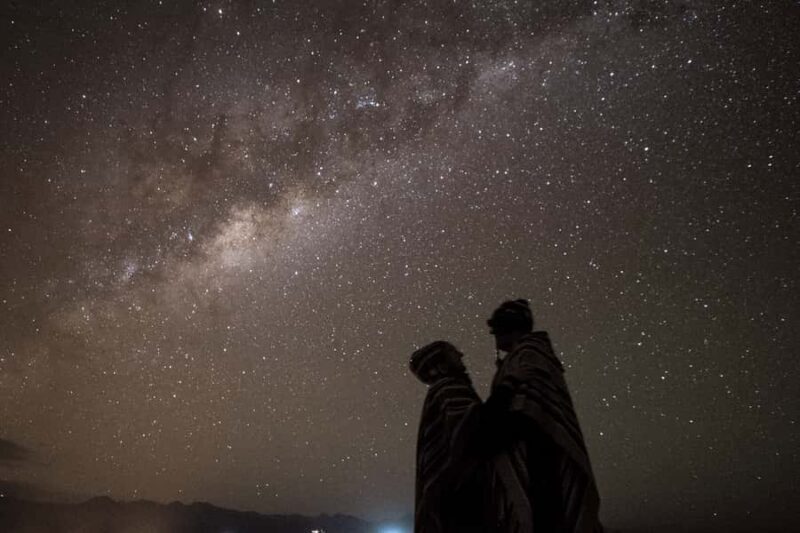
At $35 per person, the tour bundles transport, a live guide, telescope use, refreshments, blankets, a snack, and astrophotography into a 150-minute outing. If you want someone to explain the sky and set up the equipment, that is a practical package. The value is not simply the telescope: it is having a guide help you find and understand what you are seeing.
The price may not be the lowest available. One person who booked through a travel platform found the same type of tour could cost about a third less when bought locally. That does not establish the price you will find in town, and local availability may differ, but it is worth comparing if you have time before your chosen date. Booking online may be more convenient, while buying locally could save money.
The stated price is per person, and a small-group option is available. A private tour may also be offered through some arrangements, but it can cost considerably more; one account described a private outing as expensive for two people. Check the option and final price carefully before paying, especially if group size matters to you.
Free cancellation is available up to 24 hours in advance, and a reserve-now, pay-later option is offered. The meeting point varies by booking option, so confirm the one attached to your reservation rather than assuming every group leaves from the same place.
This is a strong choice if you are curious about astronomy but do not own a telescope or know how to use one. It also suits couples, small groups, and families with children old enough to stay engaged outdoors after dark. Children under four and people over 80 are listed as not suitable for the activity.
You do not need to arrive with astronomy knowledge. The talk is meant to make the sky easier to follow, and the chance to ask questions makes the experience more personal than simply looking through a telescope on your own. If you already know a great deal about astronomy, you may want to ask how technical the guide’s presentation is, since the amount of detail can vary.
This is also a good fit if you want a memorable evening that does not require a strenuous walk. The van takes you to the site, and the main activity is observation and listening. It is less suitable if you dislike cold nights, want a bathroom stop during the excursion, or need a guaranteed view of a particular planet or galaxy.
I would book this if seeing the southern sky with a guide and telescope is high on your San Pedro list. The combination of a short transfer, an astronomy talk, telescope viewing, refreshments, and a photo makes the evening easy to join, especially if you are new to stargazing. Choose a date with a darker moon if faint stars are your priority, and dress warmly regardless of the season.
Compare local prices if you have time, and confirm the meeting point and photo-delivery details before you go. If you are happy to let the guide work with the sky that night rather than expect a fixed list of celestial sights, this is a worthwhile way to spend an evening in the Atacama.
“Really informative and fun; I loved the telescopes! The welcome drink was a bit rubbish, but that it isn't really the point of the trip! Also, I wo…”
The activity lasts 150 minutes, including approximately 15 minutes of travel each way and about two hours at the observation site.
The van ride from town to the observation site takes about 15 minutes.
The live guide is available in English and Spanish.
Depending on the season and what is visible, you may observe planets, stars, binary stars, stellar clusters, nebulae, and galaxies.
Yes. Use of a telescope is included.
Yes. Drinks include tea, coffee, hot chocolate, juice, red wine, and pisco sour. A snack is also included.
Astrophotography is included. Confirm with the operator how and when your photo will be delivered.
Bring warm clothing, a jacket, and comfortable shoes. Nights can be cold, and blankets are included.
Children under four are listed as not suitable. The tour has been enjoyed by families with elementary-school-age children.
You can cancel up to 24 hours in advance for a full refund.
You can check availability for your dates here: