Physical Address
304 North Cardinal St.
Dorchester Center, MA 02124
Physical Address
304 North Cardinal St.
Dorchester Center, MA 02124

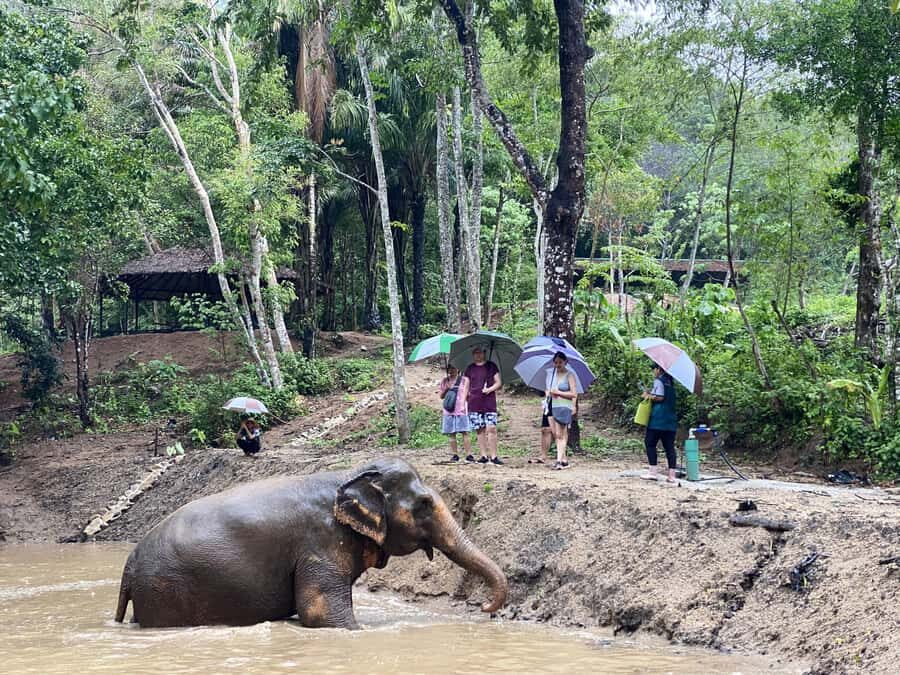
Meet rescued elephants at Phuket Elephant Nature Reserve on a 90-minute, hands-off visit with treat preparation, jungle observation, and welfare education.
At Phuket Elephant Nature Reserve, the main attraction is what you don’t do: no riding, bathing, tricks, or touching. Instead, you prepare enrichment treats and watch rescued elephants move, eat, and socialize at their own pace. I like that the visit puts elephant welfare before close-up contact, and that guides explain the individual animals’ rescue stories rather than treating them as photo props.
I also like the compact 90-minute format. It gives you time to learn, prepare food, and walk through the reserve without turning the visit into a full-day commitment. The trade-off is that this is an observation-led program, not a hands-on encounter. If touching or bathing an elephant is what you want, this is the wrong tour, and the reserve’s rules are clear about that.
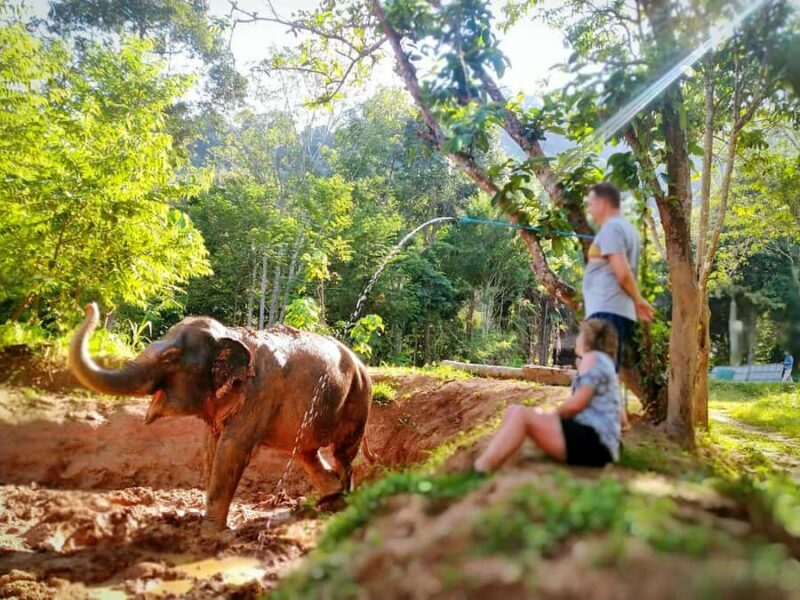
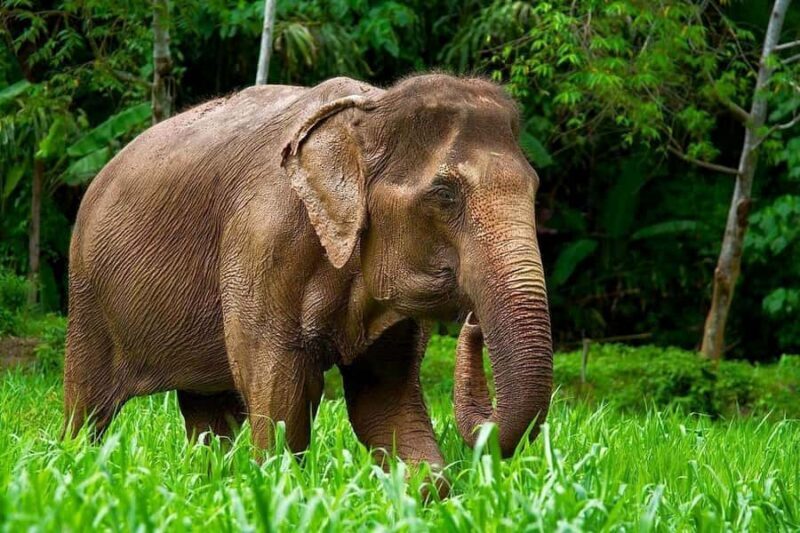
Phuket Elephant Nature Reserve describes itself as an accredited ethical sanctuary, established in 2019. Its stated credentials include certification by the Phuket Regional Livestock Office under Good Animal Practices, audits by SGS Thailand and ACES, and membership in WISE and WARN Asia. Those details matter because the word sanctuary is used loosely in wildlife tourism. Here, the program’s clearest practical standard is its hands-off policy: no riding, bathing, or touching.
That policy changes the shape of the visit. You are not there to make an elephant perform or to secure a close-contact photograph. You are there to observe, learn, and help with a small part of its daily enrichment. The distinction may seem modest when you are planning a holiday activity, but it affects how elephants spend their time and how people are taught to approach them.
The reserve cares for five named elephants, and their stories are part of the program rather than a footnote. Guides describe how elephants can arrive after years in logging, trekking, or street-begging work. You hear about the lives behind the animals in front of you, which gives the jungle walk more meaning than simply spotting a large animal among the trees.
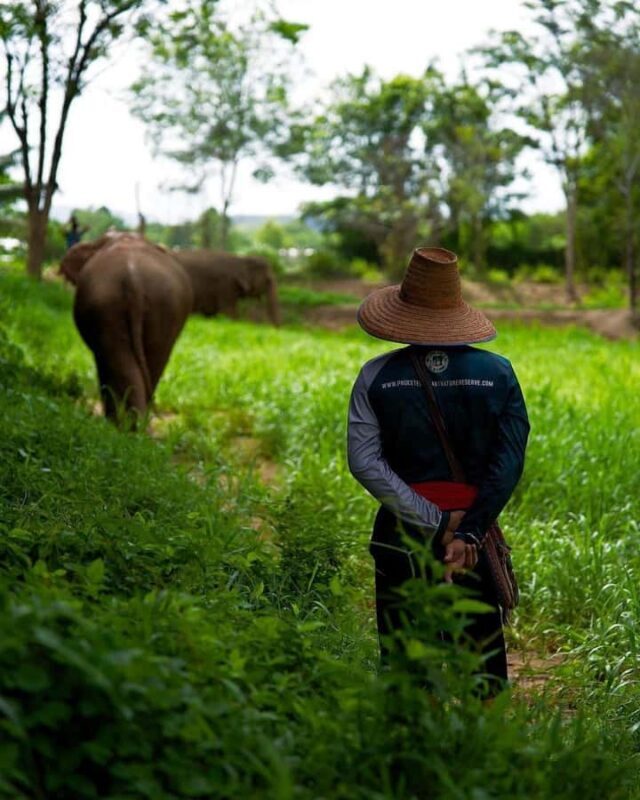
The group program is small, with an English-speaking guide. Past visitors have mentioned guides named Mike and Dang, though your guide may be someone else. The best guides help you read what is happening without pretending that every elephant will behave on cue. An elephant may forage, rest, or walk away. That freedom is the point.
Looking for more options in Phuket City? Here are some other experiences worth considering.
The schedule adds up to 90 minutes: a 10-minute safety briefing, a 20-minute class, 35 minutes of wildlife viewing, a 20-minute guided tour, and a 5-minute photo stop. In practice, these parts work together. The early explanation gives you context; the later walk gives you a chance to apply it while watching the animals.
Meet your guide next to Hug Me Cafe at the reserve and arrive 15 minutes before your start time for check-in. The opening briefing covers safety, welfare principles, and how the reserve cares for elephants rescued from difficult working conditions.
This is the moment to adjust your expectations. You are asked to keep a respectful distance, and the guide will explain what you can and cannot do around the animals. That clarity is useful: there is no awkward guessing about whether touching is allowed or whether a photograph requires an elephant to stand still.
Listen for details about the five elephants and their individual histories. Names such as Lotus, Bow, Thonglor, Nong Tang, and Mae Boon Lai give you a way to follow the group through the visit. A story about one elephant may make you think differently about the tourism activities that once shaped its life.
Next, you help prepare enrichment treats at the Elephant Kitchen. Ingredients can include seasonal fruit, fiber, and herbs. The point is not to make a snack for a staged interaction. Enrichment gives the elephants something to investigate and forage for, supporting natural behavior as part of their daily care.
This section is hands-on in a careful way. You handle the ingredients, but the elephant decides if and when to eat. Depending on the staff’s arrangements, food may be placed in a basket or at a feeding table for the elephants to take on their own time. The program does not permit hand-feeding or touching.
That limit may disappoint anyone expecting a close animal encounter, but it offers a more useful lesson than a quick photo opportunity. You see how a simple activity can support feeding and foraging without requiring the elephant to obey a visitor. It also helps explain why the reserve’s idea of interaction is different from many familiar animal-tourism experiences.
More Great Tours NearbyThe longest stretch is the guided observation walk along shaded forest trails. You may see elephants roaming, foraging, dust-bathing, or spending time together. Your guide explains behavior, diet, communication, and individual personalities as you go.
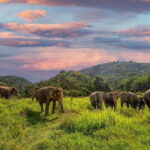
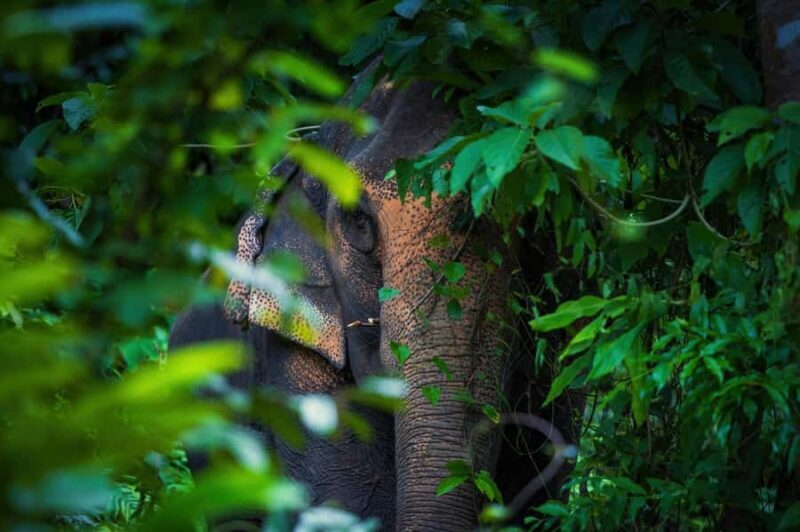
The walk is not a parade route. The elephants move at their own pace, and the group observes from a respectful distance. They may come into view nearby, but closeness is not promised or forced. That unpredictability is part of what makes the visit feel less like a show and more like watching animals in a place designed for their care.
The reserve’s natural setting adds to the experience, but the path is not a paved promenade. Expect gentle walking on uneven jungle trails. Closed-toe shoes or sturdy sandals with good grip are a sensible choice, especially if the ground is slippery or wet. This is a mild physical outing, but it is not suitable for wheelchair users or people with mobility impairments.
Take time to watch rather than keeping your phone raised for the whole walk. An elephant eating or dust-bathing may seem ordinary at first, but the guide’s explanations help you notice details in posture, movement, and social behavior. And if an elephant chooses to wander away, that is not a missed photo. It is the animal exercising choice.
The guided portion adds context to what you have just seen. You can ask about the elephants’ care, diet, rescue histories, and the welfare principles behind a no-touch program. The reserve also aims to explain why practices that look gentle to visitors, including bathing with elephants, can still be stressful or harmful.
This part is especially valuable if you are weighing different elephant activities in Phuket. A pleasant setting and friendly staff are not, on their own, proof of good welfare. Ask what the elephants are required to do, how they are handled, and whether they can move away from people. The reserve’s stated approach is observation-led, with no forced bathing, tricks, or physical contact.
Guides including Mike and Dang have been praised for making the material approachable and for sharing the elephants’ stories. Your guide may differ, but the program is designed to be educational rather than simply scenic. Bring questions if you have them; the briefing and walk are a good time to ask.
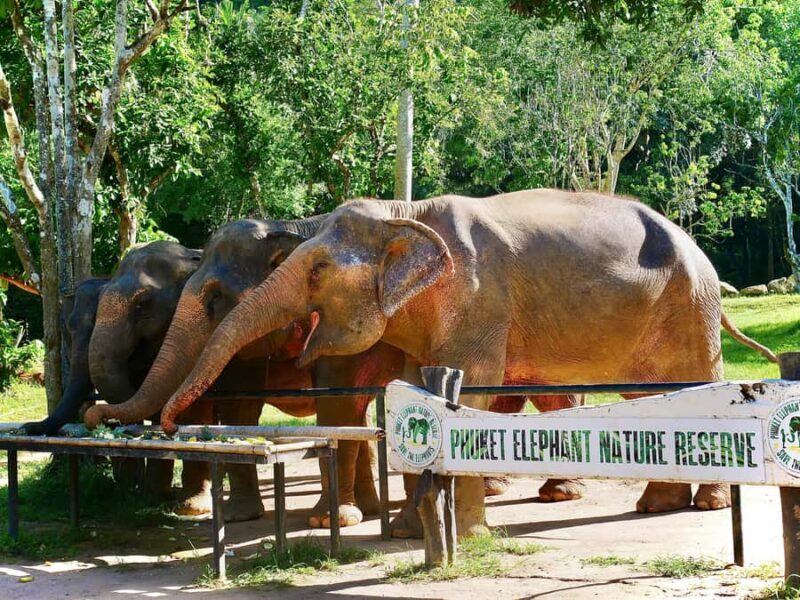
When appropriate, staff arrange a short feeding with food prepared by the team. It is supervised and hands-off, with visitors watching from a designated area. Do not expect to hold food out to an elephant or pose beside one. The animals are free to approach the food or leave it.
The program ends with a brief photo stop and time for questions. Photography is welcome from the designated viewing area, but the reserve’s rules still come first. A distant picture of an elephant behaving naturally is a fair trade for a posed image that would require a forced interaction.
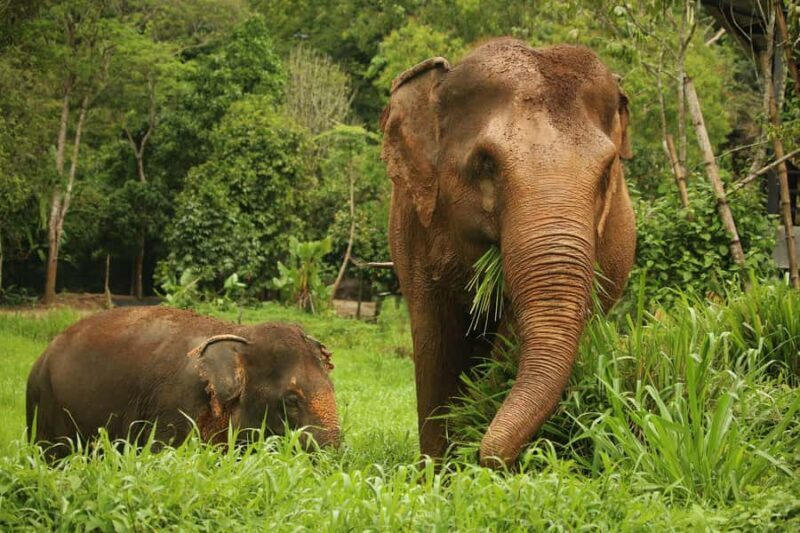
At $38 per person, this is not the cheapest way to see elephants in Phuket. The price includes entry, a small-group program with an English-speaking guide, the welfare briefing, enrichment preparation, guided jungle observation, supervised hands-off feeding when appropriate, refillable drinking water, and accident insurance.
The value is less about the number of activities than the kind of visit you are supporting. Your ticket contributes to food, veterinary care, and future rescues. You also receive context that can help you make more informed choices about elephant tourism elsewhere. If your priority is a long visit or a day packed with activities, the 90-minute program may feel brief. If you want a focused introduction to the reserve’s work, the length is practical.
There is a half-day Elephant Adventure for people who want lunch and more activities. The short program does not include hotel transfers, food, or beverages beyond water refills, so factor in your transport and any meal plans. One visitor described the drive from Patong as taking about an hour because of traffic, but travel time will depend on where you are staying and conditions on the road.
The reserve has a cafe where you can eat before or after the tour; visitors have highlighted its food and reasonable prices. That can make the visit easier to plan, especially if you are travelling across Phuket for the short program. Check your transport arrangements before booking rather than assuming a hotel pickup is included.
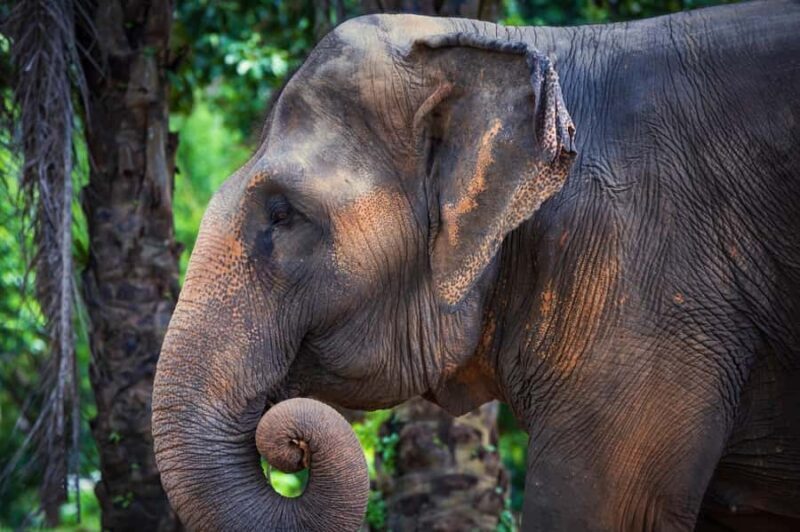
Choose this tour if you want to see elephants without riding, bathing, touching, or encouraging them to perform. It suits people who are curious about elephant welfare and rescue, families looking for an educational outing, and anyone who would rather watch natural behavior than pose for a close-up photo.
It is also a good fit if you want a shorter activity that still has a clear structure. In 90 minutes, you get an introduction, a practical enrichment activity, time on forest trails, and a chance to ask questions. The small-group format should feel more personal than a large, fast-moving attraction, though the exact group size is not specified.
Skip it if you need step-free access, use a wheelchair, or have difficulty walking on uneven ground. It is also not the right choice if you expect to touch or hand-feed an elephant. The reserve’s rules are not a minor restriction to work around; they are central to the experience.
Bring comfortable shoes, a hat, sunscreen, weather-appropriate clothing, and a reusable water bottle. Free refill stations are available, so you do not need to rely on buying bottled water at the reserve. Sunglasses and insect repellent are also sensible in the heat and forest setting; the reserve recommends biodegradable sunscreen.
Arrive 15 minutes early and look for your guide next to Hug Me Cafe. Pets, drones, and intoxication are not permitted. English is the language listed for the guided program, and starting times vary, so check availability for the date you want.
The activity offers free cancellation up to 24 hours in advance for a full refund, and you can reserve now and pay later. That flexibility is helpful if your Phuket plans are still shifting, but it does not replace arranging your own transport.
Book it if you want an ethical, observation-first elephant visit and are comfortable keeping your distance. The strongest parts are the clear no-touch rules, the opportunity to prepare enrichment treats, and the guided walk that links what you see to each elephant’s care and history. At $38, the ticket supports daily welfare while giving you a focused, well-paced introduction.
Do not book expecting bathing, hand-feeding, or guaranteed close contact. The elephants are not there to perform, and the visit is better for that. If you value a respectful encounter and can manage the uneven paths, this is a thoughtful way to spend an hour and a half in Phuket.
“Very enjoyable experience. Well informed guide. Did the 90 min tour at 3pm. This was plenty of time to interact with the animals and learn about th…”
No. The reserve has a hands-off policy, with no touching, riding, or bathing.
No. Staff may arrange a supervised feeding from a designated viewing area, but you do not hand-feed the elephants. You can help prepare enrichment treats for them.
The program lasts 90 minutes. It includes a safety briefing, a class, wildlife viewing, a guided tour, and a short photo stop.
Yes. The program includes a live English-speaking guide.
No. You need to arrange your own transport to the reserve.
Meet your guide next to Hug Me Cafe at Phuket Elephant Nature Reserve. Arrive 15 minutes before your start time for check-in.
Bring comfortable shoes, a hat, sunscreen, weather-appropriate clothing, and a reusable water bottle. The reserve has free refill stations.
No. It is not suitable for wheelchair users or people with mobility impairments. The route includes gentle walking on uneven jungle paths.
You can check availability for your dates here: