Physical Address
304 North Cardinal St.
Dorchester Center, MA 02124
Physical Address
304 North Cardinal St.
Dorchester Center, MA 02124

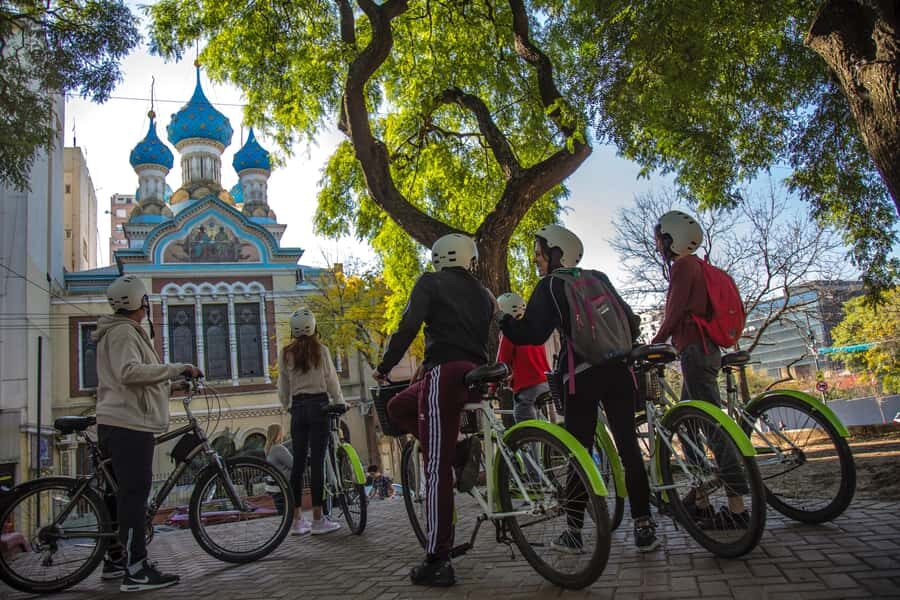
Cover more of Buenos Aires by bike on a four-hour guided tour, choosing a South route of tango, La Boca and the river or a North route of parks and palaces.
Buenos Aires sprawls, and a bike lets you link its old port, football heartland and riverfront in a morning or afternoon. On the South Circuit, you ride past San Telmo, La Boca, Caminito and Puerto Madero; the North Circuit trades those stops for grand Belle Époque buildings, Recoleta and Palermo’s parks.
I like two things in particular: you cover far more ground than on foot, and the guide connects the sights to local life, from tango and immigration to football and the city’s changing skyline. Guides such as Santiago, Pilar and Florencia are repeatedly singled out for clear explanations, a calm pace and useful recommendations.
The trade-off is that four hours means a broad introduction, not a long visit at every stop. The North route includes more riding and can use busier roads; on the South route, the Ecological Reserve is closed on Mondays and may close after bad weather.
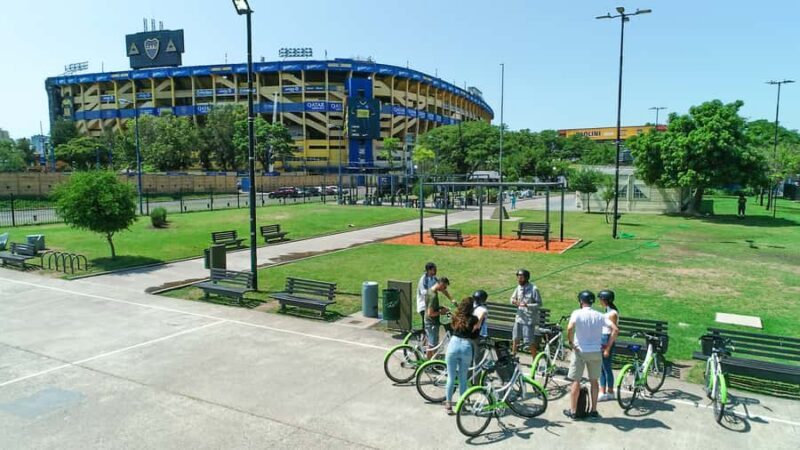
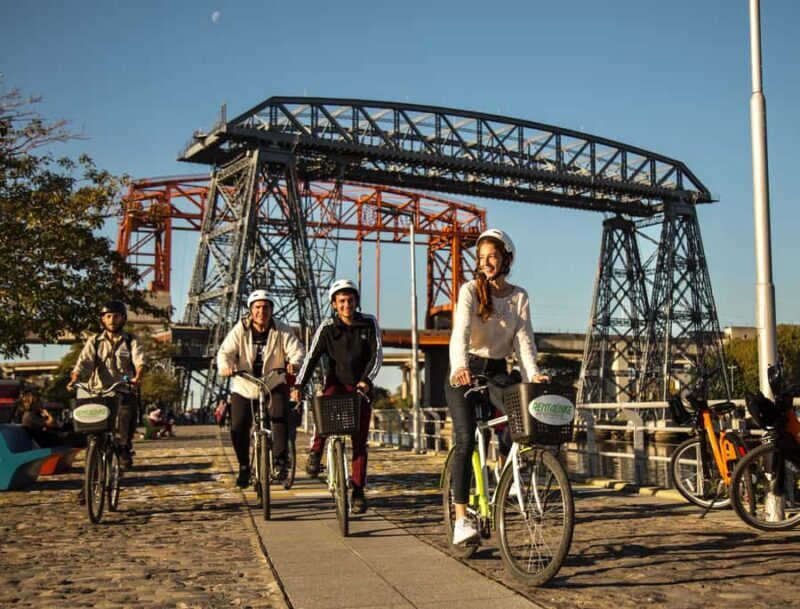
The two circuits offer different first impressions. Choose South for the city’s old quarter, tango associations, working port stories and the colorful streets of Caminito. Choose North for grand architecture, leafy parks and a look at the districts shaped by Buenos Aires’ late-19th-century growth.
You will need to book a specific circuit. The routes are not one long ride that covers every stop listed here. If you have time for only one, decide what you most want to see, or consider doing both on separate days. One rider who took both found the routes and experiences distinct, while another described the North ride as a useful introduction to places worth returning to for a longer visit.
Looking for more options in Buenos Aires? Here are some other experiences worth considering.
The South ride begins around San Telmo, Buenos Aires’ old quarter. Its early-20th-century character sets the scene for stories about the city’s foundation, immigration and tango. Parque Lezama is a key stop, where the guide talks about the first foundation of Buenos Aires. The Russian Orthodox Church of the Holy Trinity may also appear on the route.
From there, the tour continues toward La Boca. At La Bombonera, the football stadium is more than an architectural landmark: it is a symbol of the area’s strong club identity and local passion for the game. The stop is brief, so think of it as an introduction rather than a stadium visit. If a deeper football experience matters to you, ask your guide what is possible that day; one rider was able to tailor a private outing to include a stadium tour, but that should not be assumed as part of the standard circuit.
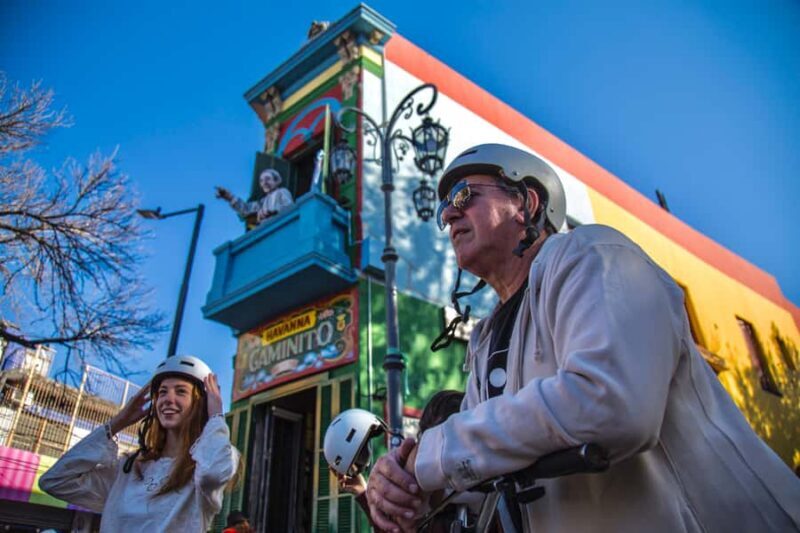
Caminito is one of the South route’s most memorable pauses. Its brightly painted buildings and street-art scene are a sharp change from the city’s formal avenues. You get some free time to wander and take photos, which is welcome on a ride that otherwise keeps moving. Bring a little cash if you might want to buy local art, and avoid expecting a long stop: the schedule has several neighborhoods to cover.
The route then heads toward the waterfront. At the Lola Mora fountain, the guide introduces another piece of the city’s public art. Puerto Madero shows a different face of Buenos Aires: the former harbor area has developed into a modern district, with newer buildings changing the skyline. The contrast with San Telmo and La Boca helps explain how the city has expanded and reinvented its riverfront.
The Ecological Reserve offers a quieter stretch between the city and the Río de la Plata. The stated reserve area is 865 acres, and the stop may include views of wildlife and open space. It is a valuable change of pace after urban streets, but it is not guaranteed: the reserve closes on Mondays and may be unavailable after rain or poor conditions.
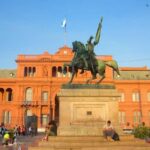
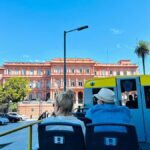
The final historic cluster is around Plaza de Mayo. Here, the guide ties together the city’s founding and political life as you see the Casa Rosada, the Presidential offices, the Metropolitan Cathedral and the Old Cabildo, once the City Hall. The plaza is a strong finish because it brings the stories of the earlier neighborhoods into the civic center.
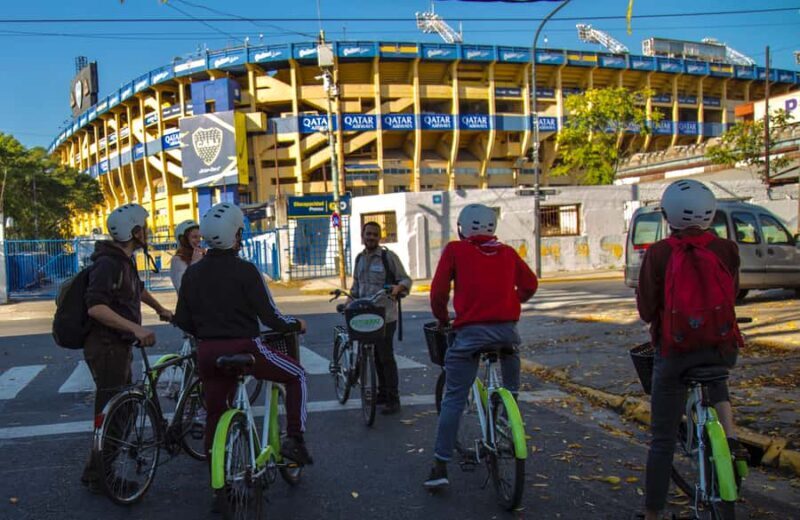
The North route begins with the energy of downtown before heading toward Retiro and Plaza San Martin. Here, imposing palaces and architectural landmarks reflect the city’s Belle Époque period. Stops may include the Monument to the Fallen in Malvinas, the Kavanagh building, the Basilica del Santísimo Sacramento and the Torre Monumental. The guide provides context, while the ride gives you a look at how quickly Buenos Aires shifts from commercial streets to formal public spaces.
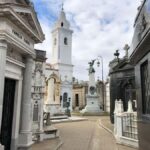
Recoleta brings the pace down. The district is known for its cemetery, cafes, ice cream shops and museums, but the bike tour does not enter Recoleta Cemetery. You pass through the area and hear about its sights, so save a separate visit if you want time to explore the cemetery itself.
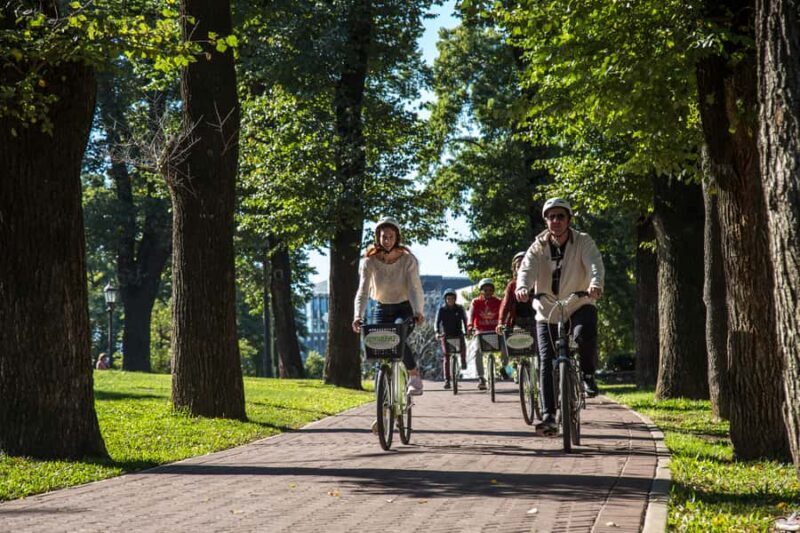
North of Recoleta, Floralis Genérica, the giant metal flower, makes an easy photo stop. The route also passes the house of General San Martin and the Museum of Contemporary Art before reaching Palermo’s parks. The Rose Garden and the broader Tres de Febrero parkland give you a welcome stretch of open space. One rider appreciated having time to walk around the park, though the total ride still favors a broad overview over an in-depth visit.
The North circuit is somewhat farther from the starting area, so expect more time in the saddle than on the South route. The route can also use busier roads. Guides are attentive to keeping the group together, and some riders have noted that much of the riding uses bike lanes, but you should be comfortable cycling in a large city and sharing some streets with traffic.
On the way back, the route reaches Plaza del Congreso, beside the building that houses Argentina’s legislative power. It is a fitting last stop after seeing both the elegant northern districts and the city center.
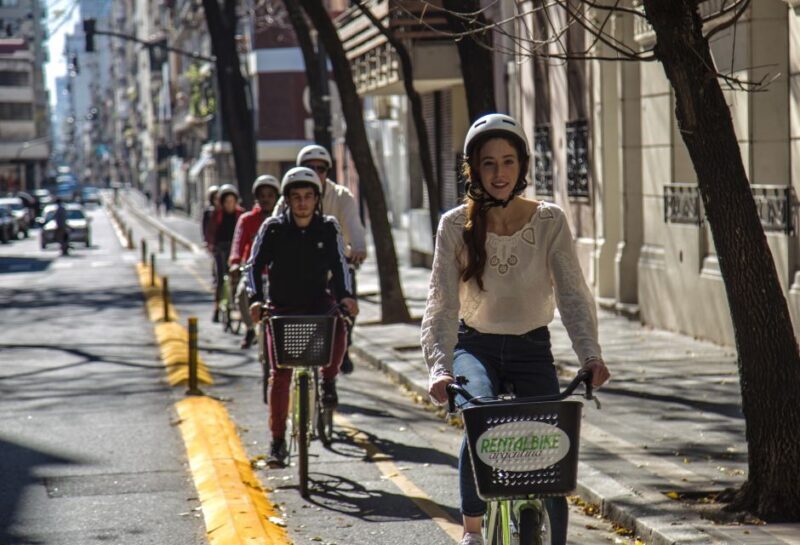
The tour starts with safety instructions, then you set off on a cruiser bike fitted with a helmet, bell and basket. The basket is handy for a water bottle and small belongings. You should bring your own bottle; a refill station is available.
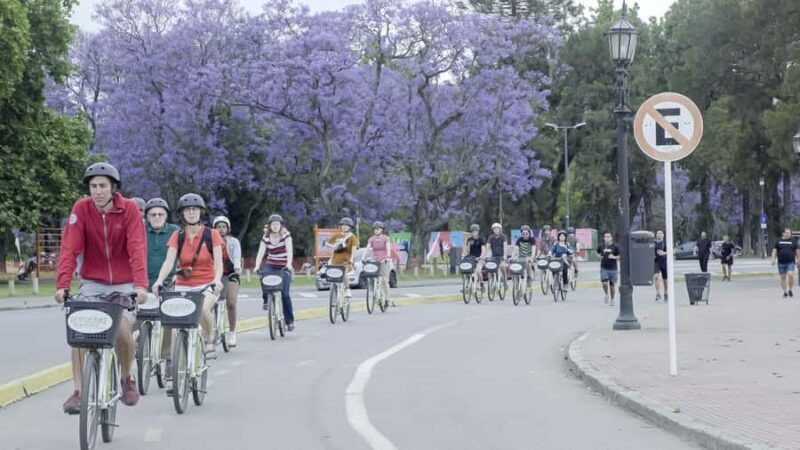
The group limit of eight helps the guide keep the ride personal. In practice, the group may be smaller, and there have been outings with only two people. That can make it easier to ask questions or focus on particular interests, but the group size on your date is not guaranteed.
The guides are a major part of the experience. Santiago, Pilar, Florencia, Ana and other local guides have been praised for telling the city’s story in clear English, adjusting to the group’s pace and sharing practical suggestions for food, bars and tango. You are not just ticking off monuments: good guiding helps connect the football stadium, immigrant neighborhoods, government buildings and green spaces to the city around you.
The advertised duration is four hours. You will stop often enough for explanations and photos, but this is still a cycling tour, not a string of long museum visits. Wear comfortable shoes and weather-appropriate clothing. Buenos Aires is generally described as flat by riders, but you should still be able to ride for several hours and keep up with a group.
The tour runs in light to moderate rain. It may be suspended if an official weather alert, heavy rain or strong winds make riding unsafe; if that happens, the company reschedules according to availability. The Ecological Reserve can also be closed after bad weather, which may change that portion of the South route.
More Great Tours Nearby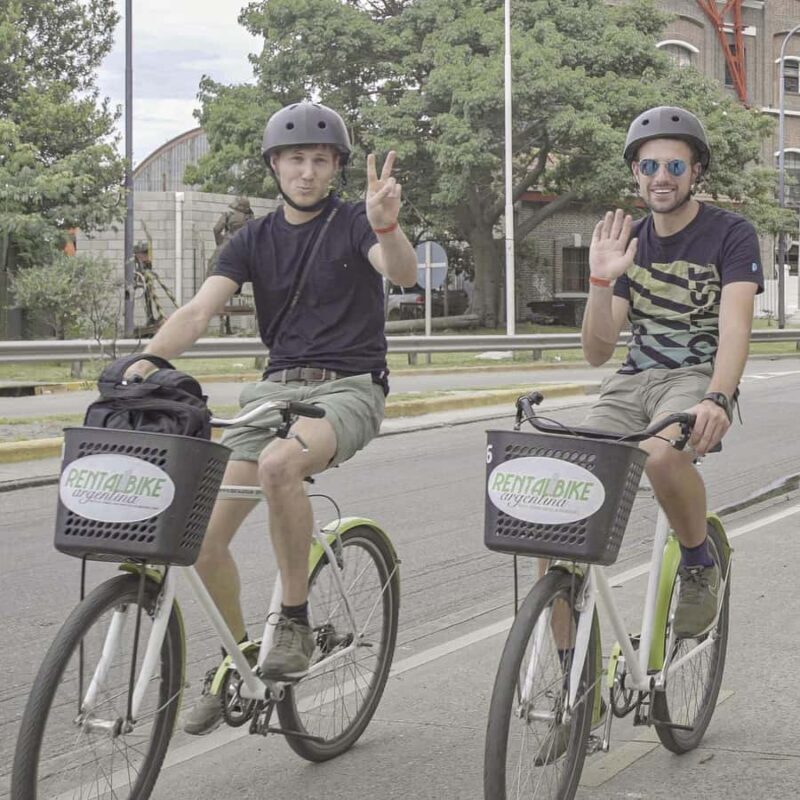
At $38 per person, the price is reasonable for a four-hour guided ride that includes the bike and safety gear. You cover several districts in one outing, and a local guide gives the landmarks context that can be hard to get from simply riding or walking by yourself. For a first day in Buenos Aires, it is an efficient way to map out places to revisit.
The value depends on what you want from the stops. If you want to spend an hour in Caminito, enter Recoleta Cemetery or explore the Ecological Reserve at length, this tour will feel too quick. It is designed to show you a broad slice of the city, with time for short pauses and photos. Tips are not included, so budget for one if you wish to thank your guide that way.
The meeting point depends on the option you book. The shop is at Chile 1145 in Montserrat, and Chile 1141 is also shown as a possible starting or drop-off location. Check your booking details and arrive 15 minutes early. The tour has a maximum wait of 10 minutes; after that, it departs without a refund.
Riders must be at least 12 years old and at least 1.50 meters tall. The activity is not suitable for pregnant women, people with mobility impairments, back or heart problems, respiratory issues, epilepsy, visual impairment, recent surgery, certain pre-existing medical conditions, or people over 118 kilograms or 95 years old. If any of these apply, check with the operator before booking.
Free cancellation is available up to 24 hours before the tour, and the reserve-now, pay-later option can keep plans flexible. Those policies are useful, but the route itself is the main decision: choose the neighborhoods that matter most to you and be ready for a few hours on a bike.
Book it if you want an active, guided overview and feel comfortable riding in city traffic. The South Circuit is the better pick for tango, La Boca, football and the old port; the North is for palaces, Recoleta and Palermo’s parks. In either case, go early in your stay so the guide’s neighborhood tips can shape the rest of your time in Buenos Aires. Skip it if you need a slow, mostly stationary visit or cannot comfortably cycle for several hours.
“The tour of the North was great! It understandably has more time spent cycling as we leave & return closer to the South, but we still had a good am…”
The tour lasts four hours, including cycling and stops at landmarks.
The stated price is $38 per person.
Yes. You can book either the North Circuit or the South Circuit.
A bilingual English- and Spanish-speaking guide, cruiser bike, helmet, bell, basket and access to a water refill machine are included.
Yes. Bring a reusable water bottle and fill it at the refill machine.
The meeting point can depend on the option booked. The shop is at Chile 1145 in Montserrat, and Chile 1141 is also listed as a possible location. Check your booking details.
Arrive 15 minutes before the tour begins. The maximum wait is 10 minutes, after which the tour departs without a refund.
The South route includes the reserve when it is open and conditions allow. It is closed on Mondays and may be closed because of bad weather.
No. The tour passes through Recoleta but does not enter the cemetery.
Participants must be at least 12 years old and 1.50 meters tall.
You can check availability for your dates here: