Physical Address
304 North Cardinal St.
Dorchester Center, MA 02124
Physical Address
304 North Cardinal St.
Dorchester Center, MA 02124

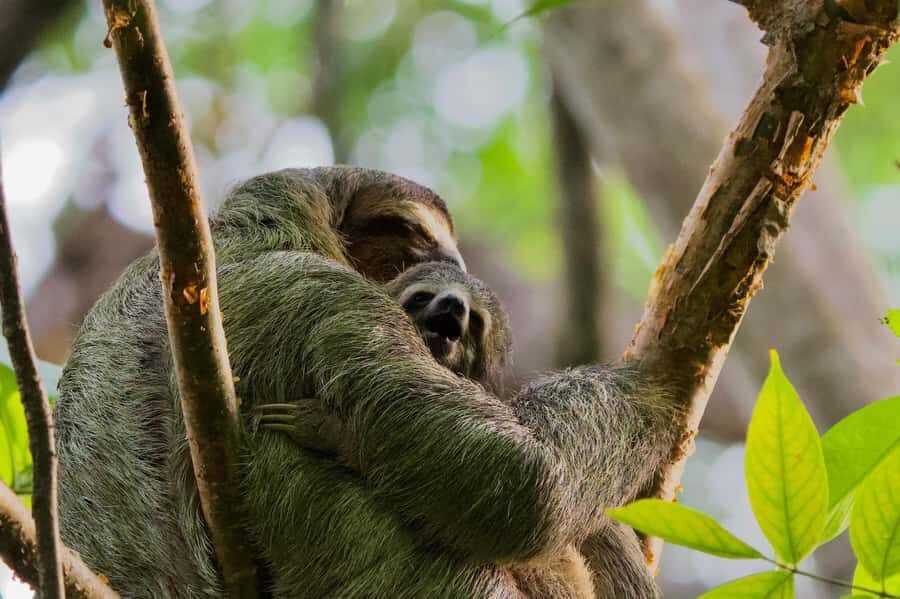
Spot sloths, monkeys, frogs, and more on a guided Manuel Antonio walk with a naturalist, high-definition scope, wildlife photos, and a beach finish.
Sloths are easy to miss when they look like a knot in a tree. This guided walk pairs a naturalist’s trained eye with a high-definition spotting scope, so you have a much better chance of seeing the animals hiding in Manuel Antonio’s forest.
I like two things in particular: the guide does the patient searching while you get close-up views, and the guide’s wildlife photos are included afterward. The trail also ends at Manuel Antonio Beach, so you can trade your walking shoes for a swim after the tour.
The main catch is practical but important: the $30 price does not include park admission. You must buy your national park ticket online in advance, and tickets can sell out in high season. The park is closed on Tuesdays.
At a glance
Manuel Antonio is not a wildlife viewing window where every animal sits in plain sight. A sloth may be curled into a branch, a frog tucked against a leaf, or a bat camouflaged on a tree. You can walk the same trail without seeing any of them. A naturalist guide changes the odds by knowing where to look and how to scan the forest.
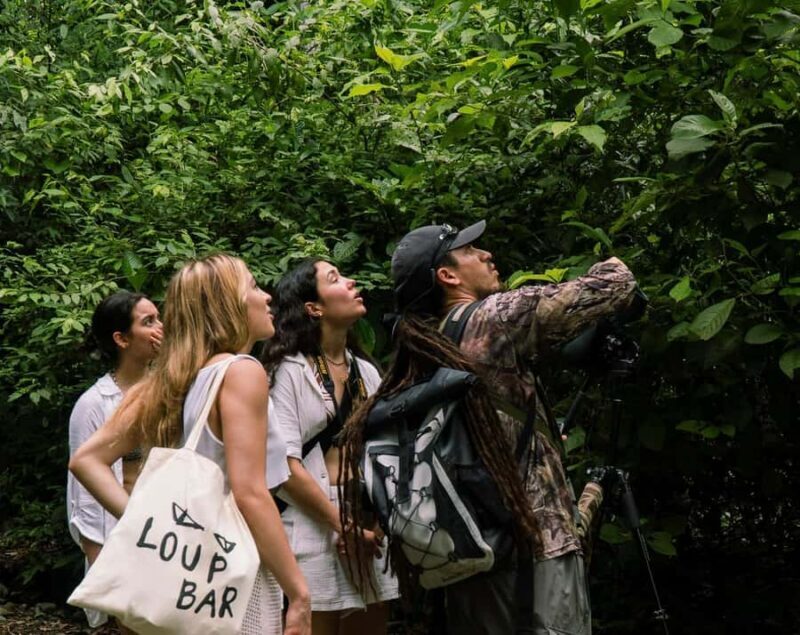
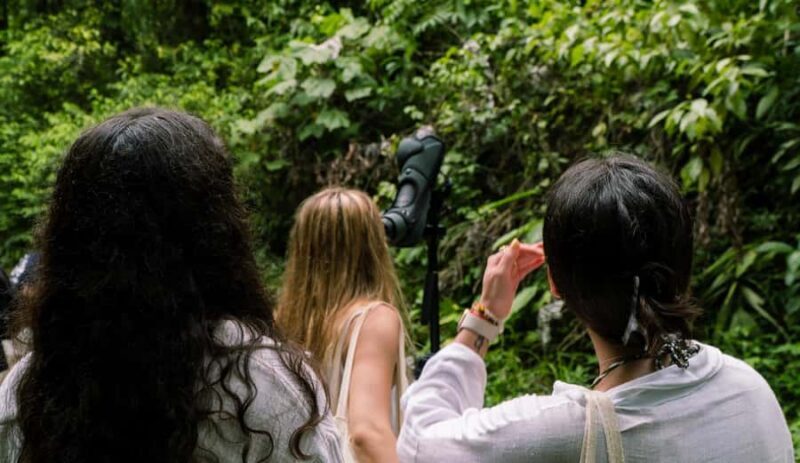
The scope matters, too. Even after a guide spots an animal, it may be hard to see clearly with the naked eye. The high-definition scope brings details into view and helps you notice what you might otherwise pass by. Guides also use it to help you take photos and videos with your phone.
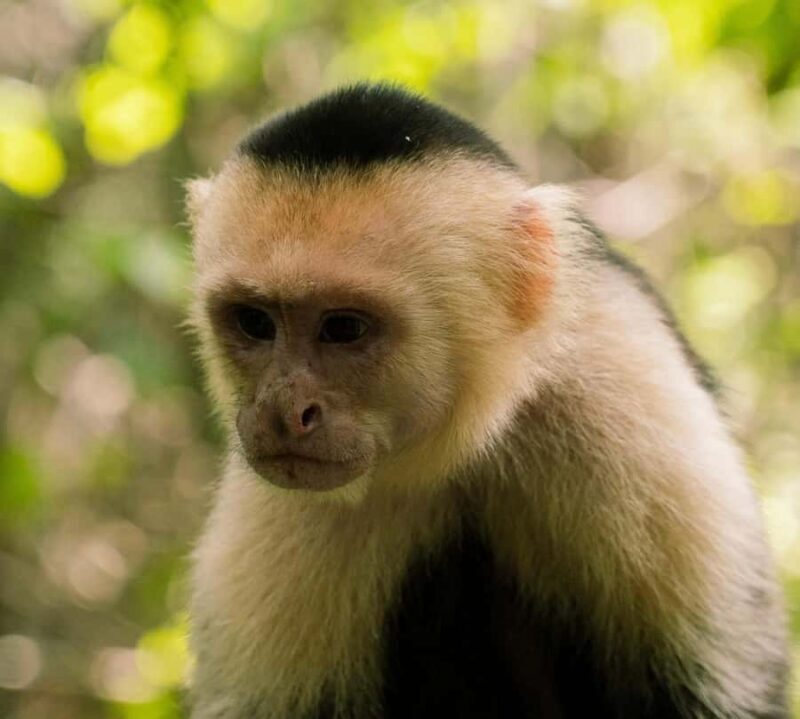
I would treat the tour as a guided introduction, not a promise of a particular animal checklist. Recent visitors have seen sloths, sometimes with babies, as well as howler, spider, and squirrel monkeys, hummingbirds, macaws, snakes, frogs, bats, lizards, and insects. Wildlife is never guaranteed, but having someone search with a trained eye gives you a much better chance than walking alone.
You can check availability for your dates here: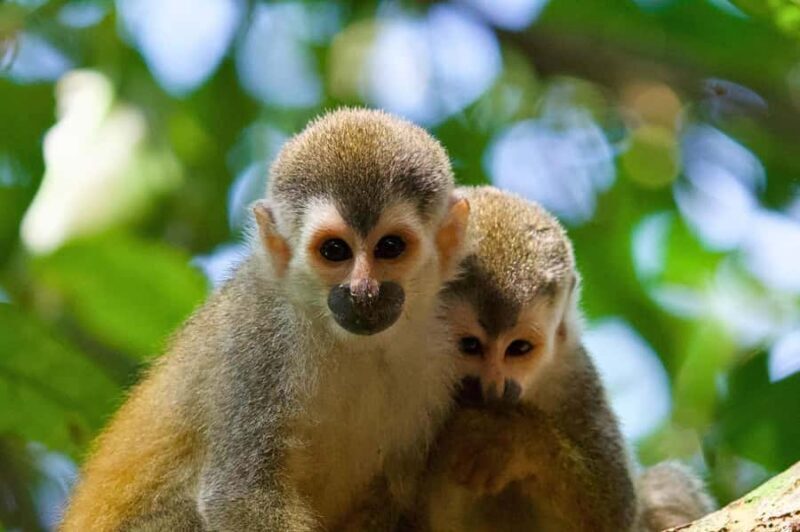
The meeting point is at the supermarket next to Chalo Parking, just before the national park entrance. It is not the beach-side meeting point, so check the location carefully before setting out. The tour operator says it will contact you the night before as a reminder.
Arrive five to ten minutes early with your park ticket ready. The group will wait no more than ten minutes after the start time. If you are late, you may have to catch up with the guide on the trail, which is a poor way to begin a wildlife walk.
If you are driving, Chalo is the recommended parking lot. Parking near the park is private, not run by the national park, and costs about $10 in cash. Street vendors may try to direct you to other lots as you approach. The tour information recommends continuing to Chalo. Public transportation is also described as an easy way to reach the meeting point, though transportation is not included in the tour price.
The meeting area can be confusing when several guides gather there. One visitor noted that guides may not carry signs or banners, so use the supermarket and Chalo Parking as your landmarks. If you are unsure where to go, contact the operator through your booking email or WhatsApp.
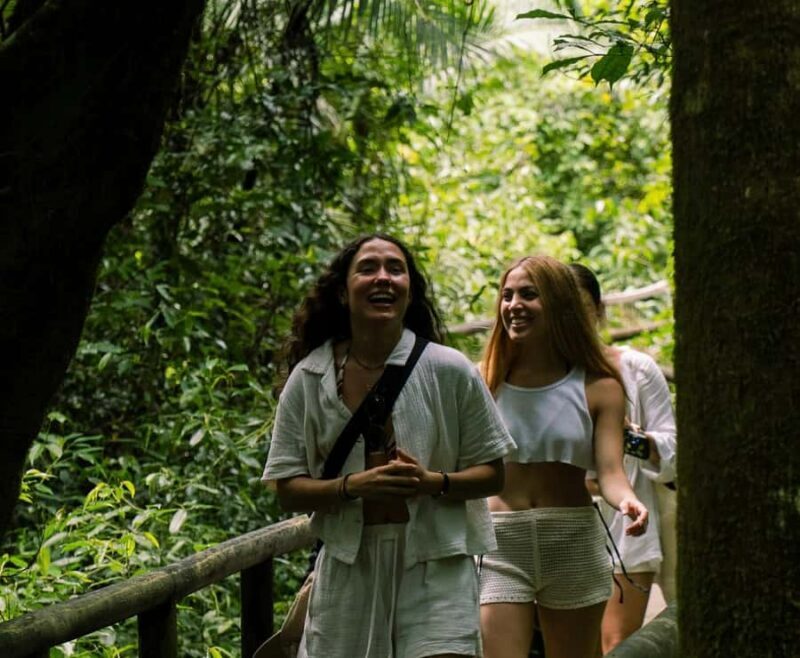
The walk takes you along Manuel Antonio National Park’s forest trails. The route is less about covering distance than stopping often to look. A guide may point out animal movement, a shape in the canopy, or a tiny creature sitting still on a leaf. That slow pace can feel surprisingly productive: the group may spend time inspecting one spot because there is more to see than first meets the eye.
Guides such as Fabio, Karina, Jeremias, Josue, and Alex have led tours here. Your guide is not guaranteed to be one of those named, but the tour is presented as a naturalist-led service in English, Spanish, or French. Visitors have particularly appreciated guides who explain animal behavior and sounds, identify plants and flowers, and make time for questions. A good guide does more than call out species; they help you understand what you are looking at.
The pace can suit families and first-time visitors. Guides have been described as checking that the group is keeping up and helping children stay engaged. Still, this is a walking tour in a warm, forested park. Wear weather-appropriate clothing and closed-toe shoes, and bring swimwear if you plan to continue on to the beach.
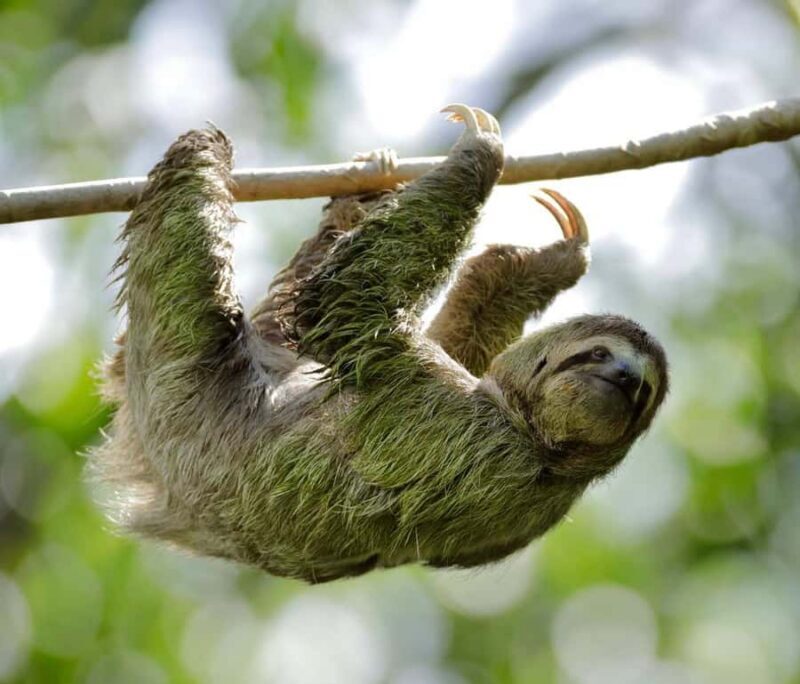
A spotting scope is more than a gadget for the guide to carry. It lets the group see animals at a distance without crowding around a tree or trying to make out a small shape through branches. The guide can also help you take close-up pictures through the scope with your phone.
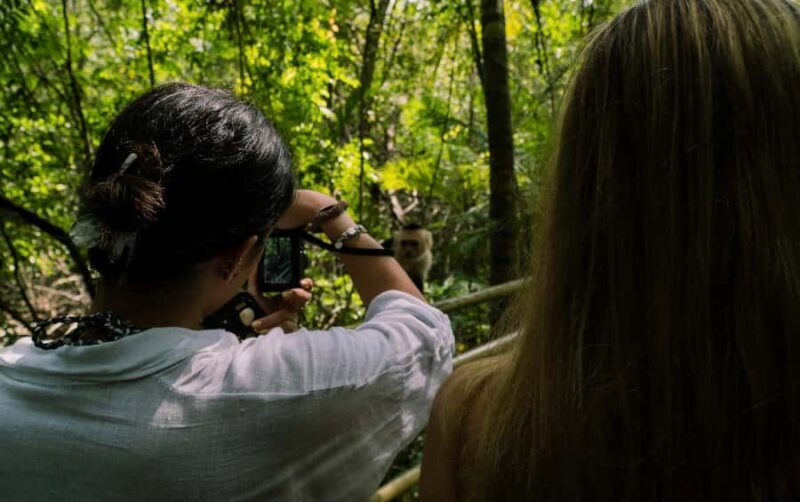
Professional photos taken by your guide are included. They are shared after the tour by AirDrop, WhatsApp, or email. That is a welcome perk if you would rather watch the forest than spend the walk trying to photograph every sighting yourself. It also means you can leave with images of animals that might be difficult to capture on your own.
The photo sharing method may depend on your phone and what works for the group, so make sure the guide has a way to reach you. The important point is that the pictures are part of the tour rather than a separate purchase.
The guided portion finishes at Manuel Antonio Beach, a scenic place to rest after the forest walk. You can unwind, swim, or continue exploring the park on your own. The beach is a real part of the tour’s value: it turns a wildlife walk into a more complete park visit, rather than sending you straight back to the entrance.
Pay attention to the park’s hours when planning the rest of your day. The park opens at 7:00 a.m. and closes at 4:00 p.m.; the beach closes at 3:00 p.m. A swim after the tour may be a fine way to cool off, but do not assume you can stay on the beach until closing time. The tour itself is listed as lasting two hours to 150 minutes, so leave room for the walk to run toward the longer end.
You can also keep exploring on your own after the guide finishes. The guided section moves slowly because the group stops for wildlife, so there may be other trails and park areas you want to see independently. That combination works well: get help spotting animals first, then set your own pace.
More Great Tours NearbyThe $30 tour fee covers the walking tour, naturalist guide, scope, and photos. It does not cover your Manuel Antonio National Park admission, parking, water, snacks, or transportation. Buy the admission ticket through the official SINAC website at serviciosenlinea.sinac.go.cr. Tickets require your full name and passport number, and the park does not sell them in person.
Plan ahead, especially from December through April. The operator recommends buying at least five to seven days ahead in high season, and advises booking around two weeks ahead when demand is high. In the quieter season, from May through November, one day ahead may be enough, but check availability rather than counting on it.
Park admission is sold by time slot. If the available slot does not match your tour start, the operator says you can buy another available slot and still enter with the group, as the park is not strict about the listed time. The simplest plan is to have your ticket purchased and ready before tour day. If you need help, contact the operator in advance; they may be able to assist if tickets remain available.
Remember that the park is closed Tuesdays. Do not book the walk for a day when the park itself is shut.
The park prohibits plastic, including plastic water bottles, wrappers, and zip-top bags. Food is also not allowed, because monkeys may be attracted to it. There is a coffee shop inside the park where you can buy something to eat or drink, but do not bring snacks into the forest.
Water is not included, and plastic bottles are prohibited. Check with the tour operator about an acceptable way to carry water before you go. If you use bug spray, apply it before arriving at the park. The park also prohibits pets, drones, flash photography, smoking, alcohol and drugs, sprays or aerosols, chewing gum, flashlights, weapons, and sharp objects. Do not touch the animals.
These rules are worth taking seriously. They protect the wildlife and help keep the park clean. A little preparation at your hotel can save a frustrating scramble at the entrance.
For $30 per person, you get a naturalist guide, use of the high-definition scope, and photos taken by the guide. Park admission is an extra cost, so compare the full outing cost rather than treating $30 as the price of entry. If you plan to visit the park anyway, the tour’s value comes from the extra eyes, local interpretation, and close views that are hard to get on your own.
The strongest reason to pay is the guide’s ability to find wildlife. The scope and images add to that value, especially if you want a close look without spending the walk peering into the canopy through a phone camera. The beach finish makes the outing more flexible, too: you can stay in the park after the guided portion rather than arranging a separate beach visit.
There are trade-offs. You have to organize admission separately, parking costs extra if you drive, and the tour spends time stopping to view animals rather than moving quickly along every trail. If you prefer to walk at your own pace or are focused on covering the entire park, you may want to explore independently after the guided section. The tour does not replace a full day in the park.
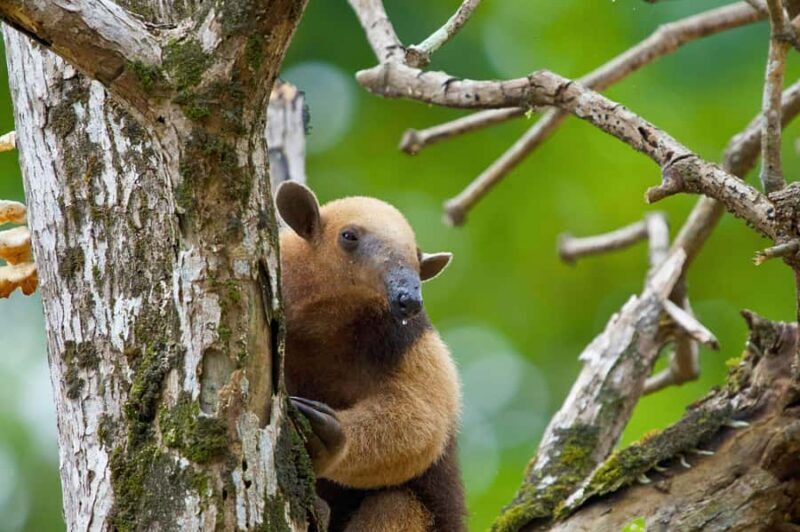
I would recommend it most to first-time visitors, wildlife fans, families, and anyone who wants help spotting animals that are difficult to see without experience and equipment. It is especially useful if you do not want to spend the day guessing whether that patch of bark is a bat or a tree knot.
It can also suit visitors who have already spent time in other Costa Rican forests. Manuel Antonio has its own mix of forest, wildlife, and coast, and a guide can help you notice small species and plant details even if you have visited other parks. If your main aim is a quiet, uninterrupted hike, a group tour may be less appealing. A private group is available if you prefer a more personal outing.
The tour has a 4.9 rating from 1,074 ratings, and the features most often praised are the guides’ sharp eyes, the close-up views through the scope, and the included animal photos. Those are the reasons I would book it, provided you are comfortable buying your park ticket separately and arriving on time.
“Our activity was great. Without a guide, we would’ve walked past absolutely everything that he pointed out. We still have no idea how he could se…”
No. The $30 tour fee does not include the park ticket. Buy admission in advance through the official SINAC website at serviciosenlinea.sinac.go.cr.
No. The park ticket must be purchased online, and it requires your full name and passport number.
In high season, from December through April, buy at least five to seven days ahead. The operator recommends booking about two weeks ahead when demand is high. In low season, from May through November, one day ahead may be enough, subject to availability.
The operator says you can buy another available time slot and still enter with the tour, as the park is not strict about the listed entry time.
Meet at the supermarket next to Chalo Parking, just before the national park entrance. Do not go to the beach-side location.
The tour is described as lasting two hours to 150 minutes. Check the available start times when booking.
The live tour guide speaks English, Spanish, or French. A private group is available.
You might see sloths, monkeys, frogs, snakes, bats, iguanas, birds, and other native wildlife. Sightings are not guaranteed.
Yes. Photos taken by your guide are included and are shared after the tour by AirDrop, WhatsApp, or email.
Wear closed-toe shoes and weather-appropriate clothing, and bring swimwear if you plan to use the beach. Plastic, food, plastic bottles, pets, drones, flash photography, smoking, alcohol and drugs, sprays or aerosols, chewing gum, flashlights, weapons, and sharp objects are prohibited.
You can check availability for your dates here: