Physical Address
304 North Cardinal St.
Dorchester Center, MA 02124
Physical Address
304 North Cardinal St.
Dorchester Center, MA 02124


Trade Rio’s city streets for Tijuca’s caves, waterfalls, and forest trails on a guided five-hour outing with hotel-area pickup.
Tijuca National Park puts a rainforest within Rio’s reach, and this five-hour trip gives you a taste of its caves, waterfalls, and forest paths without planning your own transport. I like the mix of short hikes and several distinct stops, and the chance to cool off at a waterfall after walking. Guides such as Samuel, Lucas, Eric, and Eduardo have earned particular praise for their care, nature knowledge, and knack for spotting wildlife.
One thing to weigh: the trails may be easy-going for a fit walker, but they are not a stroll on pavement. Expect damp ground, rocks, some climbing, and a total of 2 to 5 km on foot. Rain is part of rainforest life, wildlife is a matter of luck, and the Chinese Viewpoint is closed on weekends and holidays.


The outing starts with pickup in Copacabana, Ipanema, Leblon, or São Conrado, with a drive of about 50 minutes to the park entrance. Your exact pickup time depends on your address: morning departures are generally between 6:45 and 8 a.m., while afternoon departures run between 1 and 2 p.m. The provider sends the time the evening before, so keep an eye on WhatsApp.
The vehicle has air conditioning, and hotel-area pickup is useful in a city where the park is not next door to the beach districts. There are many pickup and drop-off points, including hotels and named locations in the main tourist neighborhoods. If your accommodation is outside the covered areas, group-tour transport may not be included, so check before booking.
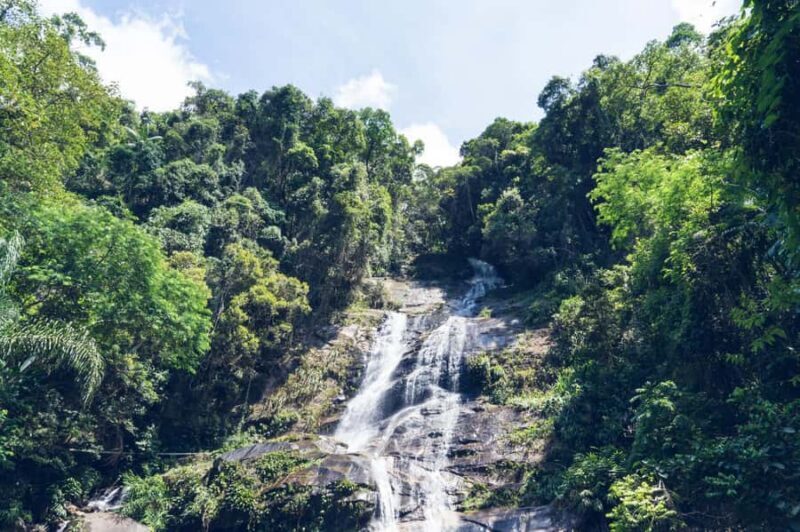
At the park, the first major stop is Cascatinha Taunay, the 35-meter waterfall. It is a scenic introduction rather than a long hike, with time for photos and a guide-led look around. The waterfall helps set the scale: Rio’s forest is not a small patch of greenery at the edge of town, but a large protected area with water, steep rock, and trails just beyond the city.
The itinerary also includes Capela Mayrink, a short visit that adds a cultural stop to the nature-focused morning or afternoon. At Recanto dos Pintores, you may have a chance to look for wildlife. These early stops break up the drive and walking, but they also mean the tour is not one continuous trek. If you prefer a long, uninterrupted hike, this format may feel stop-and-start.
Looking for more options in Rio De Janeiro? Here are some other experiences worth considering.
The walking portion takes you along moist forest trails, with the route and total distance shaped by conditions. Expect around 2 to 5 km of walking over one to two hours, with stops along the way. Some trip descriptions put the cave approach at about 20 minutes and 50 meters of elevation gain. The exact path can vary with park rules, the group’s pace, and weather.
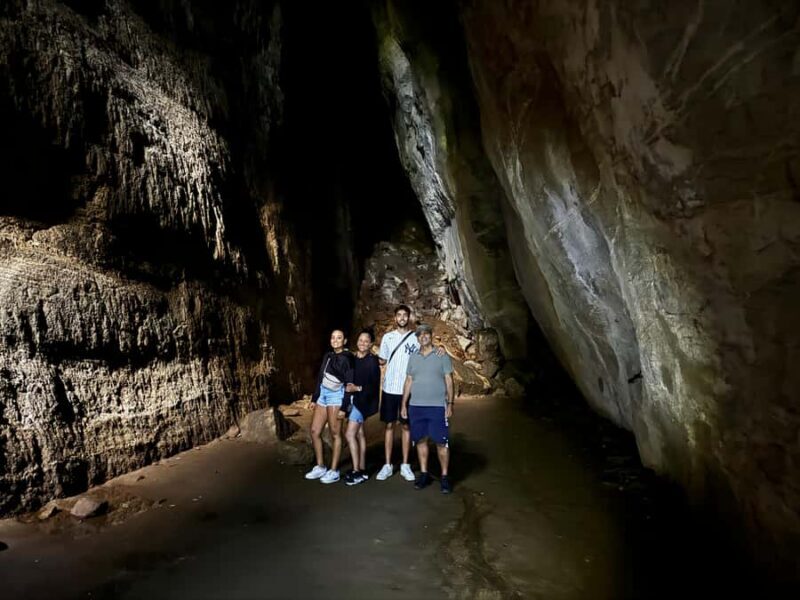
The caves are a highlight for anyone drawn to rock formations and the feel of stepping out of the open forest into a granite hollow. Stops may include Bernardo de Oliveira, Belmiro, and the Bats Cave, with the precise caves visited depending on the route. You do not need technical climbing skills, but you should be comfortable on uneven ground and able to move carefully in a cave setting. Wear closed-toe shoes with a grip; ordinary sandals are a poor match for damp dirt and rock.
A guide adds more than directions here. Guides such as Lucas and Samuel have been praised for adjusting their pace to the group and helping people feel safe in the caves. Eduardo has been singled out for his lively explanations, while Eric is often noted for communicating clearly. Those names are useful clues about the guiding team, but you cannot request or count on a particular guide unless the operator confirms it.
The park visitor center and forest viewpoints may also be part of the route. These stops give the guide room to explain the forest and its role in Rio’s past and present. The park is not just scenery: its watersheds and forest cover are part of the city’s story and its environment. A guide who connects the plants and terrain to that context can make a short walk feel far more substantial.

Waterfalls are the other reason to book. Depending on season and conditions, the route may include Cachoeira das Almas or Diamantina, then places such as Baronesa, Cristalina, or Gabriela Falls. The exact selection may change. Cascades are generally 2 to 5 meters high, and their clear water comes from the park’s water basins.
Set your expectations for the water. These falls form shallow cascades rather than deep swimming holes, so think refreshing shower, wading, and a cool pause, not a long swim. The water can feel especially cold from May through September. Bring swimwear and a towel if you want to get wet, and pack a change of clothes if you would rather not ride back damp.
The waterfall stop is a welcome reward after the trail, and the itinerary allows time to rest, snack, and enjoy the forest. Food and drinks are not included, so bring your own. The route may include several waterfalls, but the amount of time at each can depend on the day’s pace and conditions.
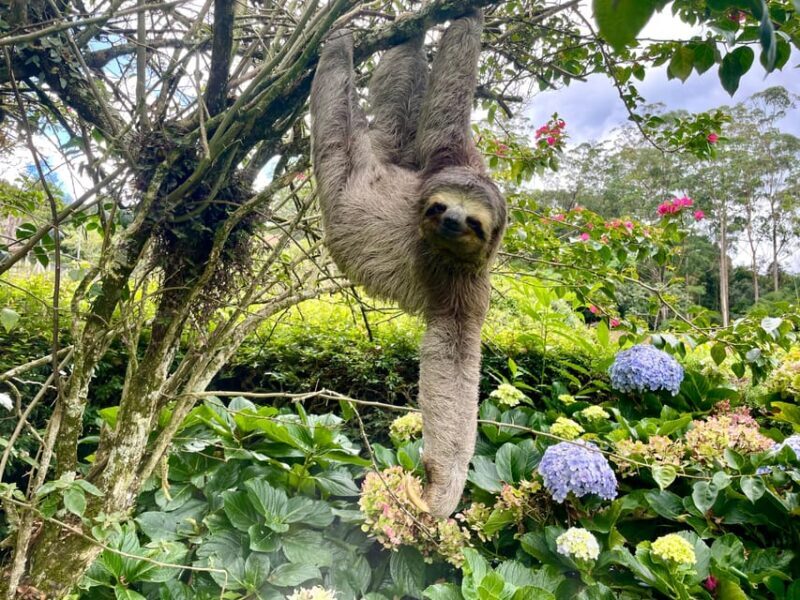
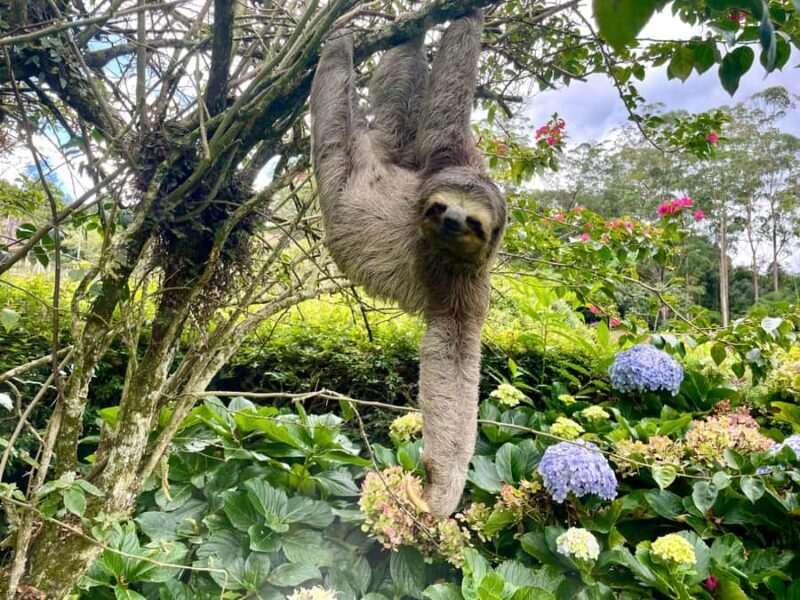
Tijuca’s wildlife gives the walk a little suspense. You might see monkeys, toucans, parrots, coatis, turtles, frogs, butterflies, or sloths. Some groups have also encountered less obvious animals, including a scorpion or a snake, when a guide spotted them. But there is no schedule for wildlife, and a quiet walk with no close sightings is still a normal outcome.
A good guide can improve your odds by knowing where to look and by pointing out signs that are easy to miss. That is one reason the guide matters more here than on a simple viewpoint drive. Bring patience, keep your eyes open, and do not feed or touch animals. Photos taken by your guide on your own device are available on request, a handy option when you want to be in the picture rather than always holding the phone.
The tour’s conservation-minded approach also matters. This is a protected national park, not a wildlife attraction where animals are brought close for a photo. Treat the forest as a living place: carry out your rubbish, leave animals alone, and follow your guide’s instructions.
More Great Tours Nearby
When open and accessible, Vista Chinesa, or the Chinese Viewpoint, offers broad views across Rio. From here you may see Sugarloaf, Christ the Redeemer, Copacabana, and other parts of the city. It is a striking contrast to the enclosed forest paths, and a good final look at how closely Rio’s mountains, forest, and urban districts fit together.
There is an important catch: the viewpoint is closed on weekends and holidays under park rules. Vehicle access may also be restricted on weekend and holiday afternoons, which can turn parts of the tour into a walk. The itinerary may shift for weather or park operations, so treat this as a possible highlight rather than a guaranteed stop.
Traffic can stretch the day beyond the stated five hours. The provider advises against scheduling a flight or another time-sensitive activity immediately afterward. That is sensible advice in Rio, where road conditions can change the return time.
At $77 per person, the value comes from combining transport, park entry, a guide, a waterfall outing, and several stops into one half-day. If you arrange your own way to Tijuca, choose a trail, and explore without a guide, you may spend less, but you will take on the transport and route planning yourself. Here, the guide’s explanations and wildlife spotting are a substantial part of what you are paying for.
The price does not cover food, drinks, or extra costs. Group-tour pickup outside Copacabana, Ipanema, Leblon, and São Conrado is also not included. Check your pickup point before paying, and bring snacks and water so you are not relying on finding refreshments in the park.
For a private group, the operator offers a private option, but the available details do not specify its price. If you value a flexible pace or want a more personal outing, ask for the private rate and what transport it covers before deciding.
Wear comfortable clothes and sturdy hiking shoes or sports shoes with closed toes. The ground can be damp, so a rain jacket or poncho is useful even when the sky looks clear. Rain does not cancel the tour; showers are part of the tropical forest, and the waterfalls can look livelier afterward.
Pack swimwear, a towel, insect repellent, a daypack, food, and drinks. A small garbage bag helps you carry out your rubbish. Leave large bags, luggage, pets, and drones behind. The tour prohibits feeding or touching animals and littering.
The outing is not suitable for children under seven, wheelchair users, people with visual or mobility impairments, people with low fitness, or people over 70. The stated walking distance is manageable for many active visitors, but it includes rough trail conditions and some elevation. Do not book based only on the word easy-going if uneven paths are a concern.
Morning tours on weekdays are recommended for better wildlife chances and less rush-hour traffic. That is a practical choice if your schedule allows it. If you can only go in the afternoon or on a weekend, you can still enjoy the forest, but the viewpoint or vehicle access may be affected.
Book it if you want a guided taste of Brazil’s Atlantic Rainforest without giving up a full day, and you are comfortable walking on damp, uneven trails. The mix of caves, waterfalls, forest history, and possible wildlife sightings gives the trip more variety than a simple drive to a lookout. It is especially appealing if you want to step away from Rio’s beach districts and see another side of the city.
Think twice if you need a gentle, fully accessible outing, expect a deep swimming hole, or would be disappointed without seeing monkeys or toucans. For most active visitors with half a day to spare, $77 is a reasonable way to reach the park, understand what you are seeing, and finish with cold water under a waterfall.
“The experience was unique. There was a hike through the forest for about 1.5 hours, which was not very easy, but the effort was worth it. We saw un…”
The tour lasts about five hours, though traffic and changes to the route can affect the timing.
Plan on about 2 to 5 km of walking over one to two hours, with some elevation and stops. The exact distance can vary with park rules, weather, and group conditions.
You can cool off in the waterfall water, but the cascades are generally shallow rather than deep pools. Bring swimwear and a towel if you want to get wet.
You might, along with other wildlife such as coatis, parrots, frogs, butterflies, or sloths. Sightings are not guaranteed.
No. Vista Chinesa is closed on weekends and holidays, and vehicle access can be restricted at those times.
Wear comfortable clothes and closed-toe hiking or sports shoes. Bring rain gear, swimwear, a towel, insect repellent, a daypack, food, and drinks.
Pickup and drop-off are included for group tours at main hotels in Copacabana, Ipanema, Leblon, and São Conrado. Transport outside those areas is not included for group tours.
You can check availability for your dates here: